
The failure of a branding project is rarely a result of poor execution during the design phase; rather, it is most often the consequence of a foundation built on ambiguous language and unaligned stakeholder expectations. In the competitive landscape of digital product development and corporate identity, the "pre-concept" phase—a critical period of discovery occurring between the initial project kickoff and the first visual draft—has emerged as the definitive factor in long-term project success. By bridging the gap between strategic intent and visual output, design teams can mitigate the risk of misaligned creative directions that lead to costly revisions and stalled launches.
Industry analysts note that nearly 60% of rebranding projects experience significant delays during the feedback loop, often stemming from subjective interpretations of core brand attributes. Terms such as "premium," "disruptive," and "trustworthy" are ubiquitous in client briefs, yet they are notoriously devoid of objective meaning. Without a rigorous, data-driven methodology to codify these descriptors into tangible visual principles, designers are forced to rely on intuition, which inevitably leads to conflict when that intuition fails to match the unvoiced, underlying assumptions of the client stakeholders.
Establishing a Chronology of Discovery
The traditional branding workflow has long been criticized for its "big reveal" structure, where designers work in isolation before presenting a polished concept. Modern design methodologies have shifted toward a more iterative, transparent timeline. The current industry standard for a robust pre-concept phase follows a specific chronological sequence:

- Contextual Discovery (Days 1–3): The initial engagement involves deep-dive research into the business model, competitive landscape, and audience psychographics. This stage focuses on what the brand must accomplish in the market rather than how it should look.
- The Perception Audit (Days 4–7): This involves gathering qualitative data from stakeholders to uncover hidden biases. By using tools like perception mapping, teams can identify where individual definitions of success diverge.
- Visual Translation (Days 8–10): The team converts the codified strategy into a "design code"—a set of visual metaphors, principles, and constraints that serve as the guardrails for the subsequent creative phase.
- Concept Development (Day 11 onwards): Only after the visual foundation is ratified does the actual design work begin.
The Role of Perception in Market Positioning
At the core of the pre-concept phase is the acknowledgment that a brand is not a logo or a color palette; it is a "gut feeling" held by the consumer. As noted by industry experts, this perception is formed through a series of touchpoints that must be consistent. In a recent case study involving a prominent health tech firm, the company identified its brand as "disruptive." Initially, the design team interpreted this as a mandate for high-contrast, avant-garde aesthetics. However, through the discovery process, it was revealed that the firm’s primary clients were conservative government medical institutions. In this context, "disruptive" meant efficiency, transparency, and clinical precision—not rebellion.
This revelation highlights a fundamental truth in identity design: categorical expectations are powerful. A brand that ignores the visual language of its sector risks losing credibility, while one that adheres too strictly to those norms fails to differentiate. The pre-concept phase allows teams to find the "tension point" where a brand can be unique without alienating its core audience.

Data-Driven Stakeholder Alignment
To remove subjectivity, professional studios have increasingly adopted rigorous, workshop-based exercises. One such method, the "Visual Brand Driver," asks stakeholders to associate the company with specific categories—such as transportation, furniture, or architecture—to build a metaphorical profile.
Data from these workshops often reveals that while stakeholders may agree on a brand’s mission statement, they hold vastly different visual references. For instance, in a fintech rebranding exercise, asking stakeholders to define "boldness" revealed that for one group, it meant neon-heavy, aggressive graphics, while for others, it meant clean, monochromatic, and structural layouts. By forcing these disagreements to the surface during the pre-concept phase, designers prevent a "feedback deadlock" that would otherwise occur when the first designs are presented.

The Three Layers of Visual Foundation
Once the research is synthesized, the transition to design must be structured to ensure all parties are aligned on the visual vocabulary. This is typically achieved through three distinct deliverables:
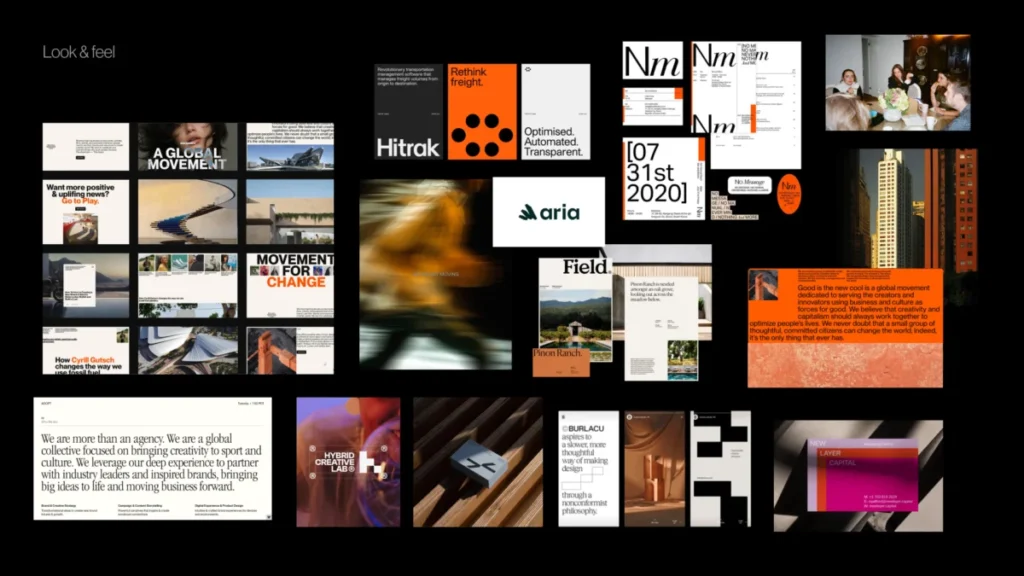
- Look and Feel Boards: These serve as perception boards rather than mood boards. They focus on the emotional response a brand aims to trigger, using third-party references to facilitate a discussion about tone, intensity, and personality.
- Design Code: This layer translates the strategic adjectives into visual rules. For example, if the strategy calls for "personalized support," the design code might dictate the use of organic shapes and human-centric imagery rather than rigid, geometric patterns.
- Asset Direction: This provides the concrete, technical specifications for typography, color theory, and photographic style. By defining these boundaries early, designers can work with the confidence that their creative choices are grounded in a shared understanding of the brand’s requirements.
Broader Implications and Strategic Impact
The implementation of a formal pre-concept phase carries significant implications for the professional design services market. By transforming the design process from a subjective art to a structured strategic service, agencies are better positioned to justify their fees and demonstrate clear ROI.

Furthermore, as digital products become increasingly complex, the need for consistent, scalable brand systems has never been higher. A well-executed pre-concept phase ensures that when a brand grows, its visual identity can evolve without losing its core character. This scalability is a key performance indicator for startups looking to attract venture capital, as investors increasingly view a coherent, well-researched brand identity as a sign of institutional maturity and operational stability.
Expert Perspectives on Process Standardization
"The industry is moving away from the ‘creative genius’ model toward a ‘collaborative consultant’ model," says a lead consultant at a top-tier brand agency. "Clients want to be part of the process, but they need to be guided. If you don’t give them a framework to discuss design, they will inevitably default to ‘I like’ or ‘I don’t like.’ The pre-concept phase provides the language they need to be effective participants in their own brand’s creation."

Evidence suggests that when this phase is bypassed, the "first concept" is essentially a blind guess. Even if the design is aesthetically pleasing, it may fail to address the underlying business problem. Conversely, when the pre-concept phase is integrated, the first concept is perceived not as a surprise, but as a logical, inevitable conclusion to the strategic work that preceded it.
Conclusion
The evolution of brand identity design is increasingly characterized by the integration of strategy and creative execution. By dedicating time to the pre-concept phase—researching context, uncovering hidden stakeholder assumptions, and establishing a shared visual foundation—designers can significantly reduce project risk and increase the long-term efficacy of their work. The objective is not to strip away creativity, but to provide it with a sharper, more relevant problem to solve. In an era where brand consistency is a critical component of market competitiveness, the ability to turn abstract strategy into a cohesive visual reality is perhaps the most valuable skill a design team can offer.