

Technology has undergone a profound metamorphosis, shifting from a tool we operate with to an environment in which we operate. This immersive, dynamic landscape, powered by artificial intelligence, has fundamentally altered human-technology interactions, transforming them from transactional exchanges to nuanced conversations. AI is no longer merely retrieving information; it is actively generating new context and content, making interactions increasingly akin to human dialogue. This seismic shift is reshaping the very fabric of brand-consumer relationships, presenting both unprecedented challenges and opportunities for marketers.
In this evolving paradigm, Arjan Kapteijns, former CEO of Saatchi & Saatchi Netherlands, has introduced a significant evolution of Kevin Roberts’ seminal "Lovemark" concept. Kapteijns’ adaptation, termed "Agentic Lovemarks," provides a strategic framework for brands to navigate a world where loyalty and affection are no longer directed solely at humans but also at their digital counterparts – AI agents. This new model acknowledges that while the core need for emotional connection remains, its orchestration is now increasingly mediated by intelligent machines.
The integration of psychological principles into marketing is not a new phenomenon. Since the early 20th century, marketers have leveraged emotions to forge deeper connections between brands and consumers. This journey began with emotional persuasion in advertising and has evolved into a sophisticated understanding that strong emotional resonance with a brand cultivates enduring loyalty and repeat engagement. For consumers to connect emotionally with a product or service, that entity needed to become more relatable, more human-like.
This need for anthropomorphism in branding found a powerful expression in the archetype model introduced by Margaret Mark and Carol Pearson in their seminal work, "The Hero and the Outlaw." This framework, now a quarter-century old, revolutionized brand building by providing marketers with a tangible, rational approach to crafting irrational consumer affection. By defining brands through a human-inspired personality framework – dictating how a brand looks, speaks, and behaves – it aimed to create holistic brand personalities that consumers could experience, connect with, and ultimately, love.
However, the landscape has shifted dramatically. The traditional archetype model, while foundational, is no longer sufficient for building Agentic Lovemarks. This insufficiency stems not from its obsolescence but from its lack of distinctiveness and actionable guidance within the burgeoning agentic economy. Previously, brands exerted considerable control over their experiential output through technology, manually shaping and steering interactions based on predefined personalities. Today, brands are increasingly compelled, both directly and indirectly, to cede this control to AI.
As AI agents autonomously operate and communicate on behalf of both individuals and brands, and as human-to-brand interactions become increasingly conversational and personalized through these intermediaries, brands face two critical imperatives for translating their personalities into the future:
The Imperative for Granular Personality Definition
Human communication, particularly in one-on-one conversations, is characterized by a complexity that a generalized archetype cannot fully encapsulate. While the 12-brand archetype model remains valuable for establishing a broad strategic direction, it falls short when it comes to informing the nuanced, human-like interactions that advanced technology can create. The inherent ambiguity in archetypes leaves significant room for interpretation. Allowing an AI to interpret a mere archetype is akin to generating a random brand logo with every consumer interaction; the experience would become inconsistent and unpredictable, eroding brand equity.

The Legible-Lovable Law: Bridging AI and Human Connection
Thomas Marzano, a former brand leader at Philips and ASML, articulates a crucial concept in his manifesto, "Brand Constitutions: The Legible, Lovable Standard for Building Equity in an Agentic Economy." He posits that in an agentic economy, brands must be both legible to AI – enabling recognition and recommendation by machines – and lovable by humans – remaining relevant in their decision-making processes. This duality is encapsulated in what he terms the "Legible-Lovable Law."
This principle necessitates a structural and almost technical approach to ensuring future brand relevance. It is not a departure from emotional connection but rather its technical reinforcement. Only when a brand’s essence can be accurately read, understood, and rendered by AI can it truly become "branded AI." This involves providing AI with explicit instructions on how to modulate its verbal tone, vocabulary, voice, and response behavior. Without this, interactions risk remaining generic, devoid of the brand-specific emotional resonance that fosters true connection.
To achieve this, a new model for defining brand personality is essential – one that is more detailed, tailored, and technologically adept, minimizing subjective interpretation. This is where the PRISM model emerges as a pivotal solution.
Introducing the PRISM Model: A Framework for Agentic Personality
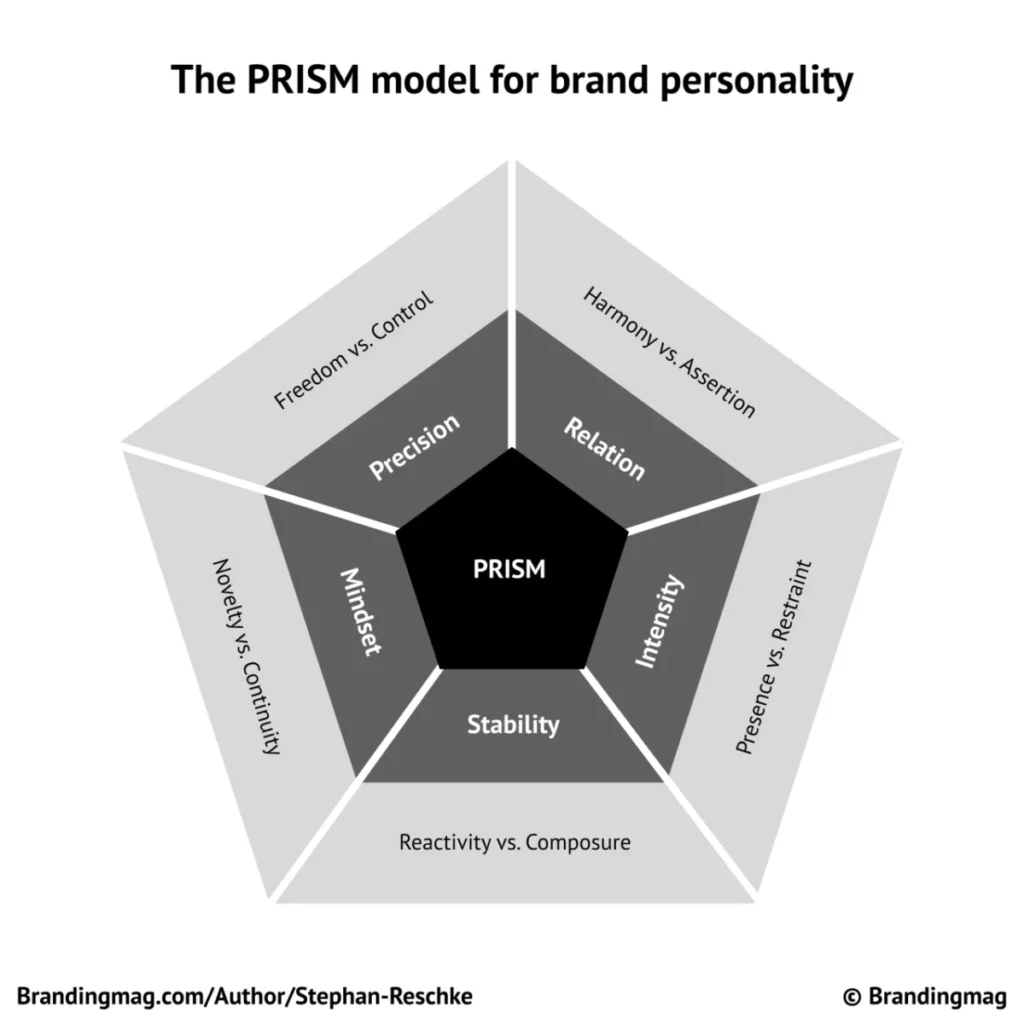
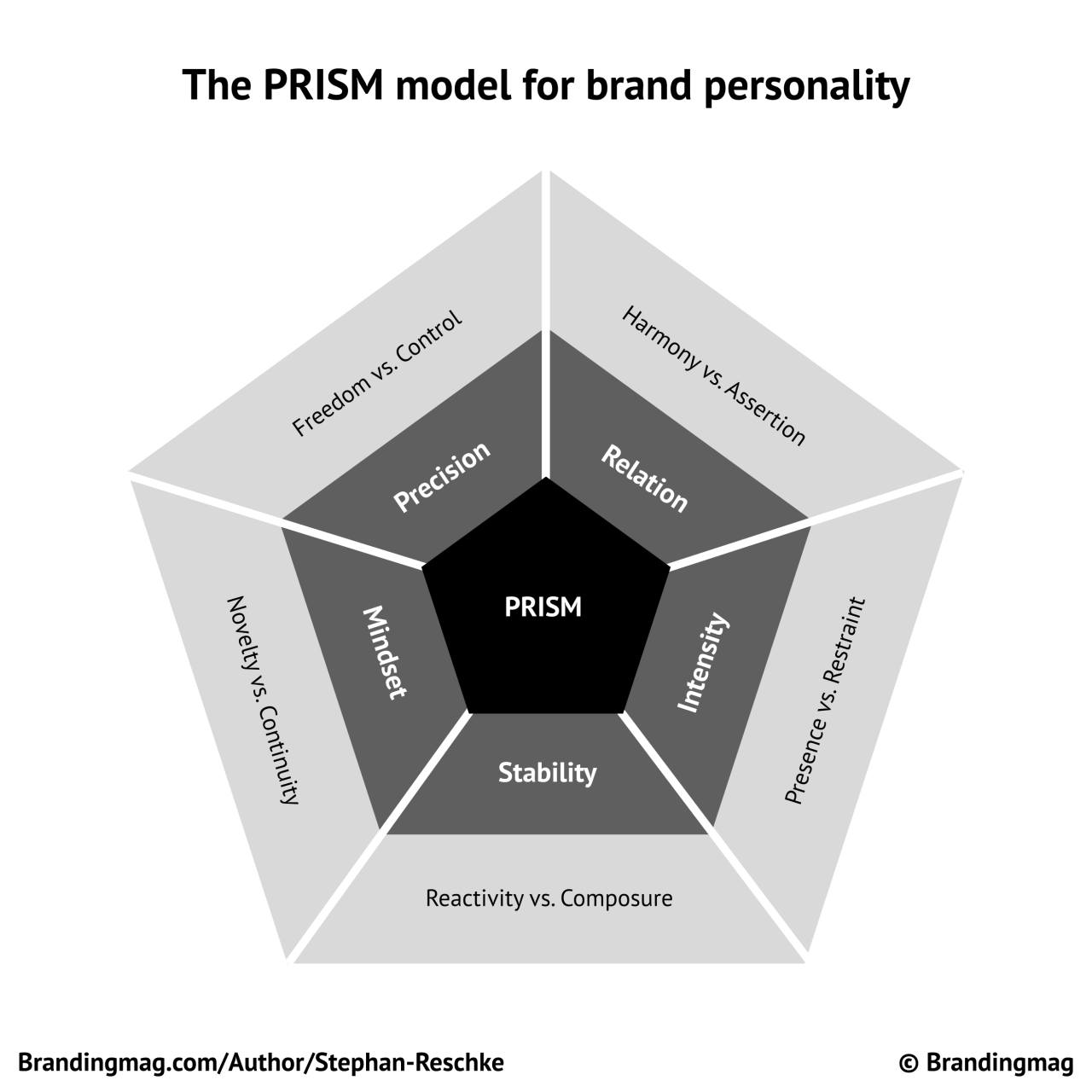
The PRISM model, developed by Stephan Reschke, draws inspiration from the widely accepted OCEAN model of human psychology, commonly known as the "Big Five." It adapts this framework for brands, classifying personality through five core domains:
- Openness: This domain explores a brand’s willingness to embrace new ideas, experiences, and creativity.
- Conscientiousness: This dimension assesses a brand’s level of organization, diligence, and reliability.
- Extraversion: This reflects a brand’s outward orientation, sociability, and energy.
- Agreeableness: This measures a brand’s cooperativeness, empathy, and trustworthiness.
- Neuroticism: This domain, when applied to brands, refers to their propensity for emotional stability and resilience.
Unlike the exclusive nature of archetypes, PRISM offers a comprehensive compilation of attitudes, thinking patterns, and mindsets that contribute to the unique distinctiveness of every human and, by extension, every brand.
Each of these five core domains is further delineated by six specific defining characteristics. These characteristics are then evaluated on a graded scale, imbuing the PRISM model with the necessary nuance to capture the complexity inherent in brand personalities. This granular approach allows for a far more precise definition of a brand’s digital persona.
The fundamental purpose of the PRISM model is to define personality in terms of mindset, communication, and behavior. This makes it an ideal framework for brands aiming to cultivate more human-like interactions. Its technical structure and comprehensive definitions provide AI agents with a legible personality guideline, enabling them to read, understand, and act upon it, thereby laying the groundwork for genuine emotional connections within human-to-brand interactions mediated by machines. In essence, the PRISM model serves as a foundational component of the "Experience Engine" that Marzano outlines in his "Brand Constitutions" – the concept of an individualized, real-time, on-demand brand experience orchestrated by AI. It is a critical element for brands aspiring to become Agentic Lovemarks.
Brand Language: The New Frontier of Brand Campaigns
As our interactions with technology increasingly become voice-driven, prioritizing auditory and verbal communication over visual, language, in its broadest sense, has ascended to become the primary touchpoint between humans and brands. Consequently, brands must dedicate heightened attention to developing a clear framework for their presence in this sonic realm, encompassing their vocabulary, grammar, tone, and overall voice.
The advent of Large Language Models (LLMs) signifies a paradigm shift in how brands must engage. LLMs do not process traditional campaigns; they analyze data, comprehend context, and generate novel content. This fundamental difference underscores the indispensable relevance of meticulously crafted brand language in forging meaningful connections.
This is precisely where the PRISM model plays a crucial role. It acts as a lens through which a brand can manifest its digital personality, establishing the bedrock for branded language. It provides a clear verbal and behavioral guideline that can be translated beyond static documents into actionable system prompts for LLMs. This enables brands to:
- Ensure Consistent Tone and Voice: AI agents can be programmed to consistently adopt the brand’s defined voice, ensuring a unified and recognizable presence across all interactions.
- Develop Brand-Specific Vocabulary: LLMs can be trained on a curated lexicon that reflects the brand’s unique terminology and communication style.
- Personalize Responses with Brand Nuance: The model allows for AI-generated responses that are not only informative but also imbued with the brand’s personality, making interactions more engaging and memorable.
- Craft Contextually Relevant Content: By understanding the brand’s PRISM profile, AI can generate content that aligns with its core values and messaging.
More profoundly, the outputs of the PRISM model inform the construction of a "digital soul" for a brand. This digital essence is then integrated into a brand’s web infrastructure, allowing LLMs to read, comprehend, and render the brand’s personality accurately.
Navigating the Future: Exploration and Exchange
The future, while promising, simultaneously evokes excitement and apprehension. Anxiety often stems from the unknown, from a lack of clarity regarding what lies ahead. The most effective approach to confronting this uncertainty is through proactive engagement: exploration, questioning, experimentation, continuous learning, and, most importantly, the exchange of ideas and insights.
The PRISM model offers another invaluable framework for comprehending and navigating this uncertain future – a future where humans, agentic AI, and brands engage on a deeply complex and interconnected level. The conversations surrounding these evolving dynamics are already underway. For those who have not yet delved into this transformative landscape, now is the opportune moment to engage and adapt.
Cover image: Luste Art Group