
In the intricate landscape of product development and user experience (UX) design, a fundamental challenge persists: accurately discerning what users genuinely want, need, and how they make decisions. While many companies operate on broad assumptions and hunches about their user base, relying heavily on explicit feedback, the reality often reveals a significant disconnect between what people say, what they think or feel, and what they actually do. This gap necessitates a deeper investigative approach, moving beyond surface-level interactions to uncover the hidden motivations and root causes that shape user behavior. This pursuit of profound understanding is not merely an academic exercise; it is a critical differentiator for creating impactful, user-centric products and services.
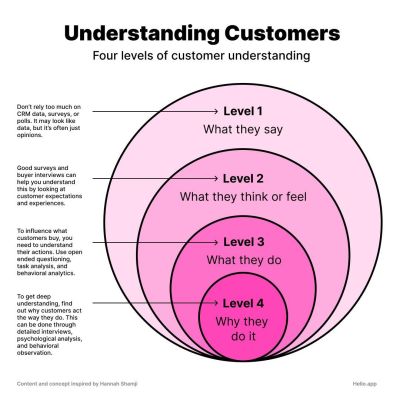
The journey toward genuine customer understanding is a multi-layered one, demanding a nuanced methodology that triangulates across various dimensions of user experience. As the digital sphere becomes increasingly saturated, the ability to truly resonate with users hinges on deciphering the complex, often messy and noisy, layers of reality that influence their actions. This comprehensive perspective is championed by frameworks such as the "Four Levels of Customer Understanding," originally proposed by Hannah Shamji, which provides a structured pathway to explore the underlying reasons for user behavior, moving from superficial statements to profound insights.
The Peril of Direct Questioning: Why Words Alone Are Insufficient
A common initial instinct in user research is to directly ask customers about their preferences, pain points, and desires. However, decades of psychological and behavioral research consistently demonstrate that this approach is rarely effective in yielding actionable insights. What people think, feel, say, and do are frequently disparate entities. This "say-do gap" is a cornerstone concept in UX research, highlighting the unreliability of self-reported data when not corroborated by other evidence.
Several cognitive biases and human tendencies contribute to this discrepancy. Users may:
- Lack Self-Awareness: Often, individuals are not fully conscious of their true motivations or the underlying reasons for their behaviors. Their responses might be post-hoc rationalizations rather than genuine insights.
- Apply Their Own Context: Questions are interpreted through a user’s unique lens, leading to varied and sometimes irrelevant answers. The researcher’s intended meaning may be lost or distorted.
- Exaggerate or Minimize: People tend to embellish their experiences or understate difficulties, consciously or unconsciously, often influenced by social desirability bias (the tendency to give answers that will be viewed favorably by others).
- Focus on Edge Cases: During interviews or surveys, users might recall extreme or unusual scenarios, leading to a skewed perception of common usage patterns.
- Prioritize Short-Term Over Long-Term Goals: Immediate desires might overshadow more significant, enduring needs, leading to requests for features that offer temporary convenience but fail to address core problems. For instance, a user might insist on a "compare products in a table" feature, when their actual underlying goal – making an informed purchase decision – could be better served by a more intuitive filtering system or personalized recommendations, as demonstrated by platforms like ProductChart.
Erika Hall, a prominent voice in UX research, succinctly states that asking a question directly is often "the worst way to get a true and useful answer to that question." The inherent subjectivity and potential for bias in verbal responses underscore the need to look beyond mere statements.
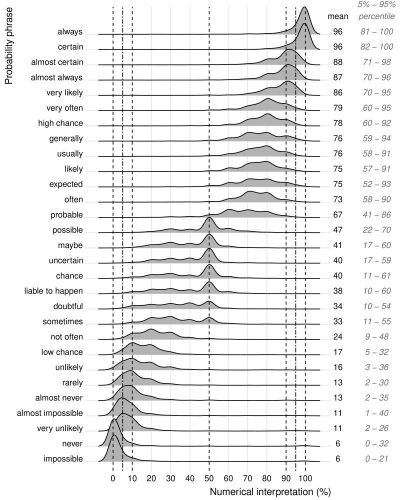
Further complicating matters is the inherent ambiguity of language itself. As Thomas D’hooge’s observations highlight, even seemingly straightforward probability phrases like "possible," "plausible," and "probable" can carry widely divergent numerical interpretations among individuals. A study on Dutch verbal probability terms further illustrates this, revealing significant disagreement on the precise meaning of terms like "maybe," "uncertain," or "likely." While extreme words might achieve some consensus, the vast majority of qualitative descriptors are open to broad interpretation, making reliance on spoken words alone a precarious foundation for design decisions. This linguistic imprecision reinforces the imperative to delve deeper than surface-level communication.
The Four Levels of Customer Understanding: A Framework for Deeper Insight
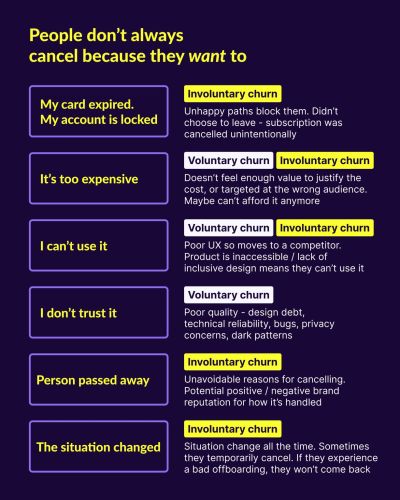
To navigate these complexities and build a more realistic, less biased view of customer needs, researchers must adopt a holistic approach, triangulating insights across four distinct levels of understanding:
-
Level 1: What They Say: This is the most accessible, yet often the most misleading, layer. It encompasses direct feedback from surveys, interviews, focus groups, and customer support interactions. While valuable for identifying immediate pain points or explicit requests, it is prone to the biases discussed above. This layer provides a starting point but should never be the sole basis for design decisions.
- Enrichment: While easy to collect, data from this level needs rigorous qualitative analysis to identify recurring themes and underlying sentiment, rather than taking statements at face value. Tools for sentiment analysis on text data can offer some automated insights, but human interpretation remains crucial. The "NPS" (Net Promoter Score), for example, is a common metric at this level, but its limitations in truly diagnosing user intent are widely acknowledged, prompting a search for more robust alternatives.
-
Level 2: What They Think or Feel: This level explores users’ internal states, attitudes, beliefs, and emotional responses to a product or service. It delves into their perceptions, mental models, and the subjective experience of interaction. This layer is crucial because emotions significantly influence decision-making and overall satisfaction.
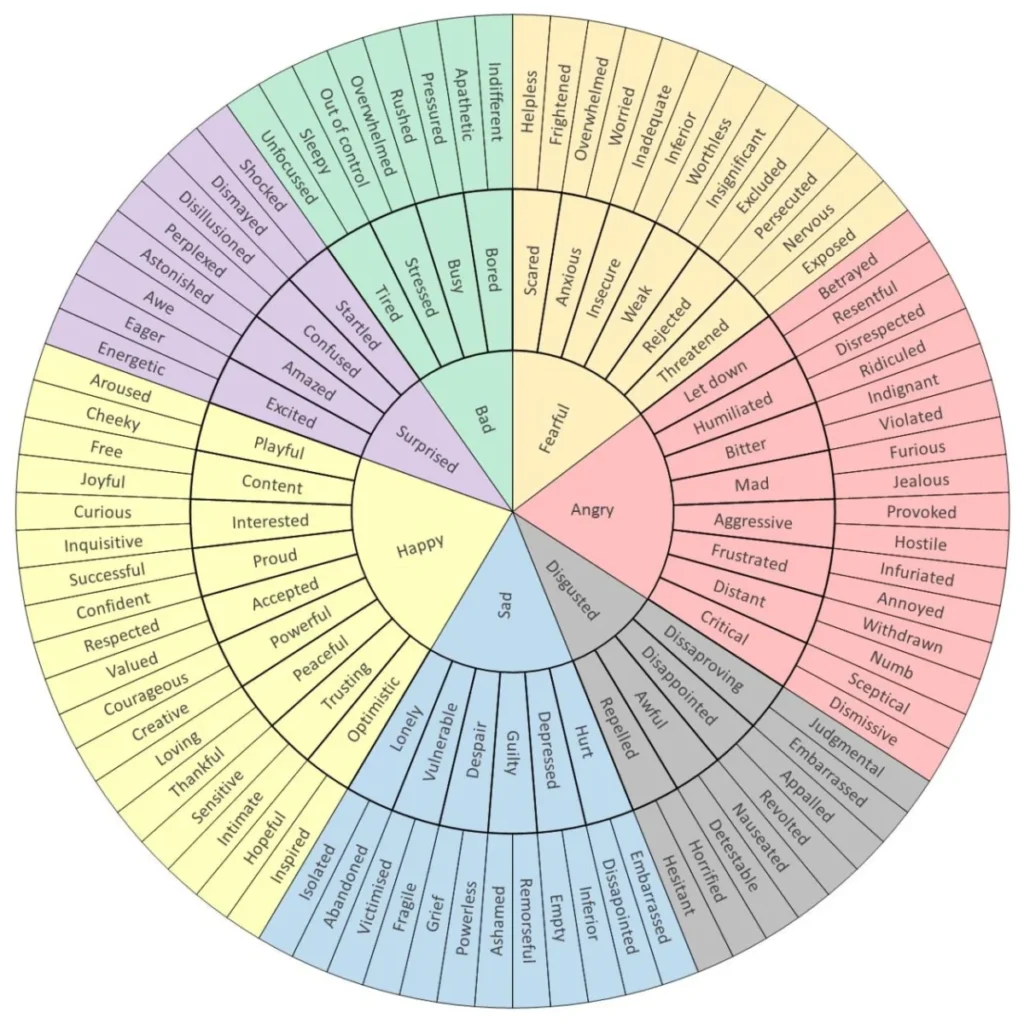
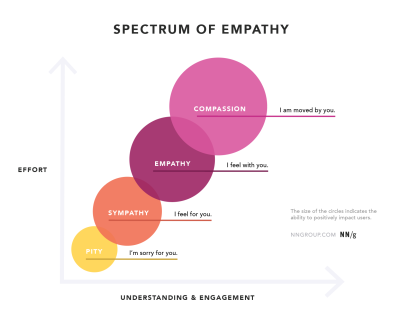
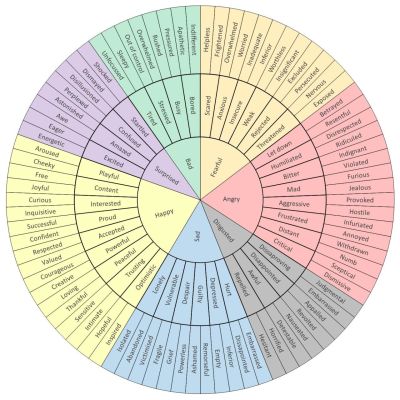
- Enrichment: Uncovering thoughts and feelings requires more sophisticated qualitative methods. Techniques like diary studies, ethnographic interviews, and card sorting can reveal mental models. For emotions, indirect questioning, projective techniques, and the careful observation of non-verbal cues during user sessions become vital. The "Emotion Wheel," developed by Geoffrey Roberts, serves as a practical tool to help users articulate a broader spectrum of feelings beyond simple "good" or "bad," fostering more precise emotional mapping. This move from mere "sympathy" to "empathy" and even "compassion," as described by Sarah Gibbons of Nielsen Norman Group, signifies a deepening commitment to understanding the user’s emotional journey.
-
Level 3: What They Do: This is the realm of observable behavior – how users actually interact with a product, navigate an interface, or complete a task. It is the most objective layer, as it bypasses the biases inherent in self-reported data. Observing actions reveals real struggles, workarounds, and unconscious patterns that users might not articulate or even be aware of.
- Enrichment: Methods for capturing "what they do" include usability testing (both moderated and unmoderated), A/B testing, heatmaps, session recordings, eye-tracking, and analytics data. This data offers irrefutable evidence of user interaction patterns. The contrast between "what they say" and "what they do" often highlights critical design flaws. For instance, users might say they understand a complex feature, but observation might show them repeatedly clicking on the wrong elements or abandoning the task.
-
Level 4: Why They Do It: This is the deepest and most challenging level to uncover. It seeks to understand the fundamental motivations, goals, and underlying needs that drive user behavior. This "why" connects to broader life contexts, aspirations, and psychological drivers. It’s about identifying the true "jobs-to-be-done" (JTBD) for which users "hire" a product or service.
- Enrichment: Reaching this level often requires synthesis of data from the previous three levels, coupled with advanced qualitative techniques like contextual inquiry, long-term ethnographic studies, and deeply probing interviews that explore user histories and aspirations. It moves beyond individual task completion to understanding the user’s overall purpose and how the product fits into their broader life or work ecosystem. Understanding the "why" allows designers to create solutions that are not just usable, but profoundly meaningful and impactful.
Refining Research Practices: Observe and Diagnose, Don’t Just Validate
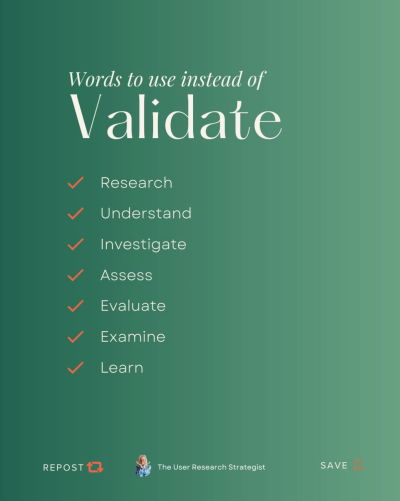
The journey through these four levels necessitates a fundamental shift in research mindset. Instead of approaching user research with a goal of "validation" – merely confirming existing assumptions or design choices – the focus must be on observation and diagnosis. This means entering research sessions with an open mind, seeking to understand existing behaviors without preconceived notions. The term "validation" itself can be problematic, often implying a search for data that supports a pre-determined outcome, rather than an unbiased quest for truth. As Nikki Anderson suggests, more appropriate terms include "research," "understand," "investigate," "assess," "evaluate," and "examine."
A key refinement in observational research, particularly usability testing, involves minimizing external influence. The traditional "speak-aloud" protocol, where users narrate their thought process while completing tasks, can be disruptive. The cognitive load of simultaneously performing a task and articulating thoughts can obscure genuine emotions and natural behavior. Instead, a more effective approach involves observing users silently as they interact, noting where they hesitate, retrace steps, hover without clicking, or exhibit non-verbal cues (e.g., furrowed brows, sighs, smiles of satisfaction). Questions are reserved for moments when a user explicitly indicates completion, gets stuck, or after the task is finished. At this point, "mirroring" – repeating what a user has said or asking the same question paraphrased – can encourage deeper explanations and reveal issues not initially articulated.
The Role of Emotion: A Signal, Not the Sole Driver
While behavioral observation is paramount, understanding user emotions remains a critical component of comprehensive UX research. Emotions serve as powerful signals, indicating how well a product is performing, how engaged or frustrated users are, and how they react to aesthetic and functional aspects. Capturing these nuanced sentiments helps in designing more delightful and less aggravating experiences.
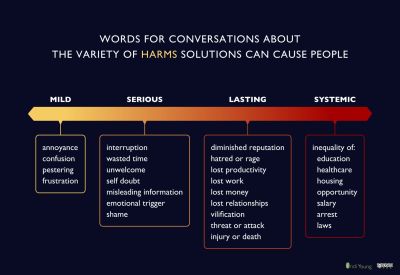
However, it’s equally important to avoid an over-reliance on emotional absorption. As Alin Buda provocatively argues, "Our work is about others – their problems, their pain, their mess. Our job is to make sense of it and then do something about it. Not to emote or perform but to act on and solve it. There is a flawed belief that to build great things, you first need to emotionally fully absorb someone else’s experience." This perspective cautions against letting empathy devolve into sentimentality, losing sight of the core objective: solving problems. Indeed, focusing too heavily on immediate emotional responses might distract from addressing systemic issues or potential harms, as illustrated by Indi Young’s framework for categorizing the varying severity and impact of solution-induced harms.
Ultimately, emotional responses are valuable data points, but they are signals to be analyzed in conjunction with observed behavior and underlying motivations. The goal is to move beyond simply acknowledging an emotion to understanding why that emotion arose and what practical steps can be taken to mitigate negative feelings or amplify positive ones, thereby improving the overall user journey.
Practical Strategies for Uncovering User Needs
Uncovering these deeper layers of user understanding does not necessarily require prohibitively expensive tools or complex methodologies. As David Travis highlights in his extensive overview, numerous practical strategies exist to gain profound insights into user needs beyond traditional focus groups or surveys. The core principle is to create environments where users’ authentic struggles can be exposed and then to ensure these struggles are made visible across the entire organization.
Effective initiatives include:
- Contextual Inquiries: Observing users in their natural environment while they perform tasks. This reveals invaluable insights into their workflow, environment, and tools they use.
- User Journey Mapping: Visually representing the entire user experience, including touchpoints, emotions, and pain points, across all interactions with a product or service.
- Shadowing: Spending time with users, observing their day-to-day activities to understand their broader context and needs, even those not directly related to the product.
- Usability Labs with Silent Observation: Setting up controlled environments where users perform tasks, while researchers observe their actions, clicks, hesitations, and non-verbal cues from behind a one-way mirror or via remote screen-sharing.
- A/B Testing and Multivariate Testing: Systematically testing different design variations to see which performs better in terms of user engagement, conversion rates, or task completion. This provides quantitative evidence of actual user preference.
- Analysis of Support Tickets and Feedback Channels: Mining existing customer support data, social media comments, and app store reviews for recurring themes, frustrations, and feature requests.
- Creating "User Walls" or "Empathy Rooms": Physical or virtual spaces within the company dedicated to displaying user research artifacts, such as user personas, journey maps, video snippets of user struggles, and key insights.
- Internal Communication Campaigns: Regularly sharing insights through short video clips of user sessions, monthly newsletters summarizing research findings, or "lunch and learn" sessions where research teams present their discoveries to other departments.
The objective of these strategies is to foster a company-wide understanding of the user’s reality. By making user pain points and triumphs tangible and visible to everyone – from marketing and sales to engineering and product management – organizations can cultivate a truly user-centric culture. This shared understanding can rally teams around common goals, ensuring that design and development decisions are rooted in genuine user needs, rather than internal assumptions or market trends alone.
The Broader Impact and Implications
Adopting a multi-layered approach to customer understanding carries significant implications for product success and organizational health:
- Improved Product-Market Fit: By truly understanding why users act, think, and feel the way they do, companies can design products that not only meet explicit needs but also address deeper, often unarticulated desires, leading to stronger product-market fit.
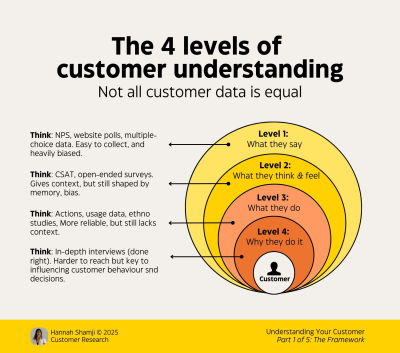
- Reduced Churn and Increased Loyalty: Products designed with a profound understanding of user motivations are more likely to be sticky, reducing customer churn and fostering long-term loyalty. This directly impacts revenue and brand reputation.
- Enhanced Innovation: Deep user insights can spark truly innovative solutions, moving beyond incremental improvements to addressing fundamental problems in novel ways. It allows companies to anticipate future needs rather than merely reacting to current demands.
- Efficient Resource Allocation: By focusing on genuine user needs, organizations can prioritize development efforts more effectively, avoiding the costly mistake of building features that users don’t want or need. This optimizes R&D budgets and accelerates time-to-market for impactful features.
- Ethical Design: A comprehensive understanding of users, including potential risks and harms, promotes more ethical and inclusive design practices. It helps designers consider the broader societal impact of their creations, moving beyond individual user satisfaction to collective well-being.
- Organizational Alignment: When all departments share a deep, evidence-based understanding of the customer, it fosters greater internal alignment, breaks down silos, and streamlines decision-making processes, leading to more cohesive product strategies.
In conclusion, to truly make an impact in the competitive digital landscape, organizations must move far beyond superficial user feedback. It is never enough to simply listen to surveys; instead, a commitment to observing actual customer behaviors, building authentic relationships, and relentlessly seeking to understand their underlying goals and motivations is paramount. This rigorous approach demands a shift from "validation" to genuine "research," focusing on what is unknown and what truly needs to be discovered. Without this profound, multi-layered understanding, all product development rests on a shaky foundation of hunches and assumptions – a foundation that is often proven to be both inaccurate and prohibitively expensive in the long run. Embracing frameworks like the Four Levels of Customer Understanding is not just a best practice; it is an essential strategy for creating truly successful and meaningful user experiences.