
The efficacy of usability testing, particularly within the sensitive realm of financial technology (FinTech), hinges on a critical, often overlooked detail: the authenticity of the login experience. A pervasive challenge observed in almost every usability session manifests at the login screen, where participants frequently pause, type, and then glance up, subtly seeking validation that they are "doing it right." This momentary hesitation is a telling indicator; users have already discerned that they are interacting with a simulated environment, not a live application. Consequently, every data point gathered beyond this point becomes inherently filtered through an awareness of artificiality, potentially skewing insights and undermining the very purpose of the testing.
The Foundational Imperative of Authenticity in Usability Research

Usability testing serves as a cornerstone of user-centered design, providing invaluable feedback that guides product development and refinement. However, the quality of this feedback is directly proportional to the realism of the testing environment. When prototypes fall short of mimicking real-world interactions, users tend to adapt their behavior, consciously or unconsciously, to the perceived limitations of the demonstration. This phenomenon, often likened to the Hawthorne effect, where individuals modify an aspect of their behavior in response to their awareness of being observed, compromises the naturalistic data sought by researchers.
In the context of general applications, this can lead to minor discrepancies. In FinTech, however, the implications are significantly sharper. Financial users are inherently conditioned to scrutinize details, to notice anomalies, and to demand precision. A balance that doesn’t quite add up, a field that accepts arbitrary input without validation, or a login screen that bypasses genuine authentication mechanisms immediately triggers a red flag. These users don’t merely disengage; they often interrupt the session to highlight the perceived flaw. The result is a body of findings that reflects user behavior in a demonstration scenario, rather than their authentic interaction with a live product, leading to potentially flawed design decisions and costly revisions down the line.
The Critical Junction: Establishing Trust at Login
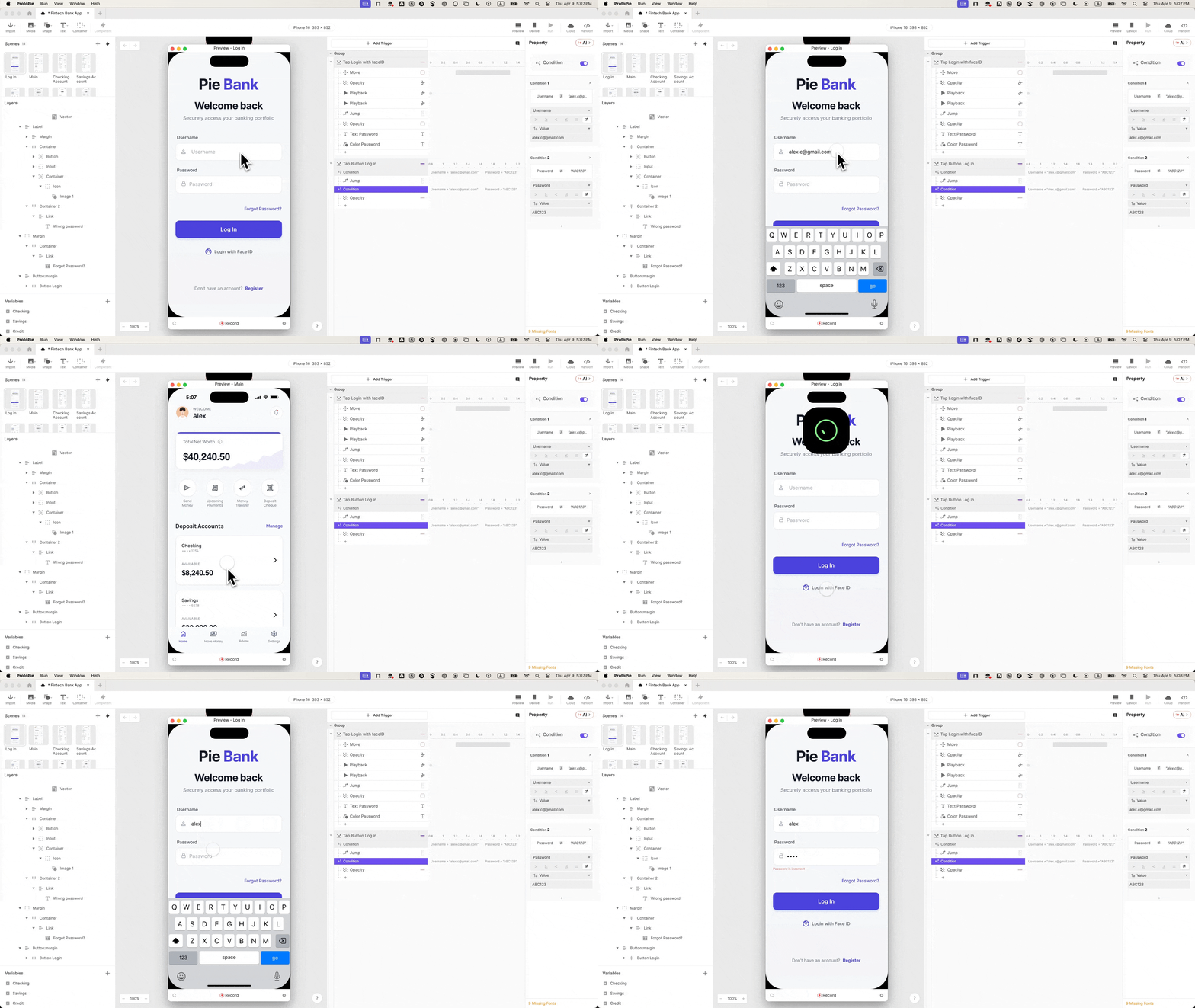
Industry experts and UX researchers increasingly emphasize that the moment participant trust is established is pivotal. In a banking application, this moment is unequivocally the login. It is the gateway through which users access their most sensitive information and manage their finances. A functional, realistic login is not merely a technical detail; it is a psychological handshake that communicates credibility and security, setting the tone for the entire interaction.
The conventional approach to prototyping often involves simulating login screens with static placeholders or simplified transitions, prioritizing speed over fidelity. While expedient, this approach proves detrimental to the integrity of usability data. By failing to validate credentials, present live error states, or replicate the nuanced animations of biometric authentication (such as Face ID), these prototypes inadvertently train users to expect a superficial experience. This disconnect leads to findings that are less about the actual usability of the financial product and more about how users navigate a series of pre-programmed screens.
Achieving High-Fidelity Login Without Extensive Coding
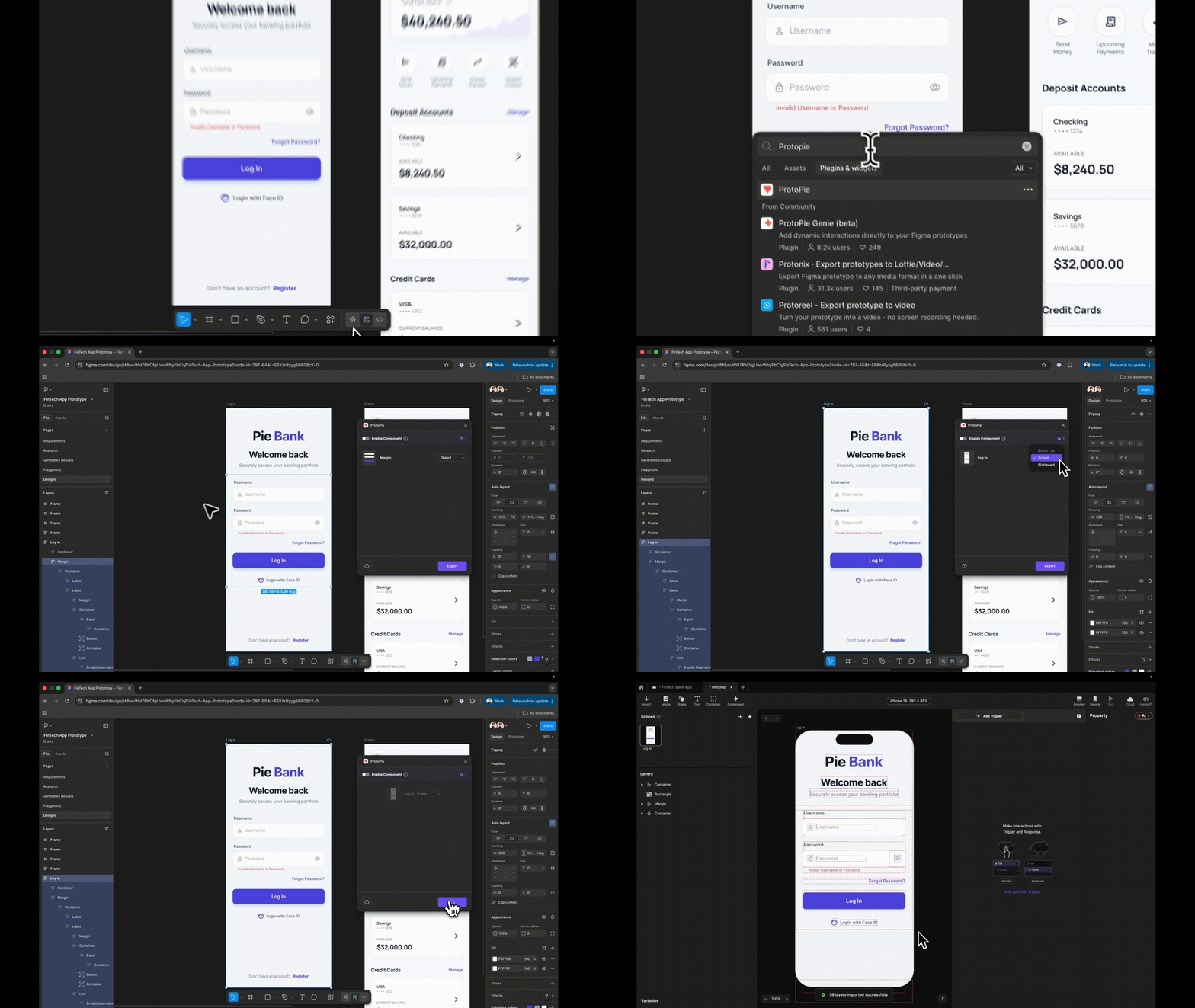
Fortunately, the solution to this challenge is often more accessible than widely perceived. Modern prototyping tools, such as ProtoPie, enable designers to construct highly realistic login flows without resorting to complex coding. This capability is critical for FinTech teams operating under tight deadlines and resource constraints, allowing them to focus on user experience rather than deep technical implementation during the prototyping phase.
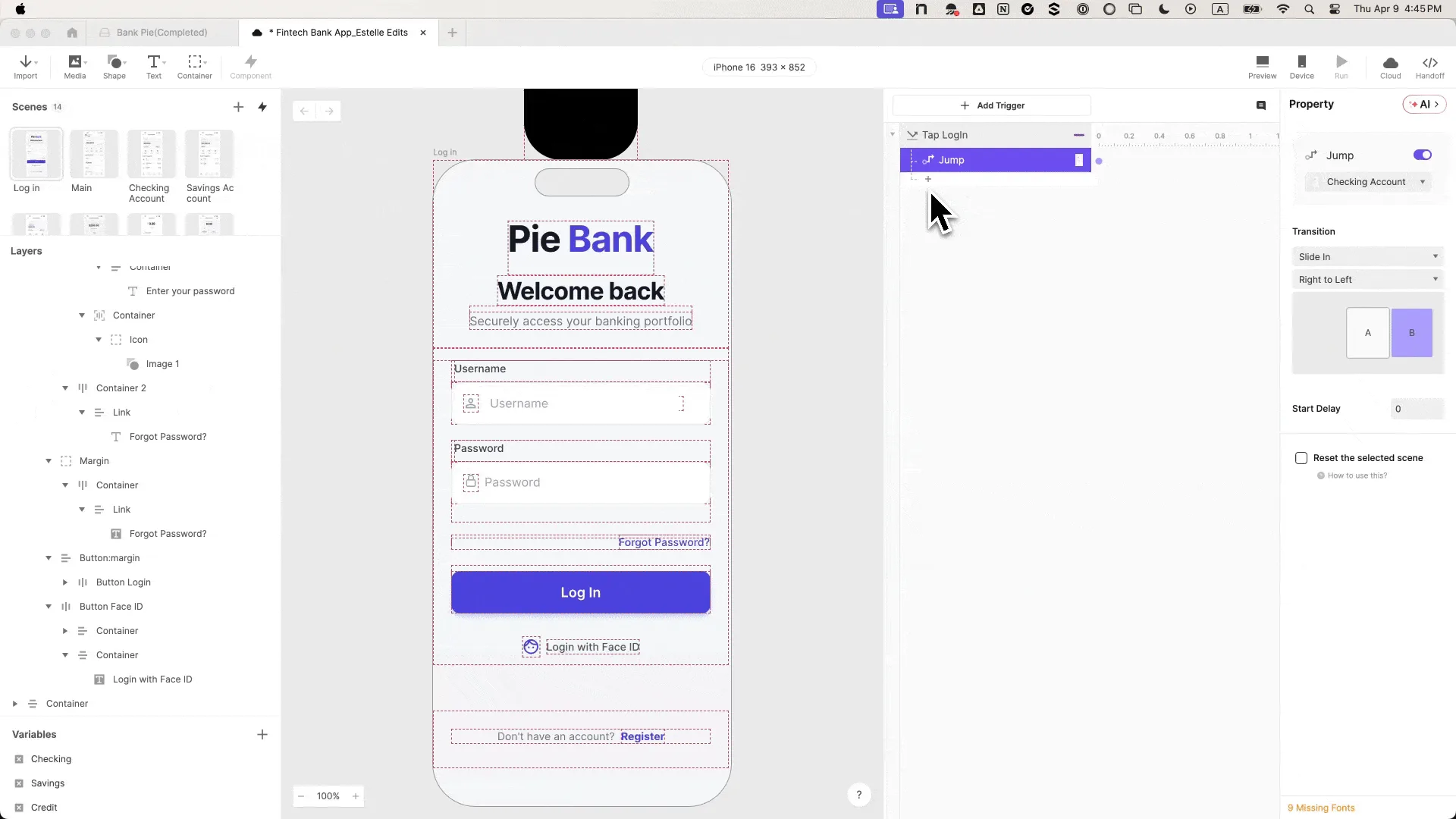
For instance, a prototype for a mobile banking application like "Pie Bank" can incorporate functional text inputs, a masked password field, credential validation, and a live error state. Crucially, it can also integrate biometric authentication animations, such as a Face ID sequence, timed to be indistinguishable from a native iOS experience. This level of detail, achieved through intuitive visual programming, transforms a static mockup into a dynamic, believable interaction.
A Step-by-Step Overview of Building Authenticity

The process typically begins with importing design assets from platforms like Figma. The key is to import designs as "scenes" rather than flattened images, preserving the layer hierarchy. This allows individual elements to be targeted and manipulated within the prototyping environment. Meaningful layer renaming ("Input Username" instead of "Rectangle 14") is a small but vital step that streamlines the subsequent logic building.
Next, static design elements for input fields are swapped out for native "Input" layers, which accept real keyboard entry. This immediately elevates the prototype from a visual representation to an interactive tool. The ability to type actual text, rather than merely tapping a placeholder, is a fundamental shift towards realism. For password fields, a single property change can mask the input, offering immediate visual feedback of security without requiring custom logic.
Before wiring navigation, it is essential to build the destination scene (e.g., the banking dashboard). This preempts common sequencing errors. The login button is then wired to trigger a "Jump" response to this dashboard. However, at this stage, the prototype remains permeable, allowing any input to grant access.
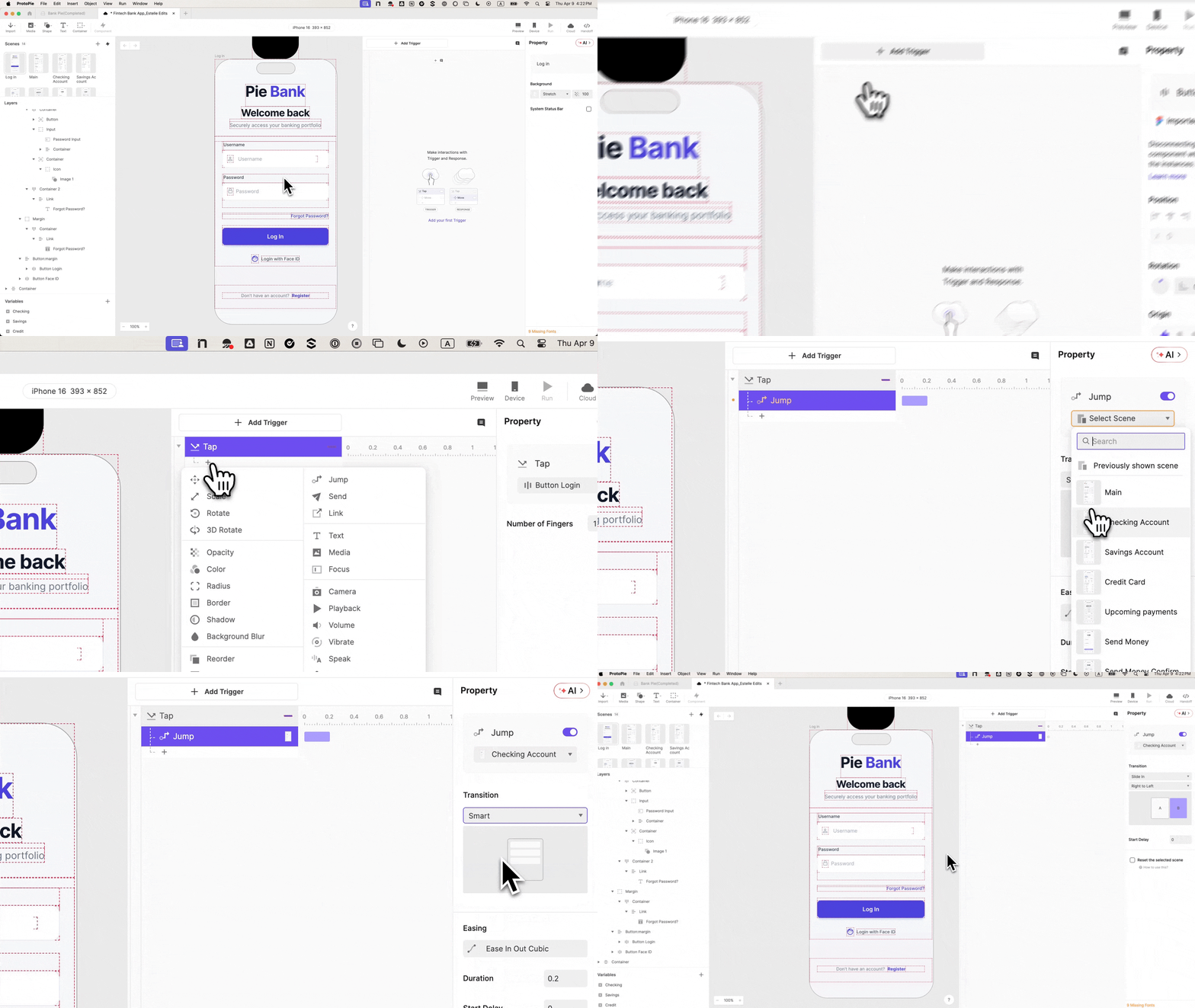
The crucial steps to introduce validation involve:
- Variables: Creating text variables (e.g.,
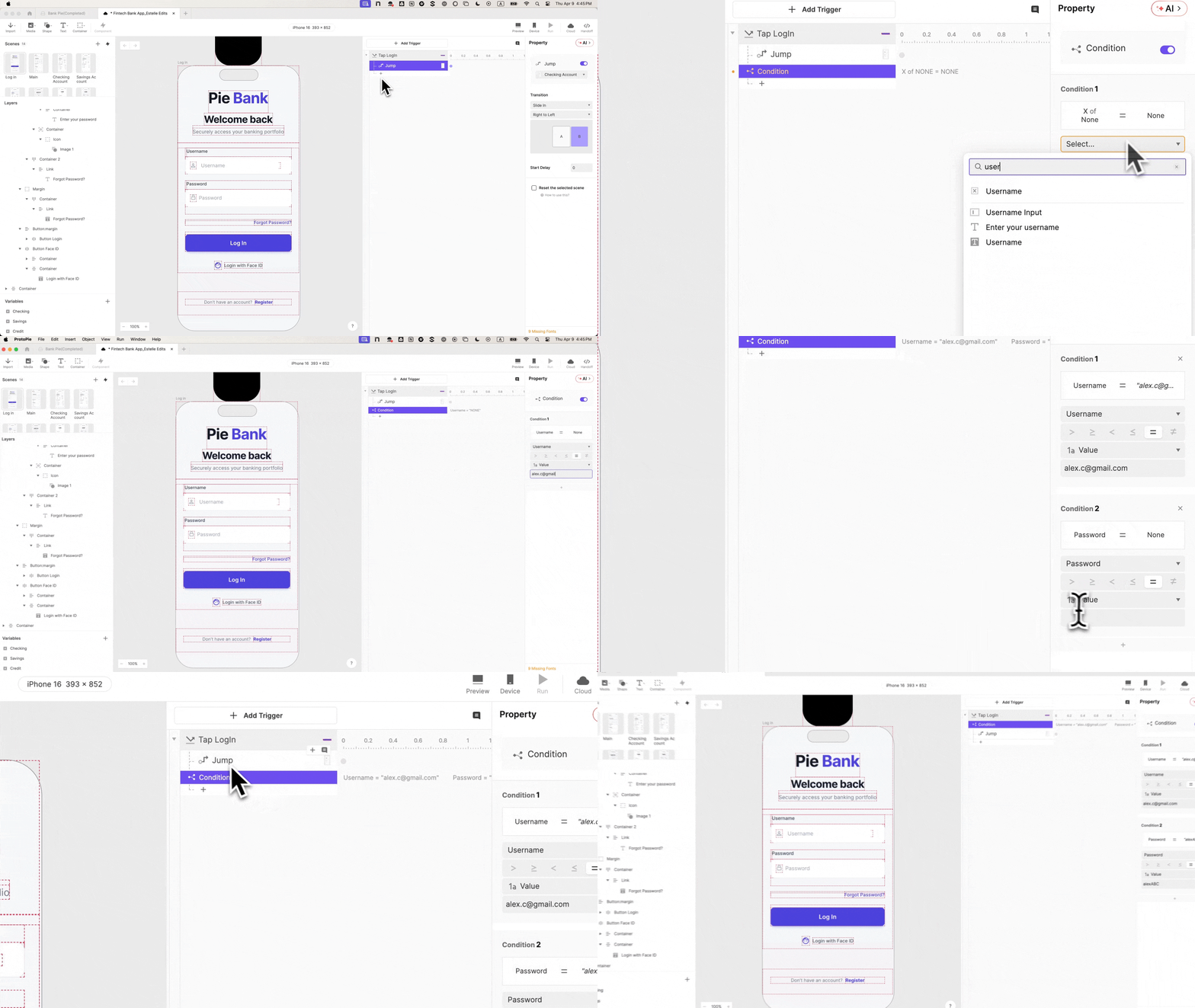
username,password) and binding them to the input layers. This allows the prototype to "remember" what the user types. Debugging overlays can confirm real-time data binding. - Conditions: Adding conditional logic to the login button’s "Tap" trigger. This condition specifies that only a predefined, valid combination of username and password will successfully navigate to the dashboard. Incorrect credentials, empty fields, or invalid formats are blocked, replicating real-world security protocols.
Finally, the error state, an interaction frequently omitted in prototypes, is built. An error message layer is initially hidden (opacity 0) and then revealed (opacity 100) if the login condition is not met. This two-outcome scenario – success or a clear error – provides genuine research touchpoints.
The inclusion of biometric authentication, such as a Face ID animation, adds a layer of sophistication that profoundly impacts user perception. By integrating a Lottie animation file, positioning it off-screen, and then orchestrating a sequence of "Move," "Seek," "Play," and "Jump" responses with carefully staggered delays, the interaction becomes virtually indistinguishable from a native app. For instance, a 0.5-second delay before the animation plays and a 1-second delay before the scene jumps ensures a fluid, natural user experience. The ability to reset scenes upon navigation back prevents the animation from appearing stuck, maintaining fidelity across multiple interactions.

The Transformative Impact on Usability Insights and Product Development
A login experience built with this level of fidelity fundamentally alters the nature of usability testing. When authentication actually works, the error state transforms into a genuine research touchpoint. Researchers can observe whether users understand the error message, if they attempt to retry with different credentials, or if they instinctively reach for alternative authentication methods like Face ID. These are critical behavioral insights that a faked login cannot provide. The data collected becomes a more accurate reflection of user expectations, pain points, and preferences, leading to more informed design iterations.
Beyond testing, the implications extend to the broader product development lifecycle:
- Stakeholder Reviews: In presentations to stakeholders, a realistic login flow speaks for itself, conveying a tangible sense of the product’s quality and functionality. This fosters greater confidence and buy-in, streamlining decision-making processes.
- Engineering Handoff: For engineering teams, the interaction panel of a high-fidelity prototype serves as living documentation. The conditional logic, variable bindings, and precise timing articulated within the prototype clearly communicate the intended behavior. This reduces ambiguity, minimizes misinterpretations, and accelerates the development process by providing engineers with a precise blueprint of the desired user experience.
- Regulatory Compliance: In the heavily regulated FinTech sector, demonstrating robust security and user experience is paramount. Prototypes that accurately simulate authentication processes can aid in discussions regarding compliance requirements and user safety protocols, providing a tangible representation of how the product addresses these critical areas.
The Strategic Investment in Login Fidelity
FinTech teams increasingly recognize that investing in login fidelity, even when the login itself is not the primary feature under test, is a strategic imperative. It is the initial interaction where participant trust is either established or eroded. Get it right, and every subsequent interaction within the prototype yields better, more reliable signal, leading to more robust products, reduced development costs associated with rework, and ultimately, higher user satisfaction and adoption rates.
The era of superficial prototypes yielding superficial insights is gradually giving way to a demand for immersive, realistic simulations. As digital financial services become increasingly intertwined with daily life, the expectation for seamless, secure, and authentic user experiences grows. High-fidelity prototyping, starting with the critical gateway of the login screen, is not merely a technical refinement; it is a foundational practice that underpins the success of modern FinTech innovation. This approach ensures that the insights gleaned from user research are genuinely reflective of real-world interactions, driving the development of products that truly meet user needs and build lasting trust.