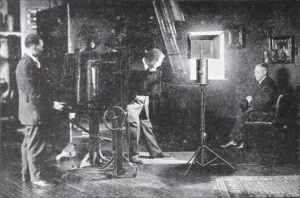
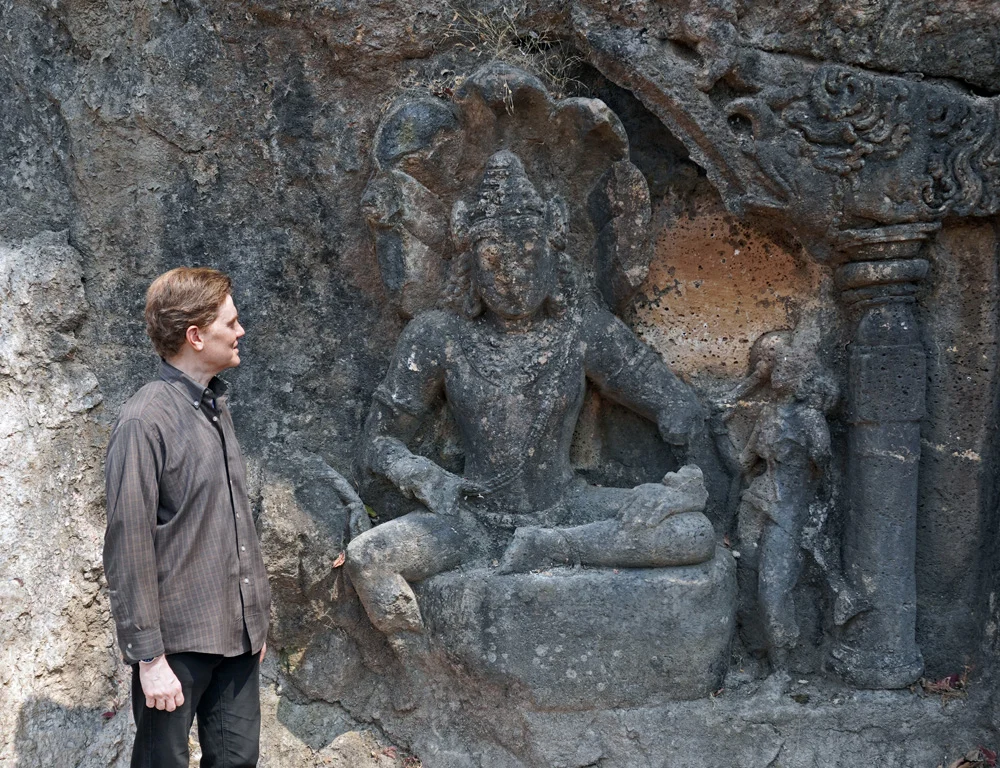

Dr. David S. Efurd, a two-time Fulbright recipient and the current chair of art and art history at Wofford College, has concluded a monumental multi-decade project documenting the ancient Buddhist cave sites of western India. Through an exhaustive process involving more than 80 site visits and the capture of over 10,000 high-resolution photographs, Dr. Efurd has created one of the most comprehensive digital archives of Indian rock-cut architecture currently available to the public. This archive, now hosted via Artstor and JSTOR, provides an unprecedented window into the monastic lives, architectural ingenuity, and religious transitions that occurred within the volcanic basalt cliffs of the Western Ghats between the second century BCE and the ninth century CE.
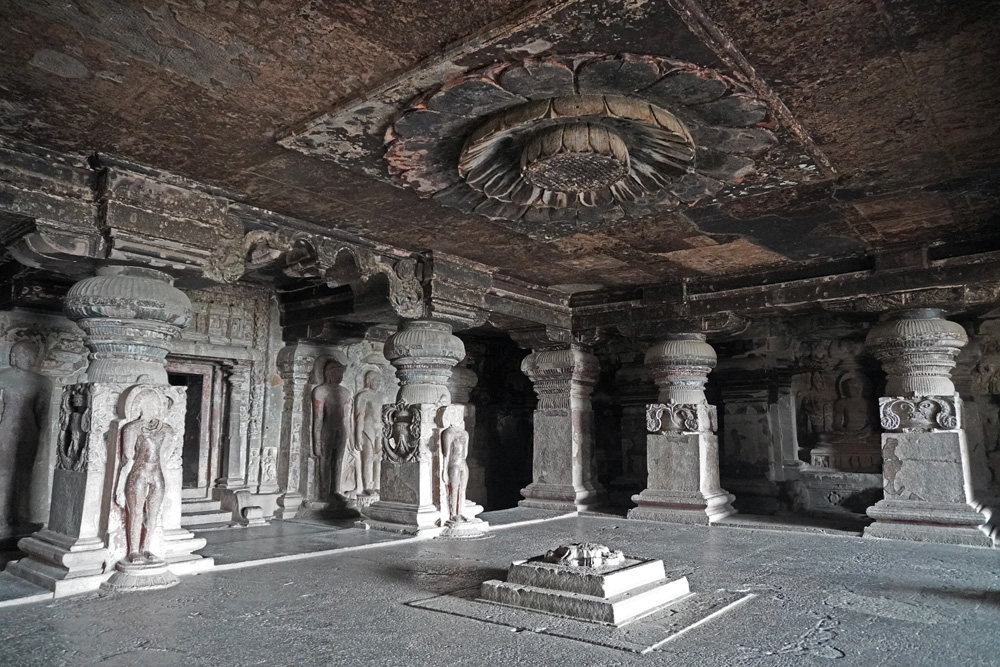
The scope of the project extends beyond mere photography; it represents a meticulous academic effort to preserve the visual record of sites that are often subject to environmental degradation and modern repurposing. These caves, carved directly into the living rock, served as monasteries (viharas), prayer halls (chaityas), and sacred shrines. They stand as a testament to a period of Indian history where religious fervor met sophisticated engineering, creating durable sanctuaries that have survived for over two millennia.
A Legacy of Slow Looking: The Methodology of Documentation
Central to Dr. Efurd’s work is the practice of "slow looking," a contemplative and deliberate approach to art history that prioritizes extended observation over rapid data collection. While the average tourist might spend less than an hour traversing the world-renowned Ajanta or Ellora complexes, Dr. Efurd’s methodology involves spending days, or even weeks, within a single cave. This commitment allows for the observation of how natural light interacts with the interior spaces at different times of the day and year—a factor that the original builders clearly integrated into their designs.

This practice has led to significant insights into the spatial characteristics of the caves. By utilizing handheld cameras and detailed notebooks, Dr. Efurd has documented nuances that are often missed by traditional architectural surveys. His work captures the "sculpted" nature of these spaces, noting that because they were carved out of solid rock rather than built up with bricks or stone blocks, the builders were not strictly bound by the straight lines and plumb levels of traditional construction. Instead, they utilized a system of proportions and mathematical relationships that resonated with the spiritual and aesthetic requirements of the time.
Historical Context: The Emergence of the Rock-Cut Tradition
The tradition of rock-cut architecture in India began in earnest during the Mauryan period but reached its zenith in the western regions of the subcontinent. The geography of the Western Ghats, characterized by massive outcroppings of volcanic basalt, provided the ideal medium for these excavations. Basalt is remarkably durable and resistant to the elements, making it the perfect material for creating permanent structures that could withstand the torrential rains of the Indian monsoon.

The chronology of these sites reflects the evolution of Buddhist thought and practice. The earliest caves, such as those at Pitalkhora and Kondhane, date back to the second or first century BCE. These early "Hinayana" or Theravada-influenced sites typically lack anthropomorphic representations of the Buddha, instead utilizing symbols like the stupa (a reliquary mound), the wheel of Dharma, or the Bodhi tree to represent the enlightened presence.
By the fourth and fifth centuries CE, during the Gupta and Vakataka periods, the artistic program shifted significantly. This era saw the rise of Mahayana Buddhism, which introduced elaborate carvings of the Buddha in human form, flanked by Bodhisattvas and other celestial beings. Dr. Efurd’s documentation captures this transition in vivid detail, showing how later generations of monks often "retrofitted" earlier, simpler caves with new paintings and sculptures to reflect evolving theological perspectives.

Architectural and Astronomical Sophistication
One of the most striking revelations of Dr. Efurd’s research, building upon the foundations laid by scholars like Walter Spink, is the sophisticated relationship between the caves and celestial events. At the Ajanta caves, it has been established that specific chaitya halls were aligned with the winter solstice. On this day, the sun’s rays enter through the massive horseshoe-shaped "caitya" window on the facade, traveling down the nave to illuminate the central Buddha figure or stupa at the back of the hall.
Similar phenomena have been documented at Ellora, where the "Kirnotsav" or festival of the sun’s rays is still celebrated. Twice a year, a narrow band of sunlight filters through a small aperture to strike the face of the Buddha in the central hall. These features suggest that the ancient architects possessed an advanced understanding of astronomy and geometry, integrating the rhythm of the cosmos into the very heart of the monastic experience.

At the Karle caves, home to one of the largest and best-preserved chaitya halls in India, Dr. Efurd has focused on the mathematical proportions of the structure. His measurements suggest that the height, width, and spacing of the colossal pillars—topped with intricate carvings of amorous couples (mithuna) and elephants—follow a deliberate numerical logic. This precision suggests that the caves were not merely shelters but were intended to be "liturgies in stone," where the physical proportions of the space mirrored the harmony of the Buddhist teachings.
Insights into Daily Monastic Life
While the grand prayer halls often receive the most attention, Dr. Efurd’s archive places equal importance on the modest living quarters of the monks. These "viharas" provide a rare glimpse into the daily routines of ancient religious communities. Many caves feature rock-cut beds, small niches for oil lamps, and benches for meditation.

The presence of sophisticated water management systems, including cisterns and tanks cut deep into the rock, illustrates how the monks survived the long dry seasons following the monsoon. These sites were strategically located along major trade routes, ensuring a symbiotic relationship between the monastic and lay communities. The monks provided spiritual guidance and "merit" to traveling merchants and local villagers, who in turn provided the physical sustenance (alms) required to maintain the monasteries. This proximity to trade routes also explains the cosmopolitan nature of the cave art, which often features motifs and styles influenced by distant regions.
The Transition to Living Spiritual Spaces
As Buddhism began to decline in India around the 7th and 8th centuries CE, many of these sites underwent a transformation. Some remote locations, like Ajanta, were abandoned and swallowed by the jungle, only to be "rediscovered" by British officers in the 19th century. However, more accessible sites were often appropriated by Hindu or Jain communities.

Dr. Efurd’s work documents this "living" history, where Buddhist halls were rededicated to Brahmanical deities. At sites like Karle, Hindu temples were built directly in front of the ancient Buddhist excavations, and images of the Buddha were sometimes reinterpreted as avatars of Hindu gods. Today, many of these caves remain active places of worship. Dr. Efurd notes that while the Archaeological Survey of India (ASI) manages them as historical monuments, they must also accommodate the needs of modern pilgrims. This balance between preservation and religious practice is a defining characteristic of Indian heritage management.
The Future of Discovery and Preservation
The archive created by Dr. Efurd serves as a critical baseline for future conservation efforts. As climate change leads to more erratic monsoon patterns, the soft stone and ancient pigments of the caves face increasing threats from moisture and erosion. Digital preservation ensures that even if the physical sites deteriorate, the visual and architectural data remains available for global scholarship.

Moreover, the potential for new discoveries remains high. Dr. Efurd highlights the recent uncovering of a "nagaraja" (serpent king) sculpture at the Ghatotkacha caves, which had been buried under debris for over half a millennium. Many sites remain partially filled with silt or hidden by overgrowth, suggesting that the full map of India’s rock-cut heritage is still being drawn.
Broader Impact and Implications
The release of this 10,000-image archive on Artstor has significant implications for the fields of art history, archaeology, and South Asian studies. It democratizes access to sites that are geographically remote and often difficult to navigate. For educators, the archive provides high-quality primary source material to teach the complexities of ancient Indian society, religious pluralism, and artistic evolution.

Dr. Efurd’s work challenges the traditional Western academic bias that once viewed these caves as "static" or "primitive" compared to European cathedrals. By highlighting the mathematical rigor, astronomical alignment, and social integration of the monasteries, his research repositioned the Western Ghats as a center of global architectural innovation.
In conclusion, Dr. David Efurd’s twenty-five-year journey through the caves of India has resulted in more than just a collection of photographs. It is a profound act of cultural recovery. By practicing "slow looking" and documenting the transition from silent ruins to living shrines, Efurd has ensured that the voices of the ancient builders and the monks who once inhabited these volcanic cliffs continue to resonate in the digital age. The archive stands as a bridge between the second century BCE and the present, offering a permanent record of humanity’s enduring quest for the sacred within the heart of the earth.