
The rapid evolution of generative artificial intelligence has fundamentally altered the landscape of the creative advertising sector, prompting a shift in how brands approach content production and audience engagement. According to a comprehensive new report titled "The New Creative Advantage," produced through a strategic partnership between marketing strategy group WARC and the short-form video platform TikTok, the industry is moving away from a "volume-first" mentality toward one defined by "cultural intelligence." The study, which surveyed 400 marketing professionals across the United Kingdom, the United States, Australia, and Brazil, highlights a critical tension: while AI tools are drastically increasing the speed and scale of content production, they often lack the nuanced understanding required to resonate with modern, community-driven digital audiences.
The Shift from Content Volume to Cultural Relevance
For much of the last decade, digital marketing strategies were predicated on the idea that higher volumes of content led to higher visibility. However, the WARC and TikTok report suggests that this paradigm is shifting. As AI tools lower the barrier to entry for content creation, the digital space has become saturated with automated assets. Consequently, the value of "relevance" has surpassed the value of "volume." The report posits that the brands currently leading the market are not necessarily those producing the most content, but those that can most effectively synthesize community insights into their creative outputs.
Andy Yang, TikTok’s Global Head of Creative and Brand Ads, emphasized this transition within the report, noting that the speed of learning is now a primary competitive advantage. Yang introduced the concept of "cultural intelligence," defining it as the ability for a brand to read what a community values in real-time as those values are being formed. This allows brands to respond with content that feels "native" to the platform and the conversation, rather than "inserted" or disruptive. This distinction is vital in an era where consumers are increasingly adept at filtering out generic, AI-generated advertisements that lack a human or community-centric touch.
Analyzing the Impact of AI on Marketing Workflows
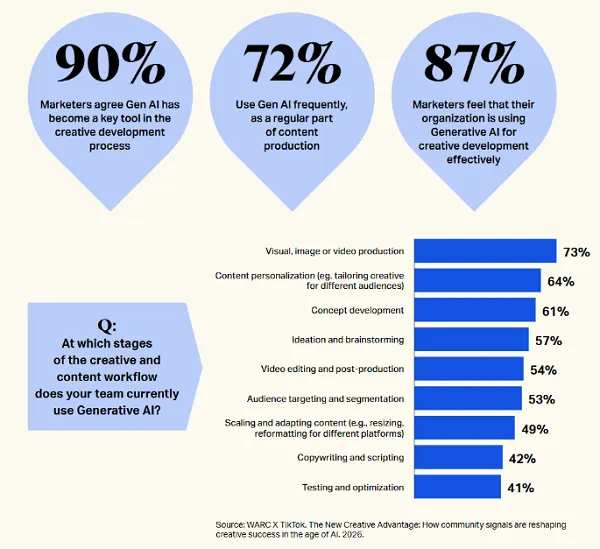
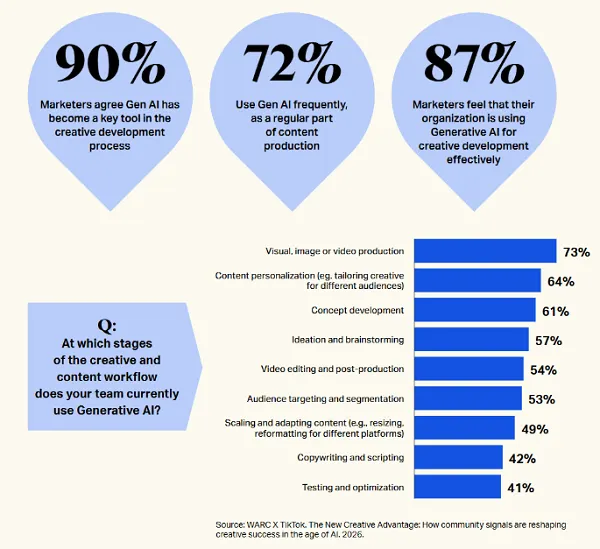
The integration of generative AI into marketing workflows has been swift. The study found that a majority of marketers now consider AI a fundamental component of the creative process. The primary utility of these tools lies in their ability to facilitate faster workflows and expand the sheer number of assets a brand can produce. Marketers reported that AI is particularly effective for labor-intensive tasks such as resizing assets for different platforms, basic image generation, and initial brainstorming phases.
However, the report identifies a clear ceiling for AI’s current capabilities. When it comes to high-level creative tasks such as copywriting, scripting, and long-term brand storytelling, the perceived value of AI tools drops significantly. This suggests that while AI can support the creative process by handling repetitive tasks and providing a "starting point" for ideas, it cannot yet replicate the "spark" of original human creativity. The consensus among the 400 surveyed professionals is that human intervention remains a non-negotiable requirement for ensuring that content is not only coherent but also emotionally resonant and original.
The Weaknesses of AI and the Need for "Human-in-the-Loop"
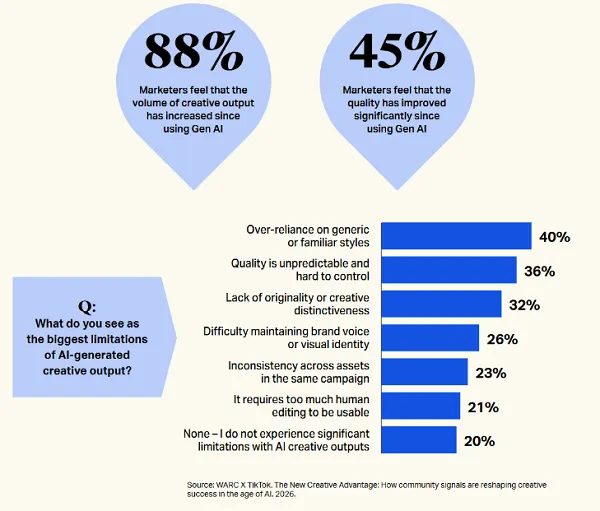
One of the most significant concerns highlighted in the WARC report is the lack of creative originality in AI-generated outputs. Because AI models are trained on existing data, they tend to produce "average" results—content that reflects the most common patterns in their training sets rather than breaking new ground. For marketers, this poses a risk of brand homogenization, where every company’s advertisements begin to look and sound the same.
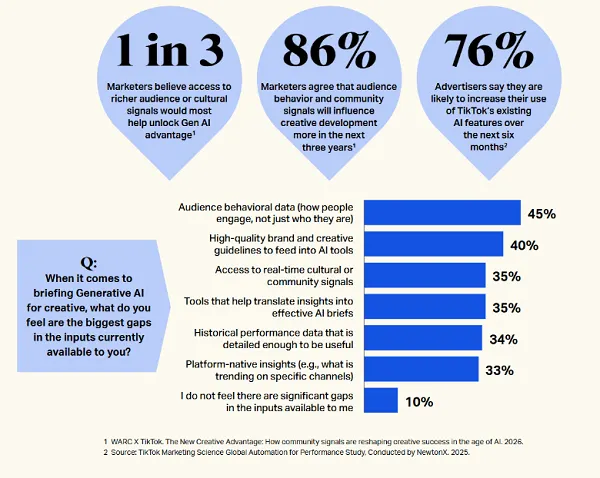
To address these gaps, the report suggests that marketers are increasingly looking for ways to feed "cultural insights" into AI prompts. By providing AI with specific, real-time data about community trends, slang, and values, marketers can improve the relevance of the output. This "human-in-the-loop" approach ensures that AI serves as a sophisticated tool for execution rather than a replacement for strategic thinking. The study indicates that the most successful marketing teams are those that use AI to interpret signals from the community and then use those interpretations to drive more informed, human-led creative choices.
TikTok as a Barometer for Community Intelligence
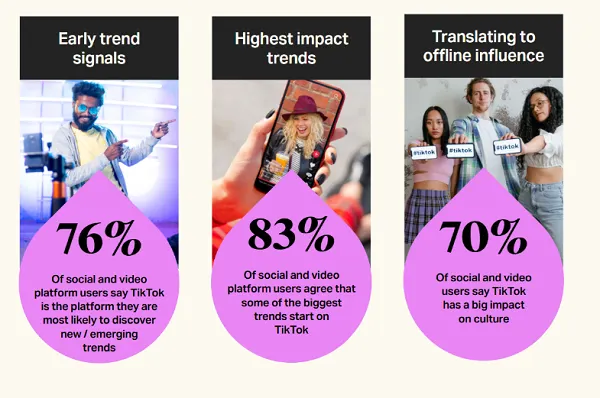
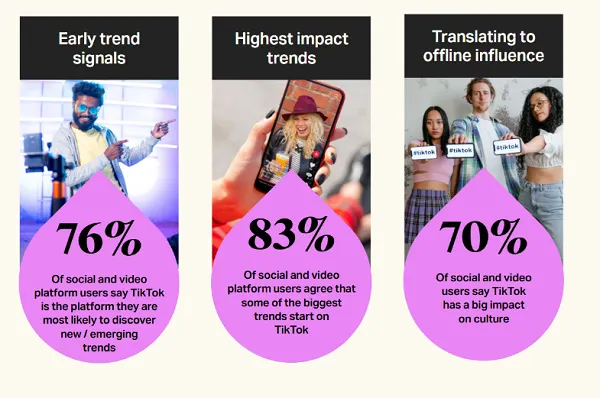
The report identifies TikTok as a primary source of the "community intelligence" needed to fuel effective AI outputs. Because the platform operates on an interest-based algorithm rather than a social graph, it serves as a real-time laboratory for cultural trends. The study suggests that by tapping into what is gaining traction on TikTok, marketers can gather the necessary context to refine their creative briefs.
The framework proposed by WARC and TikTok involves a cyclical process:
- Listen: Use platform signals to understand what communities are currently valuing.
- Analyze: Utilize AI tools to interpret these signals at scale.
- Create: Develop creative briefs that incorporate these native cultural insights.
- Execute: Use AI to scale the production of assets while maintaining a human-led creative direction.
By aligning creative approaches with target audiences in this manner, brands can move beyond simple "interruption" marketing and instead spark genuine conversations. This alignment is what allows content to feel authentic, a quality that the report identifies as the "new creative advantage."
Regional Variations and Global Trends
The study’s inclusion of marketers from the U.S., U.K., Australia, and Brazil provides a global perspective on these technological shifts. While the move toward AI integration is a universal trend, the report notes subtle differences in how these markets prioritize cultural intelligence. In Brazil, for instance, there is a historically high emphasis on creative storytelling and emotional connection, leading to a more cautious integration of AI in final creative outputs compared to the more efficiency-driven approaches often seen in the U.S. and U.K.
Despite these regional nuances, the overarching timeline remains consistent across the globe. The year 2023 was characterized by the "hype" and initial experimentation with generative AI. 2024 has become the year of "integration," where agencies and brands are formalizing their AI policies and looking for ways to measure the actual ROI of these tools. Looking toward 2025 and beyond, the report predicts a move toward "sophistication," where the focus will shift from how to use AI to how to differentiate one’s brand in an AI-saturated environment.
Broader Implications for the Advertising Industry
The findings of the WARC and TikTok report have significant implications for the future of the advertising industry. Firstly, the role of the "creative brief" is evolving. Briefs are no longer static documents but are becoming living entities that are updated based on real-time data signals. This requires a new set of skills for account managers and strategists, who must now be adept at "prompt engineering" and data interpretation as much as they are at traditional brand management.
Secondly, the report underscores the importance of platform-specific strategies. The era of the "one-size-fits-all" television commercial being cut down for social media is largely over. To succeed, content must be built from the ground up using the language and aesthetic of the specific community it is intended for. AI facilitates this by allowing for mass customization, but only if the initial "cultural seed" is accurate.
Finally, the report addresses the ethical and professional concerns surrounding AI. While there is a persistent fear of job displacement, the data suggests that AI is currently acting as a "force multiplier" for creative talent rather than a replacement. By automating the mundane, AI allows creative professionals to spend more time on high-level strategy and the "cultural reading" that the report identifies as the key to modern success.
Conclusion: The Synergy of Tech and Human Insight
The "New Creative Advantage" report serves as a roadmap for brands navigating the complexities of the AI era. The core takeaway is clear: technology alone is not a strategy. While AI provides unprecedented speed and efficiency, it requires the "fuel" of community intelligence and the "steering" of human creativity to be effective.
As platforms like TikTok continue to shape global culture, the ability of a brand to listen, learn, and respond in real-time will define its success. The integration of AI into this process is inevitable and beneficial, provided it is used to enhance—rather than replace—the connection between a brand and its community. In the words of the report, the goal is to create content that feels native, sparks conversation, and ultimately drives value through relevance rather than mere repetition. For the modern marketer, the new creative advantage lies at the intersection of algorithmic power and human empathy.