

In the dynamic landscape of search engine optimization, merely increasing the volume of published pages no longer guarantees enhanced topical authority. For many local and location-agnostic SEO initiatives, the pivotal challenge lies in judiciously identifying which search queries warrant their own dedicated web pages. A precise execution of this decision-making process can profoundly bolster content relevance, mitigate redundancy, and significantly elevate overall search performance.

The "Query Deserves a Page" Framework: A Foundational Approach
At the heart of modern SEO, particularly for local or broader topical projects, is the "Query Deserves a Page" (QDP) framework. This concept, inspired by Google’s earlier "Query Deserves Freshness" (QDF) principle introduced by former Google engineer Amit Singhal, provides a strategic lens through which content creators and SEOs can evaluate the necessity of creating new web pages. Fundamentally, QDP posits that some queries possess enough unique intent, search demand, or entity prominence to justify a dedicated page, while others are better served by integration within existing content, perhaps as a heading, paragraph, list, table, or interactive element.

The framework is predicated on two core approaches to building topical authority:

- Processing all attributes of an entity: For a central topic like "rehab," this might involve creating content around various addiction types (e.g., "cocaine addiction rehab," "alcohol addiction treatment") and their relevant attributes (e.g., "luxury rehab," "affordable rehab").
- Processing all variations of a query template: Using a template such as "Can X cause addiction?", an SEO would systematically address all relevant variations (e.g., "Can opioids cause addiction?", "Can gambling cause addiction?").
In both scenarios, the underlying metric is QDP. The critical decision is to discern when a query demands a distinct URL, as every superfluous page inflates Google’s "cost of retrieval" – the computational effort required to crawl, index, and rank content. Topical authority, in this context, can be conceptualized as "historical data multiplied by topical coverage," divided by "cost of retrieval," and further "interpreted with visual semantics."

Google’s Algorithmic Understanding of Content and Queries
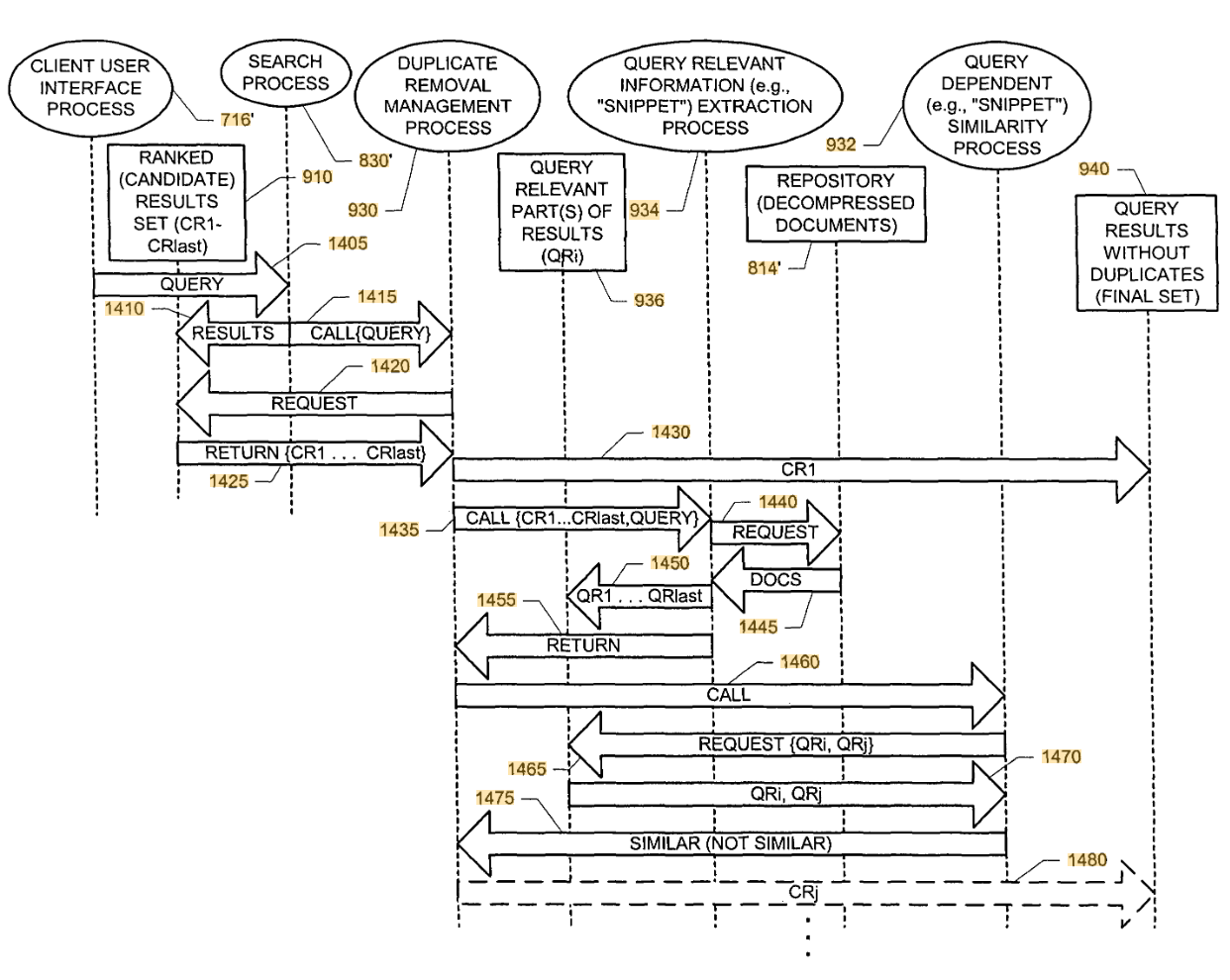
Google’s sophisticated ranking algorithms, powered by machine learning, continuously evaluate web documents for their relevance and uniqueness in response to user queries. Patents such as "Detecting Query-Specific Duplicate Documents" (US6658423B1) illuminate how Google perceives content. A document might be considered an "exact duplicate" or a "near-duplicate" depending on the specific query, rather than simply its raw textual similarity. While a degree of overlap is beneficial for interlinking and establishing semantic relationships (e.g., through anchor text), exceeding a certain threshold can lead to content cannibalization and dilute ranking signals.
This complex understanding is further refined by how Google processes queries and constructs its massive index. As Google engineers like Gary Illyes have explained, the search giant employs tiered and sharded indexing architectures, meaning not all content is treated equally or processed with the same intensity. Expensive algorithms, such as RankBrain, are reserved for websites that demonstrate sufficient quality and user satisfaction. This underscores why SEOs must align their content creation with Google’s indexing logic: if Google decides to create a new index for a query, then an SEO should consider creating a new page for it. Misinterpreting this can lead to "micro-cannibalization," where multiple pages compete for the same query, weakening each other’s potential.

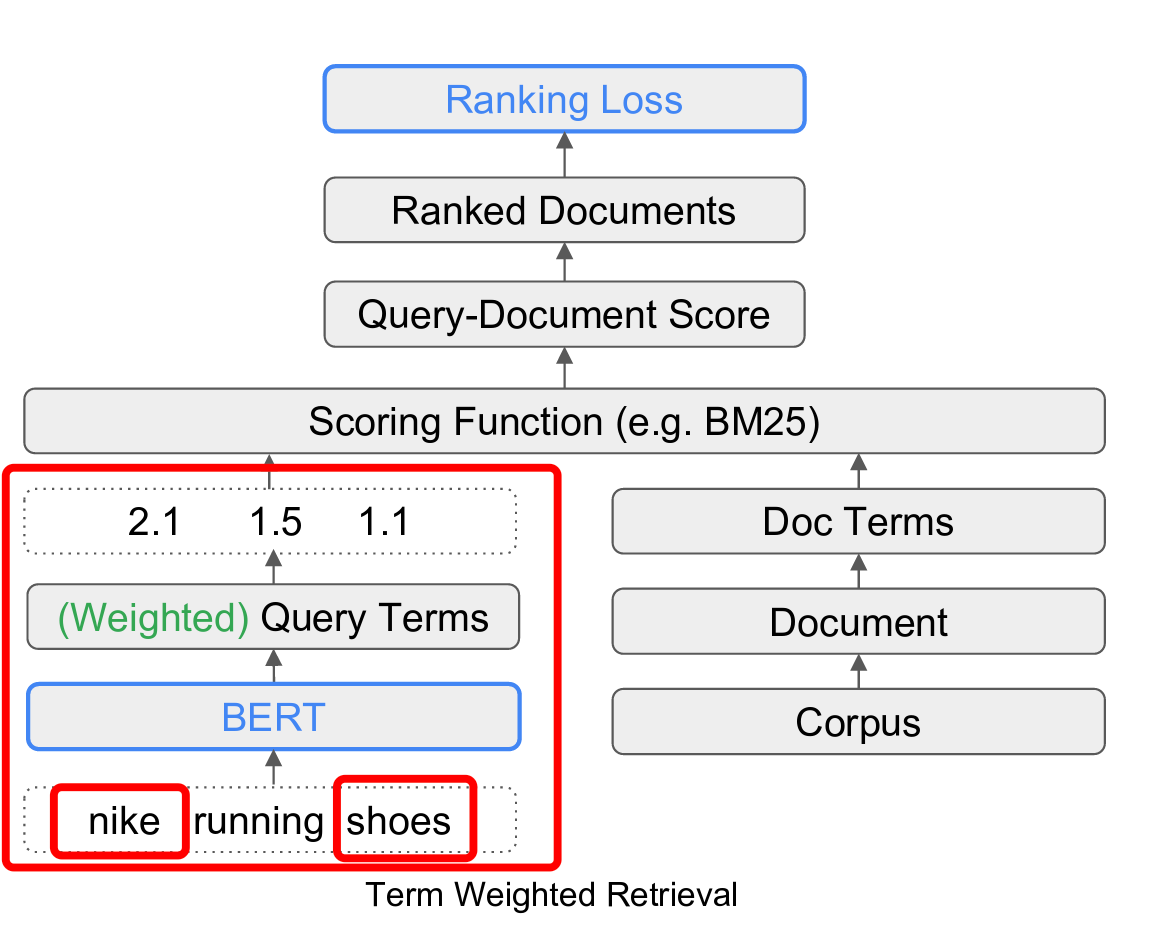
Furthermore, Google’s "End-to-end Query Term Weighting" (from Michael Bendersky and Marc Najork’s team) demonstrates how natural language processing models like BERT assign varying importance to terms within a query. For instance, in "Nike running shoes," "Nike" might carry more weight than "running" or "shoes." This weighting influences how Google matches queries to documents and, consequently, how SEOs should structure their content, vocabulary, and semantic triples (subject-predicate-object relationships) to emphasize key entities.
Strategic Content Decisions: The Page or Not Dilemma
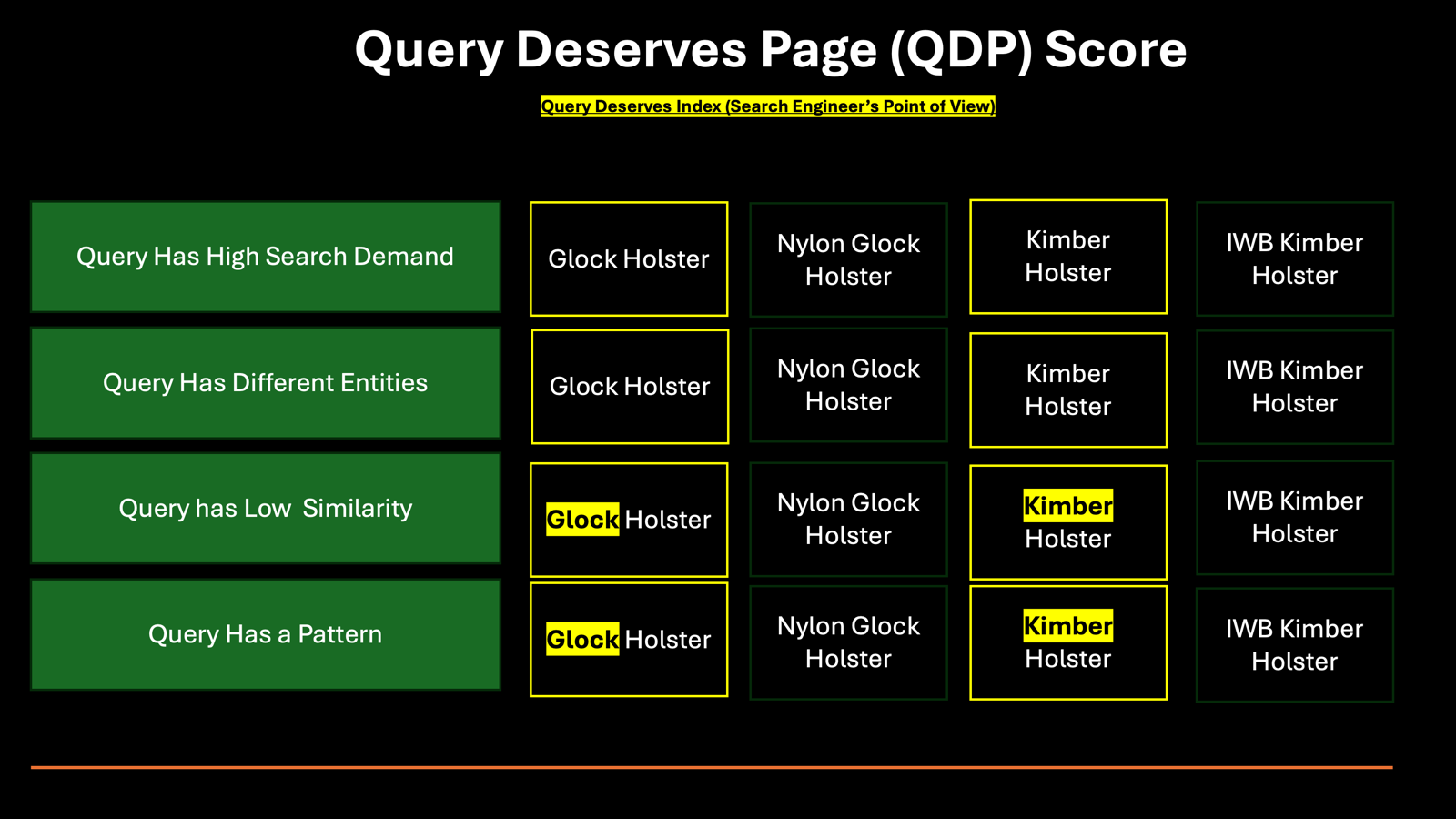
The fundamental question in local and location-agnostic SEO remains: Which query template variations and entity-attribute pairs genuinely merit a dedicated page? The decision hinges on several key metrics:

- Search Demand: Is there sufficient user interest and search volume for the specific query?
- Entity Prominence: Does the entity (e.g., a specific Glock model, a unique addiction type) hold enough distinct importance to warrant its own discussion?
- Uniqueness of Entity: Does the query introduce a truly distinct entity or attribute that cannot be adequately covered within an existing page?
- Query Similarity: How semantically similar is the query to others already addressed on the site? This isn’t just string similarity but a weighted assessment based on entity importance and search demand.
- Query Pattern: Does the query fit a recurring pattern (e.g., "X addiction treatment," "X rehab") that suggests a programmatic content opportunity?
If these metrics are met, a new page can be justified. Otherwise, the information should be integrated into existing pages using visual semantics like distinct headings, product cards, or information modules. This approach minimizes retrieval costs for search engines and enhances the clarity and focus of each page for users.

Case Studies in Action: Applying the QDP Framework
The principles of QDP have been successfully applied across diverse industries, demonstrating tangible improvements in search visibility and business outcomes.

Luxury Rehab in Southeast Asia: Mastering Entity Attributes and Query Variations
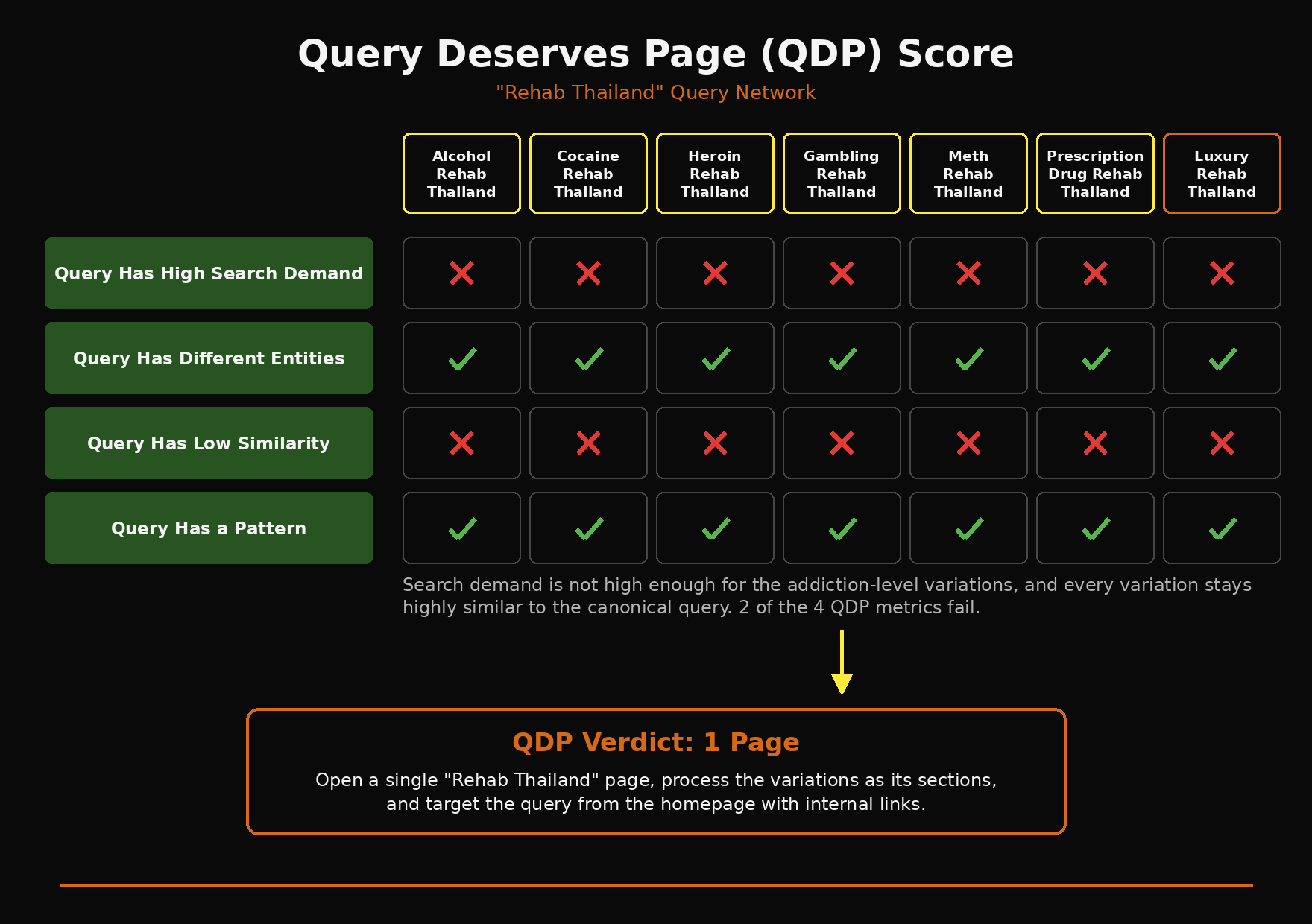
A luxury rehab facility in Southeast Asia aimed to rank for broad terms like "rehab [country name]" and specific variations like "best rehab," "x addiction," and "x addiction treatment." By systematically processing all possible attributes of addiction entities and variations of query templates, the project achieved significant gains. The homepage was strategically optimized to target the most crucial "rehab Thailand" query network, given its high search demand and query similarity. This consolidation, rather than fragmentation, led to improved rankings, as evidenced by third-party tools like Semrush and Ahrefs. Semrush data, which includes Google Business Profile rankings, showed particularly strong performance.
Melbourne Accident Attorney: Consolidating Local Relevance
A car accident attorney in Melbourne faced the common challenge of excessive location-specific pages (e.g., "Melbourne Beach accident attorney," "Melbourne Center accident attorney"). Recognizing that these sub-districts lacked sufficient unique search demand or entity prominence to warrant separate pages, the strategy involved merging these redundant landing pages. This consolidation focused ranking signals onto a more authoritative, central page for "Melbourne accident attorney," resulting in 232 new queries and 60 queries achieving better rankings. This illustrates that quality and focus trump quantity, especially in competitive local markets.

Aggregator Websites: Navigating Millions of Pages
Aggregator platforms, such as Doktorsitesi.com (for doctors and hospitals), often struggle with millions of near-duplicate pages generated for various combinations of locations, services, and entities (e.g., "Ahmet Yılmaz doctor" with 2,000 instances, or 40,000 pages for "cancer treatment"). This content bloat confuses Google’s relevance evaluation, leading to high "Crawled – currently not indexed" and "Discovered – currently not indexed" rates in Google Search Console – clear indicators of insufficient quality and uniqueness.

By ruthlessly pruning these unnecessary documents, Doktorsitesi.com saw an immediate increase of 600,000 clicks without a change in impressions, demonstrating the power of eliminating relevance confusion. Similar success was observed with a flight ticket aggregator, Ucuzabilet, which removed pages for non-existent or extremely low-demand routes (e.g., "New York City to Erzurum"). This strategic content reduction, coupled with optimized internal linking and visual semantics, led to a 248% click increase for the yacht chartering project.

Health and Eyewear: Seasonal Queries and Functional Content
For a website focused on allergies, city-level pages for "pollen forecasting and calendar in [city]" were designed with interactive calendars demonstrating pollen severity. This functional approach, combining informational aspects with a clear "center-piece annotation" (the calendar), led to a 42% year-over-year click increase during pollen season. These pages also internally linked to "find an allergist in [city]" pages, showing how informational content can support transactional goals.

Similarly, for Oscar Wylee, a premium eyewear brand, location-specific "optometrist in [city]" pages were crucial. These store pages integrated Google Business Profile iframes and provided information-connected, actionable content, reflecting the "Helpful Content Update’s" emphasis on functionality. The consistent visual semantics and a clear understanding of QDP for specific location and service combinations contributed to improved local rankings across Australia, Canada, and New Zealand.

Subdomains vs. Main Domains: Strategic Domain Choices
In certain niche cases, exact-match subdomains can outperform main domains, especially when the main domain might be hampered by historical issues or spam updates. For example, attorneys.lexinter.net, a subdomain using an expired domain with regional relevance, began ranking better for "attorneys in [X]" queries than the main domain. This suggests that Google may treat subdomains with exact-match terminology differently, potentially bypassing filters applied to the main domain’s history.

Pricelisto.com, a price-listing directory, recovered from Google’s Helpful Content System updates by migrating content to exact-match subdomains. This strategy, combined with adding user-generated content, price comparison tools, and affiliate-based food ordering functionality, transformed the site from a static directory to a functional service, allowing it to regain local query rankings.

Ranking for Non-Local Services in a Locality: The Hair Transplant Example
Even businesses without a physical presence in a target locality can rank competitively. For "hair transplant Turkey" queries, a highly competitive market, Longevita achieved a number one ranking in the UK by meticulously crafting a new subfolder landing page. This page employed sophisticated query augmentation and visual semantics to represent and verbalize all possible facets of the query, improving both relevance and responsiveness for UK users seeking services in Turkey.

The Role of Visual Semantics and User Experience
Visual semantics, driven by Google’s understanding of visual annotations (like "center-piece annotations"), plays a crucial role in topical authority. A web document is not just text; it’s how that text is presented and how the presentation satisfies user needs. For local SEO, distributing location and service attributes across a page through specific visual components (e.g., utility bars with regional phone chips, evidence strips for accreditations, review carousels, definitional blocks, therapist carousels, tabbed content selectors) creates a rich, contextual vector.

Google’s "Query Augmentation" patent (US9916366B1) and "Layout-Aware Document Understanding" patent (US12393768B2) highlight how Google processes queries and assesses page quality based on layout and pixelized information. An optimized layout, where macro-context (main content) carries the primary purpose and micro-context (supplementary content, internal links) supports it, is key. Functional elements like "book an appointment" buttons, calculators, or interactive maps are vital for pages aiming to satisfy transactional or action-oriented local queries.
External Topical Maps and Link Building: Beyond PageRank
While PageRank remains important, external topical maps serve a broader purpose than just link equity. They build "consensus and confidence" around a brand’s attributes, influencing not only traditional search engine rankings but also the responses of Large Language Models (LLMs) and AI Overviews. Links from local news sources, especially those with exact-match or partial-match domains and semantically related content, can significantly boost location-based rankings. This is aligned with Google’s NavBoost principles, where strong click signals and historical data from relevant sources are passed to the target page.

By strategically acquiring links from diverse, relevant sources that use specific anchor texts and annotational phrases (e.g., "Skills to Be a Lawyer" linking to a law firm, "Truck Accident Lawyer" from a pickup truck site), businesses can strengthen their entity graph and attribute assignments. This collective "surround sound" of claims and co-occurrences helps Google (and AI) understand "who is the best attorney in Houston for personal injury cases" by parsing the question into attributes and evaluating which entities consistently own those attributes.

Conclusion: Efficiency, Relevance, and Adaptability in Local SEO
Topical authority, when applied through the "Query Deserves a Page" framework, offers a robust, multidisciplinary approach to local and location-agnostic SEO. It harmonizes technical SEO, content strategy, visual semantics, and link building into a cohesive strategy focused on search engine understanding and user satisfaction. By meticulously evaluating search queries, pruning redundant content, optimizing page layouts for functional intent, and strategically building external consensus, businesses can achieve substantial improvements in visibility, clicks, and ultimately, conversions.

The evolving landscape of AI search further amplifies the importance of this approach. As search engines increasingly rely on agentic retrieval and chain-of-reasoning models, a clear, semantically rich, and functionally optimized web presence, built on the principle of only creating pages that genuinely "deserve" one, will be paramount for sustained success. Future case studies will continue to delve deeper into specific aspects, such as Google’s anchor text understanding and the nuanced role of exact-match domains, to further refine these advanced SEO methodologies.