

Artificial intelligence is rapidly evolving, and its voracious appetite for information is reshaping how digital content is consumed and disseminated. As AI models learn by ingesting vast amounts of data from the internet, understanding how these systems interact with websites has become a critical, yet often opaque, aspect of digital marketing. A recent comprehensive analysis, dubbed "The AI Crawl vs. Traffic Report," delves into this complex relationship, utilizing data from bot-tracking services like Cloudflare to illuminate which pages AI systems prioritize, where they send human visitors, and the implications for website architecture and content strategy.
The research, which analyzed data from 74 diverse marketing accounts, sought to answer fundamental questions that have largely been addressed in the dark: Which of a website’s pages does AI visit most frequently? And crucially, where does AI direct human visitors after processing information? Marketers have been adapting their strategies in response to AI’s growing influence, but the lack of granular data has left many operating with significant blind spots.
AI’s Unyielding Focus on the Homepage
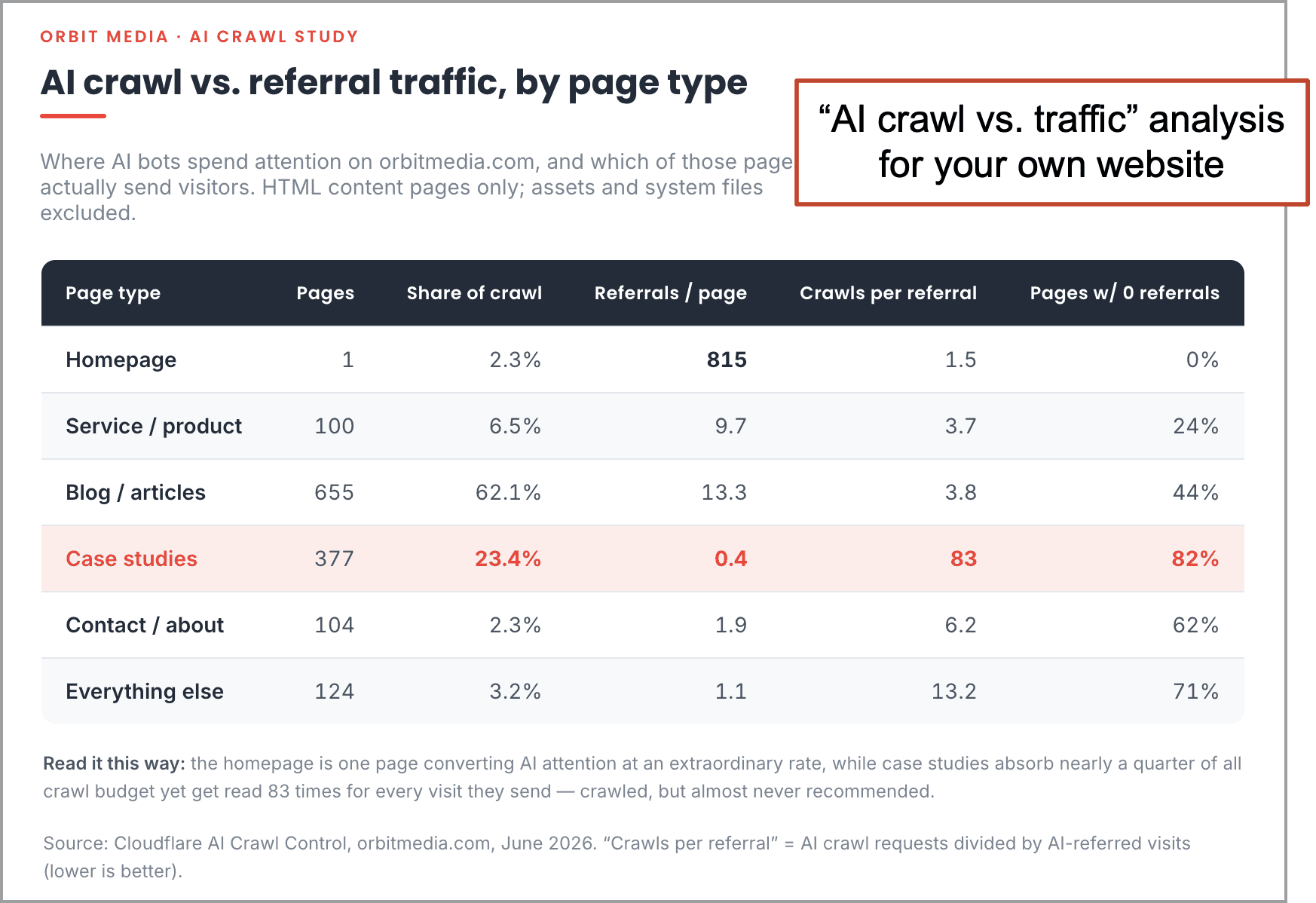
One of the most striking findings from the report is the overwhelming preference AI crawlers exhibit for website homepages. Across the analyzed accounts, homepages received approximately 15 times more AI attention than any other type of page. This disparity is not a minor deviation; it shatters baseline expectations for content distribution.
If AI requests were evenly spread, a page type constituting 5% of a site’s total URLs would theoretically receive about 5% of AI crawls. However, the homepage, often representing a single URL within a vast digital landscape, disproportionately captures AI’s attention. This trend was observed across various website categories, including service/product pages, articles, "about" sections, contact pages, pricing pages, and case studies. Even when these other page types are aggregated, their combined AI crawl share pales in comparison to that of the homepage.
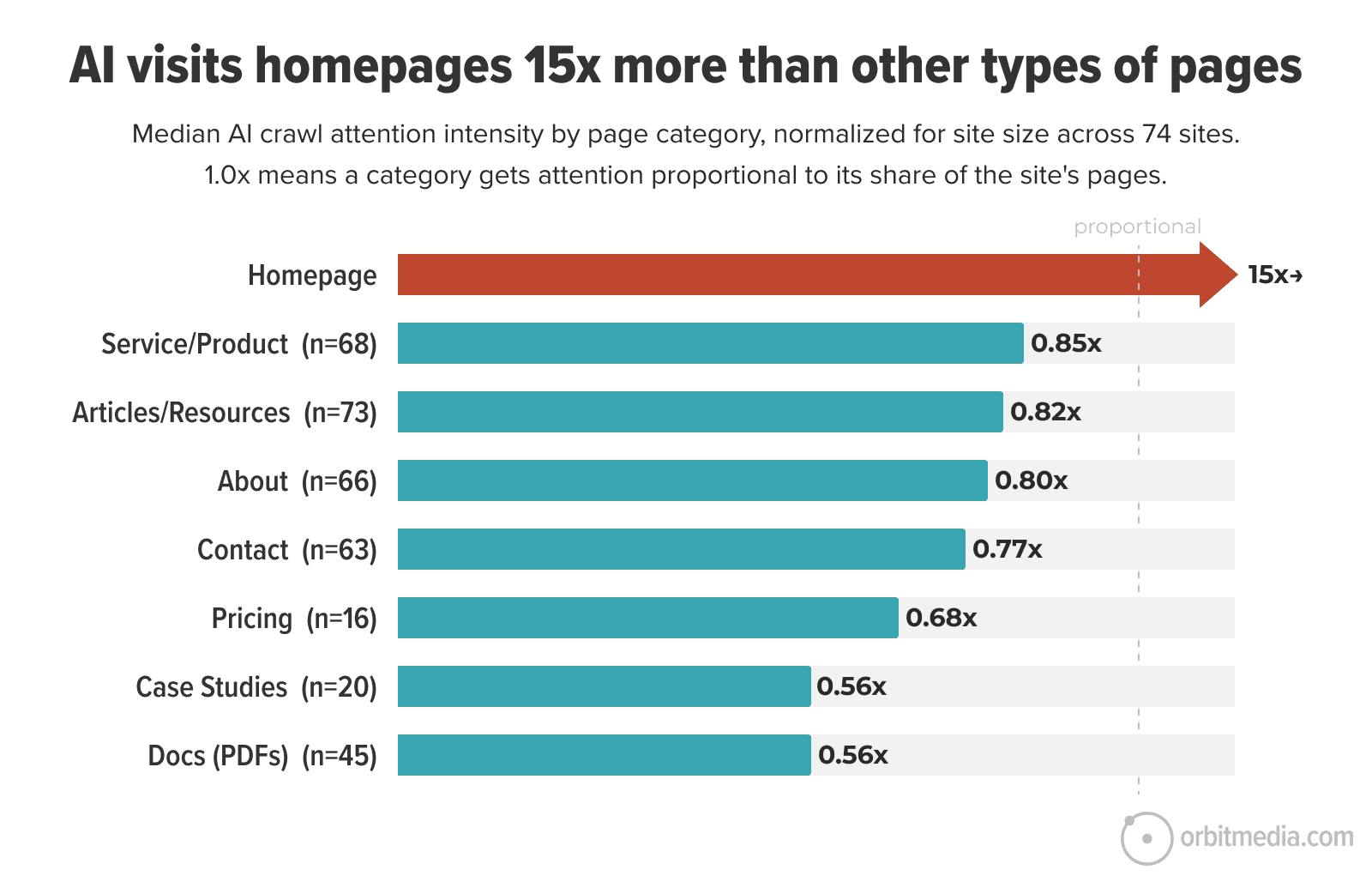
"AIs disproportionately favor the homepage itself," the report states. This suggests that for businesses aiming to ensure their core brand message is understood by AI, the homepage is the most critical real estate. The implication for marketers is clear: the content and messaging on a website’s homepage are paramount in training AI to represent the brand accurately. Cyrus Shepard, Founder at Zyppy, commented on this finding, noting, "Incredible. This data suggests that many publishers may be sleeping on the potential of their homepages. Makes sense, but you have to wonder how many brands really pay attention to what their homepage says about them, or if they are offloading this valuable information space to about, support, and article pages."
The report advocates for a strategic approach to homepage optimization, suggesting that marketers should ensure their homepage includes comprehensive information that acts as a robust sales representative for the brand. This includes clearly articulating the company’s value proposition, showcasing key products or services, highlighting customer success stories or testimonials, and providing clear calls to action.
The Scale Factor: Larger Websites Command More AI Attention

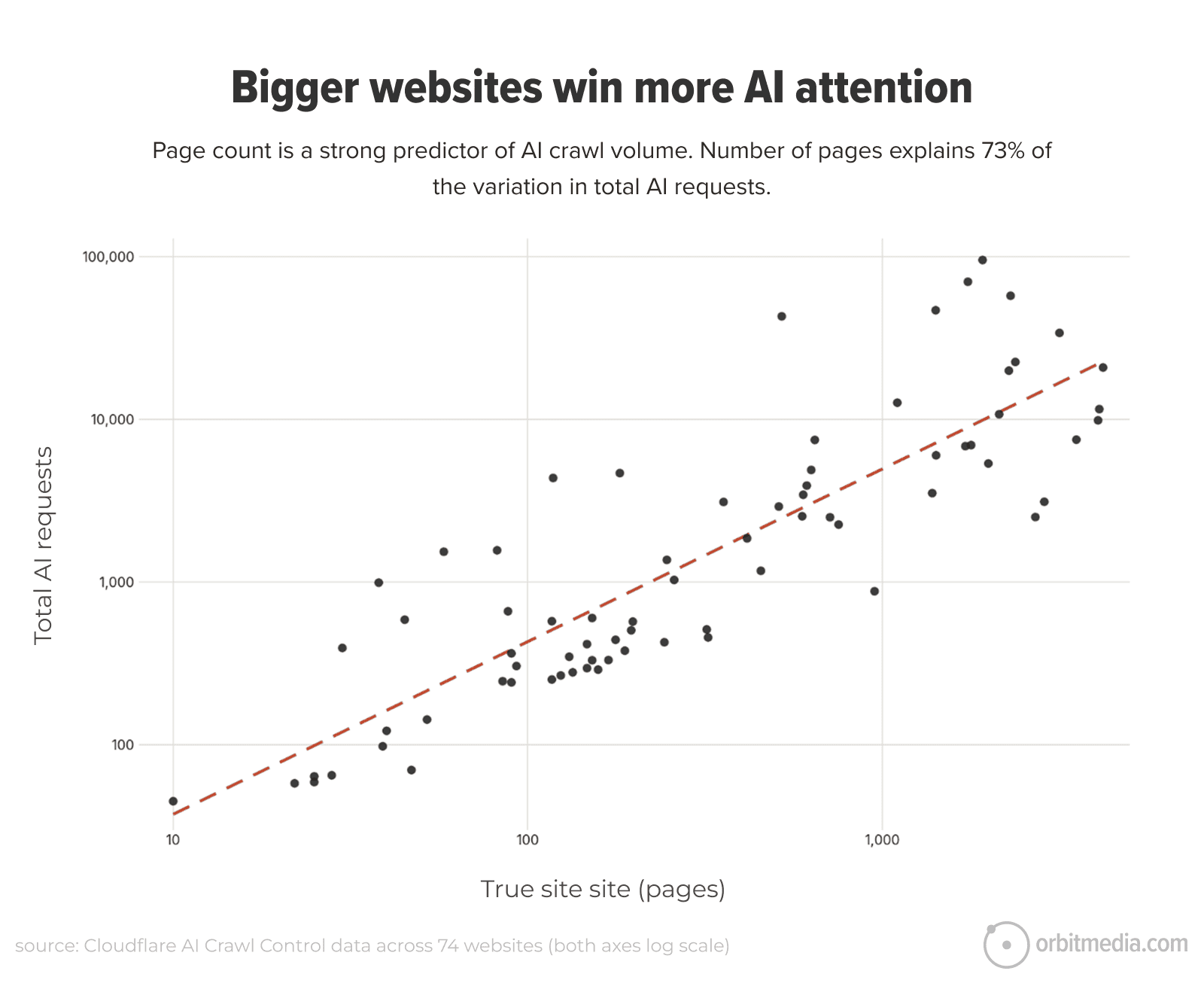
Beyond the specific content of pages, the sheer size of a website—measured by its total number of URLs—demonstrates a strong correlation with the amount of attention it receives from AI crawlers. Larger websites, with more extensive URL structures, generally attract a proportionally greater volume of AI requests. This relationship is nearly perfectly proportional, with a correlation coefficient of 0.86, indicating that AI requests tend to grow in tandem with the page count.
This finding aligns with traditional search engine optimization principles, where a larger digital footprint often translates to greater visibility. More pages provide more potential entry points for AI queries and prompts, increasing the overall "surface area" for AI interaction.
However, the correlation is not absolute. The report highlights instances where smaller websites attract a disproportionately high amount of AI attention, sometimes rivaling that of much larger sites. This suggests that factors beyond mere scale, such as content quality, on-page optimization, brand recognition, or effective marketing strategies, can significantly influence AI engagement. These outliers underscore the importance of strategic content development and optimization, regardless of a website’s overall size.
The "Dark Library Effect": AI Referral Traffic and Content Performance
While AI bots may crawl a vast array of pages, their propensity to send human visitors—referred to as AI referral traffic—varies significantly by page type. The report distinguishes between AI visibility (being crawled and potentially cited) and actual traffic (users clicking on links from AI responses). Using data from Cloudflare, which sits upstream from traditional analytics tools, the study offers a more accurate picture of AI-driven traffic.
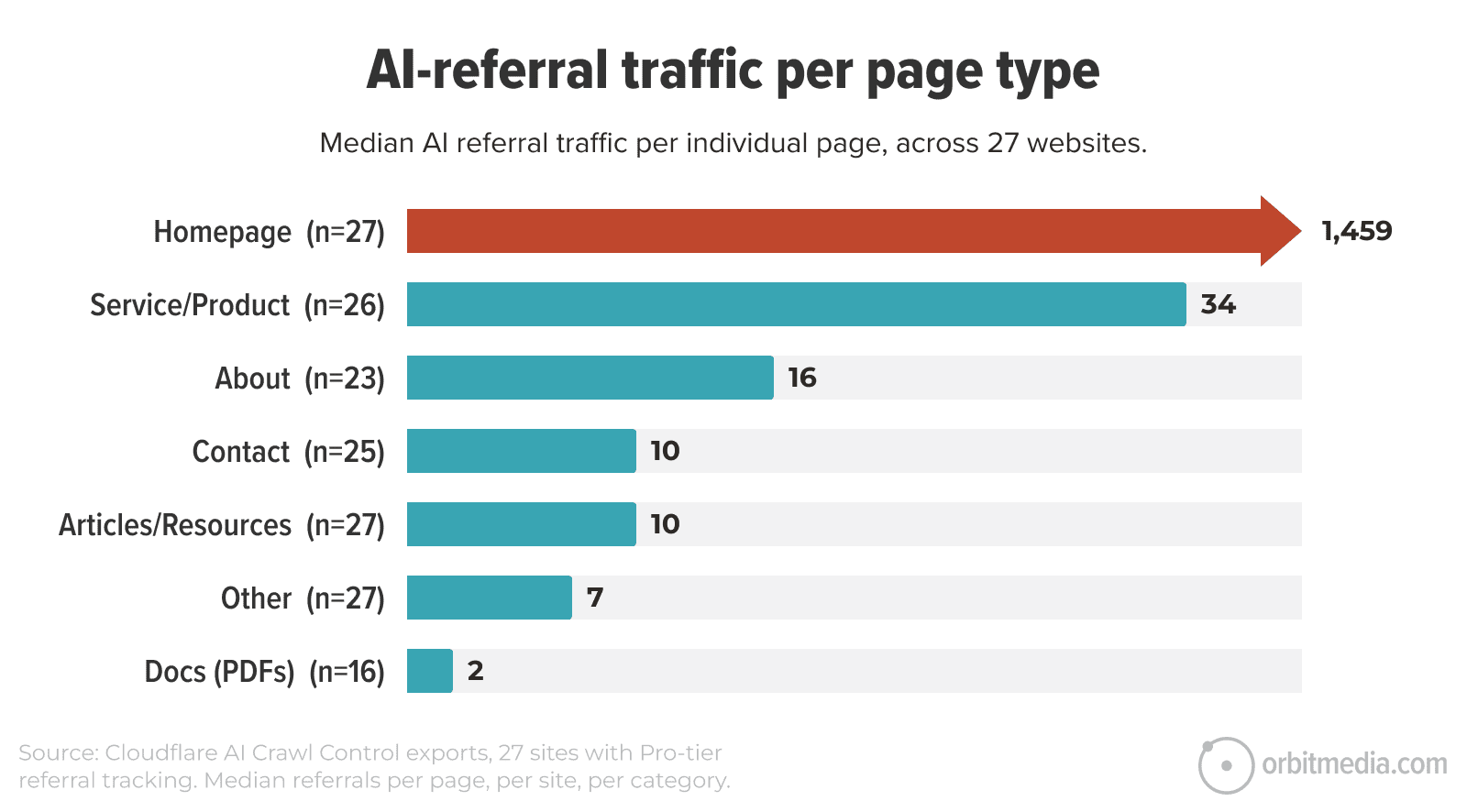
Categorizing pages into "service/product," "home," "articles/resources," "about," "contact," and "case studies," the analysis reveals that homepages and service/product pages are the most effective at converting AI crawls into actual visits. Articles and resources, despite often being heavily crawled, significantly underperform in generating referral traffic. This phenomenon is termed the "Dark Library Effect," where content is absorbed and summarized by AI but rarely leads to direct user clicks.
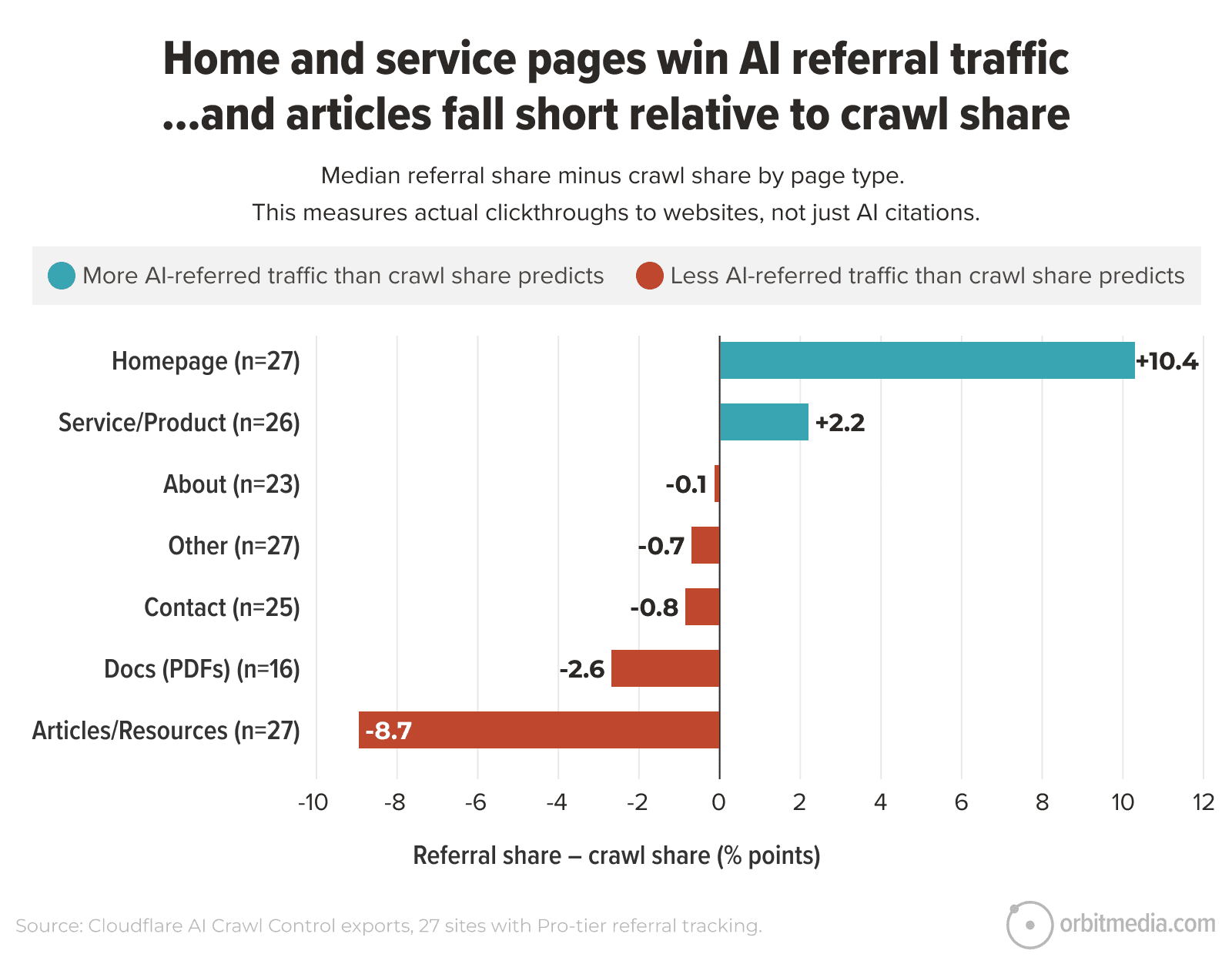
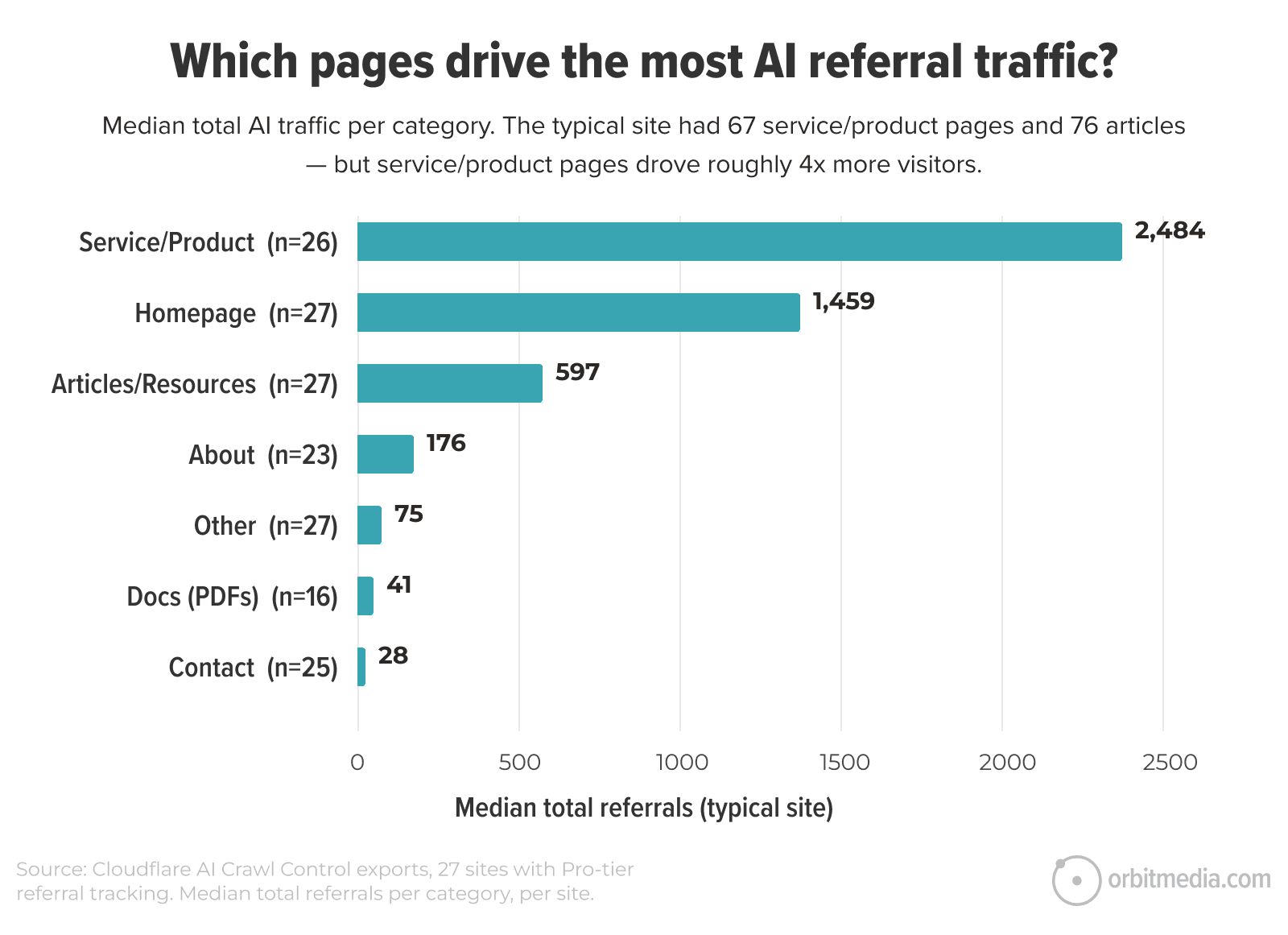
This dynamic mirrors the challenges faced in traditional SEO, where AI systems often provide direct answers to user queries, bypassing the need for users to visit external websites. For content marketers, this means that while articles serve valuable functions like building brand authority, educating the audience, and supporting sales enablement, their primary role may not be to drive direct traffic from AI. Instead, service and product pages, which directly promote offerings, are more likely to benefit from AI referrals. The data indicates that service and product pages generate approximately three times more total AI-referral traffic per page than a typical article.
Furthermore, the analysis of AI referral traffic per page type reveals that homepages, despite being singular entities, still garner the highest number of referrals (1,459 median). Service/product pages follow with 34 referrals per page, while other categories show significantly lower numbers. This reinforces the idea that AI is more likely to direct users to pages that are central to a brand’s offering or identity.
The report cautions against solely evaluating content marketing success by direct traffic metrics. It emphasizes that articles retain significant value beyond click-through rates, contributing to brand awareness, thought leadership, and a comprehensive content ecosystem.
URL Structure and Page Depth: The Architecture Tax
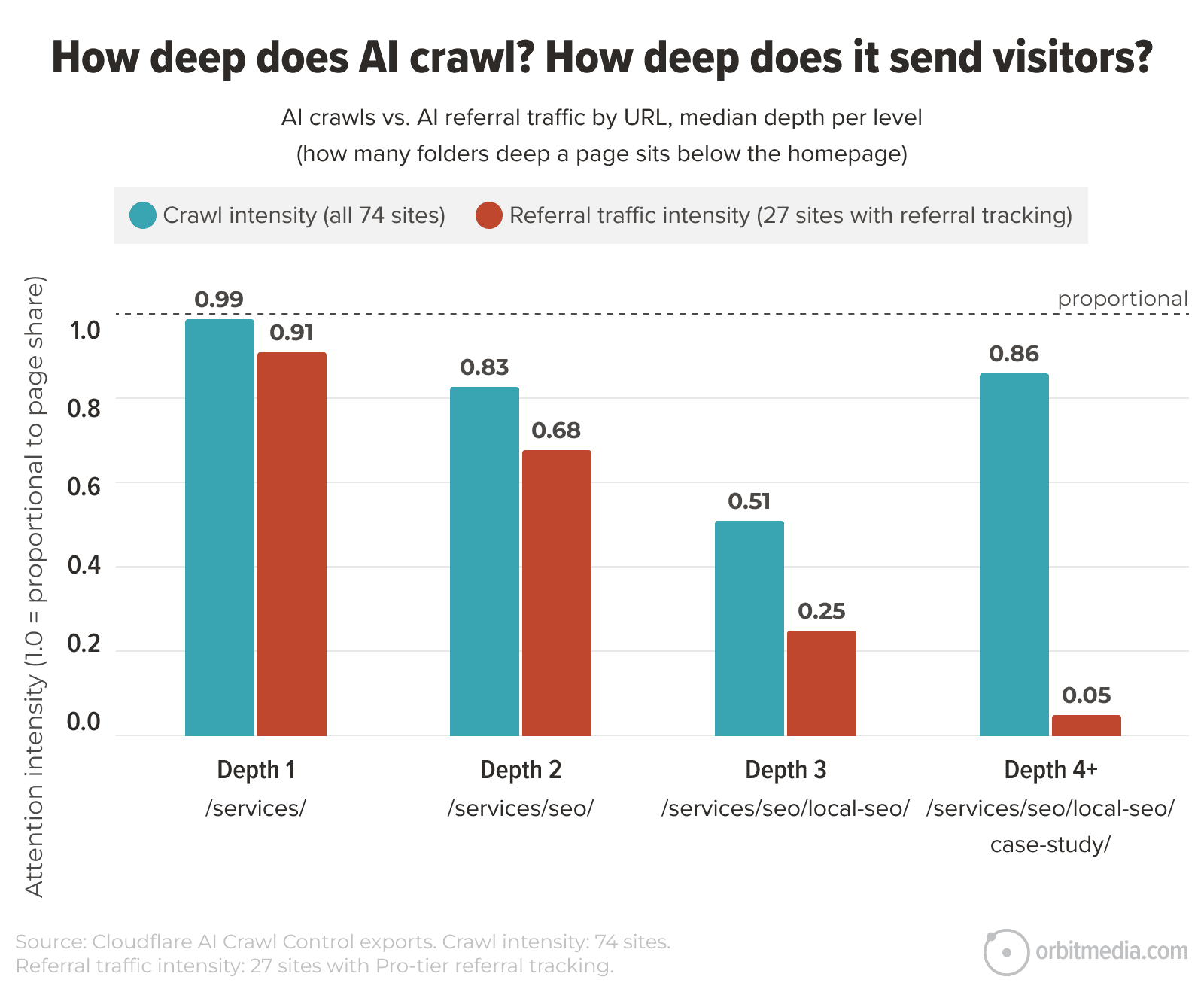
The structure of a website’s URLs and the depth at which pages are nested also play a role in AI’s engagement patterns. While AI crawlers are capable of navigating deep folder structures—willingly accessing pages three or four folders down—they are significantly less likely to direct human visitors to these buried pages. The referral traffic drops off sharply as page depth increases.
A page located three folders deep, for instance, earns about a quarter of the AI traffic its crawl presence might predict. At four folders deep, this referral rate plummets to near zero. This suggests an "architecture tax," where complex or deep URL structures can hinder AI’s ability to recommend pages to users.
While the report advises against immediate structural overhauls solely for this reason, it highlights the importance of considering URL architecture for new website builds or significant reorganizations. Optimizing for shallower URL structures can enhance the discoverability and recommendation potential of key pages by AI systems.
Implications for Marketers: Training AI to Be a Brand Advocate
The findings of "The AI Crawl vs. Traffic Report" offer actionable insights for marketers navigating the evolving AI landscape. The primary takeaway is the need to strategically leverage website content to train AI models to become effective advocates for a brand.
Key recommendations include:
- Homepage Optimization: Prioritize a compelling and informative homepage that clearly articulates the brand’s value proposition, offerings, and unique selling points. This page is the primary target for AI learning.
- Service/Product Page Focus: Ensure that pages detailing products and services are well-optimized, clearly presented, and contain persuasive information, as these pages are most likely to receive AI referral traffic.
- Content Strategy Nuance: Understand the "Dark Library Effect" and adjust expectations for article-based referral traffic. While valuable for knowledge building, articles may not be primary drivers of AI-generated visits.
- Architectural Awareness: For new site designs or restructuring, consider shallower URL structures to improve the discoverability and recommendation potential of key pages by AI.
- AI Readiness: Websites should ensure they are not inadvertently blocking AI bots. Tools like Orbit Media’s AI Bot Access Checker can help identify potential access issues, as AI discovery is a crucial goal.
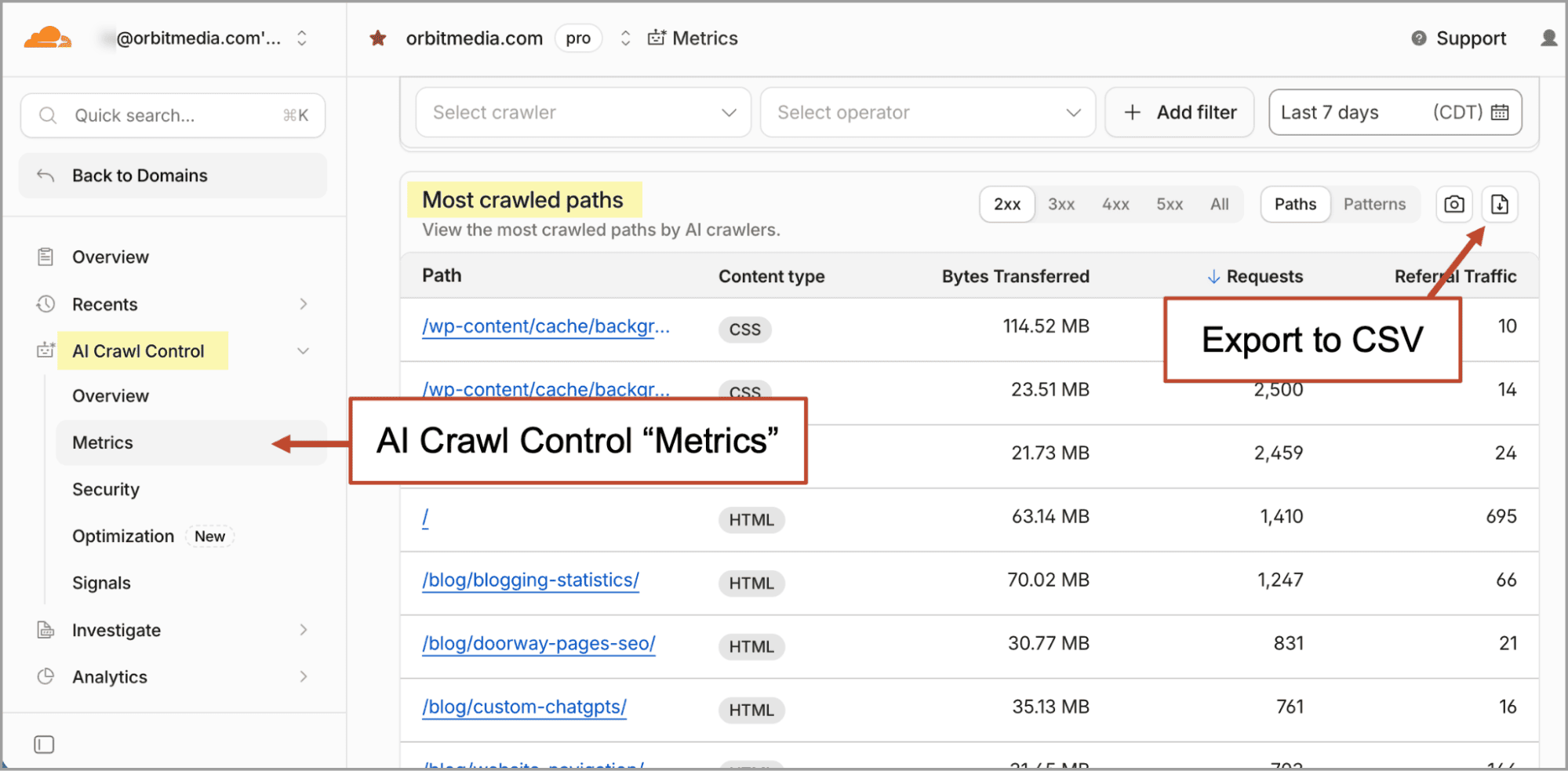
The report also provides a diagnostic prompt for users with Cloudflare data, enabling them to analyze their own AI crawl and referral patterns against the study’s benchmarks. This empowers marketers to identify specific areas for improvement within their own digital ecosystems.
Broader Context and Future Outlook
The analysis underscores a fundamental shift in how information is surfaced and consumed online. As AI continues to mature, its role as an information intermediary will only grow. Understanding its behavior—not just as a passive learner but as an active referrer of traffic—is paramount for businesses seeking to maintain visibility and drive engagement in the digital sphere.
The study’s methodology, which involved classifying pages by type and depth and normalizing data against site size, provides a robust foundation for these conclusions. The careful exclusion of irrelevant bot activity and the nuanced handling of PDFs further enhance the reliability of the findings.
In essence, the internet is increasingly becoming a training ground for AI, and websites are the direct source material. By understanding how AI interacts with their digital presence, marketers can proactively shape how their brands are represented and recommended in the AI-driven future, ensuring that AI serves not just as a passive information aggregator but as a powerful tool for connecting valuable prospects with the offerings they need. The ongoing evolution of AI necessitates a continuous dialogue between human marketers and AI systems, transforming the web into a more intelligently interconnected ecosystem.