
The integration of artificial lighting remains one of the most significant technical hurdles for amateur photographers transitioning into professional or advanced hobbyist spheres. While modern camera sensors have achieved unprecedented levels of low-light sensitivity, the reliance on ambient light often limits creative expression and technical precision. The "hotshoe" flash, a device frequently relegated to the depths of equipment bags due to its perceived complexity, represents not merely a source of additional illumination but a fundamental tool for manipulating the physics of light. By deconstructing the jargon surrounding Through-The-Lens (TTL) metering, guide numbers, and bounce angles, photographers can move beyond the "deer-in-the-headlights" aesthetic to achieve professional-grade results in diverse environments.
The Evolution of Artificial Lighting in Photography
To understand the current state of flash photography, one must look at the technological trajectory of artificial light. In the early 20th century, photographers relied on volatile flash powder, which was both dangerous and unpredictable. This gave way to single-use flashbulbs in the 1930s, and eventually to the electronic flash tubes used today. The modern speedlight is a marvel of miniaturized engineering, capable of communicating complex exposure data with the camera body in milliseconds.
Despite these advancements, a significant "fear factor" persists. Industry surveys suggest that a substantial percentage of entry-level DSLR and mirrorless camera owners avoid using external flash units because the interface feels like a "second camera" with its own steep learning curve. However, the shift from viewing flash as a "last resort" for dark rooms to a "creative tool" for all conditions marks the primary difference between a reactive and a proactive photographer.
The Physics of Light: Quality Over Quantity
The most common misconception regarding flash is that its primary purpose is to add more light to a scene. In reality, the value of a flash lies in the control it offers over light quality. The "harshness" often associated with flash photography is rarely a result of the light source itself, but rather its size relative to the subject.
A bare flash head is a small, concentrated light source. When fired directly at a subject, it creates hard shadows and high contrast, mirroring the effect of the midday sun. Journalistic analysis of lighting patterns confirms that by "bouncing" the flash off a larger surface—such as a white ceiling or a side wall—the photographer effectively turns that surface into the light source. This follows the inverse-square law and the principles of diffusion: a larger light source produces softer shadows and more flattering transitions across a subject’s features. This technique, known as "bouncing," is a staple in event and interior photography, allowing for a natural look that mimics large window light.
Chronology of the Flash Photography Learning Curve
The progression of a photographer’s relationship with artificial light typically follows a four-stage evolution:
- The Avoidance Phase: The photographer relies exclusively on "available light," often pushing ISO to grainy extremes to avoid the perceived "artificial" look of the built-in flash.
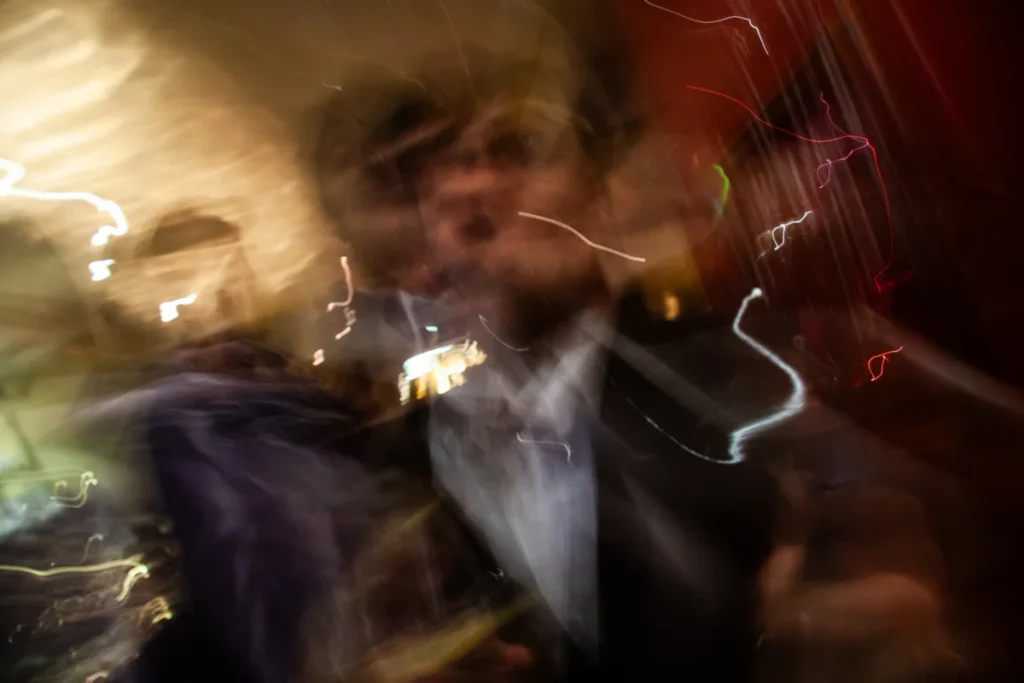
- The Direct Flash Phase: Upon acquiring a dedicated speedlight, the user fires it directly at the subject. This results in flat, overexposed images, often reinforcing the desire to return to the Avoidance Phase.
- The Modification Phase: The photographer discovers bouncing and basic diffusion (softboxes or umbrellas). They begin to understand that light direction is as important as light intensity.
- The Integration Phase: The photographer uses flash in broad daylight to fill shadows or off-camera to create three-dimensional depth. At this stage, flash and natural light are viewed as complementary components of a single exposure.
Technical Data: Freezing Motion and Overpowering the Sun
One of the most powerful technical advantages of flash is its ability to freeze motion through flash duration rather than shutter speed. While a standard camera shutter might max out at 1/4000s or 1/8000s, an electronic flash burst can occur at speeds ranging from 1/1000s to as fast as 1/20,000s at lower power settings.
In low-light environments, the flash becomes the effective shutter. If the ambient light is underexposed, the brief burst of the flash is the only light that registers on the sensor, freezing a splashing liquid or a moving subject with a level of sharpness that mechanical shutters cannot achieve alone.
Furthermore, the use of "Fill Flash" during the "magic hours" or even at high noon has become a standard industry practice. According to data from portrait photography workshops, the use of fill flash can reduce the dynamic range of a scene by 2 to 3 stops, bringing the deep shadows under a subject’s eyes and nose into a range that the camera sensor can capture without blowing out the highlights in the background.
The Economic Accessibility of Professional Lighting
The barrier to entry for professional-grade lighting has dropped significantly over the last decade. Previously, achieving "studio quality" light required expensive, heavy strobe units and power packs. Today, the "Strobist" movement—popularized by photographers like David Hobby—has demonstrated that small, battery-powered speedlights can achieve nearly identical results for a fraction of the cost.
Market analysis shows that a basic "off-camera" setup, consisting of a third-party speedlight, a wireless trigger, a light stand, and a shoot-through umbrella, can be acquired for under $150. This portability allows photographers to move their "studio" into the field, providing a competitive edge in markets such as real estate, environmental portraiture, and small-scale product photography.

Statements and Industry Perspectives
Professional photographers often emphasize that mastering flash is synonymous with mastering the "language of light."
"When you use natural light, you are a scavenger; you are looking for what is already there," notes one industry educator. "When you use flash, you are a creator. You are no longer tethered to the time of day or the placement of windows."
Technical experts from major manufacturers like Canon, Nikon, and Sony have also integrated sophisticated "Wireless Radio" systems into their latest flash units. These systems move away from "Optical Slave" technology—which required a line of sight between the camera and the flash—to radio-based systems that can trigger lights through walls or at distances of up to 30 meters. This technological shift has democratized complex multi-light setups that were once the exclusive domain of high-end commercial sets.
Broader Impact and Commercial Implications
The ability to use flash effectively has direct implications for a photographer’s earning potential. In the commercial sector, the ability to deliver consistent results regardless of weather or indoor lighting conditions is a prerequisite for professional reliability.
- Wedding Photography: Photographers who can light a dark reception hall with multiple off-camera flashes can command higher fees than "natural light only" photographers who struggle with grainy images in dim settings.
- Real Estate: High-end architectural photography often uses "flambient" techniques—a blend of flash and ambient exposures—to ensure that both the interior of a room and the view through the windows are perfectly exposed.
- Product Photography: The control of reflections and highlights on metallic or glass surfaces is impossible without the precise placement of artificial light sources.
Conclusion: A Conscious Approach to Composition
Ultimately, the study of flash photography forces a photographer to think deliberately about every aspect of an image. It requires an understanding of the "exposure triangle" (ISO, Aperture, Shutter Speed) and how a fourth variable—flash power—interacts with them.
Once a photographer understands how to manipulate the direction, intensity, and color temperature of a flash, they begin to see natural light differently. They start to notice how a white wall acts as a natural reflector or how the "golden hour" sun provides a directional rim light. By removing the "scary" elements of flash through education and experimentation, photographers gain the ultimate tool: the ability to create their own "magic hour" at any time and in any place. This transition from being a passive observer of light to an active director of it remains the most significant milestone in a photographer’s technical journey.