
The recent release of the Sony FE 400mm f/4.5 GM OSS and the FE 600mm f/6.3 GM OSS lenses has provided the photography industry with a fascinating case study in efficient optical manufacturing. While telephoto primes are traditionally viewed as distinct, bespoke engineering projects, Sony has unveiled two lenses that share a significant portion of their internal architecture. This strategic design choice represents a departure from conventional product development, blending high-end performance with sophisticated modular engineering.
A Chronology of Development
The introduction of these two lenses in September 2026 was preceded by a period of intense speculation within the wildlife and sports photography communities regarding Sony’s next move in the super-telephoto market. Following the successful, albeit different, deployment of Fujifilm’s cross-format 500mm lens strategy in 2024, industry analysts anticipated that Sony would seek a more streamlined approach to its G Master (GM) lineup.
By mid-2026, initial leaks began to circulate, suggesting that Sony was developing two new lightweight telephoto primes. Upon their official launch on September 15, 2026, the technical specifications immediately drew comparisons. The 400mm f/4.5 GM OSS was marketed as a lightweight powerhouse for field sports and agile wildlife photography, while the 600mm f/6.3 GM OSS was positioned for reach-heavy applications. However, the release documentation revealed a level of technical symmetry that caught many optical engineers by surprise.
Architectural Parity: The Internal Anatomy
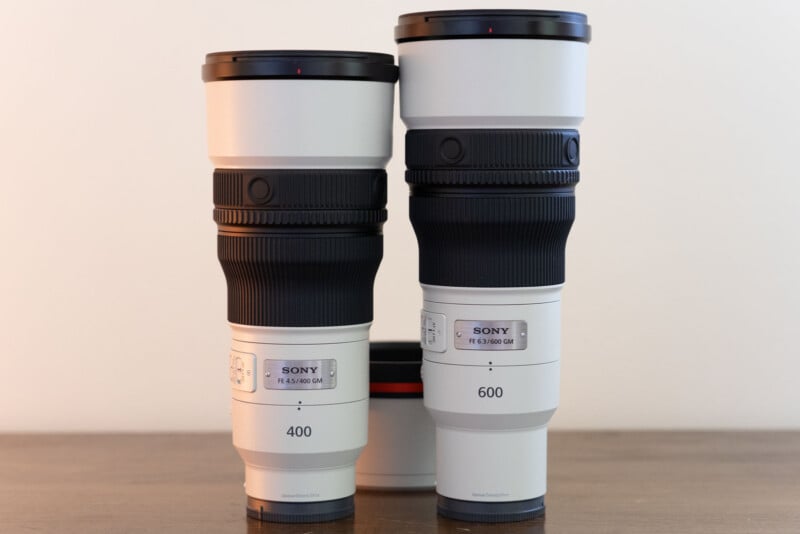
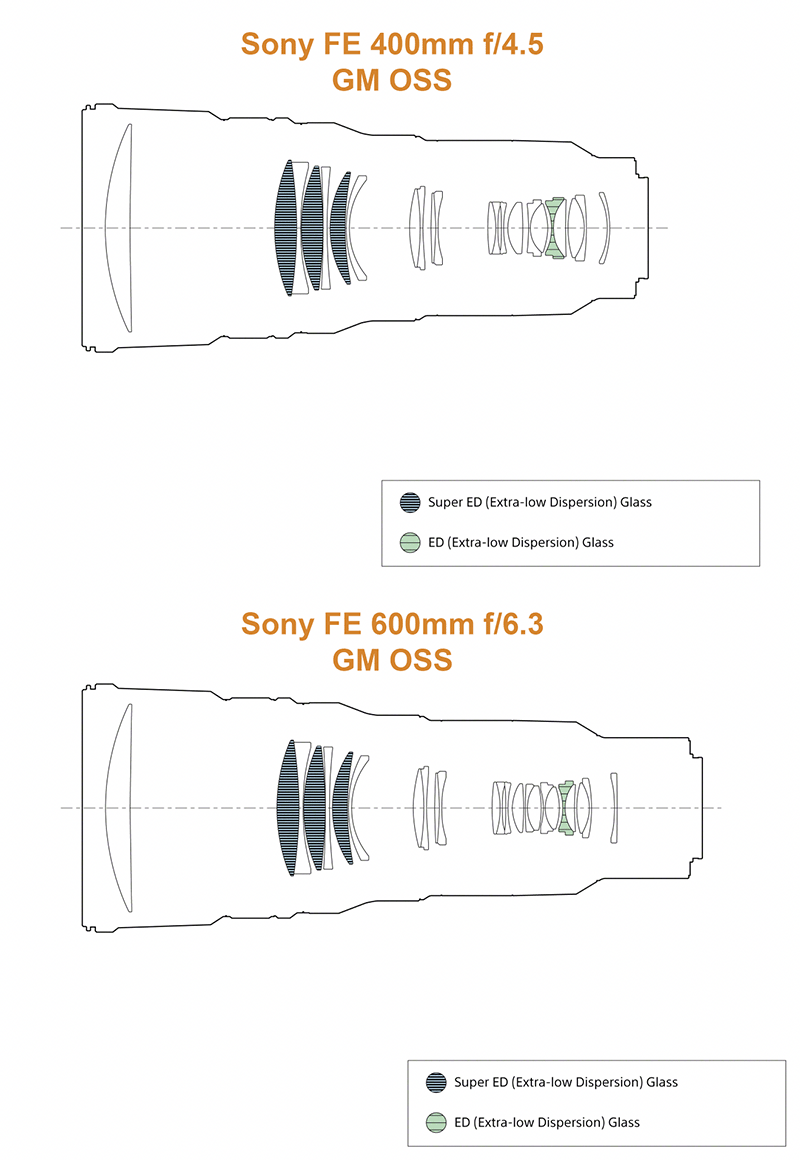
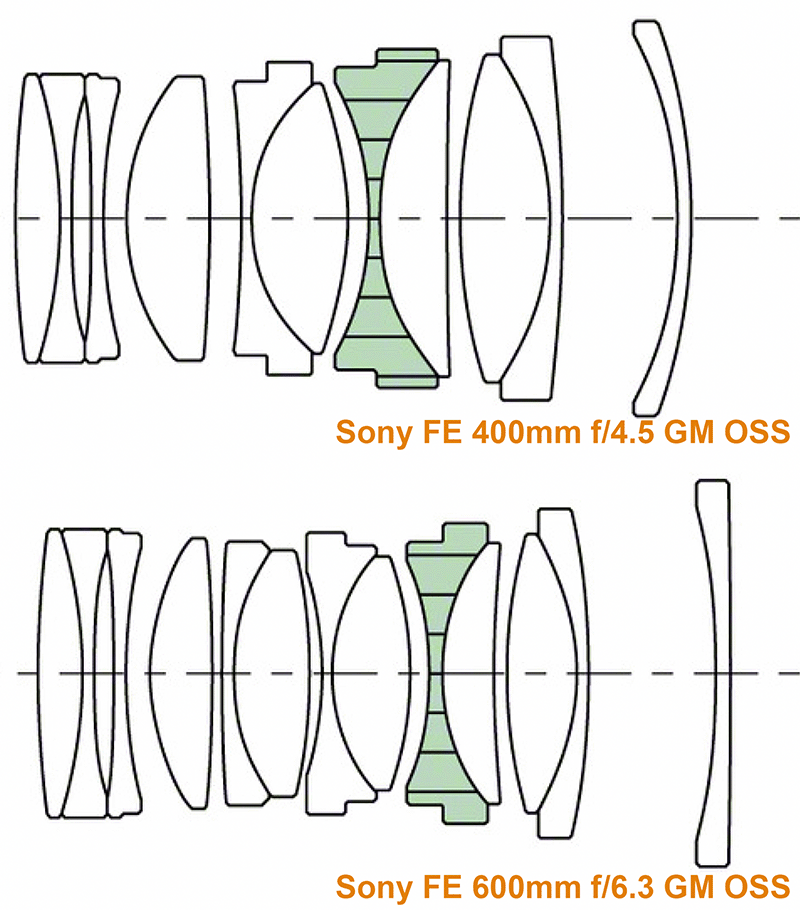
The most striking revelation lies in the internal construction of these lenses. A technical analysis of the optical diagrams reveals that roughly 50 percent of the lens elements are identical across both models. From the large-diameter front element—which serves as the primary light-gathering surface—through the complex focusing group situated in the mid-section, the two lenses are, for all practical purposes, structural twins.
The integration of Super ED (Extra-low Dispersion) glass elements is consistent in both units, ensuring that chromatic aberration is minimized with the same level of precision. This shared foundation is the primary reason for their near-identical physical profiles. The weight differential between the two models is negligible, amounting to roughly the weight of a standard paper clip or a single U.S. dollar bill. Furthermore, the physical length of the 600mm variant exceeds the 400mm by less than one inch, a disparity that is virtually undetectable during handheld operation in the field.

Comparative Data and Specifications
The shared lineage of these optics extends beyond the glass. Both lenses utilize an identical autofocus motor system, which has been calibrated for rapid tracking in both high-speed sports and erratic wildlife environments. Key shared features include:
- Weather Resistance: Both lenses utilize the same sealing architecture, providing consistent performance in harsh environmental conditions.
- Control Interface: The on-barrel custom buttons, focus range limiters, and OSS (Optical SteadyShot) switches are positioned identically, allowing for a seamless transition for photographers switching between the two focal lengths during a single shoot.
- Minimum Focusing Distance: Despite the difference in magnification, both lenses maintain an identical minimum focusing distance, a feat of engineering that required careful calibration of the rear-element groups.
The divergence begins only as the optical path approaches the camera mount. To achieve the 600mm focal length, Sony engineers incorporated an additional optical group consisting of two specialized elements. This brings the 600mm f/6.3 configuration to a total of 24 elements across 17 groups. The f/6.3 aperture on the 600mm is a direct result of this longer focal length maintaining the same entrance pupil size as the 400mm f/4.5. Mathematically, this is an elegant solution to the challenges of focal length extension without the need to increase the front element diameter, which would have exponentially increased weight and manufacturing complexity.

Industry Implications and Manufacturing Efficiency
The broader impact of this design strategy is significant. Research and development (R&D) for a new optical formula can cost millions of dollars, encompassing glass fabrication, lens coating, and precision assembly. By utilizing a common platform for two distinct focal lengths, Sony has effectively optimized its supply chain and manufacturing floor space.
This modular approach is not entirely unprecedented, but the scale at which it has been applied to the G Master series—Sony’s flagship professional line—is noteworthy. It signals a shift toward "platform-based engineering," where the core performance metrics (sharpness, contrast, and autofocus speed) are locked into a common architecture, while minor variations are used to serve different focal length requirements.
From a market perspective, this efficiency benefits the end-user by providing two high-performance tools that are inherently familiar. A photographer who masters the 400mm f/4.5 will intuitively understand the handling and responsiveness of the 600mm f/6.3. This reduces the learning curve and allows for more consistent performance in high-pressure professional environments.
The Question of Cost and Value
While the engineering efficiency is clear, it raises questions regarding the pricing model for these lenses. With a price difference of approximately $1,000 between the two units, consumers are essentially paying a premium for the two additional elements and the specific optical adjustments required for the 600mm reach.
However, professional photographers prioritize the "result" over the "cost of production." Because both lenses deliver the same high-tier image quality and optical resolution associated with the G Master badge, the value proposition remains strong. The 400mm offers a wider, more versatile aperture, while the 600mm offers the necessary reach for distant subjects. The fact that these are largely the same lens under the hood does not detract from their performance; rather, it serves as a testament to the versatility of the initial design.
Future Perspectives
As camera technology continues to advance, the demand for lighter, more portable super-telephoto lenses will only increase. Sony’s success with this "fraternal twin" lens strategy may influence how other manufacturers approach their product roadmaps. In an era where optical perfection is increasingly accessible, the ability to rapidly iterate and diversify a product line through smart, shared engineering is likely to become a key competitive advantage.

Ultimately, the FE 400mm f/4.5 GM OSS and the FE 600mm f/6.3 GM OSS stand as benchmarks for modern lens manufacturing. They prove that industrial efficiency does not have to come at the expense of optical integrity. For the professional photographer, the ability to choose between two focal lengths while maintaining a consistent weight, balance, and control scheme is an invaluable asset, regardless of the similarities hidden within the barrel. Whether this trend continues into other focal lengths remains to be seen, but Sony has established a new standard for how modern telephoto primes can be developed, manufactured, and deployed in the field.