
When pitching modern corporate strategy to the executive suite, passion and intuition no longer suffice. Decision-makers demand hard proof, scalable metrics, and undeniable ROI before allocating budgets to emerging initiatives. As traditional digital marketing channels experience diminishing returns, rising ad costs, and increasingly congested social feeds, organizations are urgently seeking alternative pathways to market visibility. This dynamic has thrust employee advocacy programs into the spotlight, transitioning them from informal, experimental side projects into core strategic pillars for modern enterprise growth.
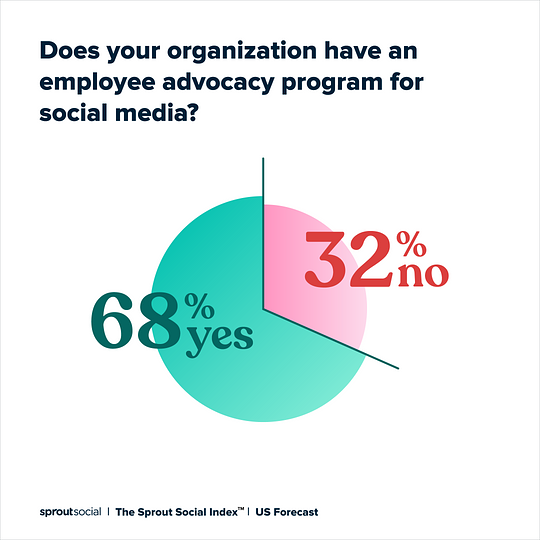
To successfully secure C-suite buy-in for an employee advocacy program, internal champions must reframe the initiative away from a simple "nice-to-have" cultural perk and position it as a rigorous, data-driven growth strategy. Industry research indicates that more than two-thirds—specifically 68%—of marketers already operate some form of employee advocacy program within their organizations. For companies lagging behind, launching a formal, structured initiative is no longer about gaining a competitive edge; it is rapidly becoming a baseline industry standard.

The Evolution and Formalization of Employee Advocacy
Historically, employee advocacy began organically. Employees would occasionally share company milestones, job openings, or product announcements on their personal social media profiles out of individual pride or loyalty. However, modern enterprise adoption requires a more sophisticated approach. Leading global brands have moved past informal word-of-mouth efforts, formalizing their advocacy initiatives through dedicated internal teams, specialized software platforms, structured operational processes, and comprehensive employee training.
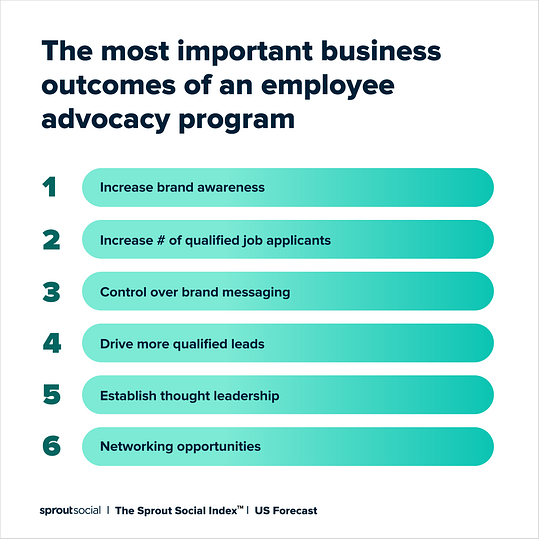
Market data tracking the strategic objectives of these programs reveals a clear hierarchy of corporate priorities. Among over 1,000 surveyed marketing professionals, the top motivations for implementing an employee advocacy program include scaling brand awareness, attracting a higher volume of qualified job applicants, and exercising tighter control over overarching brand messaging. Secondary benefits frequently cited by enterprise leaders encompass driving qualified sales leads, cementing executive and organizational thought leadership, and opening valuable new networking opportunities across key industries.
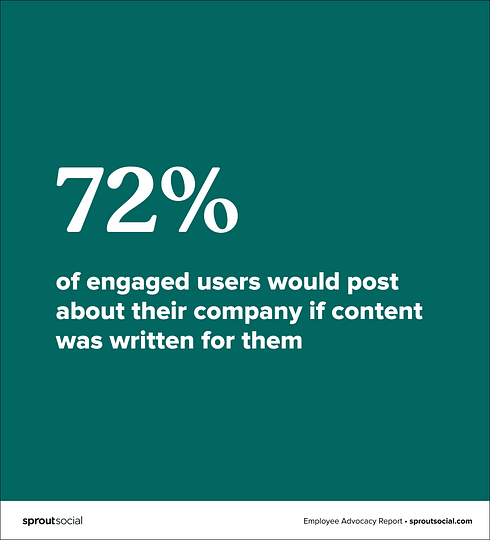
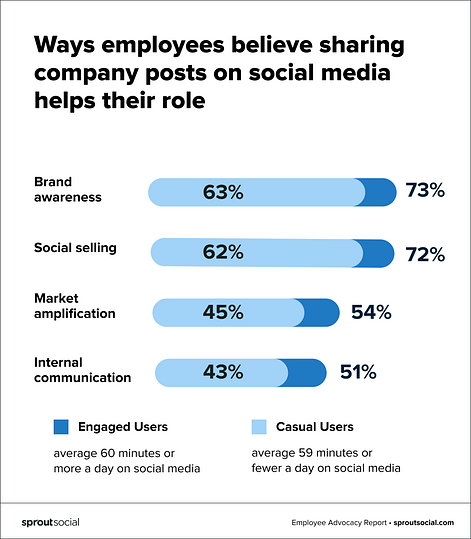
Despite these clear strategic advantages, many internal advocates encounter initial resistance from leadership teams concerned about administrative overhead, legal compliance, or employee participation rates. Overcoming these hurdles requires demonstrating that participation is rarely an issue of employee willingness. In fact, comprehensive workplace data indicates that 72% of engaged users are more than willing to post about their company on personal channels if the foundational content is written and curated for them beforehand. By removing the friction of content creation through centralized tools, organizations can easily solve the participation bottleneck.
The Trust Gap: Why Employees Outperform Corporate Channels
To understand the urgent necessity of employee advocacy, executives must examine changing consumer behavior patterns. Modern audiences have grown increasingly skeptical of polished, corporate-sponsored messaging emanating from primary brand handles. Paid advertising reach continues to grow more expensive while simultaneously experiencing lower engagement rates as consumers tune out traditional marketing noise.
In contrast, human-to-human connection retains its authenticity and credibility. According to recent market analysis, 40% of consumers discover new products and services through employee-generated content on a monthly basis. Furthermore, consumer trust studies highlight a stark contrast in audience perception: 46% of consumers express a preference for hearing directly from frontline staff and everyday employees, whereas a mere 10% indicate a desire to hear from C-suite executives or formal corporate accounts.
This massive credibility gap underpins the primary C-suite pitch for employee advocacy. While paid media budgets are continuously strained by diminishing returns, activating a company’s workforce scales the single asset that audiences continue to reward—human authenticity—at virtually no added media cost. Employees act as trusted advisors within their respective social graphs, bridging the chasm between corporate objectives and consumer skepticism.
Amplifying Reach and Maximizing Impressions at Scale
The sheer amplification power of employee advocacy fundamentally alters an organization’s digital footprint. When hundreds or thousands of employees syndicate pre-approved, brand-aligned content across their individual professional networks, the resulting reach expands exponentially beyond the limitations of organic corporate page algorithms.
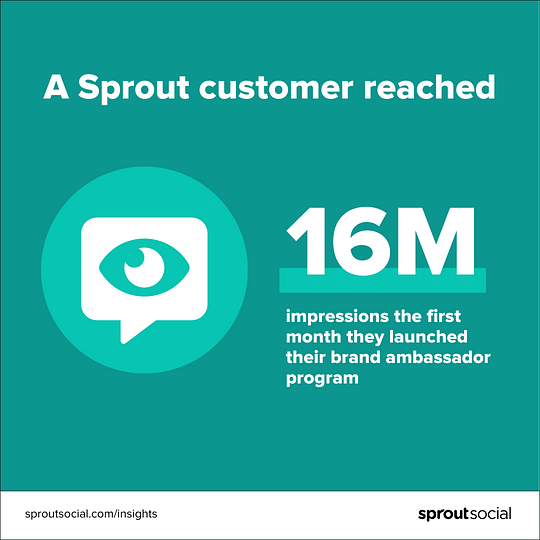
Real-world case studies across the technology and SaaS sectors vividly illustrate this phenomenon. When enterprise software leader Ivanti launched its formal brand ambassador program utilizing a dedicated advocacy platform, the company witnessed its total digital reach skyrocket by 16 million impressions within the very first month of deployment. Similarly, enterprise software provider Infor generated an estimated $100,000 in earned media value within a single month by leveraging the collective social capital of its workforce.
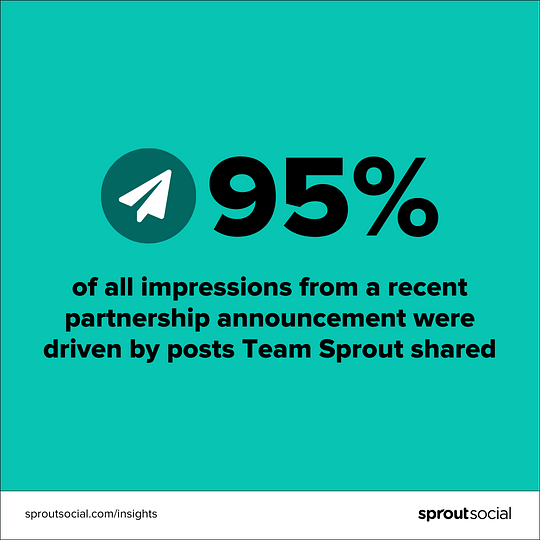
The compounding effect of employee networks is further demonstrated by enterprise tech benchmarks. When Sprout Social announced a major global partnership with Salesforce, the announcement generated approximately 740,000 impressions. An overwhelming 95% of those total impressions were directly driven by posts shared voluntarily by employees across their personal networks.
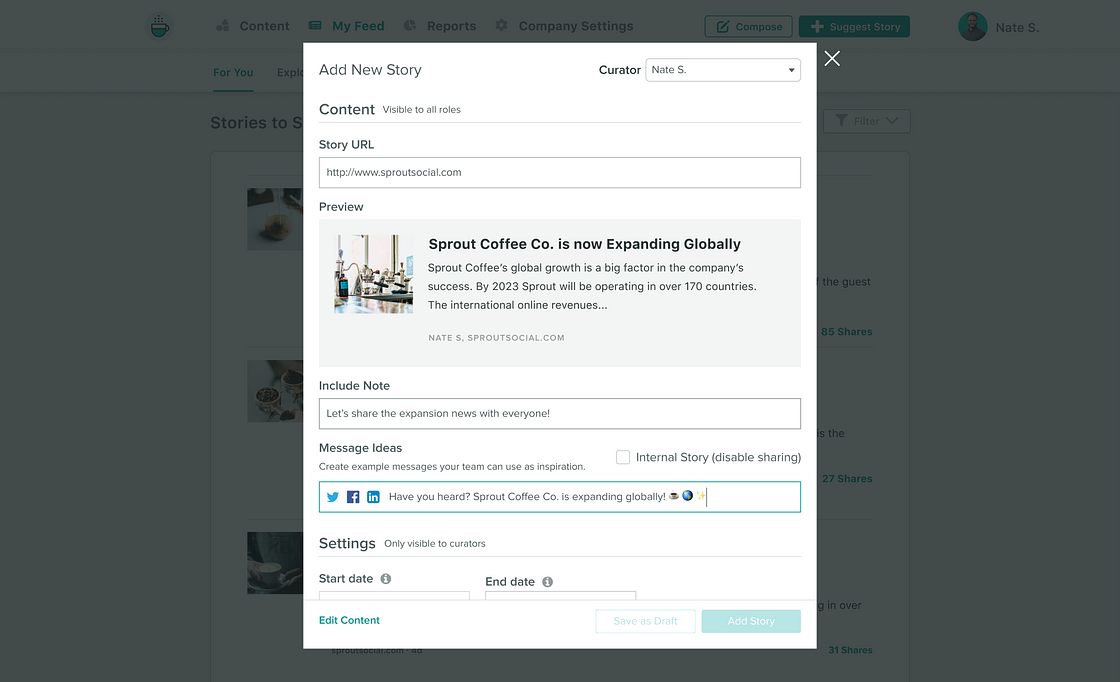
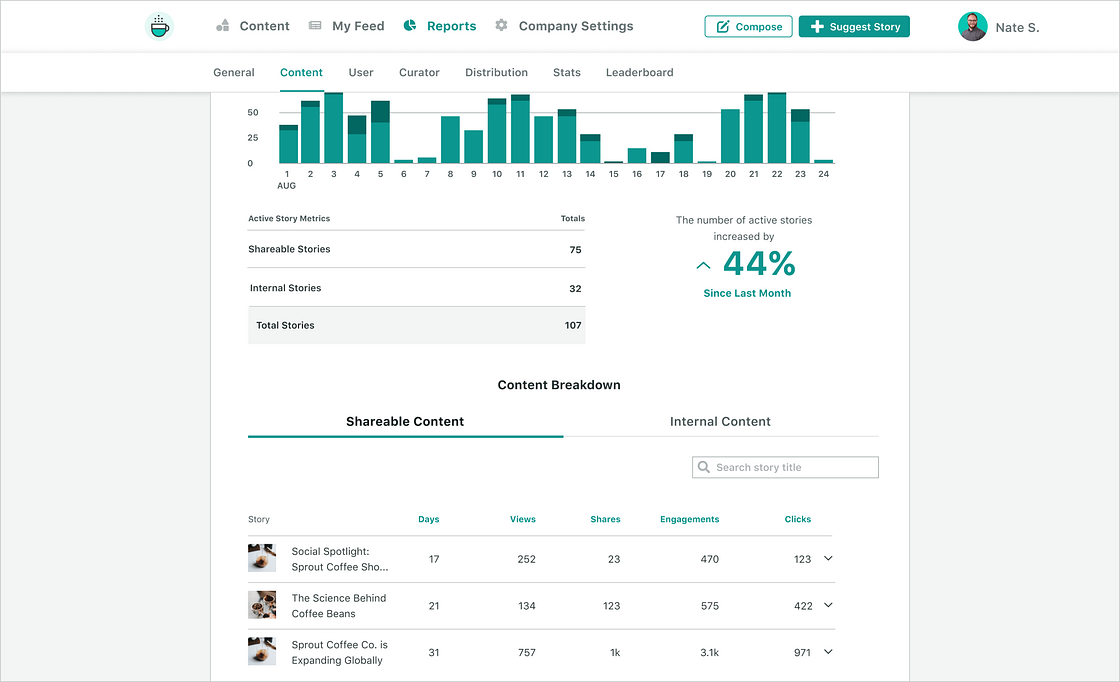
By treating employee networks as a formal, measurable amplification channel rather than an afterthought, organizations can insulate themselves against the declining organic performance of traditional corporate social pages. Real-time analytics platforms now allow marketing leaders to track shares, total engagements, and granular reach metrics, proving the tangible value of every piece of syndicated content.
Driving Revenue and Accelerating the Sales Pipeline
While brand awareness and impression volume remain vital metrics, the ultimate test for any C-suite investment is its direct impact on the corporate bottom line. Employee advocacy functions as a powerful catalyst for revenue generation, directly supporting demand generation and modern social selling strategies.
Data compiled from workplace reports indicates that 72% of engaged users believe sharing company content actively supports their day-to-day social selling efforts. Even among casual participants, 62% report similar commercial benefits. This alignment between marketing and sales yields profound results. According to LinkedIn’s Social Selling Index, sales professionals who actively share company insights and industry thought leadership are 51% more likely to consistently reach and exceed their sales quotas.
When employees position themselves as knowledgeable thought leaders by sharing curated corporate content, they open doors to new business opportunities that traditional outbound sales tactics often fail to penetrate. Revenue teams can easily integrate these advocacy shares into customer relationship management (CRM) systems, directly attributing pipeline growth, event registrations, and closed-won deals to specific employee-driven campaigns.
Attracting and Retaining Top Talent in a Competitive Labor Market
Beyond marketing and sales, employee advocacy plays an indispensable role in human resources, specifically in employer branding, talent acquisition, and employee retention. Modern job seekers rarely rely solely on corporate recruitment pages; instead, they conduct exhaustive social research to evaluate a prospective employer’s true organizational culture through the unscripted commentary of current staff.
When employees proudly celebrate their workplace culture, share team achievements, and champion company values online, they project an authentic employer brand that corporate recruitment accounts simply cannot replicate. This organic advocacy significantly expands the talent pool, generating positive public sentiment and increasing overall application volume.
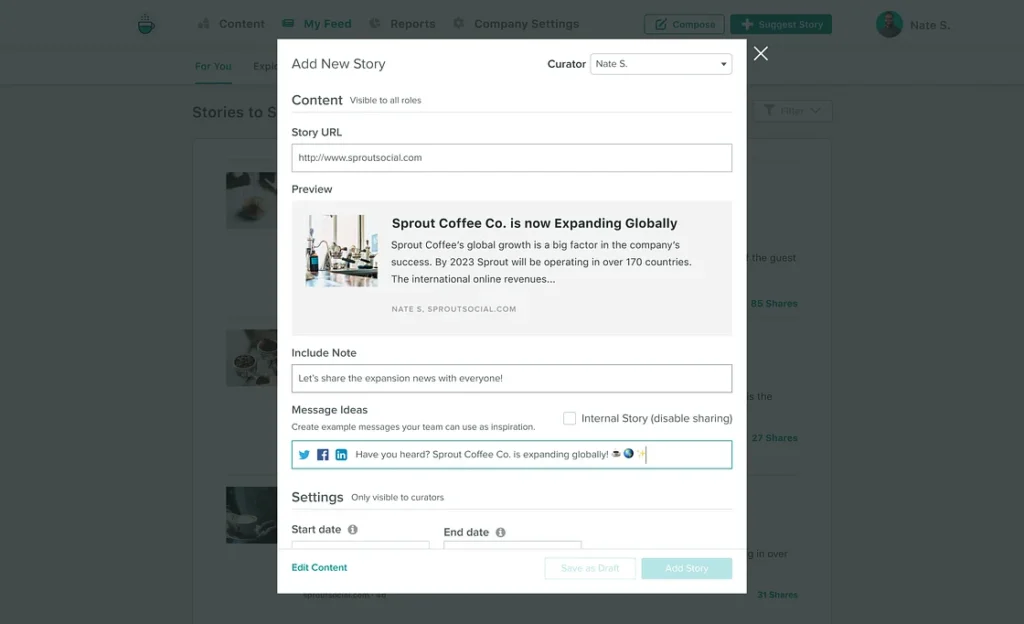
Furthermore, inviting employees to act as active stewards of the brand fosters a profound sense of ownership, belonging, and corporate loyalty. Giving staff a stake in the company’s public narrative measurably improves long-term morale, employee engagement, and overall retention rates. Organizations can streamline this process by utilizing specialized platforms to broadcast internal newsletters, highlighting open roles, corporate milestones, and cultural achievements that employees can share with a single click directly from their inboxes.
Strategic Implications and Executive Action
The cumulative data presents an unassailable business case for employee advocacy. Across diverse industries—ranging from healthcare systems experiencing a 200% surge in social engagement following program adoption, to enterprise software giants scaling millions of impressions—employee advocacy consistently transforms a passive workforce into an active, measurable growth engine.
For leadership teams navigating budget constraints and shifting digital landscapes, the strategic imperative is clear. Employee advocacy capitalizes on trusted human voices to drive awareness, accelerate sales pipelines, and attract top-tier talent without requiring exponential increases in advertising spend. As the corporate standard shifts toward formal, integrated advocacy models, the remaining question for the C-suite is not whether to adopt the strategy, but how rapidly and systematically they can formalize it to secure a competitive market advantage.
Frequently Asked Questions About Employee Advocacy
What is employee advocacy?
Employee advocacy is the strategic practice of empowering employees to share and promote their company’s content, culture, brand values, and industry insights on their personal social media profiles. It effectively transforms a company’s workforce into an authentic, trusted extension of the brand’s overall digital reach.
What is an example of employee advocacy?
Everyday examples include a sales representative sharing a newly published industry research report on LinkedIn, or a frontline retail employee posting about a company product launch. Formal enterprise programs provide employees with a curated library of pre-approved content that they can review and share across their networks with minimal effort.
What is the return on investment (ROI) of employee advocacy?
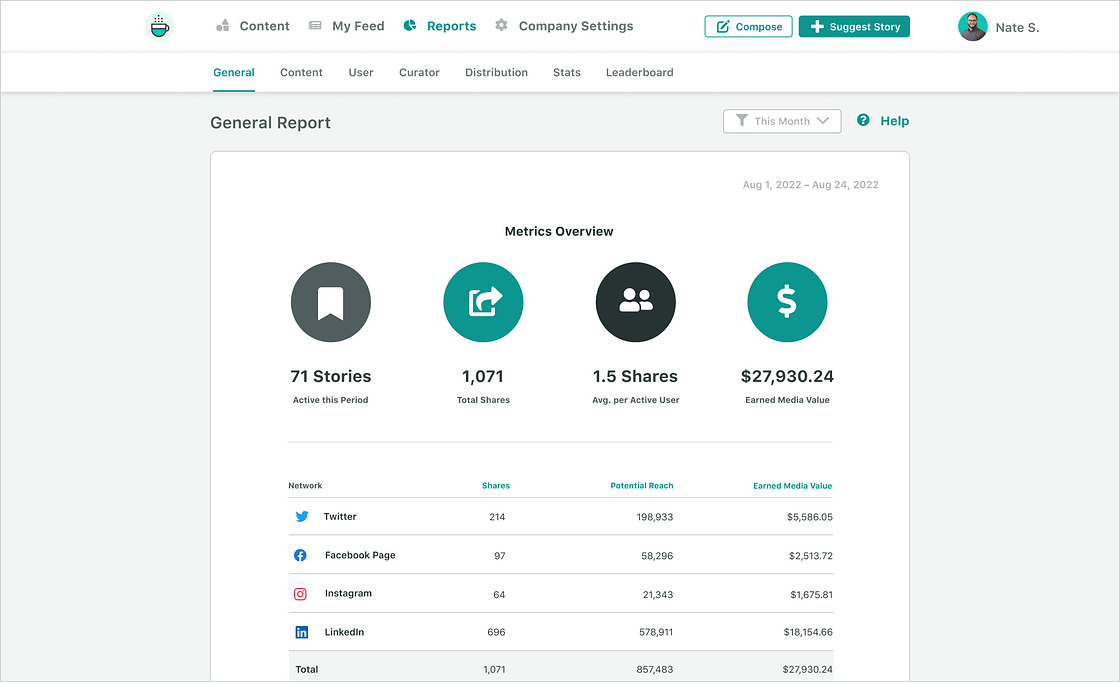
The return on investment manifests in multiple forms, including earned media value (EMV), reduced reliance on expensive paid-reach campaigns, a higher volume of qualified sales leads, enhanced social selling outcomes, and stronger talent recruitment pipelines. For instance, enterprise software provider Infor generated $100,000 in earned media value in a single month through structured employee advocacy.
How do organizations measure the success of employee advocacy?
Program success is measured by tracking key performance indicators such as employee participation rates, total content shares, overall reach, audience engagement, and earned media value. Advanced advocacy platforms aggregate these metrics into centralized dashboards, allowing organizations to tie employee sharing directly to website traffic, lead generation, and CRM-attributed pipeline conversions.