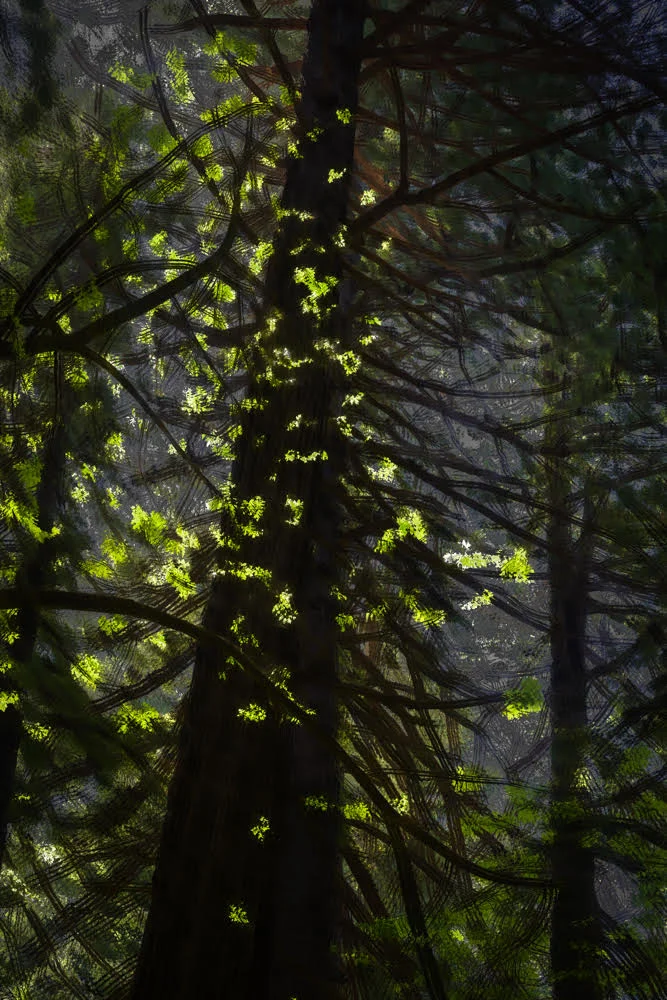

The contemporary landscape of fine-art photography is continually shaped by practitioners who seek to transcend the literal representation of topography. Among them, acclaimed film, television, and photographic director Lev L. Spiro has emerged as a prominent voice through his exploration of what Celtic spiritual tradition defines as "thin places." These locations—where the perceived boundary between the ordinary physical world and the sacred or otherworldly grows remarkably porous—form the foundation of Spiro’s recent bodies of work, including his series titled Thin Places and his ongoing project, Elemental. Through long exposures, meticulous attention to natural lighting, and a philosophy rooted in heightened perception, Spiro’s work bridges the gap between documentary landscape capture and deeply experiential visual art.
Origins and Conceptual Framework of Thin Places
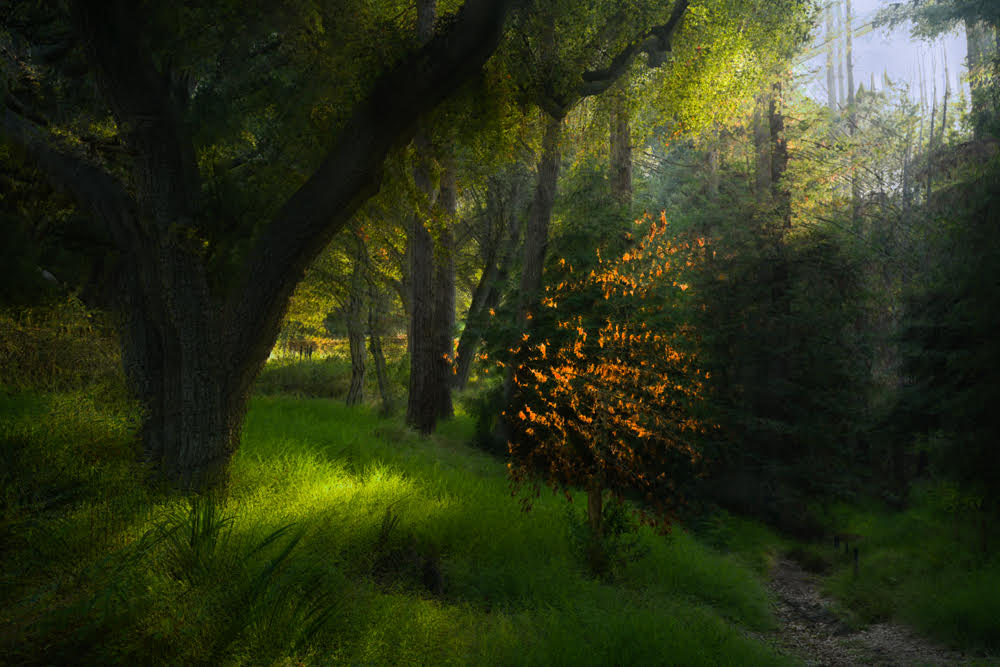
The terminology of the "thin place" traces its roots deep into Celtic folklore and spirituality, traditionally describing physical locations where the divine feels exceptionally close at hand. While historically associated with ancient sacred sites, monastic ruins, or remote islands, the concept has evolved in contemporary psychology and art to encompass any environment that induces a profound sense of awe, timelessness, and suspension of the mundane.
For Spiro, the conceptual foundation of his artistic practice was forged during his formative years. Between his eleventh and thirteenth summers, he attended a wilderness camp in Vermont modeled after the Outward Bound philosophy. Immersed in the natural topography of mountains, dense forests, and isolated watersheds far from urban and suburban infrastructure, Spiro experienced the initial, unnamed sensations of awe that would later inform his photographic philosophy. Decades later, these early encounters coalesced with traditional spiritual concepts, steering his artistic trajectory toward environments where the atmosphere undergoes a palpable shift in quality and time appears to slow.
Evolution of the Practice and Influences

Spiro’s transition into fine-art nature photography did not occur in a vacuum; it is explicitly indebted to the lineage of mid-to-late 20th-century photographic masters who prioritized internal vision over objective reporting. In developing his methodology, Spiro draws heavily upon the teachings and philosophies of Minor White, Paul Caponigro, and Sam Abell.
From White and Caponigro, Spiro adopted the foundational principle of receptivity—allowing the subject to reveal itself rather than forcing a preconceived composition onto the landscape. This pedagogical approach forms the core of the first classes Spiro teaches: instructing students how to transition from ordinary, functional seeing to a heightened state of field perception. Practitioners are taught to slow down and systematically open their senses to the interplay of light, movement, form, temporal shifts, color harmonies, textures, shapes, and spatial relationships.
From Abell, Spiro inherited the concept of allowing oneself to be "stopped" by the environment. In professional practice, this means cultivating an acute psychological and emotional openness that permits subconscious environmental cues—such as a distant waterfall glimpsed through dense foliage or a sudden shaft of illumination cutting through a dark forest foreground—to interrupt the photographer’s movement. Because these ephemeral phenomena often dissolve within moments, the photographer must remain constantly attuned to the fleeting convergence of natural variables.

Methodology and Technical Execution
Translating the intangible atmosphere of a thin place into a permanent photographic medium requires a rigorous blend of technical precision and environmental adaptability. Spiro’s workflow varies significantly depending on the specific artistic demands of his ongoing series.
For his series Thin Places, the operational window was heavily dictated by the diurnal cycle. The majority of the foundational images were captured during the critical periods of the two hours immediately following sunrise and the two hours preceding sunset. During these transitional hours, low-angle sunlight generates evocative shadows, warm color temperatures, and dramatic contrasts that enhance the otherworldly quality of woodlands and remote vistas.

Conversely, his subsequent series, Elemental, relies on prolonged temporal capture. Utilizing long-exposure techniques, Spiro actively seeks out environments characterized by dynamic fluid motion, such as running streams, waterfalls, and shifting cloud formations. This methodology requires heavy technical preparation, often involving the deployment of sturdy tripods, specialized focal lenses, and neutral density (ND) filters ranging from six to ten stops to control exposure times.
Despite meticulous planning, Spiro frequently encounters the tension between prepared intention and spontaneous discovery. It is common for the photographer to venture into the field equipped for a specific long-exposure project, only to encounter an entirely distinct visual phenomenon that demands a total reconfiguration of camera settings, lenses, and filtration systems. This friction between premeditated technique and instantaneous openness serves as a vital lesson for both the artist and his students: the necessity of abandoning rigid expectations in favor of immediate, authentic engagement with the landscape.
Environmental Ethics and Stewardship

As the popularity of wilderness photography increases, questions surrounding ecological preservation and cultural respect have taken center stage. Spiro’s approach to photographing thin places is anchored by a strict adherence to the foundational ethos of outdoor conservation: leaving no physical trace of human presence.
Because thin places frequently overlap with geographic regions holding deep spiritual significance for Indigenous populations and local communities, Spiro emphasizes the necessity of ethical engagement. Beyond avoiding physical damage to fragile ecosystems, the photographer must navigate these sensitive topographies with cultural awareness, ensuring that the act of artistic creation respects the historical and spiritual integrity of the land. In Spiro’s view, the authentic thin place exists in the relational space between the observer and the environment, requiring reciprocity and care rather than extraction or disruption.
Educational Impact and the Santa Fe Workshops Phenomenon

The broader resonance of Spiro’s artistic philosophy is perhaps best demonstrated by the overwhelming public response to his educational initiatives. His collaborative workshop with Santa Fe Workshops, titled Thin Places: Photography and the Sacred in Nature, achieved immediate commercial success, selling out consecutive sessions and generating substantial waitlists of interested practitioners.
Industry analysts and workshop organizers attribute this high demand to a distinct shift in the contemporary photographic community. While many landscape photographers achieve high levels of technical competency—mastering camera mechanics, dynamic range management, and post-processing software—a significant segment of practitioners seeks to push their portfolios beyond mere technical perfection into more deeply expressive and emotional realms.
The primary pedagogical takeaway from Spiro’s curriculum is that the "sacred" or the "thin place" is not a rare geographical commodity hidden in inaccessible corners of the globe. Rather, these spaces emerge through sustained attention, unhurried curiosity, psychological presence, and the courage to remain vulnerable to the subtle emotional impacts of the natural world.

Broader Implications for Contemporary Fine-Art Photography
The commercial and critical reception of Spiro’s work highlights an ongoing evolution within fine-art nature photography. In an era dominated by hyper-saturated, digitally manipulated landscape imagery generated for instant digital consumption, Spiro’s methodology champions a return to slowness, patience, and internal contemplation.
By prioritizing the experiential over the documentary, artists working within this tradition challenge viewers to reconsider their relationship with the natural environment. The success of Spiro’s exhibitions and educational programs suggests a growing cultural appetite for art that fosters introspection, psychological grounding, and a renewed sense of wonder in an increasingly hyper-connected modern world. Through his lens, the camera ceases to be merely a recording device and becomes an instrument for mapping the invisible boundaries of human perception.