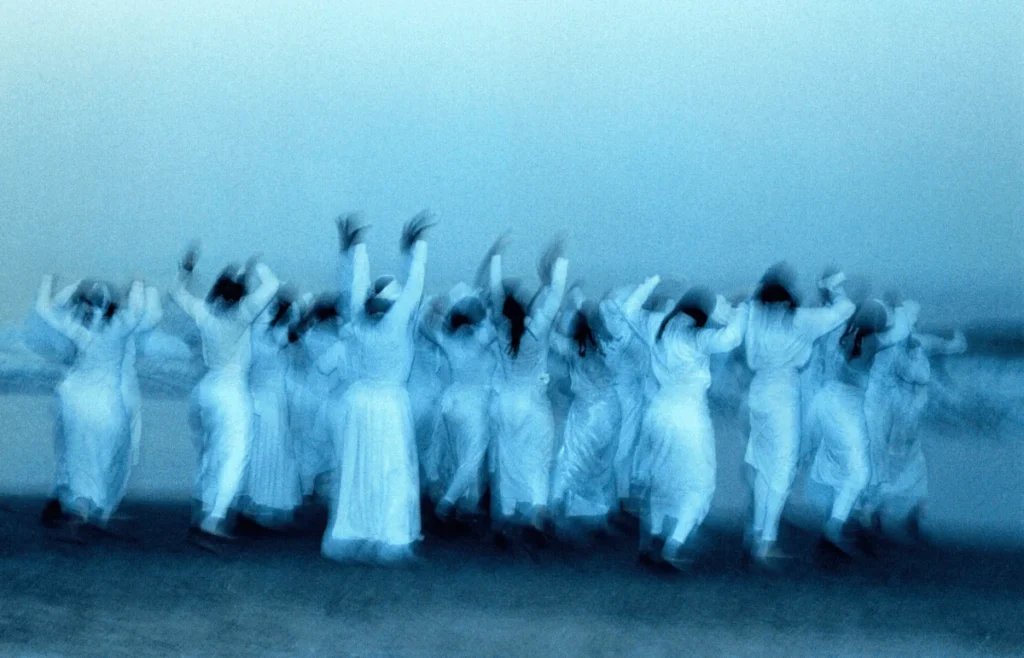

The Bruce Silverstein Gallery in New York City is currently hosting a comprehensive exhibition titled "Chester Higgins: Shared Memories," a definitive retrospective celebrating the sixty-year career of one of America’s most influential photojournalists. Running through June 20, 2026, the exhibition serves as a visual testament to the dignity, history, and spiritual depth of people of African descent across the globe. Chester Higgins, whose career includes nearly four decades as a staff photographer for The New York Times, has dedicated his life to dismantling stereotypical media portrayals and replacing them with a nuanced, humanistic "visual diet." His work transcends mere reportage, venturing into the realm of the "Signature of the Spirit," a philosophical approach that seeks to capture the invisible forces driving human existence.
The Formative Years: Alabama and the Tuskegee Catalyst
Born in 1946 and raised in rural southern Alabama, Chester Higgins came of age during the height of the Civil Rights Movement. This period was characterized by profound social upheaval and a stark dichotomy between the lived reality of Black Americans and their representation in the mainstream press. Higgins’ entry into photography was not merely an artistic choice but a reactionary one, born from a desire to correct the historical record.
While a student at Tuskegee University, a historically Black institution with a legacy of excellence and activism, Higgins experienced a pivotal moment that would define his career. After participating in a political protest at the State Capitol in Montgomery against the segregationist policies of Governor George Wallace, Higgins was struck by the media’s coverage the following day. Rather than depicting the students as citizens exercising their constitutional right to petition the government, the press utilized imagery that framed them as "potential arsonists, thugs, and thieves."

This discrepancy between the truth of the movement and the "sociological contract" of the photographers covering it led Higgins to a profound realization: "The photograph never lies about the photographer." He understood that the internal biases, fears, or comforts of the person behind the lens inevitably color the resulting image. From that point forward, Higgins committed himself to a photography of "sentiment" and "love," ensuring that his subjects were never viewed through a lens of pity or exclusion.
A Career of Expansion at The New York Times
In 1975, Higgins joined the staff of The New York Times, a position he held until 2014. During his thirty-nine-year tenure, he became a crucial "agent of expansion" within the nation’s paper of record. At the time of his hiring, media representation of Black communities often focused narrowly on crime, poverty, or social pathology. Higgins sought to broaden this "visual diet" by introducing images of Black life that encompassed the full spectrum of the human experience: family life, religious ceremonies, the dignity of labor, the wisdom of aging, and the joy of celebration.

Higgins’ impact was recognized by the highest levels of the publication’s leadership. Upon his retirement, the Managing Editor of The New York Times remarked that Higgins had fundamentally changed how the newspaper—and its predominantly white staff—perceived Black people. By placing images of Black humanity in front of America’s decision-makers daily, Higgins used art to translate complex sociological information into "digestible data." He focused on universal commonalities, such as the shared human desire for happiness and the "generosity of a creator" who provides air, water, and emotion to all, regardless of social standing.
Philosophical Foundations: The Signature of the Spirit
A central theme of the "Shared Memories" exhibition is Higgins’ concept of the "Signature of the Spirit." This philosophy is rooted in a profound out-of-body experience Higgins had as a young man, which altered his perception of reality. He came to view life as a multi-layered construction supported by invisible, shifting forces. Higgins describes himself as an "ortovert"—one who has harnessed their ego to allow the Spirit to lead.

In his photography, this translates to a search for the "marriage between Nature and life." He looks for the "behind-the-scenes effects" that drive visual reality, capturing moments where the Spirit reveals itself in the transitions between the physical and metaphysical worlds. This approach allows Higgins to look at poverty and struggle without the traditional lenses of class or pity. Instead, he focuses on the inherent humanity of the individual, finding a "balm" for the miseducation and confusion often found in modern media.
Chronology of a Visionary Career
The following timeline highlights the key milestones in Chester Higgins’ journey from rural Alabama to the heights of international photojournalism:

- 1946: Born in Fairhope, Alabama.
- 1960s: Raised in New Brockton, Alabama, experiencing the Jim Crow era and the burgeoning Civil Rights Movement.
- 1967-1970: Attends Tuskegee University. Discovers photography and begins documenting the student protest movement and rural Black life.
- 1970: Publishes his first book, Black Woman, a seminal work celebrating the diversity and strength of Black women.
- 1975: Joins the staff of The New York Times.
- 1980s-1990s: Travels extensively throughout Africa, particularly Ethiopia and Egypt, documenting ancient civilizations and the "Sacred Nile."
- 1994: Publishes Feeling the Spirit: Searching the World for the People of Africa, a culmination of decades of global travel.
- 2014: Retires from The New York Times after 39 years.
- 2021: Inducted into the International Photography Hall of Fame and Museum.
- 2024-2026: Touring of the "Shared Memories" retrospective, culminating in the current exhibition at Bruce Silverstein Gallery.
Supporting Data: The Impact of Representation in Media
Higgins’ mission to change the "visual diet" of the American public is supported by decades of sociological research. Studies on media representation have consistently shown that the "pathologizing" of Black life in news media contributes to implicit bias among the general public and decision-makers in the justice, healthcare, and corporate systems.
According to a report by the Opportunity Agenda, media portrayals that over-represent Black men in roles associated with crime or poverty, while under-representing them in roles as fathers, professionals, or community leaders, create a "distorted mirror" of reality. Higgins’ work at The New York Times served as a direct counter-narrative to these distortions. By documenting what he calls "universal experiences"—ceremonies, families, and the process of aging—he provided the "societal information" necessary to humanize a demographic that had been historically marginalized in the visual record.

Broader Impact and Implications for Modern Photojournalism
The "Shared Memories" exhibition arrives at a time of renewed national conversation regarding identity, equity, and the power of the image. Higgins’ work remains relevant because it addresses the fundamental question of how we see one another. His assertion that a photographer’s "sociological contract" is embedded in their work serves as a challenge to the next generation of visual storytellers.
In the era of social media and citizen journalism, the "visual diet" has become more crowded than ever, yet the issues of bias and "exclusive negativity" persist. Higgins’ legacy suggests that the remedy is not merely more images, but images created with a "unique, embracing, and nonjudgmental" perspective. His work demonstrates that when a photographer respects their subject, the resulting art becomes a bridge rather than a barrier.

The exhibition at Bruce Silverstein Gallery features a wide array of Higgins’ most iconic works, ranging from his early days in Alabama to his extensive documentation of the African continent. Visitors are invited to witness the "Signature of the Spirit" in portraits of world leaders, everyday citizens, and the landscapes that connect them.
Conclusion: A Legacy of Loving Representation
Chester Higgins has spent sixty years proving that photography is an act of both witness and worship. By choosing to focus on the "common denominator" of humanity, he has provided a roadmap for how media can move from a tool of exclusion to a medium of inclusion. "Shared Memories" is more than an art exhibition; it is a historical correction and a spiritual offering.

As Higgins continues to share his message, he remains a vital voice in the ongoing search for an "African Spirit" that is global, timeless, and profoundly human. His career reminds us that while humans may be "complicated and defective by nature," the lens of a photographer who loves their subject can reveal the divine within the struggle. The exhibition remains open to the public in New York through June 20, 2026, offering a rare opportunity to engage with the life’s work of a man who changed the way the world sees itself.