
For over a decade, the WordPress ecosystem has been dominated by a "boxed" approach to web design. Users have largely relied on traditional page builders that force content into rigid containers, rows, and columns. While these tools democratized web development by eliminating the need for manual coding, they introduced a new set of technical challenges: code bloat, heavy reliance on third-party plugin stacks, and significant performance degradation. Today, a shift is occurring as platforms like Kirki move toward a freeform, infinite canvas model that emphasizes clean performance and native functionality over the legacy of "div-heavy" page construction.

The evolution of WordPress page builders can be categorized into three distinct phases. The first phase involved basic shortcodes, which allowed users to insert elements but lacked any real-time visual feedback. The second phase, which arguably peaked with tools like Elementor and WPBakery, introduced the "What You See Is What You Get" (WYSIWYG) interface. While revolutionary, these tools often generated excessive nested HTML markup, which negatively impacted Core Web Vitals—the Google-defined metrics that determine how a site ranks in search results. The current, third phase represents a move toward high-performance, design-centric tools that mirror the capabilities of professional design software like Figma or Webflow, but within the WordPress environment.

A New Paradigm in Web Architecture
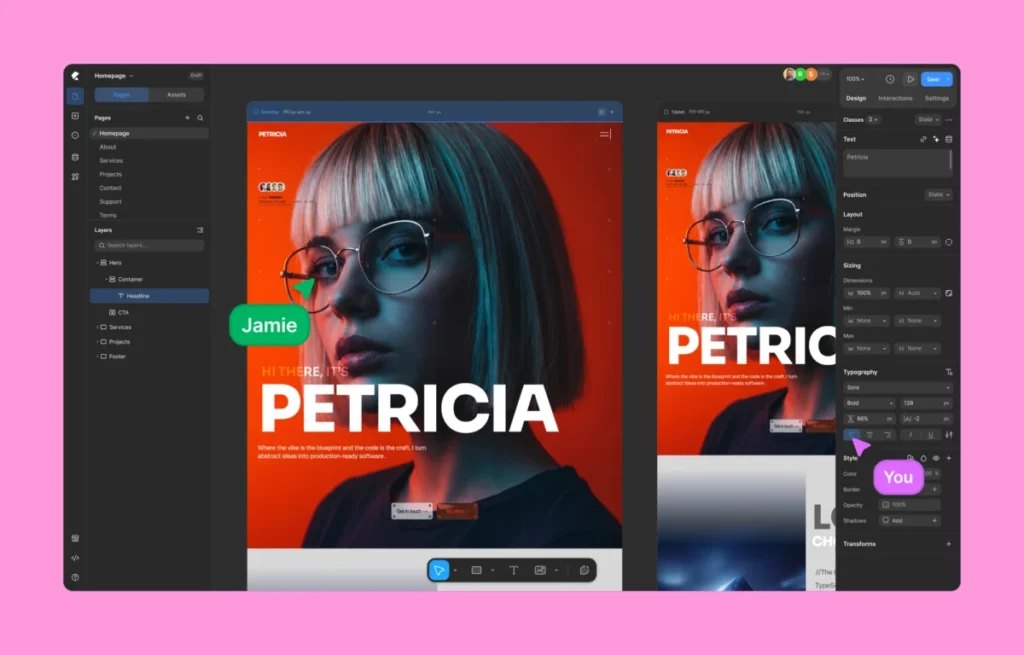
Kirki enters the market as a direct challenge to the status quo by introducing a freeform visual builder. Unlike traditional builders that force developers to adhere to pre-defined grid structures, Kirki allows for absolute positioning and layering on an infinite canvas. This transition is not merely cosmetic; it changes how the underlying code is generated. By adopting a more semantic approach to HTML, Kirki significantly reduces the DOM (Document Object Model) size.

In recent performance benchmarking tests, the differences between traditional builders and this new generation of tools have become stark. When comparing a standard layout—a hero section, a feature grid, and a contact form—built on a fresh installation of the Twenty Twenty-Five theme, the metrics highlight the impact of code efficiency. Under controlled Lighthouse audits, the traditional builder produced a heavily nested code structure, leading to higher Total Blocking Time (TBT). In contrast, Kirki’s output remained lightweight, resulting in faster Largest Contentful Paint (LCP) scores and higher overall performance ratings. For businesses relying on organic search traffic, these technical improvements are not just aesthetic; they are essential for maintaining visibility in competitive markets.

Chronology of the No-Code Shift
The rise of the "no-code" movement in WordPress has been accelerated by the demand for rapid prototyping. In 2023 and 2024, the industry saw a marked increase in interest regarding "all-in-one" solutions. Developers, previously accustomed to juggling ten or more plugins to handle forms, dynamic content, pop-ups, and animations, began demanding integrated ecosystems.

Kirki’s development timeline reflects this shift. By centralizing core functionalities—such as a dynamic content manager, a form builder, and an interaction engine—into the core plugin, the platform effectively eliminates "plugin bloat." This is a significant pivot from the traditional business model of selling "add-ons," which often created fragmented user experiences and compatibility issues. By consolidating these features, Kirki is positioning itself as a platform that prioritizes long-term site stability over quick-fix, short-term additions.

Data-Driven Design and Global Styling
A critical component of the modern web is consistency, which is often lost when individual pages are designed in isolation. Kirki addresses this through a robust implementation of CSS variables and class-based styling. By allowing users to define global design tokens—such as primary brand colors, typography scales, and spacing units—the builder ensures that changes made to one global variable propagate across the entire site instantly.

This approach is highly favored by agencies and design teams who require a systematic approach to development. The ability to save styles as reusable CSS classes means that a designer can create a specific button style once and apply it across hundreds of pages without creating redundant, inline CSS code. This architecture mimics the workflow of modern front-end frameworks, effectively bridging the gap between professional web development and visual design.

Collaboration and the Future of Agency Workflows
Perhaps the most notable feature in the current iteration of the platform is the introduction of real-time, multi-user co-editing. Previously, WordPress editing was restricted to a "one-user-at-a-time" paradigm, where one person locking a post prevented others from working on it. Kirki has bypassed this limitation, allowing team members to see each other’s cursors and edits in real-time.

For agencies, this level of synchronization is a force multiplier. It enables a copywriter, a designer, and a developer to work on the same landing page simultaneously, leaving pinned comments directly on the canvas to resolve layout issues or content mismatches. This level of granular collaboration, previously reserved for SaaS-based tools like Google Docs or Figma, is now becoming a standard expectation for high-end WordPress development.

Financial Implications and Market Positioning
The economic model of the WordPress plugin market has long been defined by "freemium" tiers, where essential features are gated behind higher-priced subscriptions. Kirki has adopted a transparent pricing strategy that aims to disrupt this cycle. By including advanced features—such as the full template library, dynamic content management, and the interaction engine—in the base subscription, the barrier to entry for high-quality design is significantly lowered.

Industry analysts observe that this "all-inclusive" approach is a direct response to the market fatigue caused by "subscription creep," where users find themselves paying for dozens of individual licenses to keep a site functional. The availability of a lifetime license option at $499 further underscores a long-term commitment to a user base that prefers capital expenditure over perpetual operating costs.

Addressing the Learning Curve
While the shift to a freeform canvas offers unparalleled creative freedom, it does introduce a steeper learning curve compared to simple, block-based editors. The platform’s complexity is a direct result of its power; providing users with the ability to define interactions, custom breakpoints, and complex layouts requires a sophisticated interface.

To mitigate this, the developers have integrated extensive documentation and "template kits" that serve as starting points. For beginners, these kits allow for a "plug-and-play" experience, while more advanced users can strip these templates down to their foundational components to build bespoke designs. This duality is essential for the platform’s survival in a market where users range from hobbyists to enterprise-level developers.

Implications for the WordPress Ecosystem
The implications of Kirki’s rise are clear: the era of the "heavy" WordPress site may be coming to an end. As web standards continue to emphasize mobile-first design, Core Web Vitals, and accessibility, the demand for builders that generate "clean" code will only intensify.

If Kirki continues to gain market share, it will likely force incumbent builders to re-evaluate their own architectures. We may see a broader move toward native integration of features that are currently handled by third-party plugins. Furthermore, the emphasis on Figma-to-WordPress workflows suggests that the lines between design tools and development platforms will continue to blur, making the web creation process more seamless and less technical for the end-user.

In conclusion, Kirki represents more than just a new tool; it is a signal of maturity within the WordPress community. By prioritizing technical performance alongside creative freedom, it addresses the most persistent criticisms of the platform. For those looking to build websites that are not only visually striking but also technically sound and scalable, the transition from rigid, boxed design to freeform, integrated development is not just an option—it is becoming a necessity. Whether one is a freelancer or a part of a large agency, the shift toward this modern architecture provides a pathway to more efficient, high-performance web development in an increasingly competitive digital landscape.