
X, formerly known as Twitter, has officially launched its Cashtag Partner Program in the United States, marking a significant milestone in the platform’s ongoing transformation into a comprehensive financial services hub. U.S.-based users can now seamlessly transition from market-related discussions on the social media platform to executing live trades for stocks and cryptocurrencies. By embedding direct pathways to major brokerage and exchange partners directly into the user interface, X is attempting to bridge the gap between real-time public discourse and financial execution. This strategic rollout represents a major leap forward for owner Elon Musk, whose overarching ambition is to convert the microblogging site into a centralized digital town square that handles everything from social networking to banking, peer-to-peer payments, and investment portfolios.
The Evolution of Cashtags and Market Integration on X
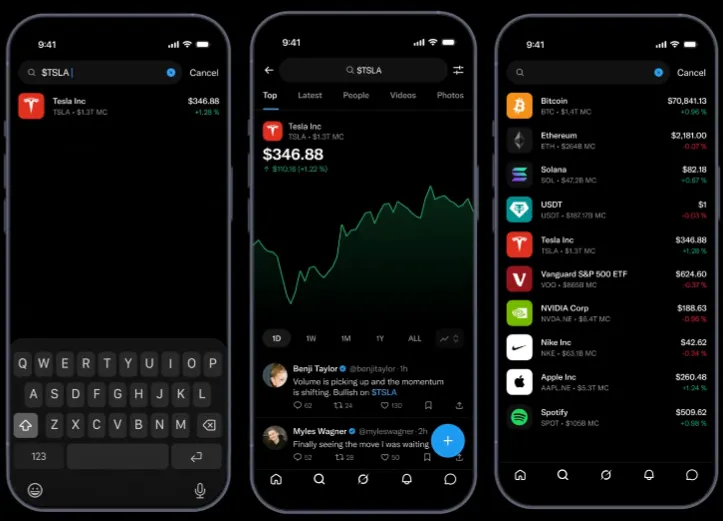
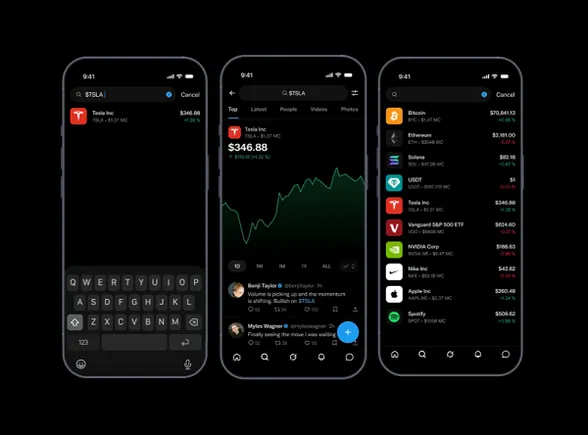
The newly introduced Cashtag Partner Program is not an isolated feature, but rather the culmination of a multi-stage rollout aimed at integrating financial data into the core user experience. The journey began in earnest when X deployed upgraded Cashtag formatting, allowing users to view real-time market data, charts, and financial metrics simply by clicking on asset tickers preceded by a dollar sign, such as $TSLA or $BTC. This initial feature was designed to keep users informed without requiring them to navigate away from the platform to external financial tracking sites.
However, viewing data was only the first phase. The newly minted Cashtag Partner Program fundamentally alters the utility of these tags by introducing transactional capabilities. Instead of merely reading market analysis or engaging in speculation about a company’s quarterly earnings or a cryptocurrency’s sudden price movement, users can now tap directly through the embedded listings. This action instantly connects them to their accounts on partner trading platforms, enabling immediate in-stream buying and selling. At launch, the roster of participating brokerages and exchanges includes prominent industry names such as Interactive Brokers, Moomoo, Gemini, Kraken, and Coinbase. By partnering with established, regulated entities, X is attempting to ensure a degree of security and regulatory compliance while expanding its commercial footprint.
A Detailed Chronology of X’s Financial Services Strategy
The integration of stock and cryptocurrency trading does not happen in a vacuum; it is part of a calculated, step-by-step roadmap that has unfolded over several years since Elon Musk acquired the platform. Understanding the trajectory of X’s financial ambitions requires looking closely at the timeline of events that have shaped its current commercial strategy.
In late 2022, following Musk’s acquisition of the company, speculation immediately mounted regarding the future creation of an "everything app," modeled loosely after applications like WeChat in China, which seamlessly blend messaging, social media, shopping, and banking services into a single ecosystem. Throughout 2023, the platform began laying the groundwork for money movement by quietly acquiring state-level money transmitter licenses across the United States. These licenses are a critical legal prerequisite for any company wishing to process payments, hold customer funds, or offer digital wallet services.
By late 2023 and into early 2024, X rolled out creator payout systems designed to compensate content creators directly through platform-managed revenue shares. This established an internal financial pipeline and conditioned users to trust the platform with monetary transactions. In April 2024, the company unveiled its revamped Cashtag format, partnering with financial data providers to display live pricing information directly within user feeds. This move capitalized on X’s pre-existing reputation as the internet’s primary hub for retail investors, day traders, and financial commentators, particularly within communities dedicated to stocks, meme assets, and decentralized finance.
Following the successful deployment of enhanced market data displays, the engineering and product teams focused on closing the loop between discussion and execution. The quiet testing and subsequent official launch of the Cashtag Partner Program in late 2024 and early 2025 have now realized this goal, enabling direct click-through trading capabilities for U.S. users. This steady cadence of product releases demonstrates a methodical approach to regulatory hurdles, user adoption, and technical integration.
Strategic Partnerships and the Brokerage Ecosystem
A critical element of X’s financial strategy relies on strategic outsourcing rather than reinventing the wheel. Rather than applying for complex global banking charters and assuming the immense regulatory liabilities associated with holding retail capital directly, X is positioning itself as an interactive front-end aggregator. By partnering with established, licensed brokers and cryptocurrency exchanges, X minimizes its direct regulatory exposure while maximizing monetization and user engagement opportunities.
The initial launch partners represent a diverse cross-section of traditional finance and the digital asset economy. Interactive Brokers brings institutional-grade execution and a massive retail customer base, while Moomoo caters heavily to tech-savvy, mobile-first retail investors who frequently populate social media financial forums. On the cryptocurrency side, the inclusion of industry veterans like Coinbase, Kraken, and Gemini ensures that digital asset enthusiasts can trade major tokens without leaving the application’s ecosystem.
Industry analysts note that this referral and integration model benefits both X and its partners. For X, it transforms passive ad-revenue scrolling into high-value transactional traffic, potentially commanding lucrative affiliate fees, referral bonuses, or sponsored placement revenue from brokerages eager to capture younger, digitally native investors. For the brokerage partners, the integration provides direct, frictionless access to millions of active users who are already discussing market movements in real time, drastically reducing customer acquisition costs.
Broader Implications for Retail Investing and Social Media
The convergence of social media discourse and direct execution carries profound implications for the retail investing landscape. For years, platforms like Twitter—and later X—have functioned as informal incubators for market trends. Phenomena such as the meme stock craze of 2021, driven largely by coordinated retail buying discussed openly on social feeds, demonstrated the immense power of online communities to move markets. However, a persistent friction point has always been the physical distance between reading a compelling financial thesis on a screen and executing a trade within a brokerage app.
By collapsing that distance into a single tap, X is removing the cognitive and mechanical friction that typically causes potential investors to second-guess their decisions. Proponents argue that this will empower users to act swiftly on breaking news, earnings reports, or market shifts. For example, if a company announces a breakthrough product and the news goes viral on X, users will no longer need to minimize the app, open a separate trading platform, log in, search for the ticker, and execute the order. Instead, the transaction can be initiated instantaneously from the context of the conversation itself.
Conversely, financial regulators and consumer advocates have raised valid concerns regarding the potential acceleration of impulsive trading behavior. The gamification of finance, combined with the emotional volatility of social media feeds where fear of missing out (FOMO) runs high, could lead inexperienced retail investors to make hasty financial decisions. The ease of in-stream trading may inadvertently encourage speculative behavior, particularly among younger demographics who consume financial advice from unverified influencers and trending hashtags rather than licensed financial advisors.

Elon Musk’s Everything App Vision and the Trust Deficit
At the heart of these product updates lies Elon Musk’s grand vision for X to evolve into the ultimate "everything app." Musk has frequently stated his intention for the platform to become the central utility for every aspect of a user’s digital and financial life, projecting that X could eventually replace traditional banking institutions entirely. In this future state, users would receive their paychecks through X, pay their bills, send money to friends, purchase goods and services, and manage diverse investment portfolios—all within a single application interface.
Yet, realizing this vision faces formidable hurdles, chief among them being consumer trust. Unlike traditional banks, which boast centuries of institutional legacy, stringent deposit insurance schemes like the FDIC, and deeply ingrained regulatory compliance frameworks, X has undergone massive corporate restructuring, leadership turnover, and drastic changes to its content moderation and security protocols in recent years. Persuading everyday consumers to entrust their life savings, primary bank accounts, and sensitive financial data to a social media company remains a towering challenge.
Furthermore, the competitive landscape is fierce. Established financial technology giants, digital wallet providers, and traditional financial institutions are continuously upgrading their own social features and user experiences. Payment networks and digital wallets already hold vast market shares in peer-to-peer transactions and commerce, meaning X must offer overwhelmingly superior convenience, lower fees, or unique utility to entice users away from incumbent solutions.
Future Outlook and Regulatory Scrutiny
As the Cashtag Partner Program establishes its operational foothold in the United States, attention will naturally turn toward international expansion and deeper financial integration. Expanding the program beyond U.S. borders will require navigating a complex labyrinth of international financial regulations, securities laws, and varying cryptocurrency frameworks across multiple jurisdictions, particularly in heavily regulated markets like the European Union and the United Kingdom.
Simultaneously, regulatory bodies such as the Securities and Exchange Commission (SEC) and the Financial Industry Regulatory Authority (FINRA) are expected to closely monitor how social media platforms interact with financial execution. Questions regarding where financial advice ends and platform facilitation begins will undoubtedly face heightened scrutiny, especially if viral posts or algorithmic amplification artificially drive trading volume in volatile securities or digital tokens.
Ultimately, the launch of in-stream stock and crypto trading on X represents a watershed moment for the intersection of social media and fintech. Whether X can successfully overcome consumer skepticism, regulatory barriers, and fierce market competition to fulfill Elon Musk’s ambitious banking replacement prophecy remains one of the most compelling business and technology narratives of the decade. For now, the platform has successfully bridged the gap between conversation and capital, forever changing how users interact with the financial markets online.