
The paradigm of digital discovery is undergoing a seismic transformation. According to HubSpot’s State of AEO in 2026 report, an overwhelming 58% of marketing professionals are actively optimizing their digital content for answer engines rather than traditional keyword-matching search bars. This strategic pivot reflects a fundamental technological evolution: the rise of generative artificial intelligence, large language models (LLMs), and the underlying mathematical frameworks—specifically vector embeddings—that power them.
As traditional search engine optimization (SEO) makes room for answer engine optimization (AEO), understanding the mechanics of semantic retrieval has shifted from an esoteric engineering concern to a vital competency for modern enterprise marketers, content strategists, and brand custodians.
The Mechanics of Meaning: Understanding Vector Embeddings
At its core, a vector embedding is a numerical representation of text generated by an advanced embedding model. The model translates words, sentences, or entire conceptual passages into a dense list of numbers, mapping semantic meaning into a multi-dimensional mathematical space.
This numerical approach allows modern retrieval-augmented generation (RAG) systems to compare passages based on underlying conceptual similarity rather than rigid lexical overlap. If a prospective buyer asks an answer engine for "the cheapest project management tool for a five-person agency," a semantic retrieval system can successfully connect that prompt to content describing a "budget-conscious project tracking plan for small teams under 10 people." Despite sharing very few exact keywords, the underlying mathematical vectors align.
Industry experts emphasize that this transformation changes how marketers must approach text generation. David Kirkdorffer, a fractional marketer appearing on the Found in AI podcast, described LLMs as performing "word math."
"Certain words add up to mean certain things. Change the words, and we change the meaning," Kirkdorffer explained. He likened the process to navigating a thesaurus, where shifting slightly away from a core term moves a brand’s narrative by degrees until it enters an entirely different conceptual category. Consequently, every rewrite of a brand’s hero section or value proposition alters the data format consumed by LLMs, dictating whether a brand is correctly categorized or obscured by semantic drift.
The Evolution of Retrieval: From Keywords to Passage-Level Relevance
The shift toward AEO is rooted in the broader maturation of AI search architectures. For decades, search engines evaluated web pages as indivisible units, ranking entire documents based on keyword density, backlinks, and aggregate domain authority. Modern answer engines, however, utilize sophisticated chunking mechanisms.

Franklin Rios, CEO of Next Net, noted on the Found in AI podcast that vectorizing information is necessary because mathematics and structured data represent the native language of LLMs. In advanced RAG pipelines, long-form content is segmented into discrete passages. Each passage is evaluated individually for topic validity, semantic relevance, and trust score.
"The chunking of every page, by the topic, the semantic, the relevance, the validity, and the trust score, it’s all in the mathematical model," Rios stated, noting that while underlying model architectures share roughly 80% commonality, the proprietary 20% differences require marketers to focus on durable content fundamentals rather than short-lived platform hacks.
This passage-level evaluation introduces a crucial rule for content creators: self-containment. If a 150-word excerpt extracted from a larger article cannot clearly communicate a complete thought or answer a specific question on its own, its utility to an answer engine plummets.
Structuring Content for Answer Engine Discoverability
To thrive in the era of generative search, content strategists are adopting rigorous copywriting patterns designed to align with how embedding models process and retrieve information. These structured patterns include:
- Entity-First Statements: Grounding brand descriptions in explicit subject-verb-object constructions (e.g., "[Brand] is a [category] for [audience] that [differentiator]") across all controlled web properties, executive profiles, and syndicated channels to minimize conflicting signals.
- Definition Blocks: Opening conceptual sections with direct, unambiguous definitions that remain coherent when separated from their broader context.
- Explicit Tradeoff Language: Directly addressing comparative questions by outlining clear use-case boundaries, such as detailing which tools excel under specific operational constraints.
- Bounded Sequences and Temporal Markers: Utilizing numbered steps with explicit outcomes alongside time-sensitive metadata (e.g., pricing or feature updates as of specific dates) to provide necessary context for temporal queries.
Furthermore, while structured data (schema markup) does not directly replace embeddings, clean machine-readable markup provides explicit entity relationships that complement semantic search signals, helping commercial platforms accurately map brand architectures.
Query Fan-Out and the Expanding Research Journey
Another defining characteristic of modern AI-driven discovery is query fan-out. Documented extensively within advanced conversational search interfaces, query fan-out occurs when an answer engine dynamically expands a single user prompt into multiple related subqueries, executing parallel searches before synthesizing a comprehensive response.
Rios illustrates this phenomenon through the progressive narrowing of conversational intent, comparing broad multi-variable consumer inquiries to tightly focused enterprise software evaluations. For marketers, this behavior invalidates the traditional practice of mapping single pages to isolated keywords.
Instead, content teams are constructing comprehensive "fan-out maps." By systematically identifying the adjacent, subsidiary questions buyers naturally ask during their research phase—such as integration capabilities, migration timelines, security protocols, and total cost of ownership—brands can anchor their content ecosystems to cover the entire conversational trajectory rather than a single entry point.

However, industry leaders urge caution against superficial volume inflation. Addressing concerns regarding automated content farms attempting to bypass quality metrics with mass production, Rios emphasized that trustworthiness and depth remain paramount. "What the bad actors are trying to do is not have the quality, not [have] the trust score, and try to override it with massive amounts of noise," he noted.
Measuring AI Visibility and Brand Integrity
As commercial platforms increasingly serve direct answers rather than driving traditional referral traffic through blue links, measuring success has required new analytics frameworks. Brands can no longer rely solely on traditional rank-tracking tools.
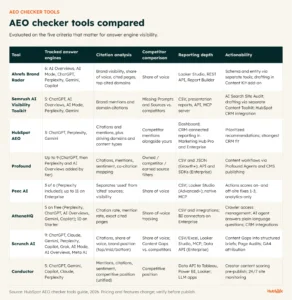
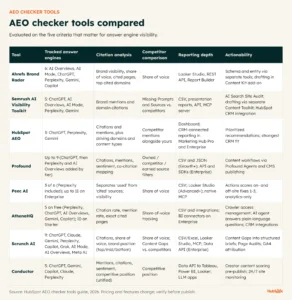
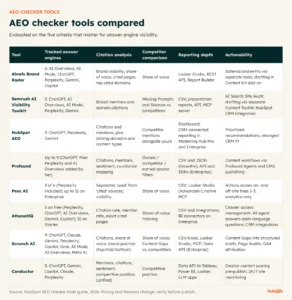
Enterprise analytics strategies now focus on AI visibility metrics, tracking prompt performance, brand citation frequency, competitor share of voice, and semantic accuracy across major answer engines including ChatGPT, Perplexity, and Gemini. Solutions such as HubSpot AEO now offer daily visibility tracking to help organizations establish baselines and monitor how their entities are represented in generative outputs.
Maintaining semantic accuracy is equally critical. If an answer engine misrepresents pricing tiers, product features, or corporate positioning, the resulting misinformation can actively deter prospective buyers, making visibility audits a vital component of modern brand management.
Implications for the Future of Digital Marketing
The transition toward vector-driven semantic retrieval and answer engine optimization marks a permanent evolution in how information is indexed, evaluated, and consumed. While the underlying mathematics—such as vector databases, embedding models, and transformer architectures—remain the domain of data scientists and software engineers, the strategic implications fall squarely on marketing leadership.
By prioritizing self-contained passages, maintaining rigorous entity consistency, covering complex query fan-outs, and rigorously tracking AI visibility, organizations can future-proof their digital footprints. Ultimately, the brands that succeed in the age of generative AI will be those that recognize structure, clarity, and authoritative depth not as mere formatting preferences, but as the foundational language of the modern web.