

In an era where digital discovery is rapidly shifting from traditional search engines to generative artificial intelligence, a groundbreaking empirical study reveals precisely what content influences an AI tool to recommend a specific business. When potential buyers prompt artificial intelligence systems for vendor recommendations, the machines do not rely on high word counts, flashy taglines, or extensive self-praise. Instead, new data shows that AI models select companies based on concrete, checkable facts clearly stated on their homepages.
Conducted to uncover the mechanics behind AI recommendations, the research analyzed 704 corporate websites across four distinct industries: web design agencies, IT managed service providers, CPA firms, and manufacturers. Researchers executed 96 prompts across four major AI tools—ChatGPT, Gemini, Google AI Mode, and Perplexity—ultimately reviewing 8,771 individual recommendations derived from 1,916 responses. By excluding top-tier enterprises in the upper quartile of Domain Authority, the study focused on the remaining 75% of businesses that can actively influence AI selections through strategic copywriting.
The Chronology and Scope of the Research
The investigation was executed over a concentrated 12-hour window in October 2026, utilizing approximately $400 in API tokens and advanced language models to process vast amounts of unstructured web data. The foundational phase involved gathering 48 detailed buyer needs across the four selected industries, carefully drafted to reflect realistic purchasing criteria without naming specific corporate entities.
Next, researchers utilized DataForSEO to capture 1,916 responses from the four targeted AI platforms in the United States. Advanced processing models then identified every corporate recommendation embedded within these answers. By mapping these recommendations back to the corresponding company homepages and up to four interior pages per site, the research team established clear correlations between on-page content and AI visibility.
The findings fundamentally challenge conventional search engine optimization (SEO) wisdom. For two decades, digital marketers have relied on correlation studies suggesting that higher word counts lead to better search engine rankings. However, the study found zero connection between homepage word count and the frequency of AI recommendations.
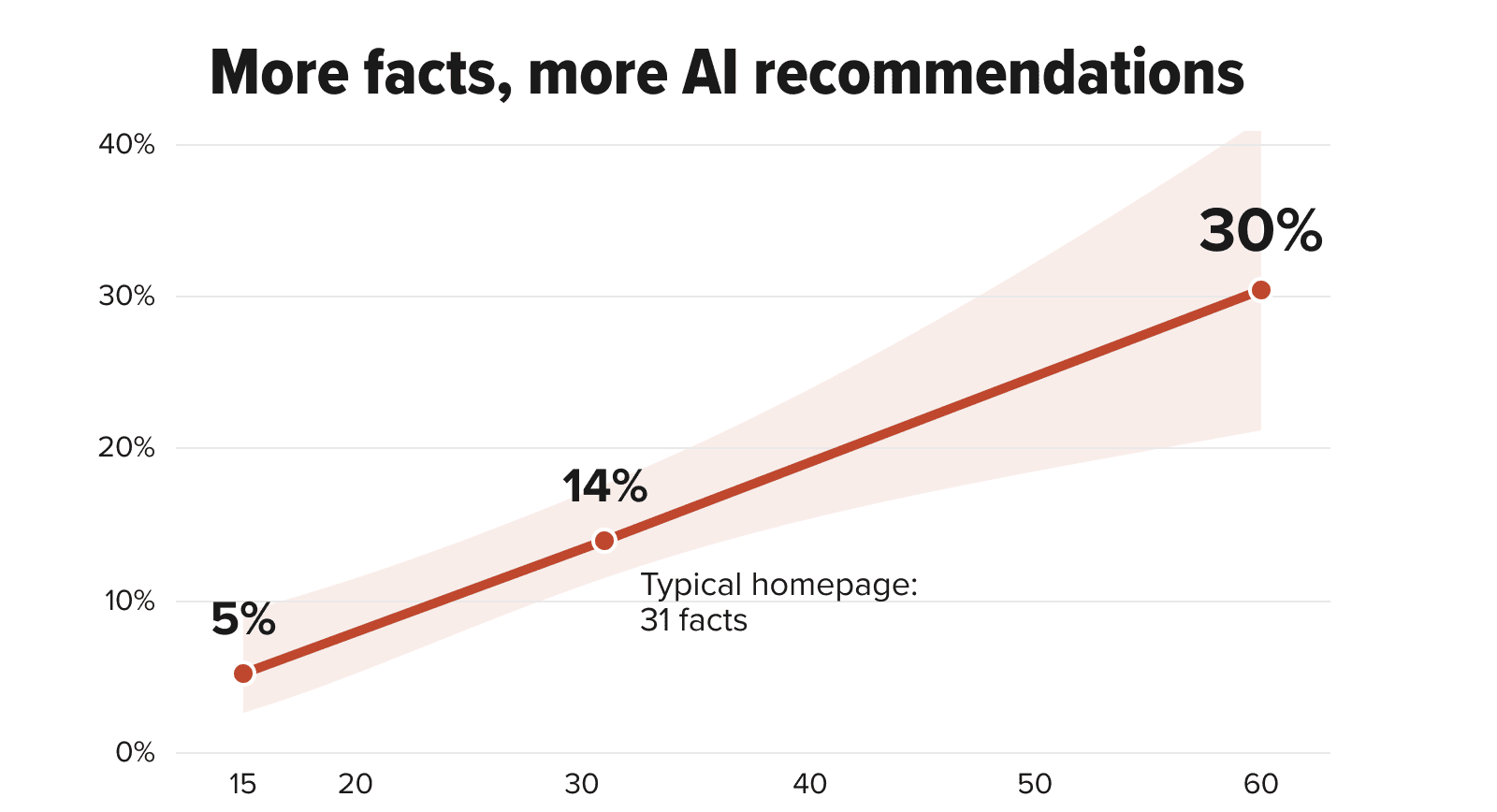
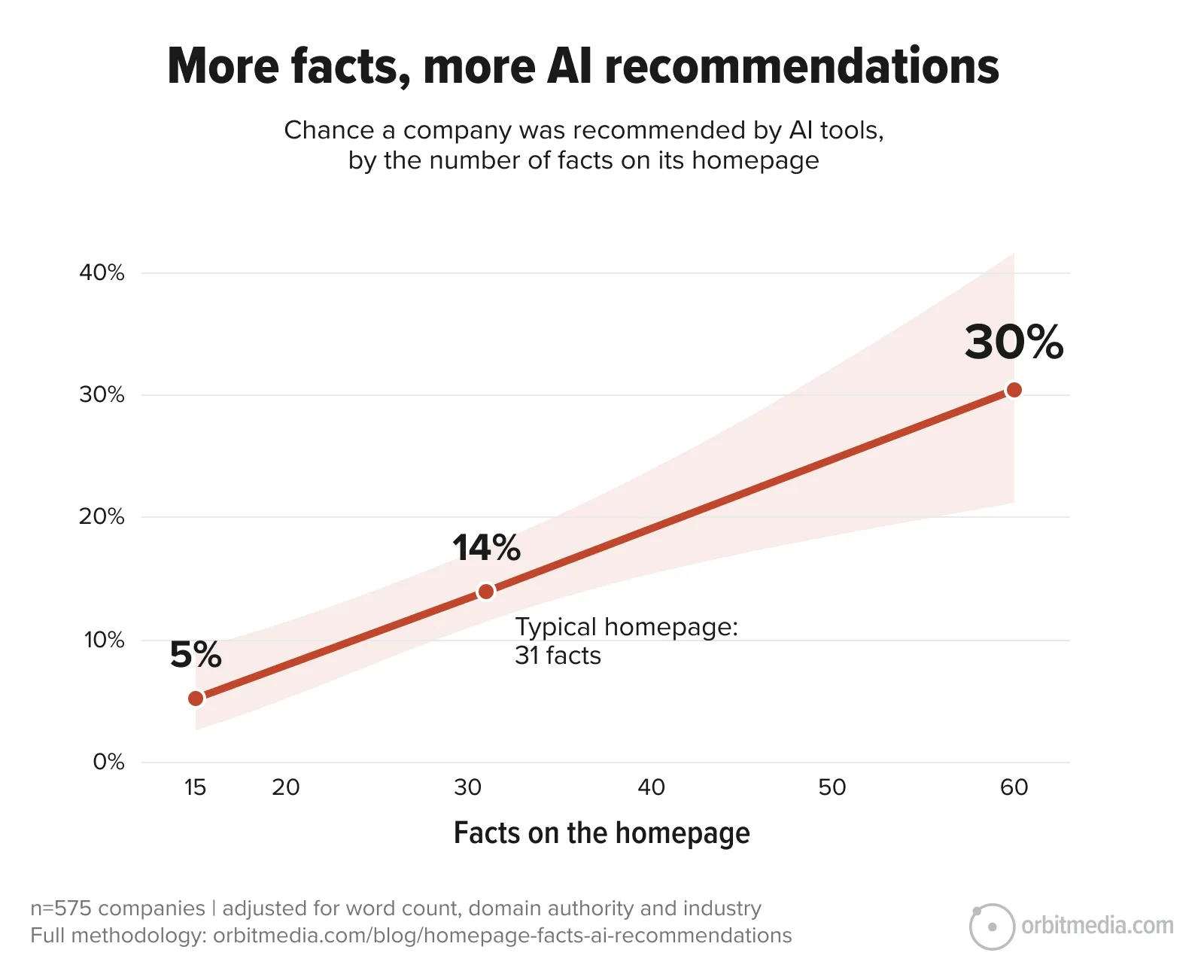
Instead, the data demonstrates a striking direct correlation between factual density and AI selection rates. Homepages containing between 15 and 60 distinct facts saw their probability of being recommended by an AI tool rise sharply from 5% to 30%. On average, a typical corporate homepage was found to state 31 individual facts.
Expert Analysis: Why Machines Prefer Facts
Industry experts point to the operational nature of probabilistic language models to explain this phenomenon. Flint McGlaughlin, Founder of MECLABS, noted that machines fundamentally favor options characterized by high clarity, high corroboration, and low ambiguity because these elements reduce the risk of recommending the wrong provider.
When a user submits a prompt, an AI model acts as a research assistant, scanning the web for verifiable parameters that match the user’s explicit constraints. Generic marketing copy filled with vague promises—such as "delivering world-class results" or "providing seamless solutions"—fails to provide the hard data points a machine requires to build a confident shortlist.
Furthermore, the study highlighted that the homepage serves as the ultimate battleground for AI visibility. Drawing on prior traffic and crawl data indicating that AI bots request homepages up to 15 times more frequently than any other site section, researchers confirmed that two-thirds of the information cited in AI recommendations originated directly from a company’s homepage. Interior pages, such as "About Us" or specific service subpages, accounted for only 5% of cited recommendation details.

The Hierarchy of Facts: What Moves the Needle?
Not all facts carry equal weight in the eyes of an AI algorithm. The research categorized homepage facts into distinct groups and discovered that specific types of verifiable proof significantly outpace others in driving recommendations.
Named clients and documented results emerged as the most powerful category, showing the highest correlation with AI selection rates. When a website lists specific client names alongside quantifiable outcomes, it provides the machine with undeniable evidence of past performance. Credentials—such as official certifications, industry licenses, partner accreditation tiers, and staff qualifications—followed closely behind. Awards, press mentions, and specific details regarding equipment, facilities, or proprietary tools also heavily influenced the likelihood of inclusion.
Conversely, the study uncovered a negative correlation between self-praise and AI recommendations. More than half of the homepages analyzed utilized superlatives such as "best," "leading," or "world-class," while three-quarters relied on adjectives like "innovative," "seamless," or "passionate." Homepages heavily laden with self-praise were recommended by AI tools only 10% of the time, compared to 16% for the rest of the dataset. Machines, it appears, disregard subjective hype in favor of objective substantiation.
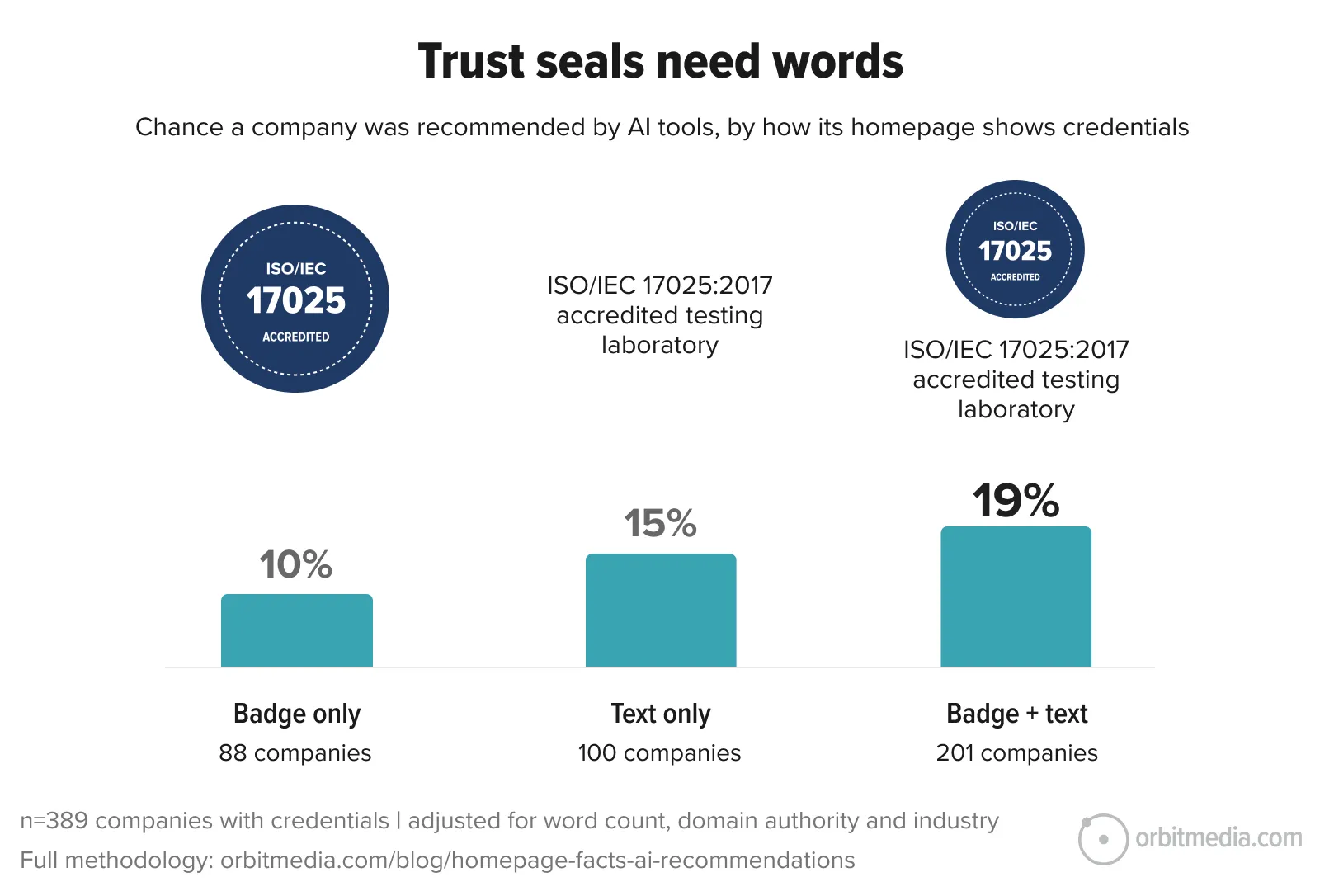
The Imperative of Textual Proof and Buyer Alignment
Another critical insight involves the format of digital trust signals. AI bots parse source code rather than rendering visual elements; consequently, client logos, certification badges, and award seals displayed solely as image files remain invisible to the algorithm. To influence recommendations, every trust seal and credential must be explicitly mentioned within the site’s body text.
Alignment with buyer intent proved equally vital. The research demonstrated that when homepage facts mirrored the specific requirements embedded within buyer prompts—such as industry specialization, geographic location, or technical constraints—the likelihood of a recommendation increased substantially. Yet, a full quarter of the analyzed homepages failed to state even a single fact aligned with detailed buyer queries, rendering them largely invisible to generative search engines.
Implications for Modern Digital Strategy
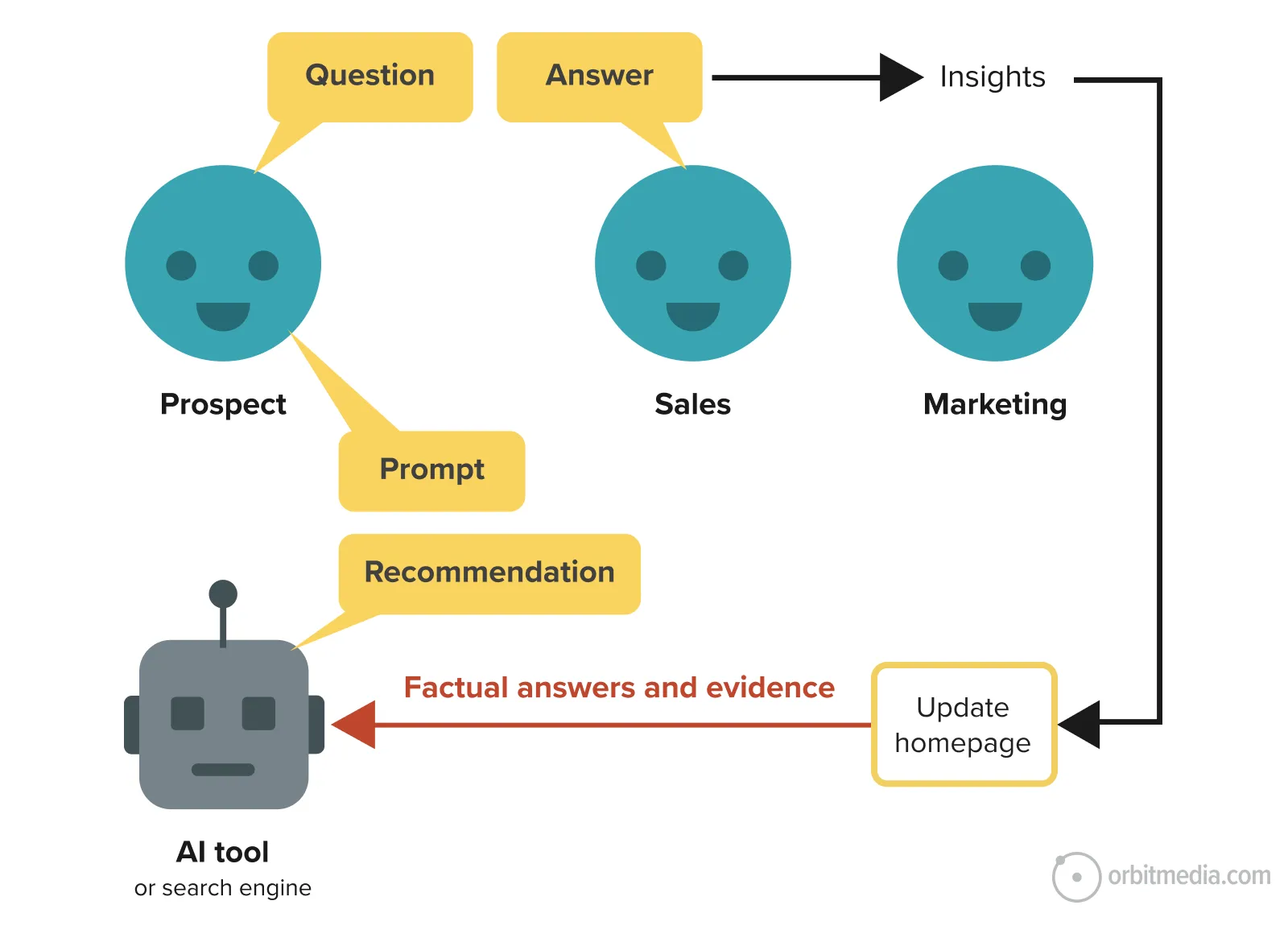
The intersection of AI search, SEO, and conversion optimization marks a profound evolution in digital marketing. While traditional SEO focused heavily on satisfying deterministic search algorithms through keyword optimization and link building, the rise of probabilistic language models requires a dual focus on machine readability and buyer alignment.
As Melissa Graham, Senior SEO and CRO Strategist at Orbit Media, observed, traditional SEOs traditionally focus on bridging the gap between a website and its competitors, whereas conversion optimizers focus on the gap between a website and its buyers. Success in the age of AI search demands both: the technical foundation to ensure visibility, paired with a robust architecture of verifiable facts that empowers AI models to serve as effective, accurate sales representatives for your brand.