
The Paradigm Shift: From Working Hours to After-Hours Engagement
For years, the consensus among B2B marketers was that LinkedIn content must be published between 9:00 a.m. and 5:00 p.m. to catch professionals at their desks. However, the 2026 data indicates a profound structural change in how users interact with the platform. While 2025 engagement was almost entirely confined to standard working hours, the latest findings show that peak windows have migrated toward the end of the workday and into the evening.
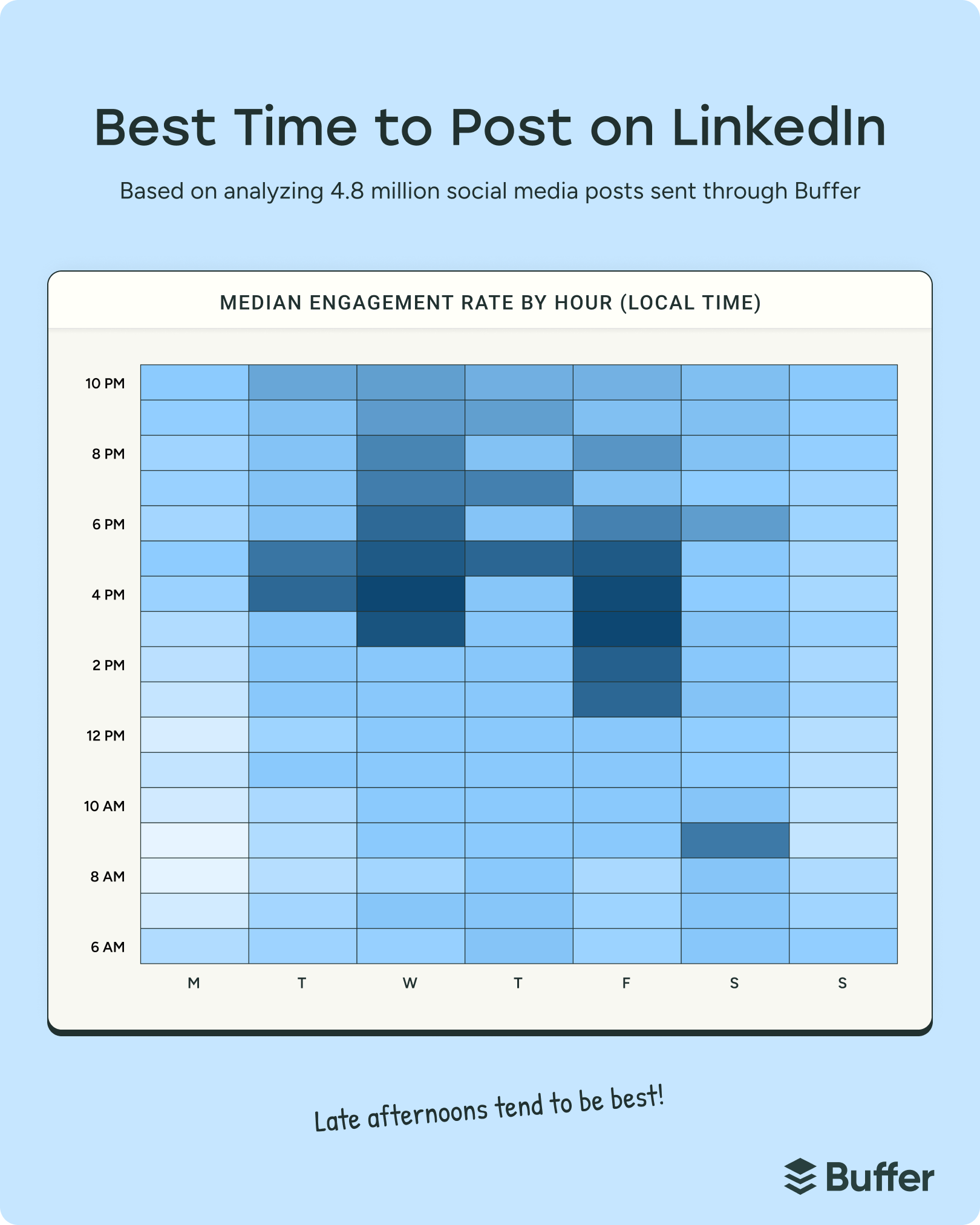
According to the report, the strongest engagement numbers are now recorded between 3:00 p.m. and 8:00 p.m. on weekdays. This shift suggests that while the content remains professional in nature, the consumption of that content has moved to "wind-down" periods—commutes, evening relaxation, or late-night industry catching-up. This "after-hours" professional development trend highlights a blurring of the lines between work and personal time, a byproduct of the hybrid work era and the increasing "socialization" of the LinkedIn feed.
Quantitative Analysis of Peak Posting Windows
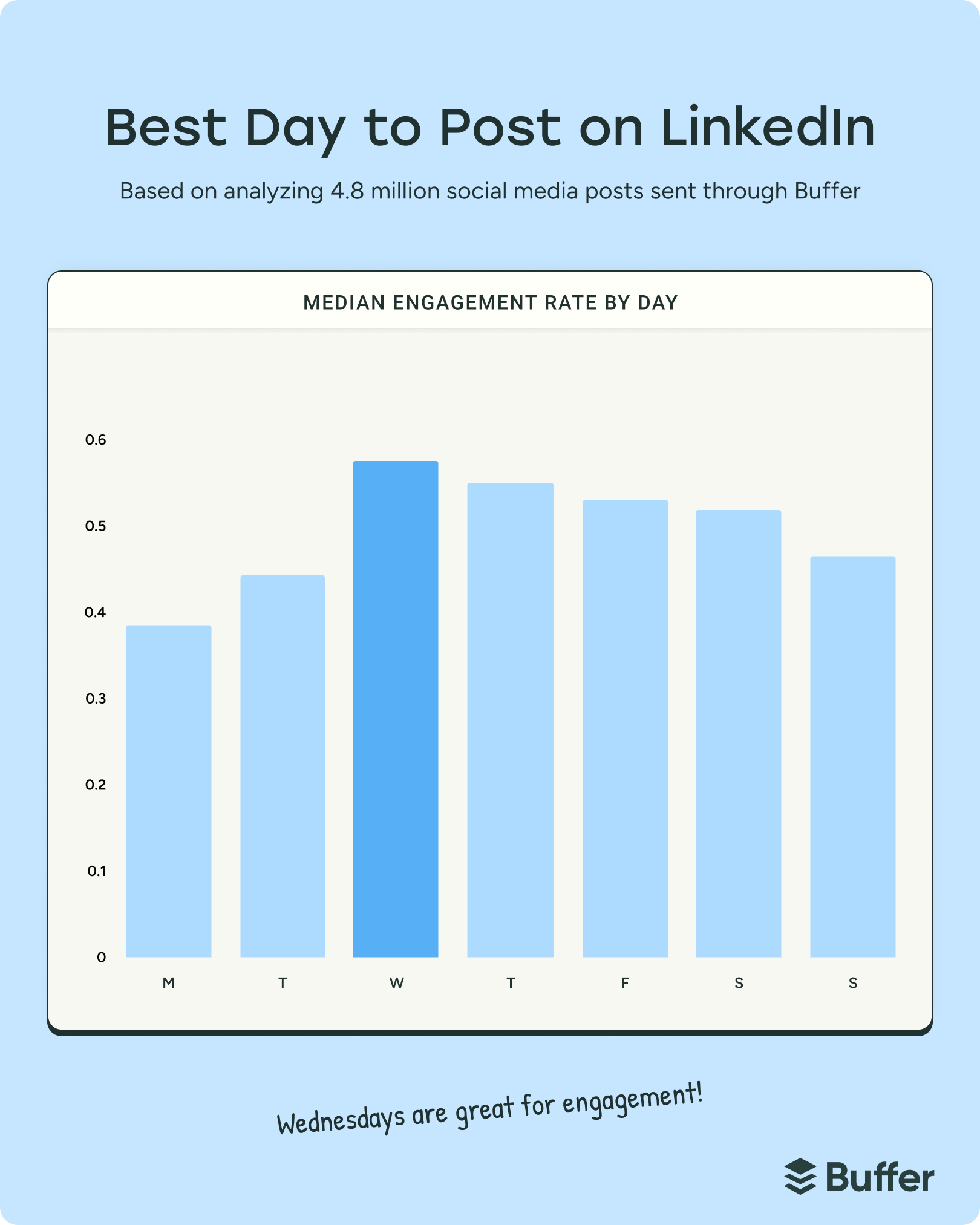
The study utilized a heatmap approach to normalize data across various time zones, ensuring that a "4:00 p.m." recommendation applies to the local time of the target audience. The analysis identified Wednesday as the undisputed leader for engagement, followed closely by Thursday and Friday. Conversely, the early week—Monday and Tuesday—showed surprisingly sluggish engagement metrics.
Daily Breakdown of Optimal Posting Times:
- Monday: Peak engagement occurs at 10:00 p.m., followed by 5:00 p.m. and 9:00 p.m. This suggests Monday is a "heads-down" workday where users only catch up on social feeds after finishing their primary tasks.
- Tuesday: The best time is 4:00 p.m., with 5:00 p.m. and 10:00 p.m. as strong alternatives.
- Wednesday: This is the highest-engagement day of the week. The "Golden Window" is 4:00 p.m., though 3:00 p.m. and 5:00 p.m. also perform exceptionally well.
- Thursday: Engagement remains high, particularly at 5:00 p.m., 7:00 p.m., and 9:00 p.m.
- Friday: As the workweek concludes, users engage early in the afternoon. The best times are 3:00 p.m., 4:00 p.m., and 5:00 p.m.
- Saturday: Generally a low-volume day, but for those who must post, 9:00 a.m. provides the best opportunity, followed by late evening slots at 6:00 p.m. and 10:00 p.m.
- Sunday: Activity is minimal until the "Sunday Scaries" set in, with 10:00 p.m. and 9:00 p.m. showing the most traction.
The Algorithmic Impact of Early Engagement
Understanding the "why" behind these times requires a look at the LinkedIn algorithm. The platform uses interaction signals—reactions, comments, and reposts—to determine the relevance of a post. When a post receives immediate engagement during these high-traffic windows, the algorithm views it as high-value content and surfaces it to a broader secondary and tertiary network.
While the concept of a "Golden Hour"—a strict 60-minute window for engagement—is not an official LinkedIn policy, the data suggests that publishing when the maximum number of followers are active creates a "snowball effect." Higher initial engagement leads to higher impressions, which in turn leads to more engagement. This feedback loop is essential for both corporate brand pages and individual creators building personal brands.
Content Format and Frequency: The 2026 Multipliers
Timing, while vital, does not exist in a vacuum. The 2026 report also touched upon the types of content that capitalize on these peak windows. One of the most striking findings is the dominance of carousel (document) posts. According to Buffer’s analysis of 2 million posts, carousels generate up to 596% more engagement than text-only posts. This format’s ability to keep users on the screen longer (dwell time) signals to the algorithm that the content is immersive and worth promoting.
Frequency also plays a significant role in visibility. The data suggests a clear tiered benefit system:
- The Baseline (2–5 posts per week): This cadence allows the algorithm to recognize the user as an active participant, resulting in an average of 1,182 more impressions per post compared to those who post only once a week.
- The Growth Tier (6–10 posts per week): This frequency can net an additional 5,001 impressions per post.
- The Power Tier (11+ posts per week): For those with the resources to maintain quality at high volume, the gains are dramatic, offering nearly 17,000 more impressions per post and three times the engagement of lower-frequency accounts.
Industry Implications and Strategic Responses
The shift toward evening engagement has significant implications for B2B marketing departments. Traditionally, social media managers worked a standard 9-to-5 shift, often scheduling their content to go out during their own working hours. The 2026 data suggests that these departments must either utilize advanced scheduling tools or shift their community management hours to the late afternoon and early evening to respond to comments when engagement is at its peak.
Industry analysts suggest that the evening surge is also a reflection of the "content-as-education" trend. Professionals are no longer just looking for news; they are looking for deep-dive insights, carousels that teach a skill, and thought-leadership pieces that require more focused attention than a quick scroll during a lunch break.
Furthermore, the lag in Monday and Tuesday engagement suggests that these days should be reserved for administrative tasks or internal planning, while "hero" content—high-production videos, white papers, or major company announcements—should be strategically held for the Wednesday-through-Friday window.
Localized Data and Global Time Zones
A common challenge for global organizations is the management of time zones. The Buffer study emphasizes that these findings are normalized to local time. For a brand based in London targeting a New York audience, the "4:00 p.m." peak must be calculated based on Eastern Standard Time (EST). The universality of the "afternoon wind-down" and "evening scroll" appears to transcend cultural boundaries, suggesting a global shift in how professional digital media is consumed.
Fact-Based Analysis of the "Evening Shift"
The transition of LinkedIn engagement to later hours can be attributed to several socioeconomic factors. First, the rise of remote and hybrid work has eliminated or changed the nature of the traditional commute, providing users with different "pockets" of time for social media. Second, the saturation of the LinkedIn feed during morning hours has likely led to "content fatigue," making the less-crowded evening feed more attractive for meaningful interaction.
Finally, LinkedIn’s own product updates, including improved video features and the promotion of "Newsletters," have encouraged longer session durations. Users are more likely to engage with these long-form formats when they are not under the immediate pressure of daily work deadlines.
Conclusion: Adapting to the New Professional Clock
The 2026 data serves as a wake-up call for those still adhering to the "work hours only" philosophy of LinkedIn marketing. With 4.8 million posts confirming that the most fertile ground for engagement lies in the late afternoon and evening, the strategy for the coming year must be one of adaptation.
By prioritizing mid-week posting, embracing high-dwell formats like carousels, and timing distribution to hit the 3:00 p.m. to 8:00 p.m. window, brands and individuals can significantly amplify their reach. However, as the report concludes, these figures should serve as a starting point. The ultimate success on LinkedIn remains a blend of data-driven timing and the consistent delivery of genuine, professional value that resonates with a specific target audience’s needs and challenges. As the platform continues to evolve, those who monitor their own analytics against these broader trends will be best positioned to lead the conversation in their respective industries.