

The digital social landscape is undergoing a fundamental transformation as users and organizations migrate from centralized, algorithm-heavy platforms toward decentralized networks that prioritize user agency. At the forefront of this shift is Bluesky, a community-first network built on the Authenticated Transfer (AT) Protocol. Unlike its primary competitors, Threads and X (formerly Twitter), Bluesky offers a transparent environment where discovery is driven by user-controlled feeds rather than opaque, corporate-owned ranking systems. For modern brands, this represents a significant departure from traditional "broadcast" marketing, necessitating a strategy rooted in authentic conversation, niche community participation, and technical verification.
The Evolution of Bluesky: A Chronology of Decentralization
To understand the strategic importance of Bluesky, one must examine its unique trajectory within the social media ecosystem. The project began in 2019 as an internal initiative at Twitter, championed by then-CEO Jack Dorsey, with the goal of developing an open and decentralized standard for social media. By 2021, Bluesky emerged as an independent entity, led by software engineer Jay Graber, distancing itself from Twitter’s corporate structure to ensure the protocol remained neutral.
The platform’s timeline reflects a measured approach to scaling. In early 2023, Bluesky launched in a private beta, utilizing an invite-only system that created an aura of exclusivity and allowed early adopters—primarily journalists, developers, and academics—to establish the network’s cultural norms. The platform officially opened to the public in February 2024, triggering a massive influx of users. Significant growth milestones often coincided with periods of instability or policy shifts on larger platforms; for instance, the suspension of X in Brazil in late 2024 and post-election shifts in the United States led to millions of new sign-ups within days. By early 2025, Bluesky had transitioned from a niche experimental project to a viable alternative for high-level professional and creative discourse.
The Architecture of Choice: Understanding the AT Protocol
The defining characteristic of Bluesky is its foundation on the AT Protocol, a decentralized framework that allows for "algorithmic choice." On traditional platforms, a single global algorithm determines what every user sees, often prioritizing controversial or high-engagement content to maximize ad revenue. Bluesky decouples the social graph from the discovery mechanism.
Users on Bluesky subscribe to "Custom Feeds"—mini-algorithms built by the community—that curate content based on specific interests, such as "Science Communications," "Tech News," or "Art Discovery." For brands, this means visibility is no longer a matter of paying for reach but of achieving relevance within these specific clusters. It shifts the driver of visibility from scale to resonance. This model provides marketers with unprecedented clarity regarding where their target audience spends time, allowing for more intentional contributions to niche communities.

Strategic Imperatives: Why Brands are Migrating
While Bluesky does not yet boast the billion-user reach of Meta’s ecosystem, its value proposition lies in the quality and influence of its user base. Data from a 2024 survey by Fire on the Hill, a digital communications consultancy, revealed that adoption among journalists and media professionals on Bluesky is significantly higher than on Threads or X. For B2B companies, technology firms, and organizations focused on thought leadership, this concentrated demographic offers a higher return on engagement than a broad but disinterested mainstream audience.
The absence of a traditional paid advertising model on Bluesky further reshapes brand strategy. Without the ability to "buy" their way to the top of a feed, brands must participate as legitimate contributors. This fosters an environment where trust is the primary currency. Early movers like Barnes & Noble and Yorkshire Tea have demonstrated that real-time, helpful, and human-centric interactions perform better than polished, promotional assets. By engaging in "reskeeting" (reposting) user content and participating in threads without a hard sales pitch, these brands have secured a foothold in the community’s trust.
Identity and Security: The Custom Domain Advantage
One of the most significant technical advantages Bluesky offers is the ability for brands to verify their identity through custom domains. On most social networks, verification (the "blue checkmark") is either a paid subscription or a process controlled entirely by the platform provider. On Bluesky, a brand can set its handle to its own website domain (e.g., @brandname.com).

This process involves adding a TXT record to the domain’s DNS settings, a task easily handled by corporate IT teams. This provides a robust layer of identity protection, making it nearly impossible for bad actors to impersonate official accounts. For news organizations like NPR, this feature has become essential for maintaining journalistic credibility in a decentralized space. It aligns with the broader industry trend toward data portability and self-sovereign identity, ensuring that a brand’s reputation is tied to its own web infrastructure rather than a third-party social media company.
Building a Resilient Strategy in Nine Steps
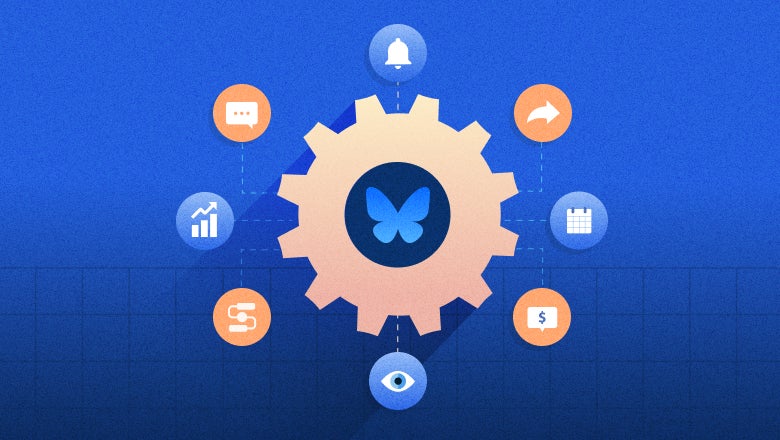
Transitioning to a decentralized network requires a tactical pivot. Industry analysts suggest a nine-step framework for brands looking to establish a sustainable presence:
- Redefining KPIs for Organic Growth: Success on Bluesky is measured by the depth of relationship rather than raw impressions. Brands should prioritize "meaningful replies" and "sentiment alignment" over follower counts.
- Voice and Niche Identification: Brands must decide whether they will act as industry educators, cultural observers, or community facilitators. Consistency in this voice is vital for appearing in relevant Custom Feeds.
- Technical Profile Optimization: Beyond the custom handle, the profile bio must be clear and human-centric, avoiding corporate jargon that tends to alienate the platform’s tech-savvy user base.
- The "Listen First" Phase: Before posting, brands are encouraged to spend time observing community norms. Understanding the specific etiquette of different Feeds prevents early PR missteps.
- Mastering Custom Feeds and Hashtags: Since hashtags function as categorization tools for community-built algorithms, using them precisely is the only way to ensure content reaches the intended audience.
- Branded Curation: Advanced brands are now creating their own Custom Feeds. For example, a software company might host a feed that aggregates the best posts on "Future of DevOps," positioning themselves as a curator of industry intelligence.
- Content Pillars: Sustainability depends on predictable themes. Brands should balance "Discussion Starters" (questions to the community) with "Data-Backed Viewpoints" (thought leadership).
- Cadence Over Volume: Bluesky’s conversational pace favors quality. A strategy of three high-value posts and ten meaningful replies per week is often more effective than daily automated broadcasting.
- Predictive News Monitoring: Given the high concentration of journalists, Bluesky often serves as the "canary in the coal mine" for breaking news. Monitoring the platform allows brands to identify emerging reputational risks or industry trends hours before they hit the mainstream.
Measuring Impact in a Non-Algorithmic World
Measuring the ROI of a Bluesky strategy requires a blend of qualitative and quantitative analysis. Because the platform lacks a centralized "Ads Manager" style dashboard, brands must look toward integrated social media management solutions, such as Sprout Social, to aggregate data.

Key performance indicators include "Reply Velocity" (how quickly a post generates conversation) and "Feed Inclusion" (how many community feeds pick up the brand’s content). Qualitative feedback—such as a journalist referencing a brand’s post or a key industry influencer engaging with a thread—provides the most accurate picture of brand affinity. As the platform matures, these "soft" signals of influence are increasingly viewed as leading indicators of market authority.
The Broader Impact: A Shift in Social Media Philosophy
The rise of Bluesky signals a broader rejection of the "attention economy" that has dominated social media for the past decade. By empowering users to choose their own algorithms and own their own identities, the AT Protocol challenges the walled-garden models of Meta and ByteDance.
For the marketing industry, this represents the death of the "one-size-fits-all" social media manager role. Success in the decentralized era requires a hybrid of community management, technical DNS knowledge, and high-level editorial strategy. Brands that invest in these capabilities now are not just joining a new app; they are future-proofing their communications against the inevitable decline of centralized, ad-saturated networks.

In conclusion, Bluesky offers a "reset" for professional social networking. It rewards those who contribute value and punishes those who treat the feed as a billboard. For organizations willing to engage with the technical and cultural nuances of decentralization, Bluesky provides a rare opportunity to build a brand presence that is both authentic and resilient in an increasingly fragmented digital world. As the network continues to scale, the early adopters who have secured their domains and mastered the art of the custom feed will likely be the ones who define the next era of corporate communication.