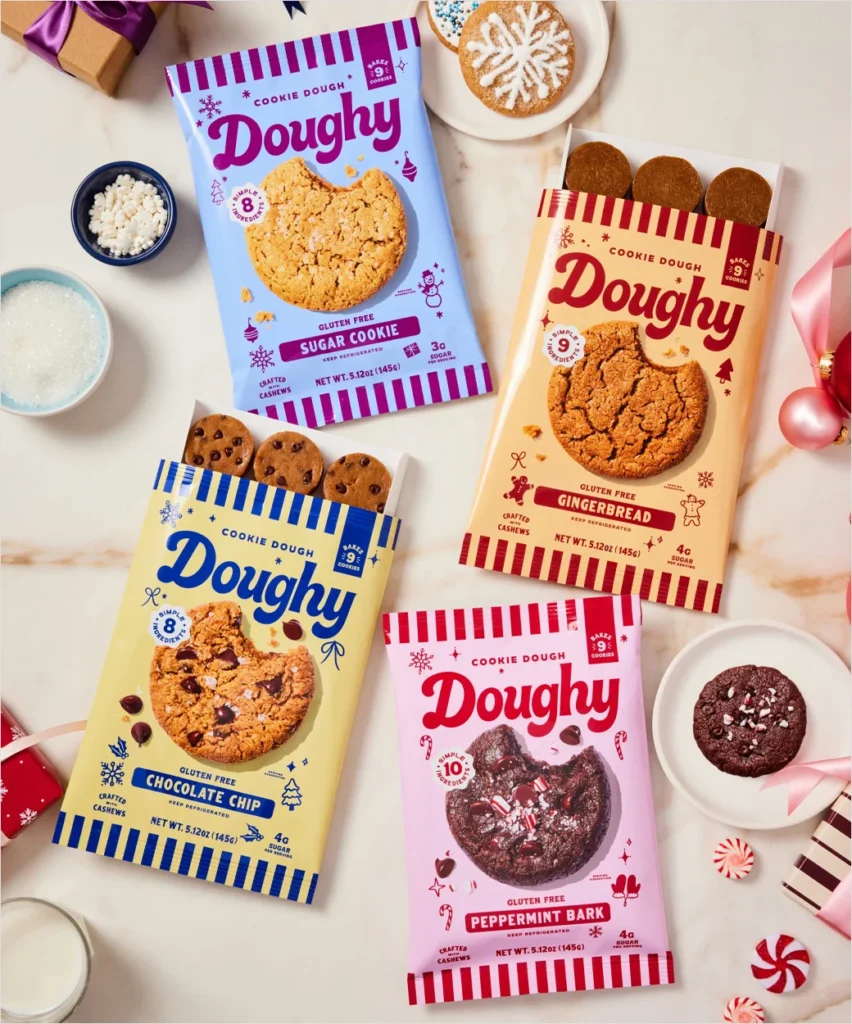

The landscape of the American functional food and confectionery market is undergoing a significant transformation, driven by consumer demand for cleaner ingredients, innovative formulations, and elevated brand aesthetics. Doughy, a prominent player in the better-for-you dessert sector, has officially unveiled a comprehensive brand overhaul, introducing a refreshed corporate logo and vibrant, contemporary packaging. This strategic rebranding effort arrives at a pivotal juncture for the enterprise, coinciding with its large-scale retail expansion into major nationwide outlets, including a prominent rollout across Target stores throughout the United States.
Founded in the domestic kitchen of entrepreneur Kelly Ramey in Santa Monica, California, Doughy has charted a remarkable trajectory from a modest homemade culinary experiment to a high-growth sweet treat brand. The company initially gained critical acclaim and commercial traction within the upscale Los Angeles wellness community, securing its position as the top-selling cookie dough brand at Erewhon, the premier luxury grocery chain operating fourteen locations across the Greater Los Angeles area. The new visual identity is meticulously designed to bridge the gap between the brand’s artisanal origins and its current status as a formidable national contender in the mass retail marketplace.
The Evolution of the Product Formulation
To understand the magnitude of Doughy’s market positioning and the rationale behind its new visual identity, one must examine the fundamental product innovation that distinguishes the brand from legacy competitors. Traditional commercial cookie dough formulations are predominantly anchored by commodity staples such as bleached wheat flour, hydrogenated or dairy-based butters, and refined white sugars. While these ingredients successfully deliver the nostalgic flavor profile consumers crave, they frequently face scrutiny from health-conscious demographics concerned with blood sugar spikes, heavy processing, and digestive discomfort.
Doughy disrupted this conventional framework by pioneering a proprietary cashew-based cookie dough formulation. Instead of relying on flour, industrial oils, and refined sugar, the brand utilizes nutrient-dense cashews combined with unrefined sweeteners like maple syrup. This formulation choice not only alters the nutritional profile—offering a cleaner ingredient deck rich in healthy fats, plant-based protein, and lower glycemic impact—but also preserves the rich, velvety texture and comforting taste profile traditionally associated with raw cookie dough indulgence.

The challenge for the brand’s design and marketing teams was to effectively communicate this sophisticated, health-forward value proposition without alienating consumers seeking pure, unadulterated comfort food. The newly unveiled logo and packaging architecture successfully resolve this tension, pairing the nostalgic indulgence of childhood treats with a bold, playful, and thoroughly modern design language.
Chronology and Growth Milestones
The journey of Doughy serves as a textbook case study in modern direct-to-consumer and premium retail scaling within the food and beverage sector.
Phase One: Kitchen Conception and Local Validation
The enterprise began in Santa Monica, where founder Kelly Ramey experimented with alternative baking bases in her home kitchen. Recognizing a gap in the market for a sweet treat that did not force consumers to compromise between health consciousness and sensory satisfaction, Ramey developed the foundational cashew-based recipe. Initial distribution was hyper-local, relying on farmers’ markets, word-of-mouth recommendations, and localized food delivery networks in Los Angeles.
Phase Two: Luxury Retail Penetration
As brand awareness accumulated, Doughy secured a distribution partnership with Erewhon, a retailer renowned for curating elite, trend-setting health and wellness products. Achieving the status of top-selling cookie dough at Erewhon served as vital social proof, validating the product’s premium price point and high consumer demand. This success caught the attention of regional specialty distributors and set the stage for broader southern California expansion.
Phase Three: National Scaling and Rebranding
Buoyed by its success in the luxury wellness market, Doughy secured major distribution agreements to enter mainstream retail heavyweights, most notably Target corporation. Recognizing that packaging designed for boutique shelves would not suffice in high-traffic, brightly lit national big-box environments, leadership commissioned a comprehensive brand redesign. The resulting identity, launched in November 2026, positions Doughy to capture a broader demographic of mainstream consumers actively seeking cleaner snack alternatives.

Insights from Leadership and Brand Philosophy
The visual and strategic transformation of Doughy is deeply rooted in the foundational philosophy articulated by its founder. Company leadership has emphasized that the redesign is not merely an aesthetic exercise, but a structural alignment with the company’s core mission of redefining permissible indulgence.
"When we started Doughy, we didn’t want to make another version of cookie dough. We wanted to rethink what cookie dough could be," stated Kelly Ramey, founder and CEO of Doughy, reflecting on the brand’s evolution.
Ramey further elaborated on the delicate balance between nutritional innovation and emotional resonance: "By starting with cashews and maple syrup instead of traditional flour, butter, and sugar, we created something entirely different, without sacrificing the incredible taste and nostalgia that make cookie dough so special. From day one, our belief has been simple: you shouldn’t have to compromise on taste to feel good about what you’re eating. Our new brand identity brings that philosophy to life and reflects just how far we’ve come, and where we’re headed next."
This sentiment underscores a broader consumer trend: modern buyers are increasingly unwilling to accept sensory deprivation in exchange for health benefits. Brands that succeed in the functional food space are those capable of delivering uncompromising flavor wrapped in transparent, aesthetically pleasing packaging.
Design Analysis of the New Visual Identity
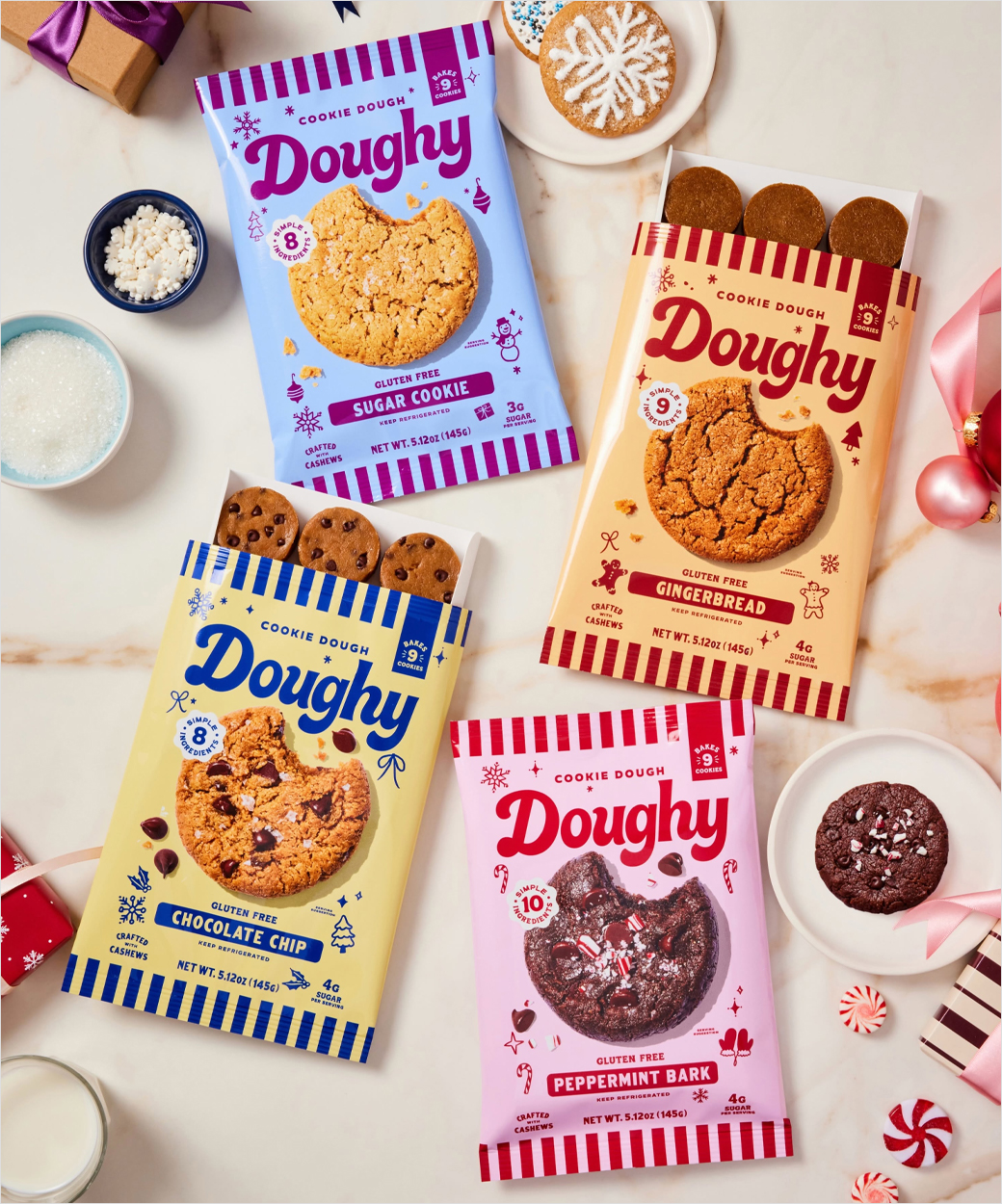
The newly revealed visual assets showcase a deliberate departure from the rustic, handmade aesthetic of Doughy’s early days, transitioning toward a polished, vibrant, and shelf-dominant design system.
Typography and Logo Architecture
The refreshed logo features custom typography that balances approachability with clean, contemporary geometry. By softening the edges of the letterforms, the design hints at the pliable, dough-like nature of the product while maintaining high legibility across various digital and physical touchpoints. The wordmark is engineered to scale effectively, ensuring brand recognition whether stamped on a miniature digital ad banner or printed prominently on large-format retail pouches.
Packaging and Color Psychology
The updated packaging utilizes a sophisticated yet playful color palette designed to stand out amidst fierce competition in grocery refrigerated aisles. Eschewing the muted, overly clinical earth tones frequently associated with vegan or health-centric foods, Doughy’s new packaging employs vibrant, saturated hues that communicate joy, indulgence, and flavor accessibility. The materials chosen reflect a commitment to product freshness while offering clear product visibility, allowing the natural textures and inclusions of the cookie dough to act as a secondary visual hook for the consumer.
Information hierarchy on the packaging has also been optimized. Key differentiators—such as the cashew base, unrefined sweetener usage, and dietary attributes—are communicated clearly without cluttering the primary display panel, ensuring that shoppers can instantly grasp the product’s value proposition within seconds of browsing.
Broader Market Implications and Industry Trends
Doughy’s rebranding and subsequent national retail expansion arrive against the backdrop of shifting consumer behaviors within the packaged goods sector. Over the past five years, the "permission-less snacking" category has experienced exponential growth. Consumers are progressively moving away from artificial ingredients, sugar substitutes with undesirable aftertastes, and heavily processed commodity snacks. Instead, they are gravitating toward whole-food-derived alternatives that offer functional benefits without sacrificing emotional comfort.
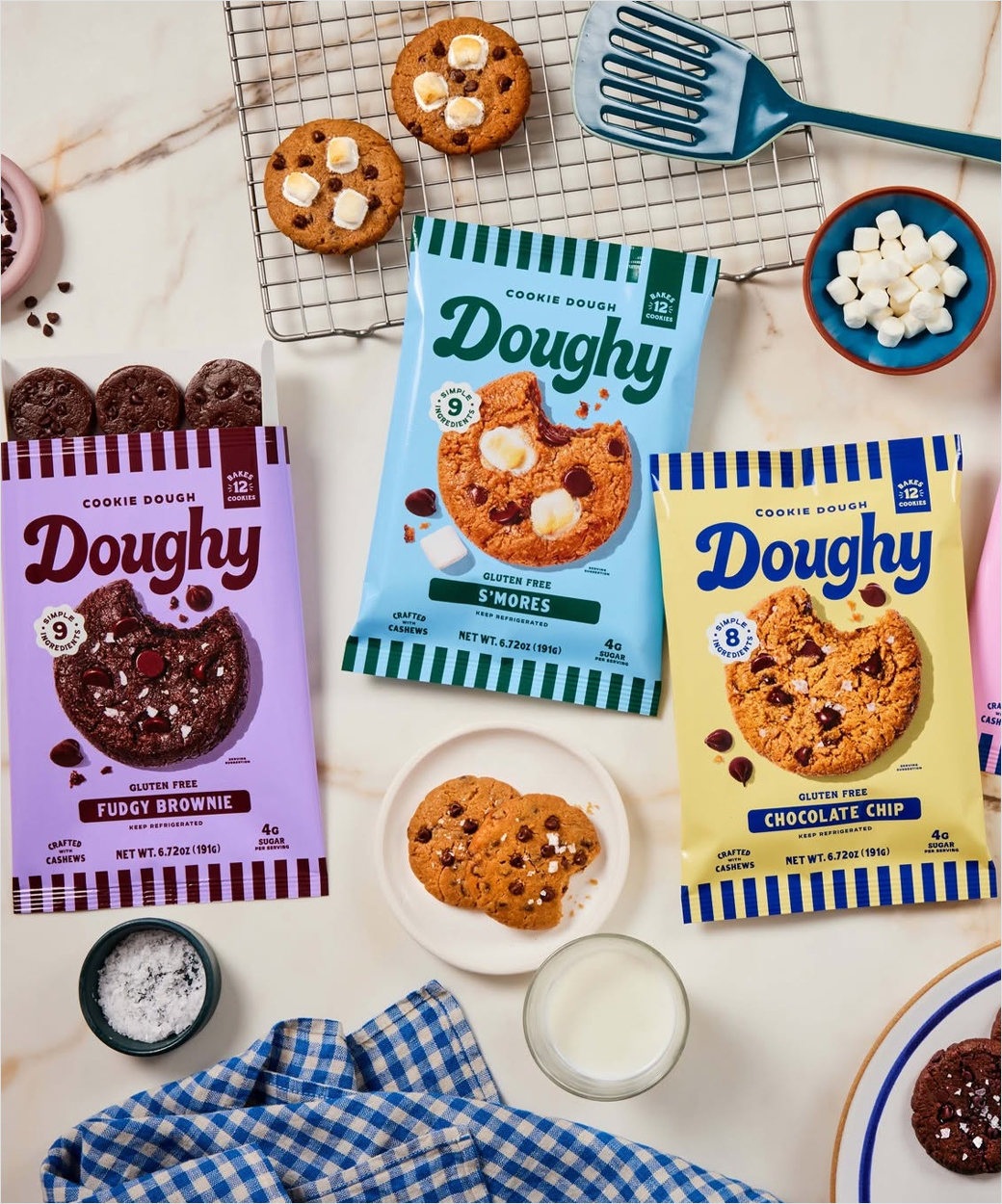
The commercial trajectory of brands like Doughy signals several critical developments in the food industry:
- The Mainstreaming of Plant-Based Ingredients: Once confined strictly to specialty health food stores, alternative base ingredients like cashews, almonds, and oats are rapidly penetrating mass-market retail channels. This normalization is driven by innovations in food science that successfully replicate traditional textures.
- The Elevation of Brand Storytelling and Design: In an increasingly saturated retail environment, functional nutritional benefits alone are no longer sufficient to guarantee consumer loyalty. Emerging brands must invest heavily in sophisticated design systems and emotional branding to establish immediate trust and connection with shoppers.
- The Bridge Between Boutique and Big-Box Retail: Doughy’s successful migration from an ultra-exclusive regional retailer like Erewhon to a ubiquitous national chain like Target demonstrates that high-end wellness brands can successfully scale for mass consumption without diluting their core ethos, provided their rebranding efforts carefully manage the transition.
Future Outlook for the Brand
As Doughy deploys its new visual identity across retail shelves nationwide, industry analysts will be closely monitoring consumer response and sales velocity within Target locations. The success of this rollout could serve as a blueprint for other emerging direct-to-consumer food brands seeking to transition into omnichannel national distribution.
By maintaining its uncompromising stance on ingredient integrity while embracing a bold, consumer-facing aesthetic, Doughy has positioned itself to capture a significant share of the evolving dessert and snack market. The brand’s ability to honor the deep-seated nostalgia of eating raw cookie dough while contemporizing the formulation for the modern wellness consumer ensures its continued relevance in a rapidly changing commercial landscape.