

The digital marketing landscape has been flooded in recent months by a new wave of diagnostic offerings: free, rapid AI visibility audits. Promoted heavily across search engines, product launch platforms, and direct-message marketing campaigns by agencies, consultants, and SEO software firms alike, these tools promise to evaluate a brand’s presence in artificial intelligence-generated answers with a simple URL submission. However, a comprehensive analysis of 100 such tools reveals a systemic flaw in their design. By focusing almost exclusively on technical infrastructure and automated content scraping while entirely bypassing foundational buyer research, these audits measure mechanics rather than human intent, rendering their arbitrary scoring models largely meaningless for modern marketing strategy.
The proliferation of these diagnostic tools mirrors a classic playbook in digital marketing history. Decades ago, search engine optimization (SEO) software pioneers leveraged automated "website graders" to attract organic inbound links and generate sales qualified leads by highlighting technical deficiencies. Today, as generative engine optimization (GEO) and answer engine optimization (AEO) take center stage, software providers and agencies have merely rebranded the concept.
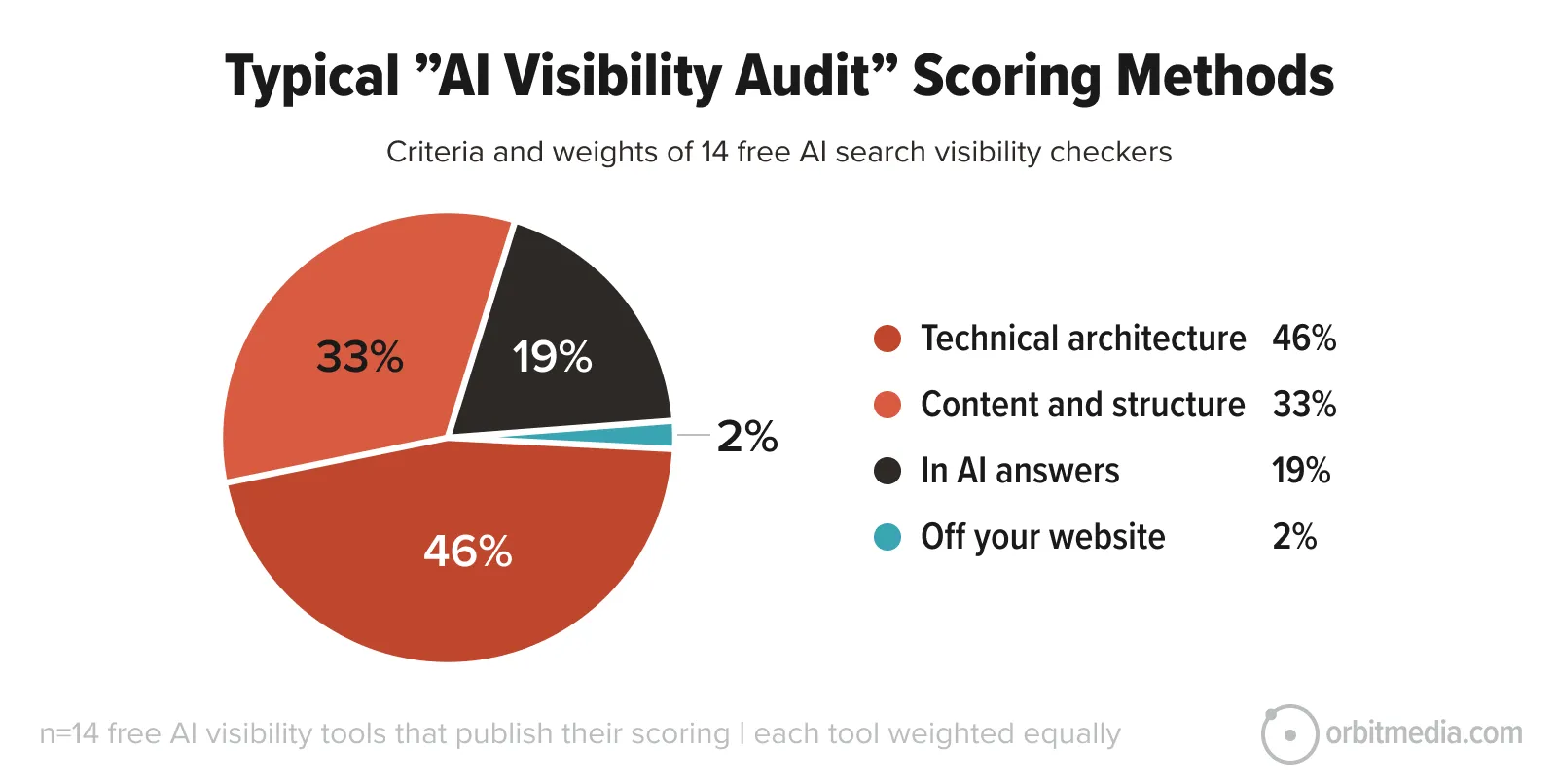
To understand the scope and methodology of these contemporary tools, a recent industry study examined 100 free AI visibility audits discovered via Google searches, curated software roundups, and Product Hunt releases during October 2026. Out of this dataset, 18 ungated tools were tested directly against a single corporate website to compare their live performance reports against their publicly stated criteria. Furthermore, the scoring weights of the 14 tools that publicly disclose their evaluation algorithms were analyzed to determine how these platforms assign grades.
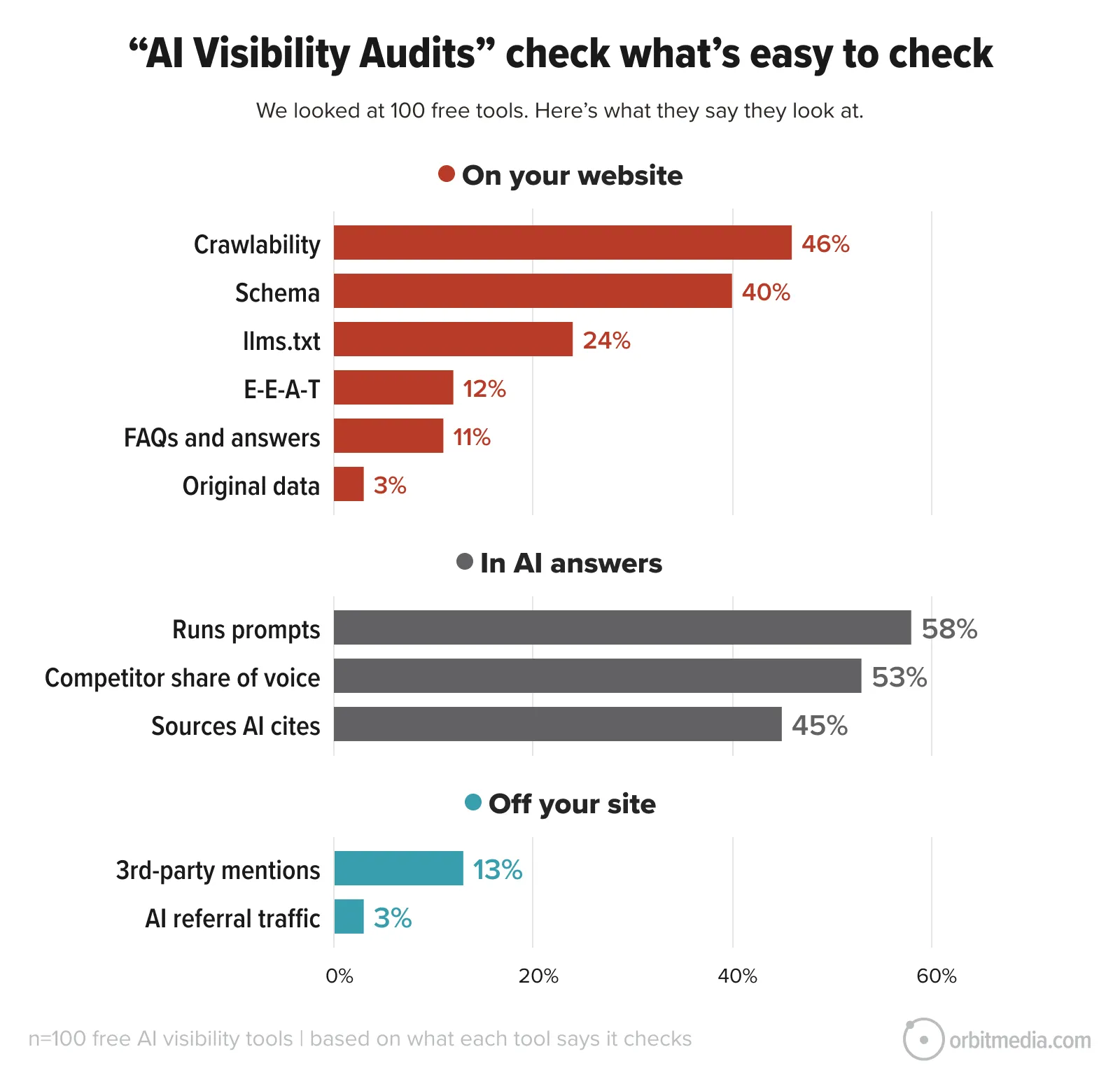
The findings indicate a stark disconnect between what these platforms claim to measure and what actually drives brand visibility in conversational AI platforms. The data reveals that 46 percent of a typical AI visibility audit score is determined by technical architecture—such as crawlability, site speed, and schema markup. Content structure and formatting account for 33 percent of the evaluation, while direct measurement of in-AI answers comprises 19 percent. Off-website factors, such as brand mentions and digital PR, scrape a meager two percent of the total weight.
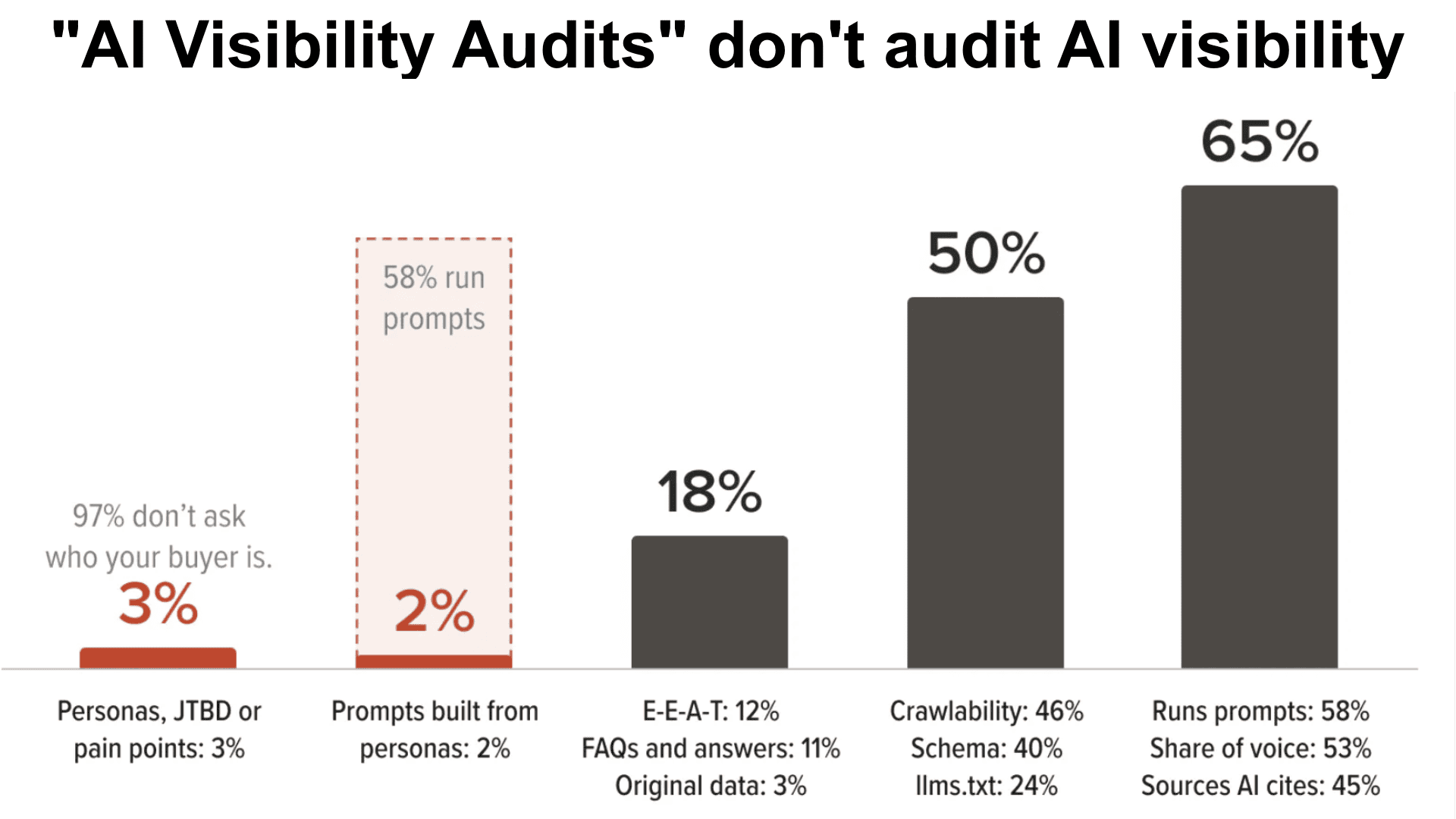
Most critically, the research uncovered that foundational buyer persona analysis is virtually absent from these automated checks. While 65 percent of the evaluated tools concentrate heavily on technical AI response formatting, a mere 3 percent incorporate any evaluation of target audience alignment or buyer behavior.
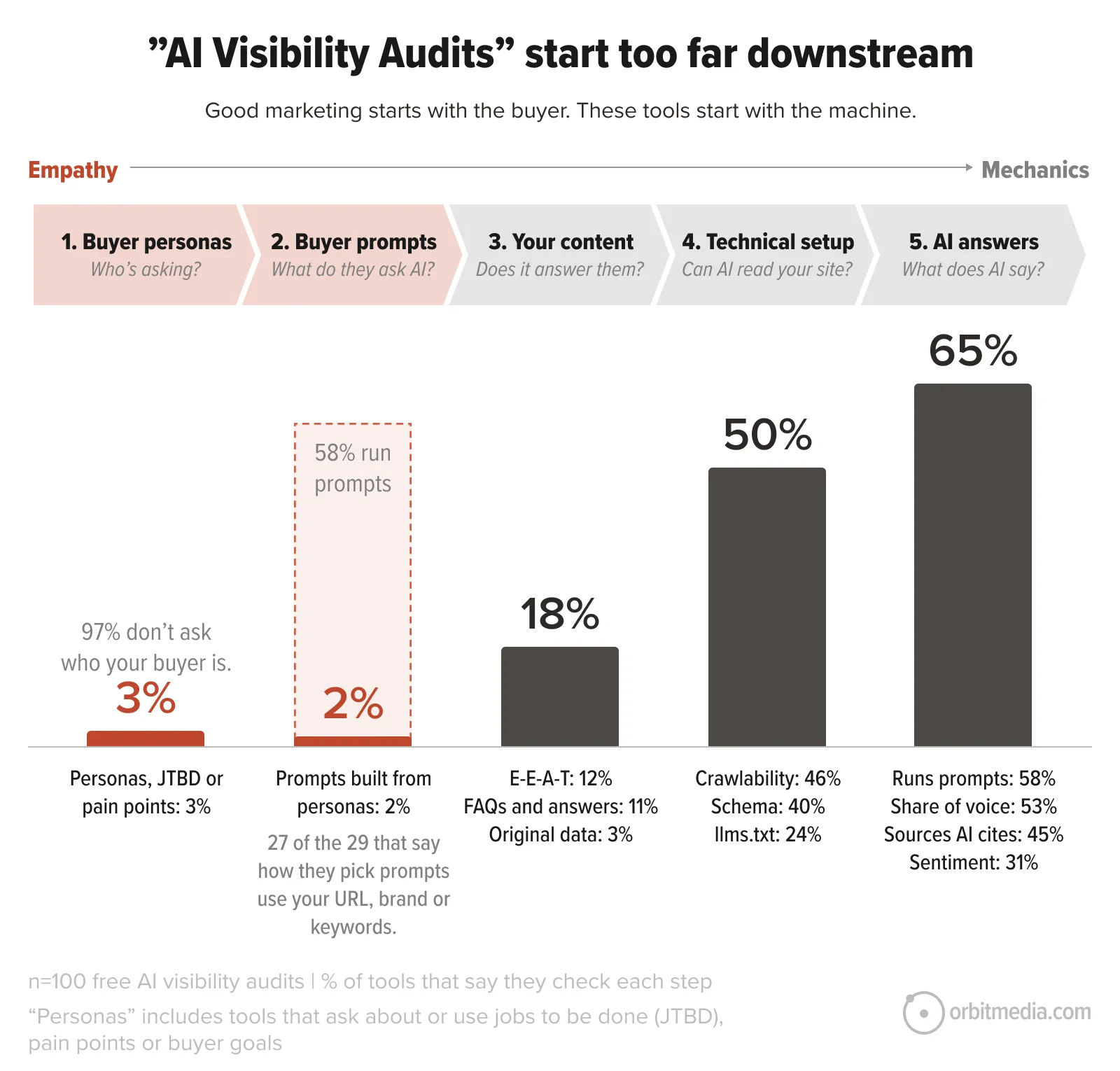
This oversight stems from a fundamental misunderstanding of how modern buyers interact with generative search tools. Traditional keyword research relied on short, mechanical search queries typed into a search engine bar. In contrast, modern AI-driven discovery resembles an intimate, highly personalized conversation. A buyer researching enterprise solutions late at night does not type a generic two-word phrase; they input complex operational hurdles, budgetary constraints, historical vendor frustrations, and specific corporate requirements into conversational models like ChatGPT or Claude.
The AI then synthesizes these multifaceted constraints to curate a hyper-targeted shortlist of recommended partners. Consequently, true AI visibility begins with an empathetic understanding of the human buyer—what triggered their journey, what questions they are asking, and what criteria they use to make a decision—long before any technical bot ever crawls a web page.
Despite this reality, the methodology employed by most free audit tools works in reverse. More than half of the evaluated platforms (58 percent) dynamically generate test prompts by crawling the target website itself. In essence, the audit tool reads a web page, writes hypothetical buyer prompts based solely on the content it finds, queries an AI model with those self-generated prompts, and then grades the web page based on the resulting output. This circular logic creates an echo chamber: a poorly aligned page can easily pass an automated audit if the audit tool bases its evaluation criteria entirely on the flawed messaging already present on the site.
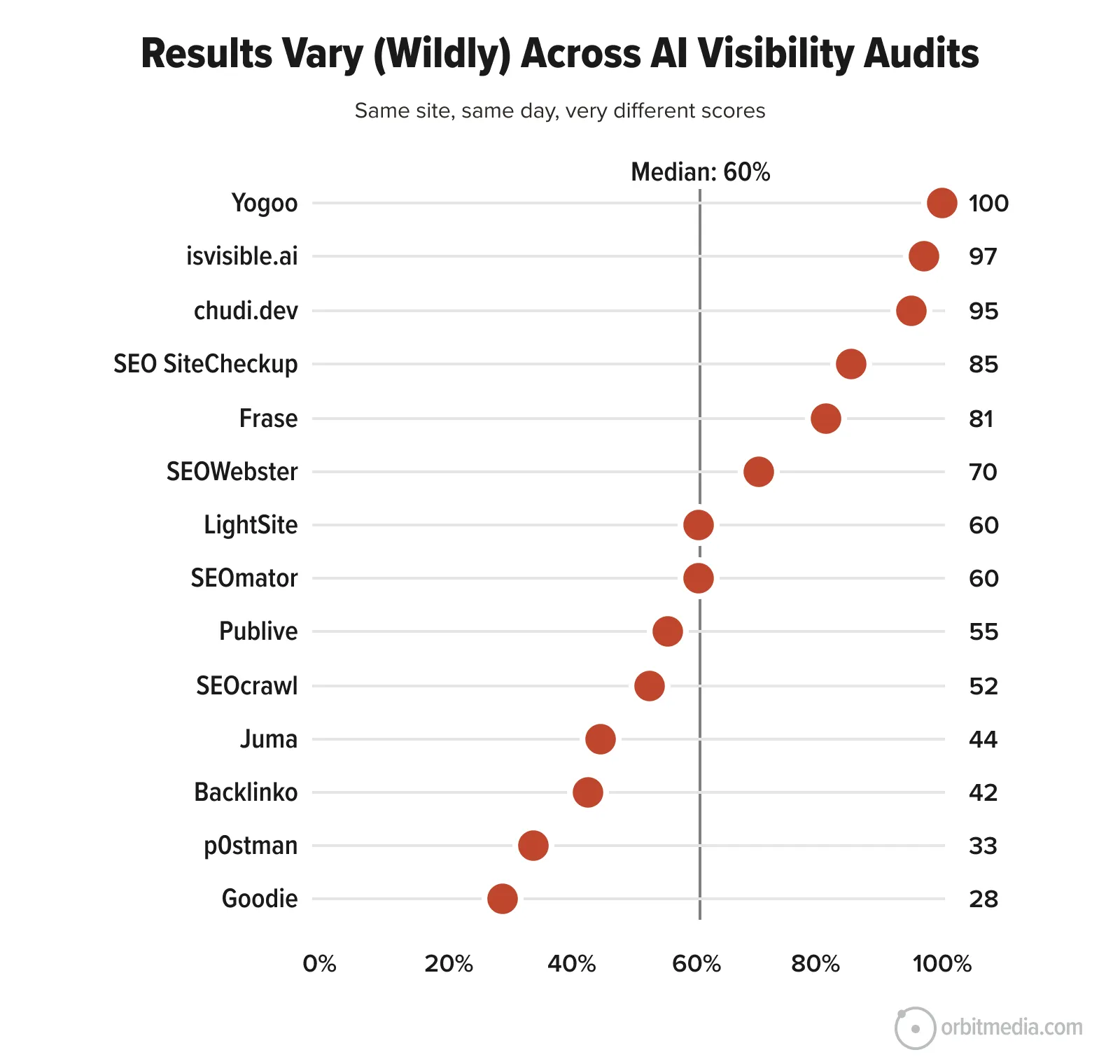
The unreliability of this approach is further underscored by the wild variance in scoring outcomes. When a single domain was submitted across 14 different auditing platforms, the resulting scores ranged from an abyssal 28 percent to a perfect 100 percent, with a median score hovering near 60 percent. Industry analysts note that if these tools were robust and scientifically reliable, the performance evaluations would cluster within a predictable, standardized margin of error. Instead, the erratic scoring underscores that these metrics are largely arbitrary.
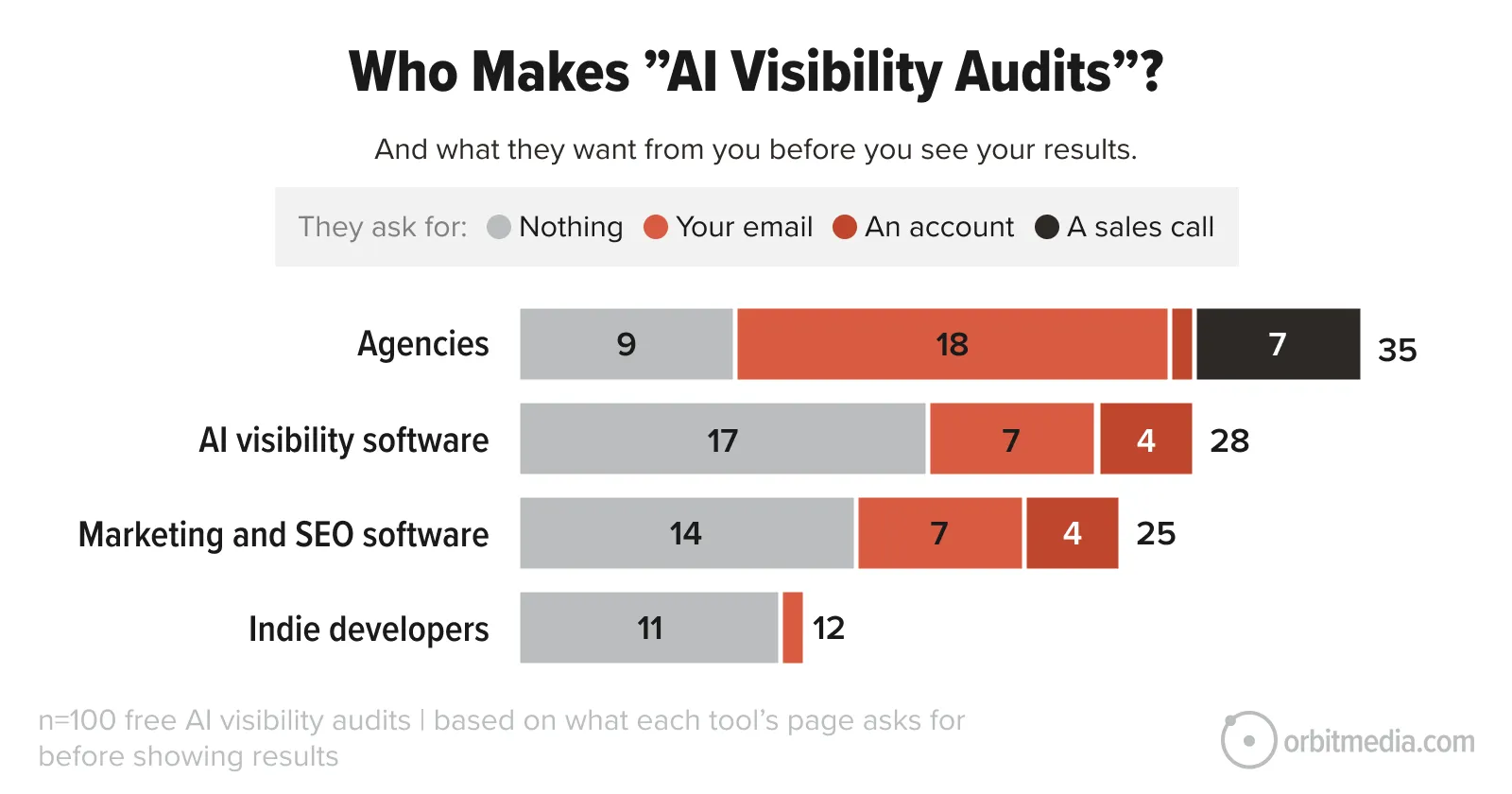
Behind the veneer of objective technical analysis, the primary incentive driving the creators of these tools is lead generation. The evaluation taxonomy of the 100 studied audits demonstrates that different providers gate their reports according to distinct commercial models. Software-as-a-service (SaaS) companies typically require users to create a verified account to view full metrics, whereas specialized digital agencies frequently gate their reports entirely behind a mandatory sales consultation call. Because these tools are explicitly designed to initiate sales pipelines, their algorithms are intentionally calibrated to unearth technical flaws, ensuring that the user finishes the audit with a perceived vulnerability that the software or agency can subsequently solve.
Industry professionals and copywriters have voiced growing concern over this mechanical fixation. Kristen Hicks, a freelance copywriter and digital strategist, notes that while the emergence of AEO has changed technical requirements, the core principles of effective marketing remain fundamentally human.
"The last couple of years have been stranger than usual, but most of what works best in the era of AEO isn’t new: speaking to your audience’s needs, updating old posts, conducting original research, and adding expert insights," Hicks observed. "That and including FAQ sections more often—that wasn’t quite as common a couple of years ago."
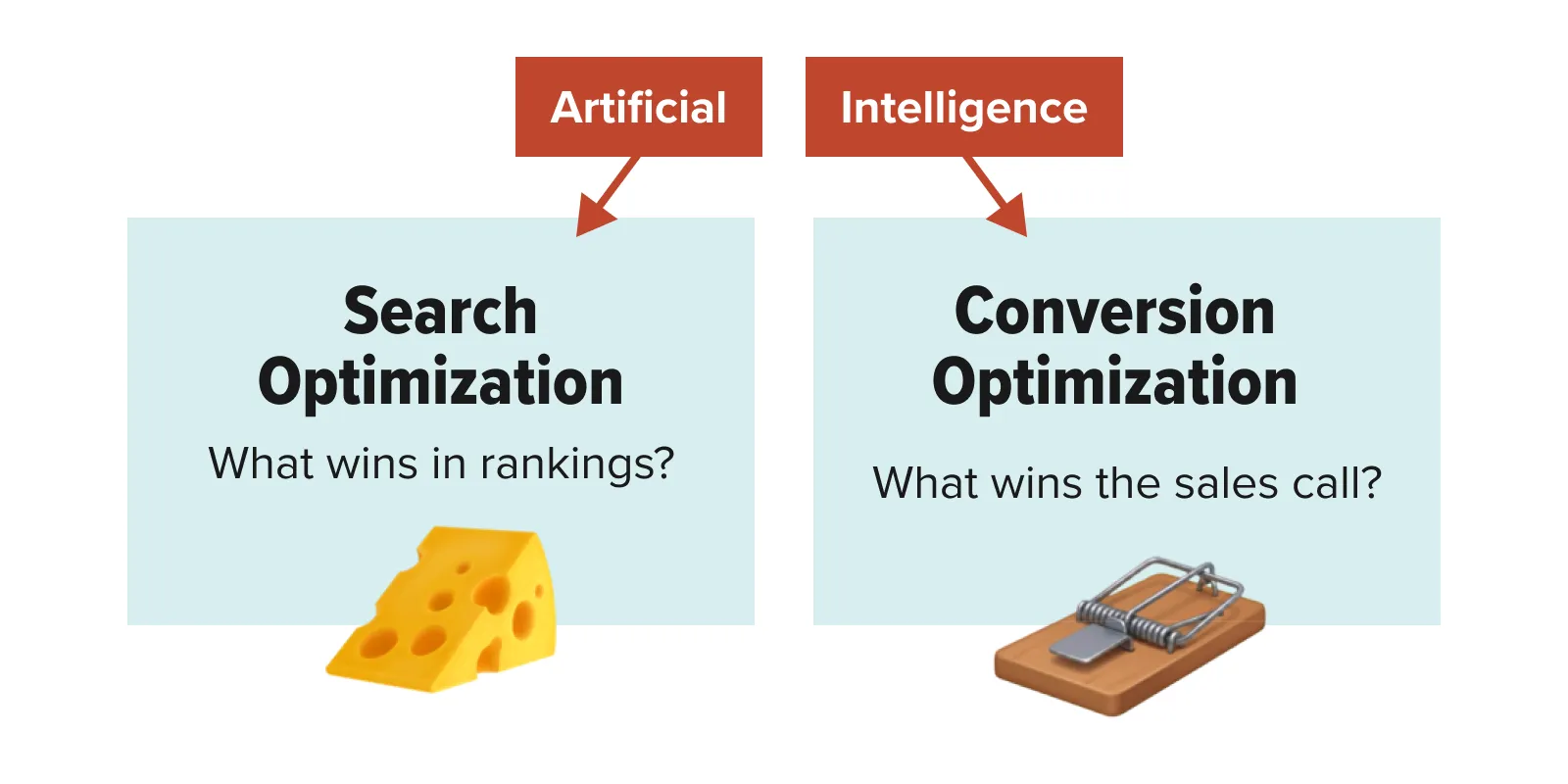
This distinction highlights a broader philosophical divide within the digital marketing sector. For decades, traditional SEO specialists have focused heavily on search engine algorithms, server mechanics, and indexation protocols, frequently overlooking deeper full-funnel buyer psychology. Critics argue that this legacy mindset has carried over into the era of generative AI, leading practitioners to optimize blindly for "AI visibility" rather than organic, conversation-driven "AI recommendations."
Nevertheless, industry experts emphasize that these free tools are not entirely devoid of utility. Technical plumbing remains a prerequisite for digital discovery. Features such as robust server crawlability, structured data schema, and clearly defined Frequently Asked Questions (FAQ) sections assist language models in parsing site content efficiently. However, technical readiness must not be confused with audience alignment. A website can achieve a pristine technical score while remaining completely misaligned with the actual problems, language, and decision-making criteria of its prospective buyers.
Ultimately, the proliferation of automated AI visibility graders signals a maturing market where flashy software tools often outpace genuine strategic methodology. For corporate leadership and marketing executives navigating the shift toward generative search, the takeaway is clear: automated audits should be treated as rudimentary technical checklists rather than definitive measures of market presence. True optimization in the age of conversational AI does not begin with a software scan of a corporate URL; it begins with deep, empathetic audience research designed to answer the genuine questions buyers are asking in their own words.