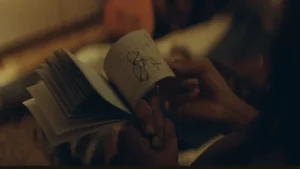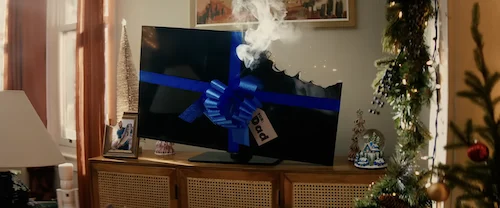

The perennial holiday tradition of leaving out a midnight snack for Santa Claus has taken a surprisingly litigious and comedic turn in the latest marketing campaign from Nabisco’s iconic cookie brand, Oreo. Breaking a five-year hiatus from holiday television commercials, Oreo has returned to the festive season’s advertising landscape with a high-profile campaign titled "Santa wreaks revenge on Dad for eating his Oreos." The campaign, which humorously addresses the widespread household phenomenon of parents partaking in the children’s offerings meant for St. Nick, marks a significant return to seasonal broadcast media for the brand.
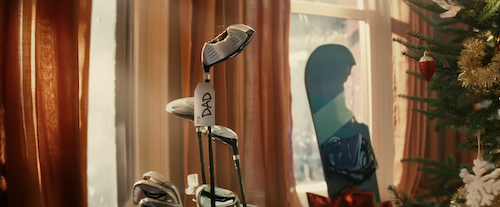
The commercial centers on a relatable domestic grievance: fathers sneaking into the kitchen late on Christmas Eve to consume the milk-and-cookie pairings meticulously arranged by their children. In this narrative, however, Santa Claus is no longer willing to overlook the missing treats. Instead of leaving coal in the stocking, the mythical gift-giver executes a whimsical yet firm act of retribution against the snack-stealing father. The spot playfully replaces the traditional offering of carrots for the reindeer with strictly enforced cookie protocols, cementing Oreo’s position as the definitive holiday snack.
The production of the campaign was spearheaded by No Notes, the newly prominent content studio founded by comedian and Saturday Night Live star Colin Jost. Direction for the commercial was led by Benjo Weinstein, whose visual storytelling brought the comedic revenge plot to life through the collaborative efforts of production companies Merchant and Good Company. To ensure comprehensive execution, the campaign also relied on consulting support from Publicis Production, while global media agency Dentsu managed the social media rollout across multiple digital ecosystems.
Chronology and Background of Oreo’s Holiday Advertising
Oreo’s absence from the holiday television commercial (TVC) circuit over the past half-decade makes this 2026 release a notable milestone for the brand’s marketing strategy. The last major Christmas campaign launched by the cookie giant was the memorable "Ding Dong" commercial in 2021, which similarly leaned into the playful rituals surrounding Santa’s midnight visits.
For decades, consumer packaged goods (CPG) brands have utilized the winter holiday season as a critical battleground for consumer attention and retail sales. The fourth quarter traditionally accounts for a significant percentage of annual sales in the cookie and confectionery category. By sitting out the peak holiday advertising windows from 2022 through 2025, Oreo focused its promotional efforts on digital-first activations, seasonal product packaging, and limited-edition flavor releases.
The decision to re-enter the high-cost television landscape in November 2026 signals a strategic shift back to mass-reach visual media. The campaign’s timeline reflects modern multi-platform media consumption habits:

- Early November 2026: Official debut of the campaign across digital and streaming platforms.
- Mid-to-Late November 2026: Rollout of 15-second and 30-second cutdowns across major connected TV (CTV) networks, streaming services, and social media channels.
- December 2026 (Projected Peak): Amplification across linear television partnerships and user-generated content campaigns encouraging consumers to share their own holiday snack traditions.
Production Team and Creative Pedigree
The collaboration with No Notes represents a growing industry trend where major brands partner with boutique content studios led by established entertainment figures. Colin Jost, widely recognized for his tenure anchoring Saturday Night Live’s "Weekend Update," brought his distinct comedic sensibility to the conceptualization of the project. The studio model employed by No Notes allows for rapid ideation and a sharper focus on character-driven comedy, which translates effectively into short-form advertising.
Director Benjo Weinstein utilized cinematic techniques typically reserved for feature films to heighten the comedic tension of the commercial. The interplay between the magical, benevolent figure of Santa Claus and the guilt-ridden, midnight-snacking father is handled with subtle deadpan humor. Production companies Merchant and Good Company provided the logistical and artistic infrastructure required to execute complex practical sets and visual effects, ensuring the commercial meets the high aesthetic standards expected of global brand campaigns.
Furthermore, the integration of Publicis Production for consulting support highlights the complex machinery required to produce modern omnichannel campaigns. Publicis ensured that the core narrative assets could be seamlessly reformatted for various aspect ratios, durations, and platform-specific requirements. Meanwhile, Dentsu’s oversight of the social media rollout guarantees that the campaign is optimized for engagement, driving consumer interaction across diverse digital communities.
Media Strategy and Omnichannel Distribution
The distribution strategy for the new Oreo campaign is designed to capture fragmented consumer attention across both traditional living room screens and personal mobile devices. Rather than relying solely on linear television broadcasting, the media plan heavily prioritizes streaming, connected TV (CTV), and premium video-on-demand (VOD) environments.
The campaign features tailored 15-second and 30-second versions optimized for varying attention spans and platform constraints. Key distribution channels include:
- Streaming and Connected TV (CTV): Major streaming environments and Amazon Prime Video placements, targeting households during peak evening viewing hours.
- Social Media Platforms: High-frequency delivery across Meta (Facebook and Instagram), TikTok, Pinterest, and Snapchat to capture younger demographic cohorts and parents actively searching for holiday inspiration.
- Video Sharing Networks: Comprehensive presence on YouTube through pre-roll and bumper ads.
- Owned Channels: Direct consumer engagement via Oreo’s official brand website and verified social handles.
This cross-platform saturation ensures that the narrative reaches both children and parents, bridging generational appeal through humor and nostalgia. By deploying short-form cutdowns on platforms like TikTok and Instagram Reels, the brand invites viral participation, encouraging users to debate whether parents have the right to tax Santa’s cookie plate.
Industry Analysis and Market Implications
The return of Oreo to the holiday advertising arena carries notable implications for the broader snack food and confectionery market. During the fourth quarter, competition among brands such as Chips Ahoy!, Keebler, and private-label alternatives intensifies significantly. By investing heavily in a humorous narrative-driven campaign, Mondelez International (Oreo’s parent company) aims to reinforce brand equity and defend its market share against emerging artisanal and health-conscious competitors.
From an economic perspective, marketing expenditures in the CPG sector are carefully scrutinized for return on investment (ROI). Analysts note that campaigns leveraging humor and emotional resonance—such as the universal guilt of eating children’s holiday offerings—tend to generate higher brand recall and consumer affinity compared to straightforward product-feature advertisements. By positioning Oreo not merely as a food item, but as an essential participant in holiday folklore, the brand strengthens its cultural relevance.
Moreover, the partnership with a high-profile creator studio like No Notes points to an ongoing evolution in agency-client relationships. Traditional advertising agencies are increasingly sharing space with agile, creator-led production entities that understand the nuances of modern digital humor. This hybrid approach allows legacy brands to maintain mass-market appeal while adopting the cultural currency of contemporary comedy.
Consumer Reception and Cultural Resonance
Early reactions to the campaign across digital platforms suggest that the premise resonates strongly with modern families. Social media users have flooded Oreo’s promotional posts with anecdotes of being caught by their children while raiding the holiday pantry. The democratization of parenting humor on platforms like TikTok has made the "Dad eating Santa’s cookies" trope a reliable comedic staple, which Oreo has effectively capitalized on.
By modernizing the traditional holiday narrative, the brand avoids the overly sentimental tropes that frequently dominate December advertising. Instead, it offers a self-aware, lighthearted look at family dynamics during the holiday season. As the campaign gains traction throughout the holiday shopping season, it is expected to drive both immediate sales lift and long-term positive sentiment, proving that after more than a century on the market, Oreo retains its ability to innovate within cultural traditions.