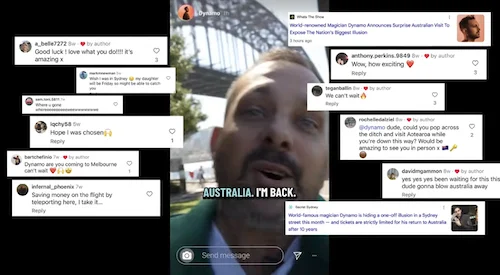

The world-renowned British illusionist Dynamo recently made his long-awaited return to Australia, marking his first appearance in the country in over a decade. However, the purpose of his visit was not to perform his trademark stage magic or captivate audiences with card tricks, but rather to dismantle a widespread psychological blind spot concerning residential security. Partnering with creative agency It’s Friday and iconic garage door manufacturer B&D, Dynamo touched down in Sydney to expose what organizers have termed Australia’s biggest garage security illusion: the deeply ingrained assumption that a closed garage door is automatically a locked garage door.
The high-profile campaign was orchestrated to launch B&D’s latest innovation, the Roll-A-Door Secure. Unlike traditional models that require manual locking mechanisms or rely solely on the weight of the door, this new product features an automated four-part integrated locking system that engages the moment the door closes. By leveraging the star power of an illusionist globally recognized for bending reality, the campaign aimed to jolt homeowners out of a false sense of security regarding their property’s largest and most vulnerable entry point.
The Anatomy of a Suburban Illusion
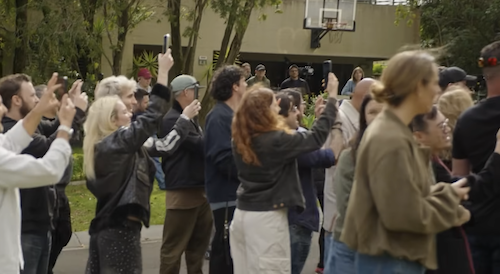
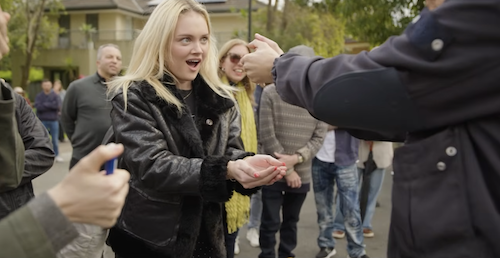
The campaign kicked off in a quiet, unassuming suburban cul-de-sac in Sydney, catching local residents completely off guard. Known for his intimate street magic and large-scale stunts, Dynamo initially engaged neighbors with his signature illusions, setting a playful and mystifying tone. However, the tone shifted dramatically as the illusionist transitioned from entertaining the crowd to revealing a harsh reality of modern suburban living.
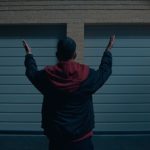
With the assistance of the creative production teams, Dynamo orchestrated a live reveal that demonstrated how easily conventional garage doors—even those that appear securely shut—can be manipulated from the outside if they lack advanced locking technology. The stunt served as a physical manifestation of the invisible vulnerabilities that countless households live with every day. For the unsuspecting residents of the suburban street, and subsequently the broader Australian public viewing the campaign online and on television, the demonstration underscored a jarring truth: what looks secure may leave homeowners entirely exposed.
Data Reveals a Shocking Disconnect in Home Security
The creative concept was not plucked from thin air; it was heavily informed by comprehensive market research commissioned by B&D ahead of the campaign rollout. The findings painted a concerning picture of how Australians perceive and manage the security of their homes, highlighting a massive gap between perception and reality.
According to the research data, 43% of Australians operate under the assumption that their garage door is securely locked simply because it is closed. Furthermore, a resounding 67% of survey respondents agreed that the garage is consistently one of the most overlooked areas when it comes to comprehensive home security planning.
The stakes associated with this oversight are remarkably high. The data revealed that nearly half of all surveyed Australians—some 47%—store more than $20,000 worth of personal belongings, tools, recreational equipment, and vehicles inside their garages. Perhaps more alarming is that 52% of respondents acknowledged that their garage serves as a direct entry point into the main living areas of their property. When combined, these statistics highlight a significant vulnerability: millions of households are inadvertently leaving high-value assets behind a barrier that offers little to no physical resistance once closed.
Creative Vision and Strategic Execution
Bringing an international illusionist down under to perform a trick in reverse—not creating an illusion, but shattering one—required a massive collaborative effort between the corporate sector and the creative arts.
Vince Lagana, Chief Creative Officer at It’s Friday, elaborated on the unique creative challenge during the campaign’s launch. He noted that it is a rare occurrence for an agency to ask one of the world’s preeminent magicians to expose an illusion he did not invent. By turning Dynamo’s usual role entirely on its head, the campaign successfully forced the public to confront an illusion they had been living with for years. Lagana expressed immense pride in bringing the vision to life alongside the teams at B&D, Dynamo, production company Revolver, and experiential collective The Glue Society.
From the client’s perspective, the partnership was built on the premise that traditional marketing approaches often fail to break through the noise of everyday safety messaging. Alysha Deane, Marketing Director at B&D Garage Doors, emphasized that Dynamo was the ideal collaborator to challenge deeply entrenched consumer habits. Deane pointed out that while security-conscious homeowners routinely lock their front doors, secure their vehicles, and double-check house windows before leaving or going to sleep, they frequently overlook the largest aperture of the house. By partnering with Dynamo, B&D sought to spotlight this hidden security illusion in a dramatic, unforgettable manner that would resonate with consumers on a visceral level.
Behind the Scenes: Production and Creative Credits
The execution of the campaign required a meticulous blend of live-event staging, high-end television commercial (TVC) production, and digital content creation. The project brought together some of the most respected names in the Australian creative and production industries.
The campaign was conceptualized and driven by creative agency It’s Friday, working in lockstep with B&D’s internal marketing team, which included Marketing Director Alysha Deane, Marketing Manager Tom Mathiesen, Brand and Communications Manager Joey Teo, and Marketing Coordinator Jessica Butler.
Production duties were handled by Revolver under the direction of The Glue Society. The extensive production credits feature Managing Director and Co-Owner Michael Ritchie, Executive Producer and Partner Pip Smart, Executive Producers Jasmin Helliar and Nick Payne, and Producer Max Horn. The visual narrative of the live event and TVC was captured by Director of Photography Jordan Maddocks, with additional camera operation by Alex Dufficy for the second unit. Production design was managed by Michael Iacono, while hair and make-up were overseen by Mat Hornby.
Post-production was executed in-house by Glue Society Studios, featuring editing by Luke Crethar and color grading by Marcus Friedlander for the live event and Trish Cahill for the television commercial. To maximize digital reach, Revolver’s dedicated socials studio produced specialized content directed by Ollie Ritchie and produced by Lizzie Dingle. Media placement and strategy were managed by media agency Speed, while Dynamo’s appearance and logistics were coordinated through talent management by Millicent Greenwood at YMU.
Broader Implications for Home Security and Industry Standards
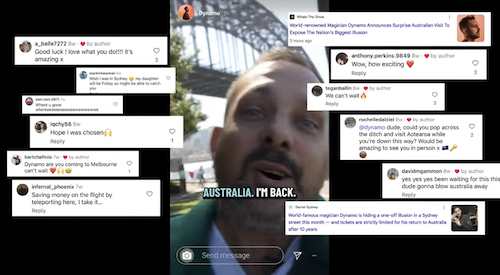
Beyond the entertainment value of a world-famous illusionist appearing in a Sydney neighborhood, the It’s Friday and B&D campaign carries significant implications for the broader home security and manufacturing sectors.
In recent years, residential security discussions have heavily emphasized smart locks, security cameras, and reinforced window glass. However, physical perimeter breaches frequently target traditional garage doors due to the widespread consumer misconception that closing the door achieves locking. The introduction of automated, multi-point locking systems like B&D’s Roll-A-Door Secure shifts the burden of security away from human memory—where homeowners might forget to manually slide a bolt or engage a lock—and embeds it directly into the daily operation of the hardware.
As property crime methods evolve, consumer awareness campaigns that utilize behavioral psychology and high-impact storytelling are becoming increasingly vital. By reframing a mundane household fixture as a critical security perimeter, the campaign has successfully shifted the conversation around residential safety in Australia. It serves as a reminder that the most dangerous security risks are often the ones hiding in plain sight, maintained by everyday habits and unverified assumptions.