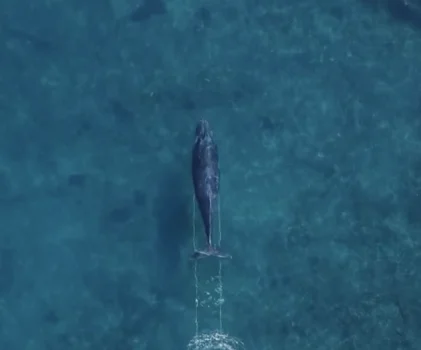

The first two weeks of July witnessed a concentrated series of humpback whale entanglements across the Pacific Ocean, stretching from the rugged coastlines of Western Australia to the transboundary waters of British Columbia and the tropical sanctuaries of Hawaii. This surge in reported incidents has mobilized international rescue teams, highlighting a growing conflict between migratory marine life and commercial fishing infrastructure. While several successful disentanglements were celebrated, the period was also marked by tragedy, including the death of a nine-meter humpback in Western Australia, an event that underscores the lethal potential of marine debris and active fishing gear.
The cluster of incidents has prompted government agencies and conservation organizations to issue urgent directives to the public. As humpback populations continue their annual migrations—moving toward warmer breeding grounds in the Southern Hemisphere and feeding grounds in the Northern Hemisphere—the risk of interaction with ropes, nets, and buoys has reached a critical threshold. Professional responders emphasize that while the sight of a distressed whale often provokes a desire for immediate civilian intervention, the complexity of these rescues requires specialized training, heavy-duty equipment, and a strategic approach to ensure the safety of both the animals and the rescuers.
A Chronology of Crisis: July’s Pacific-Wide Reports
The timeline of entanglements in early July reveals the staggering geographic scope of the problem. On July 2, whale watchers near the Canada-U.S. border in the Salish Sea identified a well-known humpback whale nicknamed "Pop Tart" trailing hundreds of meters of heavy line. The animal, a frequent visitor to the region, remained entangled for nearly a week as responders navigated challenging weather conditions. It was not until July 10 that the Pacific Whale Watch Association’s response network was able to confirm a successful release.
Simultaneously, on the other side of the Pacific, Australian authorities were overwhelmed by a flurry of reports. On July 4, a humpback became ensnared in a shark-control net off the Gold Coast in Queensland. A grueling four-hour operation involving the Queensland Fisheries’ Marine Animal Release Team and the Sea World Foundation was required to free the animal the following day. This incident reignited local debates regarding the efficacy and safety of shark-control measures during peak whale migration seasons.
The most severe concentration of reports occurred between July 5 and July 10 within the Ningaloo Marine Park in Western Australia. The Department of Biodiversity, Conservation and Attractions (DBCA) received up to five reports of entangled whales during this five-day window. While some reports likely involved the same individual, the volume of sightings indicated a significant hazard in the area. The situation took a grim turn on July 8 when responders located an emaciated humpback heavily embedded in gear. Despite attaching a satellite tag to track the animal overnight, the whale succumbed to its injuries before a full rescue could be mounted. Its carcass washed onto the reef at Mandu, necessitating the closure of two popular beaches due to increased shark activity.
The Source of the Threat: Commercial Gear and Ghost Nets
The materials recovered from these whales provide a window into the origins of the entanglements. Brinkley Davies, founder of the Balu Blue Foundation, noted that much of the rope identified in the Western Australian incidents is consistent with gear used in commercial crab and crayfish (rock lobster) fisheries. "We’re seeing a lot of rope consistent with commercial fishing gear… and there’s a lot of uncertainty as to where they’re coming from and why there’s more this year," Davies stated in an interview with ABC News.
This uncertainty points to a broader systemic issue. Entanglements are often caused by "ghost gear"—fishing equipment that has been lost, abandoned, or discarded at sea. However, active gear also poses a significant risk. Humpback whales are particularly vulnerable due to their unique anatomy; their long, pectoral fins and pleated throats are easily snagged by vertical lines connecting traps on the seafloor to buoys on the surface. Once a whale is caught, its instinct is often to roll, which frequently results in the line wrapping multiple times around the tail stock (peduncle) or the mouth, leading to deep lacerations, restricted movement, and an inability to feed.
The Science of Entanglement: A Slow and Painful Impact
The biological toll of entanglement is rarely instantaneous. Instead, it is often a protracted process of physical exhaustion and systemic failure. When a whale is forced to drag hundreds of pounds of gear, its energy expenditure increases exponentially. For a migrating humpback that relies on stored blubber for energy, this additional drag can lead to emaciation, as seen in the Mandu reef case.
Furthermore, the physical damage caused by the rope is severe. As the whale swims, the constant tension of the line causes it to saw through the skin and blubber, eventually reaching the bone. This creates open wounds that are prone to infection. In some cases, the gear may wrap around the whale’s mouth, effectively "bridling" the animal and preventing it from filtering the krill or small fish it needs to survive. The case of "Starry Knight," a whale in the Salish Sea, illustrates the repetitive nature of this threat. After being freed from a life-threatening entanglement in July, the same whale was found snagged again weeks later in a nearly identical spot, with new lines cutting into wounds that had not yet begun to heal.
Global Statistics and the Role of the International Whaling Commission
The incidents in July are part of a staggering global trend. The International Whaling Commission (IWC) estimates that more than 300,000 whales, dolphins, and porpoises die annually due to bycatch and entanglement. While many species are affected, humpbacks are frequently at the center of rescue efforts because their coastal migration routes overlap heavily with high-density fishing zones.
In response to this global crisis, the IWC established the Global Whale Entanglement Response Network. This initiative focuses on training responders in different nations to handle these high-stakes situations. The goal is not only to save individual animals but also to collect data on the types of gear causing the most harm. This data is essential for working with the fishing industry to develop "whale-safe" gear, such as "ropeless" fishing technology or lines with timed-release mechanisms that reduce the amount of rope in the water column.
Official Protocols: Why Bystander Intervention is Dangerous
One of the most critical messages from the DBCA, NOAA (National Oceanic and Atmospheric Administration), and various wildlife foundations is a stern warning against unauthorized rescue attempts. While the impulse to help is understandable, "grabbing a knife" and jumping into the water can be fatal for both the human and the whale.
A distressed whale is a powerful and unpredictable animal. A single flick of a humpback’s tail can deliver enough force to crush a boat or kill a diver instantly. Furthermore, cutting the wrong line can actually make a rescue more difficult. Professional teams use specialized "V-shaped" knives on long poles and utilize the drag of the gear to help pull the whale free. If a well-meaning bystander cuts the trailing line but leaves the wraps around the whale’s body, the rescue team loses the "leverage" needed to remove the remaining gear, often leaving the whale in a worse position than before.
In Western Australia, only trained and authorized responders are permitted to attempt disentanglements. The DBCA warns that unauthorized interference is not only dangerous but also illegal, carrying significant penalties.
The Power of Documentation: How the Public Can Help
While the public is urged to stay back, their role in a successful rescue is nonetheless vital. Rescuers emphasize that the single most useful thing a bystander can do is provide high-quality documentation and rapid reporting.
"Your frames are more than pretty pictures," conservationists explain. Clear photos and videos taken from a safe, legal distance—at least 100 yards in U.S. waters—allow responders to identify the individual whale and, more importantly, to analyze how the gear is wrapped. This "forensic" look at the entanglement allows the team to develop a "cut plan" before they even reach the animal.
The Balu Blue Foundation and DBCA have requested that anyone who spots an entangled whale should:
- Maintain Distance: Stay at least 100 meters away to avoid stressing the animal.
- Log Coordinates: Provide a precise GPS position.
- Note Direction: Observe the direction and speed of the whale’s travel.
- Visual Evidence: Capture photos or videos of the wraps, the floats, and any identifying marks on the whale.
- Report Immediately: Use official wildlife rescue hotlines or contact local maritime authorities.
Broader Implications and Future Outlook
The spate of entanglements in July serves as a sobering reminder of the ecological costs of human maritime activity. Beyond the immediate animal welfare concerns, these events have economic and social implications. Beach closures, such as those at Mandu, affect local tourism and recreation. Furthermore, the recurring nature of these incidents puts a strain on the resources of non-profit organizations and government agencies.
However, there is a growing movement toward mitigation. In parts of the United States and Australia, seasonal closures of certain fisheries during peak migration times have been implemented. Additionally, the development of "ropeless" or "on-demand" fishing gear—which keeps lines on the seafloor until a fisherman triggers a release—offers a potential long-term solution to the vertical line problem.
As the humpback whales continue their journey across the Pacific, the events of early July highlight the fragility of marine ecosystems and the necessity of international cooperation. The survival of these charismatic megafauna depends not only on the skill of rescue teams but on a collective shift toward more sustainable ocean management and a vigilant public that knows exactly how to help when a crisis is spotted on the horizon.