
Meta Platforms has released its comprehensive Q3 2026 earnings report, detailing robust financial and operational performance alongside critical strategic insights into the relative growth and user engagement patterns of its core applications: Facebook, Instagram, and Threads. While the headline figures highlighted strong revenue growth and expanding user bases despite surging artificial intelligence infrastructure costs, executive commentary provided a granular look at how algorithmic overhauls and cutting-edge machine learning models are fundamentally transforming user experiences across the company’s vast digital ecosystem.
The findings offer strategic clarity for digital marketers, content creators, and industry analysts attempting to navigate Meta’s evolving algorithmic priorities. By prioritizing original content, shifting toward sequential reel ranking, and deploying large language model (LLM)-inspired generative retrieval systems, Meta has successfully reversed historical engagement headwinds on legacy platforms while accelerating the explosive market penetration of newer products like Threads.
Architectural Overhauls Drive Instagram to All-Time Highs
During the third quarter of 2026, global time spent per user on Instagram reached an all-time high, catalyzed by robust engagement growth across both traditional Feed views and the short-form video product, Instagram Reels. According to Meta Chief Financial Officer Susan Li, algorithmic enhancements deployed during the quarter generated a more than 4% increase in Reels time spent alone.
This growth was primarily facilitated by an upgraded model architecture capable of ranking sequences of Reels simultaneously, moving away from legacy systems that evaluated individual video clips in isolation. Furthermore, Meta integrated richer watch time signals into the scoring mechanism to better gauge qualitative user interest.
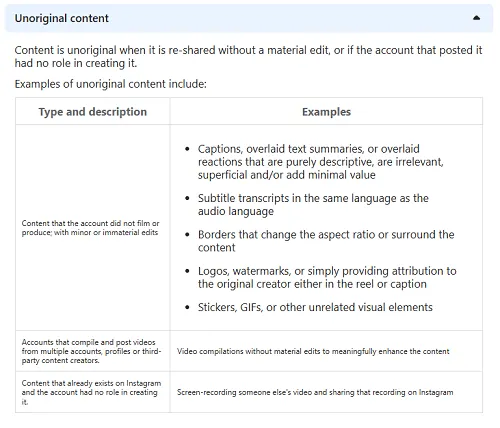
A notable byproduct of these systemic adjustments is the velocity at which fresh content is surfaced to audiences. Li reported that nearly 45% of recommended Instagram Reels are now less than one day old, representing an increase of more than 11 percentage points compared to the second quarter. This operational shift aligns closely with Instagram’s broader, long-term policy initiatives designed to elevate original creators and systematically suppress content aggregators, watermarked videos, and unoriginal reposts.
For digital creators and media strategists, this dynamic underscores a critical operational reality: the vast majority of organic engagement for Reels is increasingly concentrated within the first 24 hours of publication. Consequently, content distribution strategies must adapt to immediate algorithmic indexing rather than relying on delayed organic discovery.
Facebook Rejuvenation via Generative Retrieval Systems
Meta’s flagship platform, Facebook, has similarly experienced a profound engagement renaissance, driven largely by the exponential adoption of Facebook Reels, which achieved all-time high watch times with double-digit year-over-year growth in Q3.
For years, industry analysts closely monitored a gradual plateau in core Facebook engagement. While daily active user metrics remained exceptionally high due to the platform’s entrenched utility for maintaining personal connections, user session durations faced persistent competitive pressure from platforms like TikTok, where younger demographics increasingly migrated for entertainment consumption.
To combat this retention challenge, Meta initiated a multi-year structural overhaul of its content delivery systems. A cornerstone of this strategy was the global rollout of a new generative retrieval architecture. Inspired by the foundational mechanisms of large language models, this system labels discrete pieces of content with semantic representations and proactively generates potential recommendations. This enables Meta’s backend infrastructure to surface relevant posts to users before those items have accumulated significant historical engagement.
Li confirmed that this generative retrieval architecture is now operational across approximately one-quarter of unconnected Feed views and half of all Reels views, yielding an immediate 1% increase in overall Reels watch time. Additionally, Meta doubled the historical data window accessible to its Facebook Reels ranking models, a localized optimization in the United States that yielded an additional 1% increase in watch time. These combined engineering triumphs have successfully injected fresh, highly personalized content into user feeds, revitalizing user retention and shielding the platform from competitive disruption.
Threads Surpasses X Amid Continued Double-Digit Growth
In the microblogging and public conversation segment, Meta’s Threads has cemented its position as a dominant market force. Chief Executive Officer Mark Zuckerberg confirmed during the earnings briefing that Threads has officially surpassed X (formerly Twitter) in monthly active users, maintaining an aggressive growth trajectory since its high-profile launch.
CFO Susan Li noted that time spent per user on Threads expanded by more than 20% year over year. This upward trajectory was propelled by continuous network effects and systematic algorithmic improvements targeting relevance, content personalization, and real-time delivery. Having already crossed the milestone of 500 million monthly active users, Threads has transitioned from an experimental project into an established ecosystem fixture.
The maturation of Threads carries significant implications for the broader digital advertising landscape. As audience engagement stabilizes and deepens, marketers are presented with expanded organic reach opportunities, paving the way for the platform’s eventual large-scale monetization through targeted advertising integrations.
Empowering Marketers Through the Creator Marketing Hub and Meta AI
Complementing these algorithmic advancements, Meta is aggressively scaling its infrastructure to support brand-creator partnerships. Li announced that the company’s Creator Marketing Hub is now universally available to all global advertisers, housing a vetted network of more than 10 million creators ready for campaign collaborations.
To streamline workflow complexities for brands, Meta is integrating its proprietary Meta AI Business Assistant directly into the Hub. This conversational interface allows advertisers to execute natural language searches for creators, identify optimal content assets for partnership ads, and receive real-time workflow guidance.
This integration reflects Meta’s broader enterprise strategy: embedding generative artificial intelligence across every operational layer—from backend content recommendation pipelines to front-end advertiser tools. By bridging the gap between advanced machine learning infrastructure and commercial utility, Meta is positioning its product suite to capture sustained marketing spend in an increasingly competitive digital economy.