
A Chronology of May 2026 Browser Releases
The month began with the rollout of stable channel updates, providing developers with long-awaited features designed to streamline UI development and enhance media performance. Chrome 148, released in the second week of May, set the tone by focusing on performance optimizations for modern media-heavy web applications. Firefox 151 followed shortly thereafter, prioritizing the expansion of the Document Picture-in-Picture API and advanced CSS container query capabilities. Safari 26.5 rounded out the month by finalizing support for the :open pseudo-class, effectively closing the loop on several high-priority interoperability targets.
Following these stable releases, the industry shifted its focus to the beta channel, where Chrome 149 and Firefox 152 began testing next-generation features. These include advanced CSS gap decorations and programmatic scroll resolution, signaling a continued commitment from browser vendors to provide developers with tools that were previously only possible through complex JavaScript libraries.
Advancements in CSS: From Container Queries to Pseudo-Classes
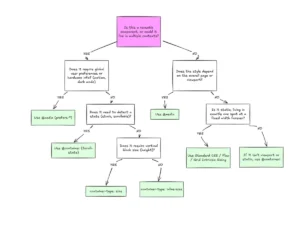
One of the most consequential shifts this month is the achievement of "Baseline Newly Available" status for name-only container queries. Previously, developers were required to define both a container-type and a specific query condition to leverage the power of container-based styling. By decoupling these requirements, the CSS specification now allows for cleaner, more maintainable codebases. This simplification is expected to reduce the boilerplate code in responsive design systems, allowing developers to target named containers without the overhead of declaring rigid layout types on every ancestor element.
Parallel to this, the introduction of container style queries for custom properties in Firefox 151 represents a major leap in architectural flexibility. By enabling the application of styles based on the values of CSS variables within a parent container, developers can now build highly dynamic components. For instance, a component can automatically adapt its theme—switching from light to dark—simply by checking the state of a custom property on its parent. This shift minimizes the need for class-based state management, moving the responsibility of visual configuration into the CSS layer where it is more performant and easier to debug.
Furthermore, the standardization of the :open pseudo-class across all major engines simplifies the interaction states of common UI elements. By providing a native way to style the expanded state of <details>, <dialog>, and <select> elements, the web platform moves away from reliance on non-semantic attributes like [open]. This change not only improves code readability but also enhances accessibility by ensuring that browser-native UI components expose their states in a predictable, standard manner.
Optimizing Media and Performance
The performance-oriented updates in Chrome 148, specifically the native implementation of lazy loading for <video> and <audio> elements, address a persistent pain point in modern web architecture. As high-resolution media becomes ubiquitous, the ability to delay the loading of these resources until they enter the user’s viewport is critical. Industry data indicates that media elements are often the largest contributors to cumulative layout shift (CLS) and total blocking time (TBT). By utilizing the loading="lazy" attribute, developers can now achieve significant reductions in initial page load weight without implementing third-party intersection observer scripts.
The broader impact of these performance tools is evident in the push toward "Core Web Vitals" optimization. As search engines and users alike prioritize faster, more efficient page loads, native browser support for media deferral is no longer optional. The implementation of this feature, as highlighted by technical documentation from industry leaders like Squarespace, underscores a shift toward standardizing performance best practices directly within the browser core, rather than leaving them to the discretion of individual web developers.

API Expansion: Web Serial and Picture-in-Picture
The expansion of the Web Serial API to Firefox 151 and its mobile debut in Chrome 148 marks a significant milestone for the "Web as an Application Platform" movement. Historically, the ability to interact with local hardware—such as 3D printers, microcontrollers, or scientific equipment—was confined to native desktop applications. The inclusion of this API in major browsers opens the door for browser-based IDEs and configuration tools that require direct serial communication.
To mitigate security concerns, the implementation in Firefox utilizes a site-permission add-on model, ensuring that access to hardware is explicitly granted by the user in a controlled environment. This approach demonstrates a balanced strategy: fostering innovation in hardware-interfacing web apps while maintaining the strict security posture that users expect from the browser.
Simultaneously, the Document Picture-in-Picture (PiP) API in Firefox 151 enables a new category of "Always-on-Top" web experiences. While traditional PiP was limited to video feeds, the Document PiP API allows for the spawning of arbitrary HTML windows. This is particularly transformative for productivity tools, such as video conferencing platforms that need to display persistent participant grids, or financial applications requiring floating stock tickers that remain visible even as the user navigates between different tabs.
Future Horizons: Beta Testing and Experimental Features
Looking ahead, the beta releases for June—Chrome 149 and Firefox 152—offer a glimpse into the next wave of developer-centric features. The proposed introduction of "gap decorations" in CSS promises to simplify the styling of gutters in grid and flexbox layouts, a task that currently requires complex negative margins or redundant padding.
Additionally, the movement toward programmatic scroll methods that return Promises marks a transition toward more predictable asynchronous workflows in JavaScript. By allowing developers to await the completion of a scrollTo() or scrollIntoView() operation, browsers are enabling more sophisticated scroll-linked animations and transitions, reducing the reliance on setTimeout or event-listener hacks that often lead to "janky" user interfaces.
Broader Implications and Industry Analysis
The rapid pace of these updates suggests a healthy competition among browser vendors to provide the most robust platform for web applications. The alignment on "Baseline" features is particularly notable; it represents an industry-wide consensus that the era of "browser-specific" web development must end in favor of a universal standard.
Analysts suggest that these improvements will have a compounding effect on developer productivity. By offloading complex tasks—such as hardware communication, scroll management, and responsive state handling—to the browser core, developers can focus on application-specific logic rather than polyfills and workarounds. Furthermore, the emphasis on standardizing CSS container queries and pseudo-classes indicates a maturation of the CSS language, which is becoming increasingly capable of handling complex UI logic that was previously the exclusive domain of JavaScript frameworks.
As the industry moves into the second half of 2026, the cumulative effect of these features will likely be a more consistent, faster, and more capable web. Developers are encouraged to monitor these developments via the MDN Web Docs and the various browser release notes to ensure their production environments are prepared to leverage these advancements. The stabilization of these features, particularly the CSS upgrades, provides a solid foundation for the next generation of high-performance web applications, ensuring that the platform remains competitive against native alternatives across both desktop and mobile ecosystems.