
The landscape of professional cinematography has undergone a significant transformation with the rise of high-performance mirrorless cameras, most notably the Nikon Z series. However, while the hardware capabilities of cameras like the Nikon Z8 and Z9 have reached parity with many dedicated cinema rigs, the software ecosystem supporting these devices has often lagged behind. To address this disparity, developer Mike Aguado has released Parallax Monitor, a sophisticated control and monitoring application designed to bring high-end cinema tools—previously exclusive to brands like RED Digital Cinema—to the Nikon Z ecosystem.
Addressing the Professional Software Gap in Mirrorless Systems
For years, professional filmmakers transitioning to mirrorless systems have noted a recurring limitation: the lack of robust, integrated monitoring tools. While Nikon’s proprietary SnapBridge application provides basic connectivity and file transfer capabilities, it is primarily tailored for still photographers rather than the rigorous demands of a film set. High-end cinema workflows require specific visual aids such as false color, anamorphic desqueeze, and precise exposure indicators that standard consumer applications do not offer.
Parallax Monitor, formerly known during its beta phase as ZR Ctl, aims to provide a professional-grade alternative. By utilizing Nikon’s Software Development Kit (SDK), the application integrates deeply with the camera’s internal processing to provide real-time data and control. The app is positioned as a low-cost, high-utility solution for cinematographers who require the precision of a dedicated field monitor but prefer the portability and connectivity of a smartphone or tablet.
Technical Features and Exposure Tools
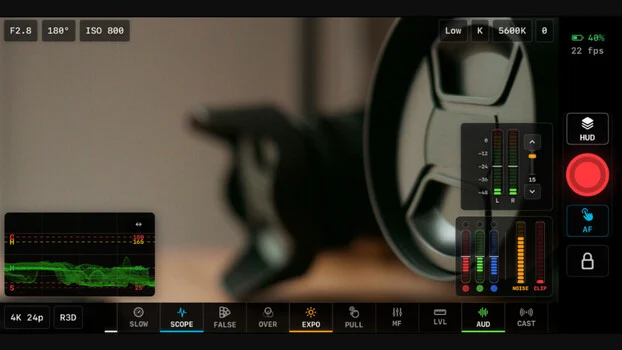
One of the most significant additions Parallax Monitor brings to the Nikon Z series is the implementation of advanced exposure monitoring. The application introduces "X-Lights," a specialized variant of the proprietary "traffic light" exposure system found on RED cameras. In professional cinematography, a traffic light system provides immediate visual feedback on sensor clipping across the RGB channels, allowing operators to nail exposure in challenging lighting conditions without relying solely on a histogram.
This is particularly critical for users shooting in N-RAW or ProRes RAW. While these codecs offer immense latitude in post-production, they require precise exposure at the point of capture to minimize noise and maximize dynamic range. The application is specifically calibrated to account for the differences in how N-RAW and RED’s R3D codecs handle highlight retention and shadow detail.
Beyond exposure lights, the app includes:
- False Color and X-Zone: These tools provide a color-mapped representation of exposure levels across the frame, allowing cinematographers to see exactly where skin tones sit and where highlights are reaching the point of saturation.
- Anamorphic Support: As anamorphic lenses become more accessible to independent filmmakers, the need for "desqueezing" the image for proper monitoring has grown. Parallax Monitor supports all standard desqueeze factors and allows for custom horizontal and vertical values.
- Focus Peaking: While Nikon cameras have internal focus peaking, the app provides a high-resolution overlay on the connected device, which is often larger and easier to view than the camera’s built-in LCD.
- Viewing LUTs: Users can load 3D LUTs (Look-Up Tables) directly into the app, enabling them to monitor a "graded" look while the camera continues to record a flat Log profile.
The Chronology of Development: From Marvel to Independent Innovation
The development of Parallax Monitor is a result of shifting tides in the technology and film industries. The creator, Mike Aguado, previously served as a systems engineer for Marvel, working on high-level production pipelines. His transition into independent app development was precipitated by the broader industry trend of artificial intelligence-driven restructuring, which led to his departure from the studio.
Aguado began the project as a personal endeavor to enhance the utility of his own Nikon equipment. The timeline of the app’s development accelerated significantly following Nikon’s decision to release a more comprehensive SDK for third-party developers. This move by Nikon signaled a shift in the company’s strategy, moving away from a "walled garden" approach and inviting external innovation to improve the user experience for professional filmmakers.
The application gained significant traction following a public showcase at the Cine Gear Expo in Los Angeles. It was here that the filmmaking community first saw the integration of cinema-standard tools on a mobile platform, leading to a successful beta period and the eventual rebranding of the software to Parallax Monitor.
Connectivity and Integration
A critical hurdle for any third-party camera app is the stability of the connection between the device and the camera. Parallax Monitor addresses this by offering three distinct methods of connectivity, catering to different set environments:
- Wi-Fi Connection: Best for handheld or gimbal use where cables would interfere with movement.
- USB-C Tethering: Provides a more stable, low-latency connection for studio environments or long-form interviews.
- Ethernet/Wired LAN: Utilizing the Nikon Z9’s built-in Ethernet port or a USB-to-LAN adapter on the Z8, this method allows for the most secure connection over long distances, which is ideal for remote camera operation in live event or broadcast scenarios.
The application functions as a full remote control interface, not just a monitor. Users can toggle record start/stop, adjust aperture, shutter speed, and ISO, and change recording formats (such as switching from 4K to 8K or changing frame rates) without physically touching the camera body. This is a vital feature for cameras mounted on cranes, jibs, or in crash housings.
Market Context: Nikon’s Strategic Evolution
The release of Parallax Monitor comes at a pivotal moment for Nikon. The company’s recent acquisition of RED Digital Cinema has sent ripples through the industry, suggesting a future where Nikon’s mirrorless technology and RED’s color science and compression patents merge.
By allowing apps like Parallax Monitor to flourish, Nikon is effectively crowdsourcing the improvement of its ecosystem. The addition of RED-style tools to Nikon cameras via third-party software serves as a bridge for cinematographers who are accustomed to the RED workflow but are drawn to the autofocus capabilities and form factor of the Nikon Z series.
Data from recent industry reports indicates that the mirrorless segment now accounts for over 80% of the professional camera market, with video capabilities being the primary driver of new sales. As the line between "stills cameras that shoot video" and "cinema cameras" continues to blur, software like Parallax Monitor becomes an essential component of the hardware’s value proposition.
Broader Impact and Future Outlook
The success of independent applications like Parallax Monitor highlights a growing demand for customizable, software-defined camera features. Unlike traditional hardware manufacturers who may be slow to update firmware with niche features, independent developers can iterate quickly based on user feedback.
Aguado has indicated that the roadmap for Parallax Monitor includes several advanced features that will further blur the line between mirrorless and cinema workflows. These include:
- Multicam Support: Allowing a single tablet to monitor and control multiple Nikon Z units simultaneously.
- Jam Sync Timecode: Improving the integration of the camera into professional audio and multi-camera sync environments.
- Enhanced Photography Tethering: While currently video-centric, future updates may incorporate more advanced tools for commercial and fashion photographers who require high-speed tethering.
The application is currently available on iOS under the name Parallax Monitor and on Android as ZR Ctl. Priced at $19.99, it represents a significant shift in the economics of film production tools, where a fraction of the cost of a traditional monitor can now unlock the full potential of a flagship camera’s sensor.
For the professional community, the emergence of such tools signifies a democratization of high-end features. As Nikon continues to expand its footprint in the cinema world, the synergy between its robust hardware and innovative third-party software will likely play a defining role in the next generation of digital filmmaking.