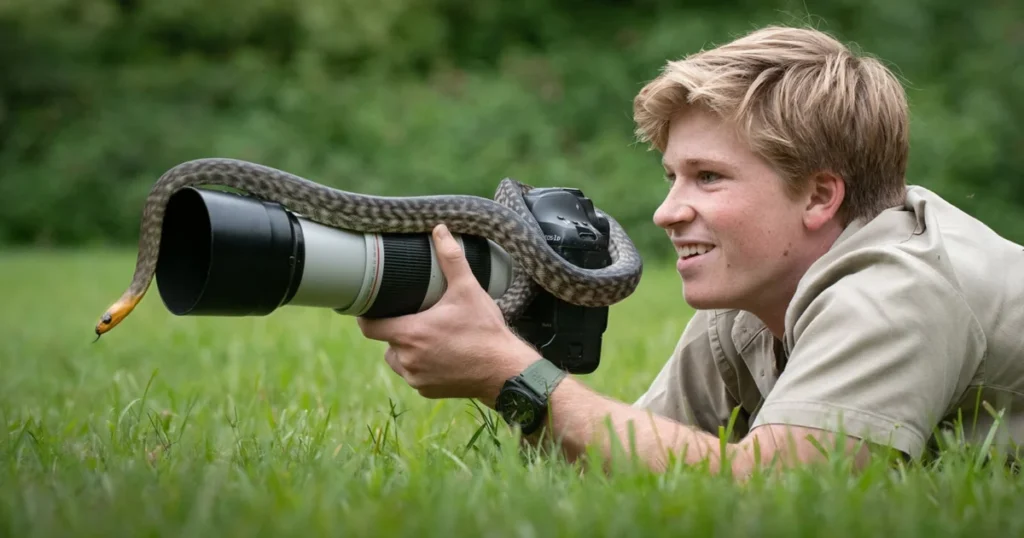

Robert Irwin, the renowned conservationist, television personality, and professional wildlife photographer, has voiced significant concerns regarding the integration of generative artificial intelligence (AI) in the field of photography. In a comprehensive discussion regarding his career evolution and his ongoing commitment to environmental advocacy, Irwin highlighted the potential for AI to undermine the integrity of natural history documentation. As the son of the late "Crocodile Hunter" Steve Irwin, the 22-year-old has spent over a decade utilizing the camera lens as a primary tool for conservation, arguing that the shift toward synthetic imagery threatens to dilute the visceral impact of real-world wildlife encounters.
Irwin’s reflections come at a pivotal moment for the global imaging industry, which is currently grappling with the ethical implications of AI-generated content. Speaking on his lifelong dedication to the craft, Irwin noted that photography has been the most formative element of his personal and professional development. While he has recently expanded his public profile through various ventures, including a victorious stint on the television program Dancing With the Stars, he maintains that his core identity remains rooted in the observation and protection of the natural world.
The Environmental and Artistic Critique of AI
In his assessment of generative technology, Irwin pointed to two primary areas of concern: the physical environmental cost of AI infrastructure and the conceptual erosion of photographic artistry. While AI is often discussed in terms of its digital output, Irwin underscored the "environmental destruction" associated with the massive data centers and energy requirements necessary to sustain complex algorithmic processing. Research into the carbon footprint of large-scale AI models suggests that the training and operation of these systems require significant electrical power and water for cooling, a reality that Irwin suggests is often overlooked by the general public.
From an artistic perspective, Irwin contends that AI-generated imagery creates a paradoxical "dilution" of what is considered impressive. He argued that as the digital landscape becomes saturated with hyper-realistic but entirely fabricated scenes—such as an eagle riding an elephant—the audience’s ability to appreciate genuine, hard-won wildlife photography is compromised.
"Because we’ve seen so many incredible things, we don’t realize that what is real is more amazing because it’s real," Irwin stated. He emphasized that the "wow factor" of a photograph historically derived from the viewer’s understanding of the skill, patience, and physical presence required to capture a fleeting moment in nature. When the boundary between reality and synthesis is blurred, the inherent value of the "authentic moment" is put at risk.
Chronology of a Conservationist’s Lens
Irwin’s journey into photography began at the age of ten, a period he describes as the start of his "passion project." Growing up at the Australia Zoo, he was surrounded by some of the world’s most unique and endangered species, providing him with a singular vantage point. His early interest in the technical aspects of photography quickly evolved into a sophisticated understanding of visual storytelling as a vehicle for conservation.
Over the last decade, Irwin has transitioned from a child enthusiast to an award-winning professional. His work has been featured in major galleries and publications, consistently focusing on the "true and raw state" of nature. This chronological progression from observer to advocate reflects a broader tradition within the Irwin family: using media and public engagement to secure funding and awareness for global wildlife protection initiatives.
The 2023-2024 period has marked a significant expansion of Irwin’s influence. While maintaining his duties at Australia Zoo and his photography career, he has leveraged his growing international platform to address contemporary technological threats to conservation messaging. His recent interview with Parade serves as a manifesto for a new generation of photographers who must navigate a world where the "truth" of an image is no longer guaranteed.
The Crikey! Magazine Photography Competition and the Anti-AI Mandate
To combat the rise of synthetic nature imagery, Irwin and the Australia Zoo have announced the 10th-anniversary edition of the Crikey! Magazine Photography Competition. This global event is designed to celebrate authentic wildlife photography and provides a platform for both amateur and professional photographers to showcase their work.
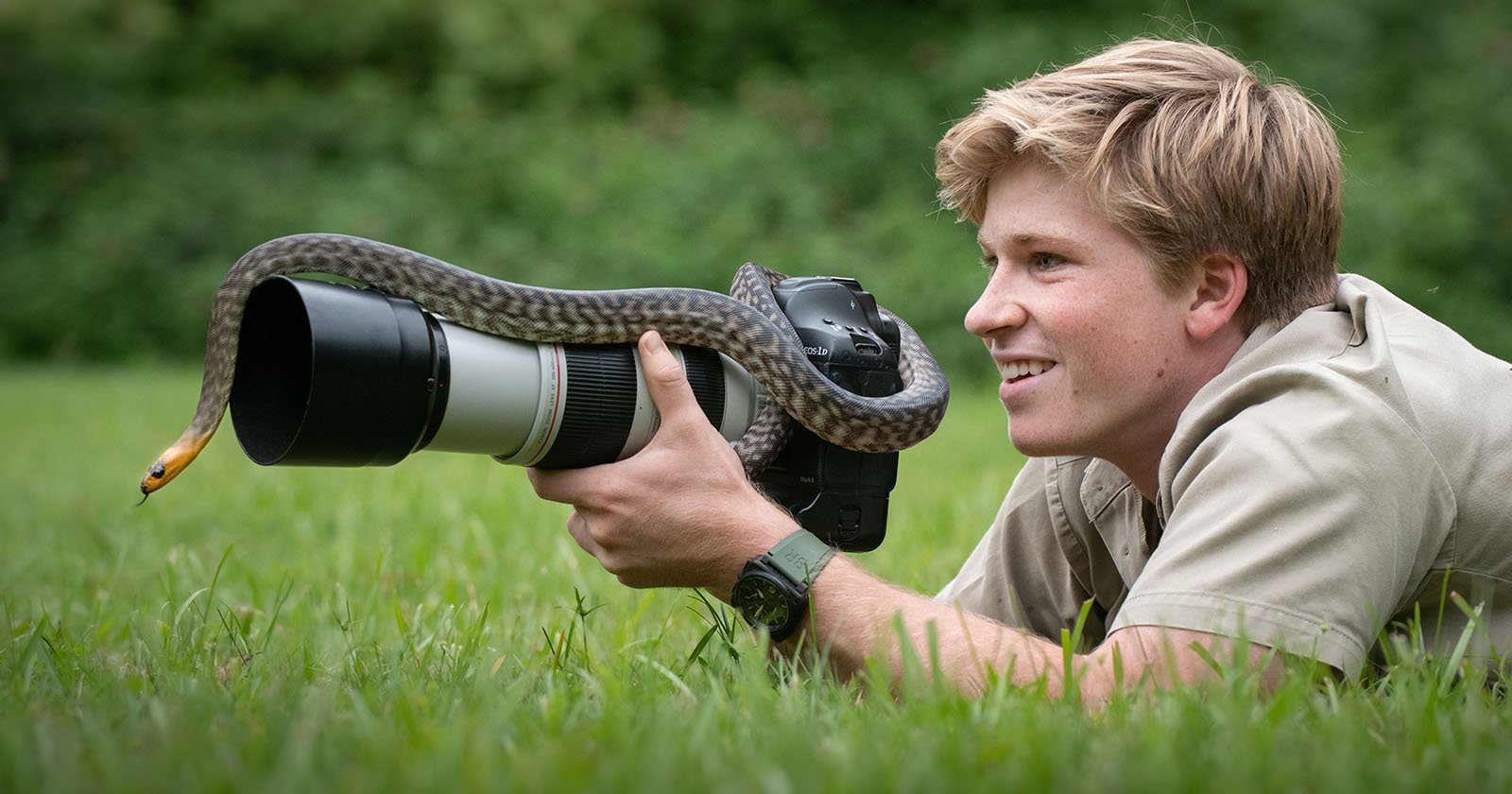
Crucially, the competition has implemented a strict "no AI" policy. Irwin was categorical in his stance, asserting that there is no room for generated content in a competition dedicated to the natural world. "It ain’t happening," he remarked, emphasizing that the judging criteria will prioritize storytelling that shows nature as it was intended, without human "meddling" or algorithmic intervention.
The competition, which accepts entries until August 31, 2026, seeks to highlight the "visceral feeling" that only authentic representation can provide. By setting these boundaries, the Australia Zoo aims to preserve the integrity of wildlife documentation and ensure that the "conservation message" remains tied to biological reality rather than digital fantasy.
Expanding the Global Portfolio: Irwin’s Wildlife Bucket List
Despite his extensive travels and life spent among animals, Irwin revealed that his "mile-long" list of subjects he has yet to photograph remains a driving force in his career. His aspirations reflect a deep desire to document the world’s most elusive and iconic species in their native habitats.
Among the top priorities on Irwin’s list are:
- South American Biodiversity: Irwin has yet to visit South America and expressed a specific interest in documenting sloths in the wild.
- The Galapagos Islands: A region synonymous with evolutionary biology and unique endemic species.
- Komodo Dragons: While he has encountered many reptiles, photographing the world’s largest lizards in the wild remains a primary goal.
- The "Pinnacle" Species: Irwin identified the snow leopard and the polar bear as the ultimate challenges for any wildlife photographer. He described the prospect of seeing a polar bear in the wild as an experience that would elicit genuine "squeals of excitement," highlighting the enduring wonder that fuels his work.
Analysis: The Implications of AI on Conservation Science
The concerns raised by Irwin extend beyond the realm of art and into the field of conservation science. Photographic evidence has long been a cornerstone of biodiversity monitoring, used to identify individual animals, track migration patterns, and document the health of ecosystems. The proliferation of AI-generated "nature" photos poses a risk of misinformation, where fabricated images could be mistaken for scientific data.
Furthermore, the "dilution" Irwin speaks of has psychological implications for public engagement. Conservation relies heavily on the emotional connection between the public and the natural world. If the public becomes cynical about the authenticity of wildlife imagery, the "visceral hit to the heart" that motivates charitable donations and policy changes may be weakened.
Irwin’s advocacy for "authentic representation" serves as a call to action for the photography industry to establish clearer labeling standards and verification processes. As AI technology continues to advance, the distinction between a "captured" image and a "created" image will become a central debate in media ethics.
The Future of Visual Storytelling at Australia Zoo
As Robert Irwin continues to lead the Australia Zoo’s creative and conservation efforts, his focus remains on inspiring the next generation. He noted that his goal is to give other children the same feeling of connection to nature that he discovered through his first camera at age ten.
The Australia Zoo’s commitment to "true and raw" photography is more than just a preference for traditional methods; it is a strategic defense of the natural world’s intrinsic value. By championing the work of photographers who endure harsh conditions and long hours to capture a single, real moment, Irwin is reinforcing the idea that nature is "more amazing because it’s real."
The upcoming years will likely see Irwin further integrating his photography with large-scale conservation projects, using the Crikey! Magazine Photography Competition as a cornerstone for global outreach. In a digital age increasingly defined by the artificial, Irwin’s steadfast commitment to the authentic serves as a reminder of the power of the unedited, unmanipulated truth of the wild.