
Published by Damiani to coincide with Earth Day on April 22, 2026, Patterns: Art of the Natural World stands as a definitive exploration of the structural geometries underlying the global ecosystem. Authored by acclaimed Australian photographer and conservationist Jon McCormack, the monograph bridges macro and micro photography to present a cohesive visual taxonomy of the Earth. Born out of the spatial restrictions and operational shifts enforced by the COVID-19 pandemic, the project redefines landscape photography by stripping away the pursuit of geographical novelty in favor of deep, sustained observation.
The Pandemic Shift: From Global Travel to Micro-Geography
For decades, contemporary nature photography has relied heavily on motion, exoticism, and the pursuit of untouched wilderness across remote continents. McCormack’s early career followed this conventional trajectory, characterized by extensive fieldwork and international expeditions. However, the onset of the global health crisis in 2020 abruptly halted this outward momentum. Grounded by international travel restrictions, McCormack was forced to restrict his practice to a narrow radius, anchoring his camera to a single stretch of coastline in Northern California.
Initially, this constraint presented a creative challenge. The immediate impulse was to capture traditional, expansive vistas and dramatic sunsets. Yet, as weeks turned into months and the novelty of the location dissolved, McCormack encountered a creative turning point. The daily return to the same geographical coordinates eliminated distraction, allowing him to bypass surface-level aesthetics.

This enforced repetition fostered an intimate, meditative approach to image-making. Without the safety net of new destinations, McCormack began to notice transient phenomena: the migration of foam around coastal rocks, shifting tidal geometries, and the intricate play of light across moving water. This localized immersion yielded a foundational realization for the artist: wonder is not a byproduct of geographic distance, but of the depth of attention brought to the subject.
The Evolution of a Monograph: Moving Beyond Place to Pattern
Translating this localized mindfulness into a coherent book-length project required a significant conceptual pivot. In the early stages of production, McCormack’s pandemic-era portfolio consisted largely of impressionistic landscape studies—striking variations on a single coastal motif. However, when laid out for editorial review, the collection lacked a unifying narrative thread.

The breakthrough came when McCormack reevaluated the organizing principle of the work. Rather than structuring the book around specific locations, ecosystems, or traditional photographic categories—such as landscape, macro, or micro—he organized the sequence around visual resonance and structural intelligence.
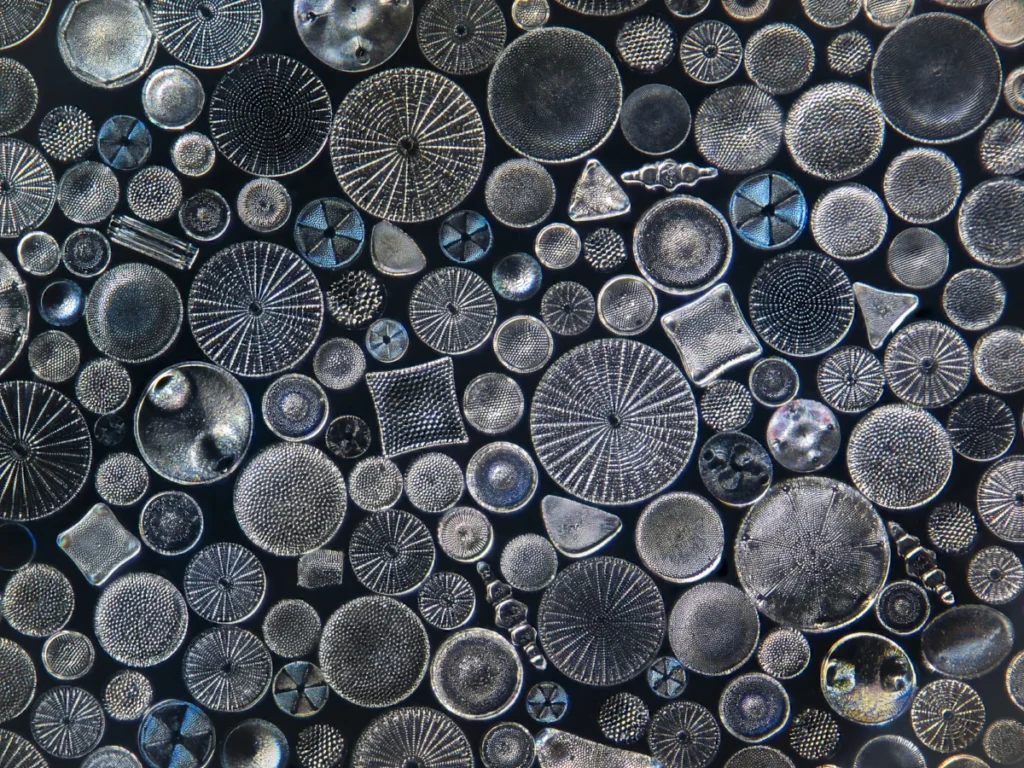
By analyzing form rather than geography, McCormack discovered startling structural continuities across wildly disparate scales. Spirals, fractals, ripples, branching forms, and tessellations appeared consistently across diverse materials: in the frozen architecture of Icelandic glaciers, the mineral banding of tigerite and jasper, avian plumage, fossilized remains, and the microscopic geometry of diatoms. This realization transformed the manuscript from a collection of isolated nature photographs into a unified study of the natural world’s intrinsic design principles.

Technical Rigor and the Microscopic World
A defining feature of Patterns is its seamless integration of macroscopic aerial views and microscopic laboratory studies. To capture structures invisible to the naked eye, McCormack utilized specialized microscopic photography, presenting formidable technical hurdles. Because magnification drastically reduces the depth of field—often limiting the plane of sharp focus to a fraction of a millimeter—many of the book’s microscopic plates, including detailed captures of diatoms, require complex focus stacking. This technique involves blending up to 25 individual exposures captured at incremental focal lengths to achieve complete clarity across complex three-dimensional micro-structures.
This technical dedication serves a broader conceptual purpose. By placing microscopic phenomena on equal visual footing with monumental landscapes, McCormack challenges human perceptions of scale. The monograph posits that biological and geological complexity is scale-invariant; a structural rhythm found in a microscopic mineral crystal carries the same evolutionary and physical intelligence as a sprawling river delta captured from the air.

Process, Force, and the Visual Language of Earth
In the introduction to Patterns, McCormack articulates the philosophical core of his work, writing that "beneath the surface of what we see lies structure, repetition, and intelligence, proof that the world is not just alive, but speaking."
In interviews accompanying the book’s release, McCormack clarifies that this phrasing avoids metaphysical mysticism, instead pointing toward tangible, physical realities. Natural patterns are not arbitrary decorative motifs; they are the visual records of physical forces at work. They represent the visible consequences of pressure, fluid dynamics, thermal expansion, gravity, crystallization, chemical composition, and evolutionary adaptation over deep time.

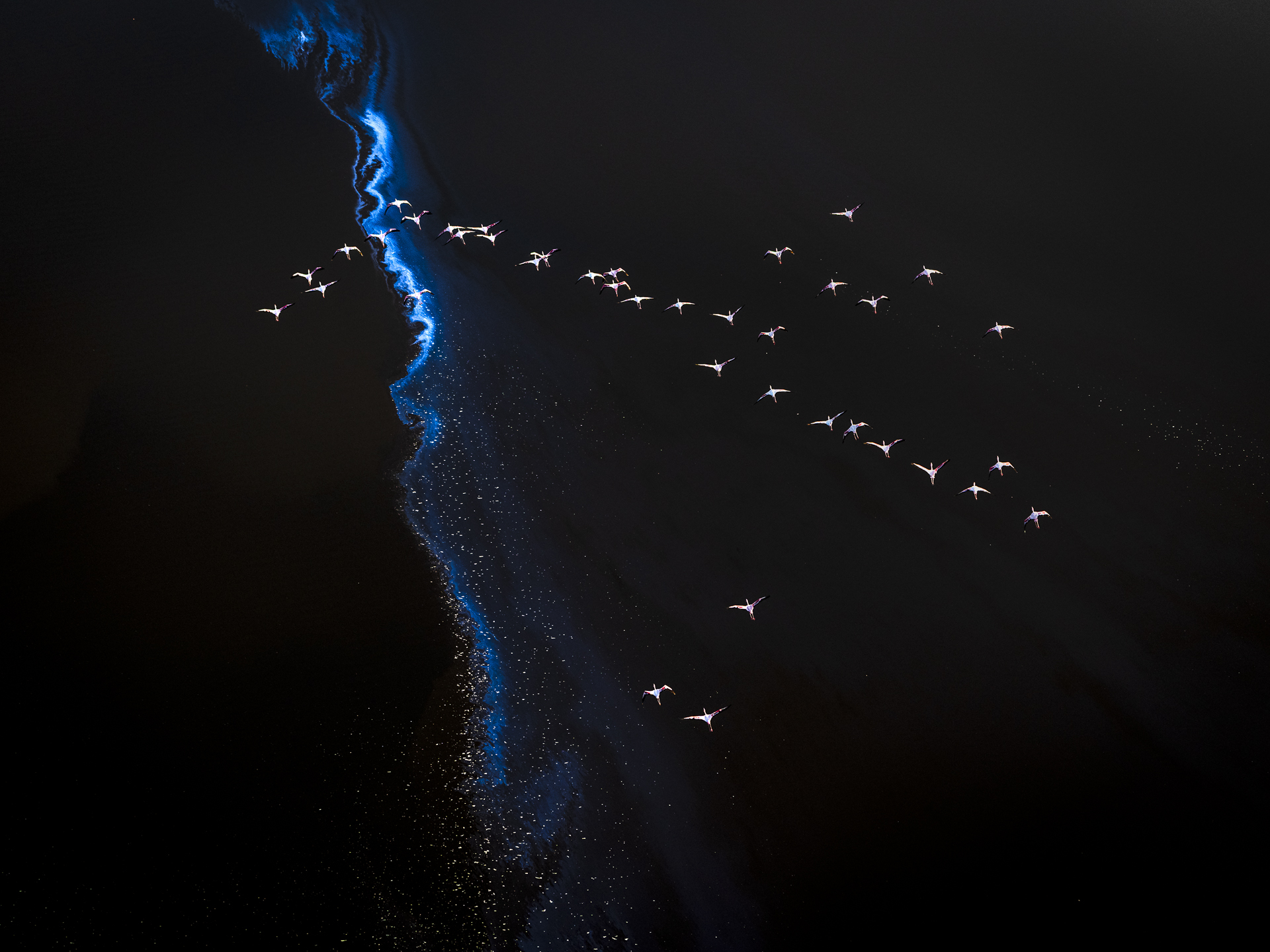
By documenting these structural echoes, McCormack’s photography captures the legible traces of environmental history. The resulting images demonstrate how disparate elements of the biosphere—from the salt crusts of Lake Magadi to glacial fractures in Vatnajökull—participate in a shared structural language governed by physical laws.
Conservation Partnership and Exhibition Timeline
Aligning with its core message of ecological interconnectedness, the release of Patterns carries a direct philanthropic mandate. All proceeds generated by the book’s sales will be donated to Vital Impacts, a nonprofit organization founded by renowned photojournalist Ami Vitale. Vital Impacts utilizes funds raised through the arts to support grassroots conservation initiatives and empower emerging environmental storytellers globally.

The launch of the monograph coincides with major public and institutional exhibitions throughout the spring of 2026:
- April 17 – May 17, 2026: CENTER Santa Fe hosts a solo exhibition titled Elements of Wonder: Where Nature Becomes Art, showcasing key selections from the project.
- April 22 – June 14, 2026: In New York City, in partnership with the South Street Seaport Museum and Photoville, McCormack’s works will be displayed prominently in an outdoor public exhibition featuring large-scale, six-by-six-foot photocubes stationed throughout the South Street Seaport district.
Broader Implications and Critical Reception
The publication of Patterns arrives at a critical juncture for contemporary environmental art and nature photography. As climate disruption accelerates habitat transformation across the globe, traditional documentary landscape photography often leans heavily into elegiac or catastrophic framing. McCormack’s work charts an alternative course by emphasizing structural resilience, deep continuity, and the inherent elegance of natural systems.

By demonstrating that the geometric rules governing microscopic diatoms mirror those shaping continental coastlines, Patterns encourages a re-evaluation of humanity’s relationship with the non-human world. The monograph suggests that ecological literacy begins not merely with the identification of endangered species or vanishing habitats, but with a fundamental recognition of the underlying intelligence that sustains all life on Earth.