
Tag: Tech

  • Modernizing Enterprise UX: Navigating the Complexities of Legacy Systems for Sustainable Impact

    Modernizing Enterprise UX: Navigating the Complexities of Legacy Systems for Sustainable Impact

    The contemporary enterprise landscape is increasingly defined by the silent yet pervasive challenge of legacy systems. These deeply entrenched technological infrastructures, often operating for a decade or more, underpin critical daily operations despite being slow, unreliable, and severely outdated. While the drive for digital transformation and enhanced user experience (UX) gains momentum, many organizations grapple with the daunting task of improving systems that are effectively "black boxes"—essential yet poorly understood. This article, informed by practical guidelines from Vitaly Friedman’s "Measuring UX Impact" course, delves into strategies for driving significant UX improvements within organizations burdened by such legacy systems and their associated broken processes.

    The Enduring Presence and Cost of Legacy Infrastructure

    How To Improve UX In Legacy Systems — Smashing Magazine

    Legacy systems are not merely old software; they represent a complex amalgamation of historical investment, specialized customization, and often, undocumented knowledge. Many were developed externally by suppliers, frequently without the benefit of rigorous usability testing, and have become indispensable to core business functions. This deep integration is precisely why they persist: replacing them outright often presents an insurmountable financial and operational hurdle. Industry data consistently shows that enterprises allocate a substantial portion—typically 40% to 60%—of their IT budgets to simply managing, maintaining, and fine-tuning these aging systems. This substantial allocation represents not only a direct cost but also a significant opportunity cost, diverting resources that could otherwise be invested in innovation and new product development.

    Consider the operational impact: a system designed for an earlier era often struggles with modern data volumes, processing speeds, and user expectations. The individuals who initially conceived and built these systems may have long since departed, leaving behind fragmented documentation, inconsistent design choices, and design artifacts trapped in discontinued software versions. For instance, in healthcare, Electronic Medical Record (EMR) systems, while critical, are notorious for their complex, often unintuitive interfaces that can lead to physician burnout and errors. Similarly, financial institutions often rely on decades-old mainframe systems for core banking functions, whose underlying complexities make even minor UX updates a monumental undertaking. The sheer scale of replacing such systems across thousands of branches or user terminals, as seen with older cash register technologies, renders a complete overhaul remarkably expensive and disruptive.

    The User Experience Paradox: Modern Interfaces Clashing with Antiquated Backends

    How To Improve UX In Legacy Systems — Smashing Magazine

    The most visible manifestation of the legacy system challenge is the "Frankenstein" effect. Organizations often attempt to integrate modern, sleek user interfaces with these antiquated back-end systems. The result is a patchwork experience: visually appealing front-ends that abruptly transition into painfully slow, barely usable fragments when critical data processing, validation, or error messaging occurs. This inconsistency shatters user trust and significantly degrades the overall product experience.

    A single point of friction within a complex user flow—perhaps a sluggish database query, an obscure error message, or an unresponsive layout within a legacy module—can undermine all the meticulous design work applied to the rest of the application. Users, particularly those in corporate environments who rely on these systems daily, perceive the entire product as broken, irrespective of the enormous effort invested in modernizing other parts. This creates a deeply frustrating experience, impacting productivity, increasing training costs, and potentially leading to employee dissatisfaction and turnover. A CIO might lament, "We’ve invested heavily in digital transformation, but our core operational systems remain a drag on efficiency and user morale, creating a perception gap between our brand image and the reality of our internal tools."

    A Strategic UX Roadmap for Legacy Transformation

    How To Improve UX In Legacy Systems — Smashing Magazine

    Given the criticality and inherent complexities, simply "ripping out and replacing" a legacy system is rarely a feasible or advisable strategy. Such "big-bang" redesigns are not only expensive and time-consuming but also carry immense risks, potentially disrupting core business operations. Instead, a phased, strategic approach is essential, one that respects the existing institutional knowledge embedded within these systems and the deeply ingrained habits of their users.

    Phase 1: Comprehensive Discovery and Assessment

    The initial step in any legacy UX improvement initiative is a thorough understanding of the existing ecosystem. This phase is about illuminating the "black box" as much as possible, even if its internal workings remain opaque.

    How To Improve UX In Legacy Systems — Smashing Magazine
    • Stakeholder Interviews: Engage key stakeholders—business owners, department heads, IT leads—to understand their priorities, challenges, and perceived value of the legacy system. This helps capture invaluable institutional knowledge about the system’s purpose and its critical role in various business practices.
    • User Research and Ethnographic Studies: Critically, involve the heavy users of the system. Observe them in their natural work environment, noting their actual workflows, pain points, workarounds, and the frequency with which they use specific features. Usability testing on the existing legacy system, no matter how rudimentary, can reveal profound insights into user struggles and task completion difficulties. A long-term user might express, "It’s slow and clunky, but I know where everything is, and I’ve developed my own ways to get things done. I worry a new system will disrupt my entire day."
    • Technical Audit and Dependency Mapping: Work closely with IT to uncover the system’s architecture, data flows, and, crucially, its dependencies on other systems—which may themselves be older legacy components. Documenting these interconnections helps visualize the intricate web of relationships and identify potential ripple effects of any changes. A visual board mapping current workflows and dependencies, involving both technical and business teams, becomes an invaluable tool.
    • Feature and Priority Mapping: Not everything needs to be migrated or redesigned. Through discovery, identify critical features, frequently used workflows, and high-impact areas that are most ripe for UX improvement. A prioritization matrix, balancing user impact with technical feasibility and business urgency, is essential.

    Phase 2: Defining the Migration Strategy

    Once a comprehensive understanding is established, organizations must select an appropriate migration strategy. This choice dictates the scope, timeline, and ultimate UX impact. The goal is not just to migrate a system, but to transition workflows, habits, and ways of working.

    • Rehosting (Lift-and-Shift): Moving the application to a new cloud infrastructure without significant code changes. While offering minimal immediate UX improvements, it can lay the groundwork for future enhancements by improving performance and scalability.
    • Re-platforming: Modifying the application to optimize it for a new cloud platform, potentially involving minor code changes. This offers slightly more opportunity for UX tweaks to leverage new platform capabilities.
    • Refactoring: Restructuring and optimizing the existing code without altering its external behavior. This primarily improves maintainability and performance, which can indirectly enhance UX through faster load times and fewer errors.
    • Replacing: Discarding the old system entirely and building a new one from scratch. This is the most radical approach, offering the greatest potential for UX transformation, but also carrying the highest risk and cost. It is often implemented incrementally, replacing modules over time.
    • Retaining: Keeping the legacy system as is but building modern user interfaces or APIs around it to provide a more contemporary experience. This can be a cost-effective way to improve UX for specific interactions without touching the core legacy code.
    • Retiring: Decommissioning systems that are no longer needed, streamlining the IT landscape.

    The decision hinges on factors like business criticality, technical debt, budget, timeline, and the desired level of UX transformation. Incremental strategies, such as the "Strangler Fig" pattern where new functionality gradually replaces old, are often preferred to mitigate risk and allow for continuous user feedback.

    How To Improve UX In Legacy Systems — Smashing Magazine

    Phase 3: Incremental Implementation and Continuous Feedback

    The implementation phase should prioritize iterative development and constant engagement with users.

    • Pilot Projects: Initiate small, controlled pilot programs with a select group of users. This builds confidence, validates assumptions, and allows for real-world testing in a low-risk environment. A successful pilot can become a powerful internal case study, securing further buy-in.
    • Agile Development and Small Releases: Break down the transformation into manageable, testable chunks. Deploying small, iterative improvements allows for quick feedback loops and adaptation.
    • A/B Testing: Where applicable, test new UX elements or workflows against the existing legacy ones to gather empirical data on user preference and performance improvements.
    • User Training and Support: Anticipate the need for comprehensive training and ongoing support. Even well-designed changes can face resistance if users are not adequately prepared and supported.
    • Monitoring UX Metrics: Continuously track key performance indicators (KPIs) related to user experience, such as task completion time, error rates, user satisfaction scores, and productivity gains. This objective data is crucial for demonstrating the tangible impact of the UX work.

    Navigating Stakeholder Dynamics and Building Trust

    How To Improve UX In Legacy Systems — Smashing Magazine

    Transforming legacy systems is as much a people challenge as it is a technical one. Stakeholders and long-term users, despite acknowledging the system’s flaws, often harbor skepticism, doubts, and fears about change. They are deeply attached to existing workflows and institutional knowledge.

    • Strong Relationships and Shared Ownership: Building strong, trusting relationships with key stakeholders and heavy users from the outset is paramount. Involve them in discovery, design, and testing. Share ownership of the problem and the solution.
    • Transparent Communication: Regularly report progress, challenges, and successes. Address concerns proactively and transparently. Stakeholders will invariably focus on edge cases, exceptions, and tiny tasks, and they will question decisions. Be prepared to explain the rationale, demonstrate prototypes, and reiterate the benefits.
    • Managing Expectations: It is crucial to set realistic expectations. The new system will not run flawlessly from day one, and there will be a learning curve. Acknowledge the complexity and the journey ahead.

    The Strategic Imperative and Long-Term Value

    Revamping a legacy system is undeniably a tough challenge, often fraught with technical hurdles and organizational resistance. However, few projects within an enterprise can yield such profound and far-reaching impact. Beyond mere aesthetics, improved UX in legacy systems directly translates to:

    How To Improve UX In Legacy Systems — Smashing Magazine
    • Increased Efficiency and Productivity: Streamlined workflows and reduced error rates empower employees to accomplish tasks more quickly and accurately.
    • Reduced Operational Costs: Fewer support tickets, less manual intervention to correct errors, and optimized processes can significantly lower operational expenses.
    • Enhanced Employee Satisfaction and Retention: Providing modern, intuitive tools improves morale, reduces frustration, and makes an organization a more attractive place to work.
    • Greater Business Agility: Modernized systems are more adaptable to changing business requirements, market demands, and regulatory shifts, fostering greater organizational agility.
    • Competitive Advantage: Organizations that successfully modernize their core systems can outmaneuver competitors burdened by antiquated, inefficient technologies.

    In essence, a successful legacy UX transformation is a critical enabler of digital transformation, unlocking new levels of organizational performance and employee empowerment. While the journey is arduous, the teams that navigate it successfully are often remembered, respected, and rewarded for years to come, having delivered foundational improvements that drive sustainable business value. For those embarking on this journey, resources like "Measure UX & Design Impact" offer practical guidance on how to track and visualize the incredible impact of UX work on business outcomes, turning challenges into strategic triumphs.

  • RAG Chunking Strategies: Unveiling the Production Realities Beyond Tutorial Hype

    RAG Chunking Strategies: Unveiling the Production Realities Beyond Tutorial Hype

    The burgeoning field of Large Language Model (LLM) applications, particularly those leveraging Retrieval-Augmented Generation (RAG), hinges on a fundamental yet frequently underestimated process: chunking. This crucial step involves dividing vast swathes of source documentation into manageable, semantically coherent segments, or "chunks," which are then indexed and retrieved to inform the LLM’s responses. While countless online tutorials advocate for a seemingly straightforward approach like RecursiveCharacterTextSplitter(chunk_size=1000, chunk_overlap=200), the practical experience of teams deploying RAG systems in production reveals a far more nuanced reality, often encountering a critical "chunk size nobody talks about." This article delves into the complexities of RAG chunking, exploring six leading strategies that are actually employed by practitioners, evaluating their performance against a shared corpus, and highlighting the approach that consistently delivers superior results in real-world scenarios.

    The Foundational Challenge: Bridging the Gap Between Retrieval and Response

    Retrieval-Augmented Generation has revolutionized how LLMs interact with proprietary or domain-specific knowledge, enabling them to provide accurate, up-to-date, and attributable answers by drawing from external data sources. The efficacy of a RAG system, however, is directly proportional to the quality of its retrieval mechanism, which in turn is heavily influenced by how the underlying documents are chunked. The challenge lies in striking a delicate balance: chunks must be small enough to be precisely relevant to a query, yet large enough to provide sufficient context for the LLM to formulate a comprehensive answer.

    The "chunk size nobody talks about" refers to this often-missed sweet spot, where an ill-conceived chunking strategy can lead to significant failures. Imagine a 30-page legal contract, meticulously indexed, yet when a customer queries an indemnity clause, the system retrieves only fragmented pieces, confidently omitting crucial details. Or consider a product documentation QA bot that cites two seemingly relevant paragraphs but misses a critical table located two pages away, which holds the actual answer. Even more frustrating, a seemingly minor change like swapping an embedding model or re-chunking an entire corpus can send evaluation scores plummeting by double-digit percentages, underscoring the sensitivity and impact of this foundational choice.

    To objectively assess chunking strategies, a robust evaluation framework is indispensable. The data points presented herein are derived from a rigorous evaluation conducted on a substantial corpus: 1,200 questions posed against 2,300 pages of diverse technical-product documentation. This corpus encompassed SaaS changelogs, intricate API references, and dense contract PDFs—materials representative of complex enterprise knowledge bases. The evaluation utilized top-5 retrieval, text-embedding-3-large for embeddings, gpt-4o-2024-11-20 as the generative model, and Ragas for comprehensive scoring. Critically, only the chunking strategy varied across experiments, ensuring a direct comparison of their impact on two primary retrieval metrics: Recall (the proportion of relevant chunks successfully retrieved) and Precision (the proportion of retrieved chunks that are actually relevant).

    Evolution of Chunking Strategies: A Chronological Overview

    The landscape of RAG chunking has evolved from rudimentary methods to highly sophisticated, context-aware techniques. This progression reflects a continuous effort to overcome the limitations of simpler approaches and better align retrieved information with the nuanced requirements of LLMs.

    1. Fixed-Size Chunks: The Baseline of Simplicity

    The most basic chunking strategy, fixed-size chunking, involves slicing text into equal character windows, optionally with some overlap, without regard for linguistic or structural boundaries like sentences, paragraphs, or sections. The implementation is straightforward, often a simple loop iterating through the text.

    • Mechanism: Divides the document into segments of a predetermined character count.
    • When it Wins: Ideal for homogeneous text with minimal inherent structure, such as raw chat logs, interview transcripts, or single-author essays where semantic continuity is less dependent on explicit formatting. Its computational cheapness and predictable chunk sizes make batch-embedding trivial and cost-effective.
    • When it Loses: Its indiscriminate nature is its biggest downfall. Documents with headings, tables, or code blocks are particularly problematic. This method frequently splits mid-sentence, mid-clause, or mid-function, scattering crucial entities across multiple, disconnected chunks that a retriever may fail to reassemble. For instance, a key policy term might be severed from its definition, rendering both parts less useful.
    • Scores on Corpus: Recall 0.61, Precision 0.54. This represents the absolute floor in performance, serving as a stark reminder of the importance of more intelligent chunking.

    2. Recursive Character Splitting: The Common Default

    Recursive character splitting represents a significant step up from fixed-size chunks and is widely adopted, often being the default in popular RAG frameworks like LangChain.

    • Mechanism: This method attempts to split text using a hierarchical list of separators. It first tries the largest separator (e.g., nn for blank lines), and if the resulting chunk is still too large, it falls back to the next separator (e.g., n for newlines, then . for sentence endings, then ` for words) until the chunk fits within the specifiedchunk_size`. This approach aims to preserve paragraph and sentence boundaries where possible.
    • When it Wins: Highly effective for most prose-based documents, suchcluding articles, reports, and general descriptive text. It offers a good balance between engineering effort and retrieval performance, providing paragraph-aware splits with minimal configuration. For many initial RAG deployments, its ease of use and respectable performance make it the default choice.
    • When it Loses: While better than fixed-size, it struggles with highly structured content. Tables often get flattened into plain text, losing their inherent organization. Headings can become "orphaned," detached from the substantive sections they introduce. For example, retrieving "Pricing" without the three paragraphs detailing the pricing tiers below it severely limits the LLM’s ability to answer complex queries. The chunk_overlap parameter, while intended to mitigate boundary issues, can sometimes mask these underlying structural problems on simpler questions, only to exacerbate them on more challenging ones where precise context is paramount.
    • Scores on Corpus: Recall 0.74, Precision 0.68. This marks a substantial improvement over fixed-size chunking and is often where many development teams conclude their chunking optimization efforts.

    3. Semantic Chunking: Topic-Driven Segmentation

    Semantic chunking introduces an intelligent, meaning-aware approach to text segmentation, moving beyond mere character counts or structural delimiters.

    • Mechanism: This strategy involves embedding every sentence in a document and then iterating through these embeddings. Chunks are formed by cutting the text when the cosine distance (a measure of semantic dissimilarity) between adjacent sentences spikes past a predefined threshold. The goal is to create chunks that align with shifts in topic or meaning, rather than arbitrary length limits.
    • When it Wins: Particularly powerful for long-form narrative content characterized by clear topic changes, such as academic research papers, blog posts, or detailed interview transcripts. In such corpora, where content flows logically from one distinct subject to another, semantic chunking can yield significant recall improvements. Demos often showcase impressive recall jumps (e.g., 40%) on these specific types of documents.
    • When it Loses: Its performance degrades significantly on dense reference documents where most sentences remain "on-topic." In technical writing, the embedding-distance signal can become noisy, leading to chunks that are either excessively large (if few distance spikes are detected) or highly fragmented (if minor formatting quirks or subtle shifts trigger premature splits). Furthermore, semantic chunking is computationally intensive, typically 10 to 100 times more expensive than recursive splitting, as it requires an embedding call for every sentence. This cost is re-incurred every time the corpus changes, making it less economical for frequently updated knowledge bases.
    • Scores on Corpus: Recall 0.72, Precision 0.65. On the technical product documentation corpus, semantic chunking performed slightly worse than recursive splitting, underscoring its corpus-specific strengths and weaknesses.

    4. Hierarchical / Parent-Document Retrieval: The Production Workhorse

    Hierarchical or Parent-Document Retrieval addresses the fundamental tension between retrieval granularity and contextual completeness by separating the "matching unit" from the "answering unit."

    • Mechanism: This strategy involves splitting the document twice. First, into smaller "child" chunks (e.g., 400 characters) designed for high retrieval accuracy due to their focused content. Second, into larger "parent" chunks (e.g., 2000 characters) that provide ample context. The system then embeds the child chunks and indexes them in a vector store. At retrieval time, a query matches against these smaller child chunks, but the retriever returns the larger parent chunk that contains the matching child. This ensures that the LLM receives both precise relevance and sufficient surrounding context.
    • When it Wins: This approach consistently excels in almost every real-world document-QA workload, including complex contracts, extensive product documentation, internal knowledge bases, and operational runbooks. The small child embedding precisely identifies the relevant clause or detail, while the parent chunk provides the necessary surrounding definitions, cross-references, or explanatory text. For example, finding a specific row in a table necessitates retrieving the table’s header and potentially other related sections to fully understand its meaning. This strategy elegantly solves the problem where the ideal unit for matching a query is smaller than the ideal unit for answering it.
    • When it Loses: It can be less efficient for very short documents where a "parent" chunk would essentially encompass the entire document, negating the hierarchical benefit. It also poses challenges for extremely token-constrained budgets, where even a 2,000-character parent chunk might be too expensive to include multiple top-5 retrievals. Operationally, it adds weight: maintaining two separate stores (for children and parents) and tuning two distinct splitters introduces a layer of complexity not present in simpler methods.
    • Scores on Corpus: Recall 0.86, Precision 0.79. This strategy achieved the highest recall on the technical product documentation corpus, demonstrating its robust performance in complex, structured environments.

    Why Parent-Document Retrieval Consistently Wins in Production

    The success of Parent-Document Retrieval lies in its direct attack on a critical failure mode: the matching unit is smaller than the answering unit. In many real-world scenarios, a query might precisely hit a specific phrase, a single line in a contract, or a data point in a table. However, to provide a truly comprehensive and accurate answer, the LLM often requires broader context—surrounding definitions, preceding explanations, or related sections.

    Consider these common failure points:

    • A retriever finds the exact contract clause, but the LLM needs two paragraphs of surrounding definitions to fully interpret it.
    • It identifies a specific row in a product feature table, but requires the column headers, and possibly an introductory paragraph two pages up, to understand what that row signifies.
    • It locates a function definition in an API reference, but needs the class docstring or module overview to grasp the function’s broader purpose and usage.

    Parent-Document Retrieval elegantly resolves these issues by decoupling the optimization concerns. It allows for small, precise child chunks for effective retrieval while providing larger, contextually rich parent chunks for the LLM’s consumption. Other strategies, by forcing a single chunk size to serve both roles, inevitably compromise either retrieval precision or contextual completeness.

    The RAG Chunking Strategy That Beat All the Trendy Ones in Production

    Another, often undersold, reason for its production dominance is its graceful degradation. In complex, dynamic corpora, new document types or unexpected formatting can break even well-tuned child splitters. With parent-document retrieval, even if a child chunk is poorly segmented, the larger parent chunk often remains sufficiently intact and comprehensive to still provide a reasonable amount of context to the LLM. This resilience makes it a more robust choice for evolving knowledge bases where perfect chunking cannot always be guaranteed.

    5. Propositional Chunking: Maximizing Atomic Precision

    Propositional chunking represents a more radical departure, leveraging LLMs themselves to refine the chunking process for extreme precision.

    • Mechanism: This advanced technique employs an LLM to decompose each passage of a document into atomic, self-contained factual propositions. These propositions are designed to be independently verifiable and true without relying on the surrounding text. These granular propositions are then embedded. At retrieval time, the system matches queries against these highly precise propositions, optionally returning the original, larger passage from which they were extracted. This approach draws inspiration from research like Chen et al.’s "Dense X Retrieval" (2023).
    • When it Wins: Exceptional for fact-dense corpora where questions typically map to single, discrete claims, such as medical guidelines, regulatory texts, or encyclopedic entries. Its primary strength lies in its precision, as each retrieved proposition is a clean, unambiguous unit of information.
    • When it Loses: Cost is a significant barrier. This method requires an LLM call for each passage during the ingest process, and these costs are re-incurred with every corpus update. A 10,000-document corpus could incur hundreds of dollars ($200-$800) just for propositionalization, even before embedding costs. Furthermore, the quality of propositions is highly sensitive to the extractor’s prompt; different engineers using the same code might derive different sets of propositions, introducing variability. There’s also a risk of the LLM-based extractor inadvertently dropping context that a proposition might need, especially for highly interconnected clauses.
    • Scores on Corpus: Recall 0.81, Precision 0.84. While achieving the best precision on the corpus, its high ingest cost and maintenance complexity make it a specialized, expensive solution.

    6. Late Chunking: Contextual Embeddings for Enhanced Understanding

    Late chunking is an innovative, still-emerging strategy that aims to imbue individual chunk embeddings with broader document context.

    • Mechanism: This technique involves feeding the entire document into a long-context embedder. Instead of immediately creating chunk embeddings, the system retains the per-token embeddings generated by the model. Only after this full-document embedding pass are chunk boundaries applied. The chunk vectors are then formed by averaging the token embeddings within each boundary. The key advantage is that every chunk’s embedding implicitly carries contextual information from the rest of the document, as pronouns and implicit references are understood in their full textual environment. For instance, the pronoun "it" in chunk 7 is embedded with awareness of its antecedent in chunk 2.
    • When it Wins: Particularly effective for documents rich in anaphora and implicit references, such as legal contracts, academic papers, or narrative reports. It directly addresses the "who does ‘the Licensee’ refer to in this chunk" problem by ensuring that such references are disambiguated at the embedding stage.
    • When it Loses: Requires specialized long-context embedders (e.g., Jina v3, Voyage-3, Cohere Embed 4, typically with 8k-32k context windows), which are not universally available or always cost-effective. Incremental caching becomes challenging, as changing even a single paragraph often necessitates re-embedding the entire document. SDK support is still nascent, largely confined to specific libraries like Jina’s implementation. Being a relatively newer approach (with key papers emerging around 2024), fewer teams have extensive production mileage, making it a strategy worth watching as tooling and adoption mature.
    • Scores on Corpus: Recall 0.79, Precision 0.76. It outperformed recursive splitting but lagged behind parent-document retrieval on this specific corpus.

    Comparative Analysis: The Scorecard and Key Takeaways

    The following scorecard summarizes the performance and operational characteristics of each chunking strategy on the evaluated corpus. While "your mileage may vary" depending on the specific document types and query patterns, the general shape of these results is consistent with observations from numerous RAG deployments across various industries.

    Strategy Recall Precision Ingest Cost (relative) Ops Weight
    Fixed 0.61 0.54 1x Trivial
    Recursive 0.74 0.68 1x Trivial
    Semantic 0.72 0.65 50x Medium
    Parent-Document 0.86 0.79 1.2x Medium
    Propositional 0.81 0.84 200x Heavy
    Late Chunking 0.79 0.76 3x Medium

    The scorecard reveals a clear hierarchy. Simple, arbitrary chunking methods (Fixed, Recursive) offer low cost and trivial operational overhead but yield suboptimal retrieval performance. Semantic chunking, despite its intellectual appeal, struggles with dense technical documentation and incurs significant computational costs. Propositional chunking achieves impressive precision but at an exorbitant cost, making it feasible only for highly specialized, static, and fact-critical applications. Late chunking shows promise but is still maturing.

    Industry Perspectives and Future Outlook

    The insights gleaned from this comparative analysis reflect a growing consensus among RAG practitioners: the choice of chunking strategy is not a mere technical detail but a strategic decision with profound implications for system performance, cost, and maintainability.

    Developer Experience: For developers, the operational weight of a chunking strategy is a critical factor. Trivial methods are easy to implement but lead to debugging headaches due to poor retrieval. Heavy methods, while potentially offering high performance, can become a bottleneck in deployment pipelines, increase infrastructure costs, and complicate incremental updates. Parent-document retrieval, despite its "medium" operational weight, is often seen as a worthwhile investment due to its robust performance and graceful degradation.

    The Role of Evaluation: The exercise underscores the paramount importance of rigorous, corpus-specific evaluation. Relying solely on generalized benchmarks or flashy demos can be misleading. As demonstrated by semantic chunking’s performance on technical documentation, a strategy that excels in one domain (e.g., narrative text) may underperform significantly in another. Teams must invest in constructing representative evaluation datasets and establish clear metrics (like Recall and Precision) to make informed decisions.

    Tooling and Ecosystem: Frameworks like LangChain have democratized access to various chunking strategies, including the ParentDocumentRetriever which, despite its "unglamorous name," has proven to be a workhorse in production. The continued evolution of these tools, coupled with the emergence of specialized solutions for advanced techniques like late chunking (e.g., jinaai/late-chunking on GitHub), suggests a future where more sophisticated strategies become easier to implement and manage.

    Evolving LLM Capabilities: The rapid advancements in LLM technology, particularly the expansion of context windows in newer models (e.g., 128k, 1M tokens), might subtly shift the chunking landscape. While longer context windows reduce the urgency of aggressive chunking for LLM input, the challenge of efficient and precise retrieval from vast document stores remains. The core problem of matching units versus answering units persists regardless of LLM context size. Improved embedding models will undoubtedly enhance the effectiveness of all chunking strategies, but the structural considerations remain paramount.

    Conclusion: Prioritizing Practicality Over Hype

    In the dynamic world of RAG, where new techniques and models emerge with dizzying speed, it’s easy to be swayed by the latest research papers or visually appealing demos. Semantic chunking might generate captivating visualizations of topic shifts, propositional chunking might boast impressive precision numbers in academic contexts, and late chunking might spark engaging discussions on social media due to its technical ingenuity.

    Yet, time and again, when teams move beyond initial experimentation and into production environments with real-world document QA workloads, they find themselves converging on hierarchical or parent-document retrieval. This strategy, though less glamorous and present in codebases since 2023 without much fanfare, offers a pragmatic and robust solution to the core problem of bridging retrieval precision with contextual completeness. It excels because it acknowledges and addresses the fundamental discrepancy between the optimal size for identifying relevant information and the optimal size for enabling an LLM to formulate a comprehensive answer. Moreover, its ability to degrade gracefully provides a crucial safety net in the unpredictable world of enterprise data.

    For any team embarking on a document QA RAG project, the unequivocal advice from the trenches is clear: evaluate parent-document retrieval first. Do not let the allure of flashier, more theoretically elegant approaches distract from the practical, proven solution that keeps winning in the challenging arena of production RAG systems.

    For those seeking deeper insights into building robust RAG systems, Chapter 9 of "Observability for LLM Applications" offers an end-to-end guide on retrieval instrumentation, covering how to monitor for silent recall regressions and detailing the RAG-specific evaluation rigs that underpin the findings presented here. This resource is invaluable for any team navigating the complexities of shipping reliable RAG features.

  • March 2026 Unveils Significant Advancements Across Major Web Browsers, Enhancing Developer Capabilities and User Experience.

    March 2026 Unveils Significant Advancements Across Major Web Browsers, Enhancing Developer Capabilities and User Experience.

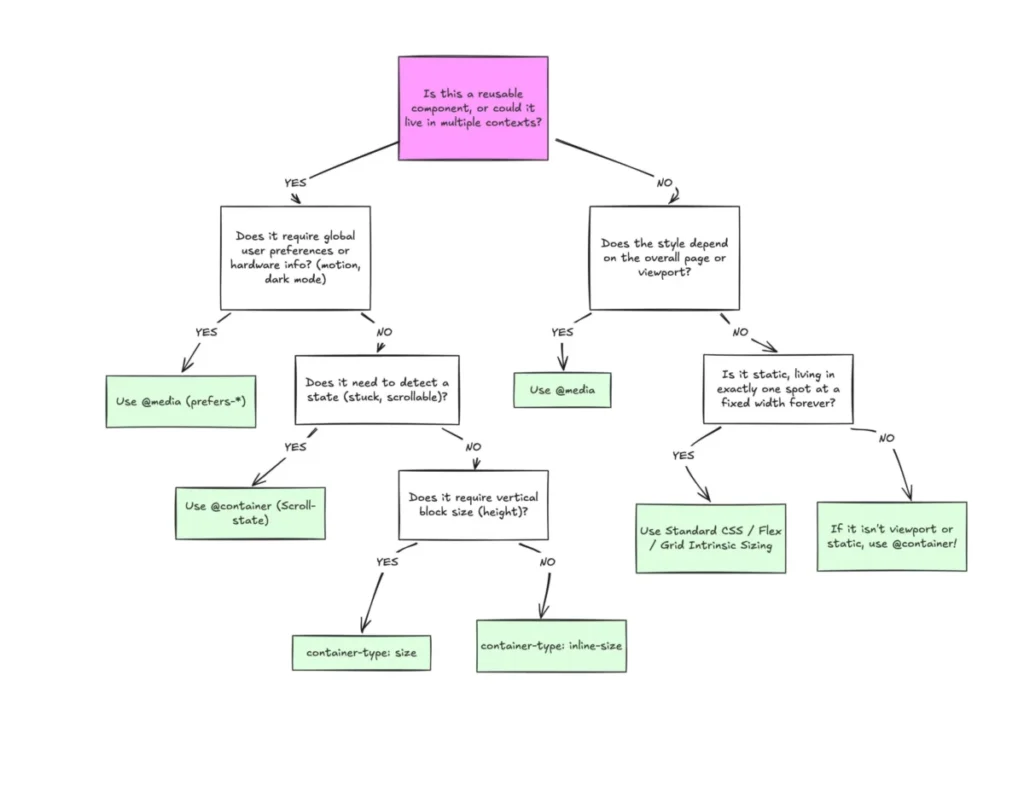
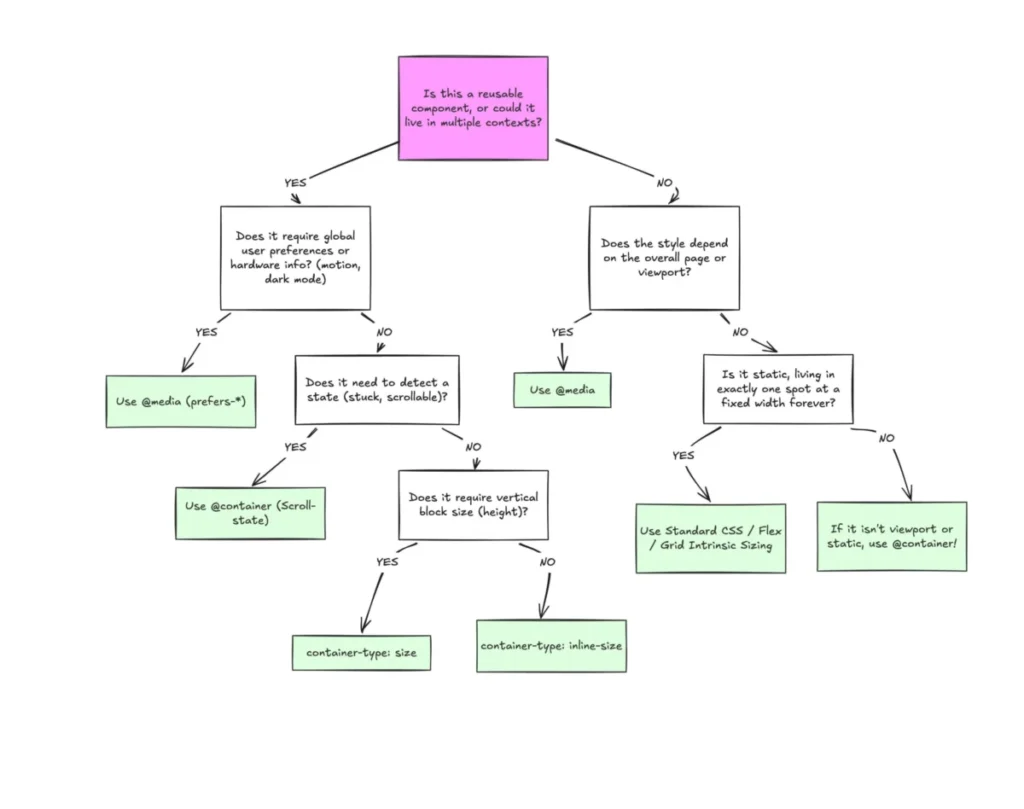
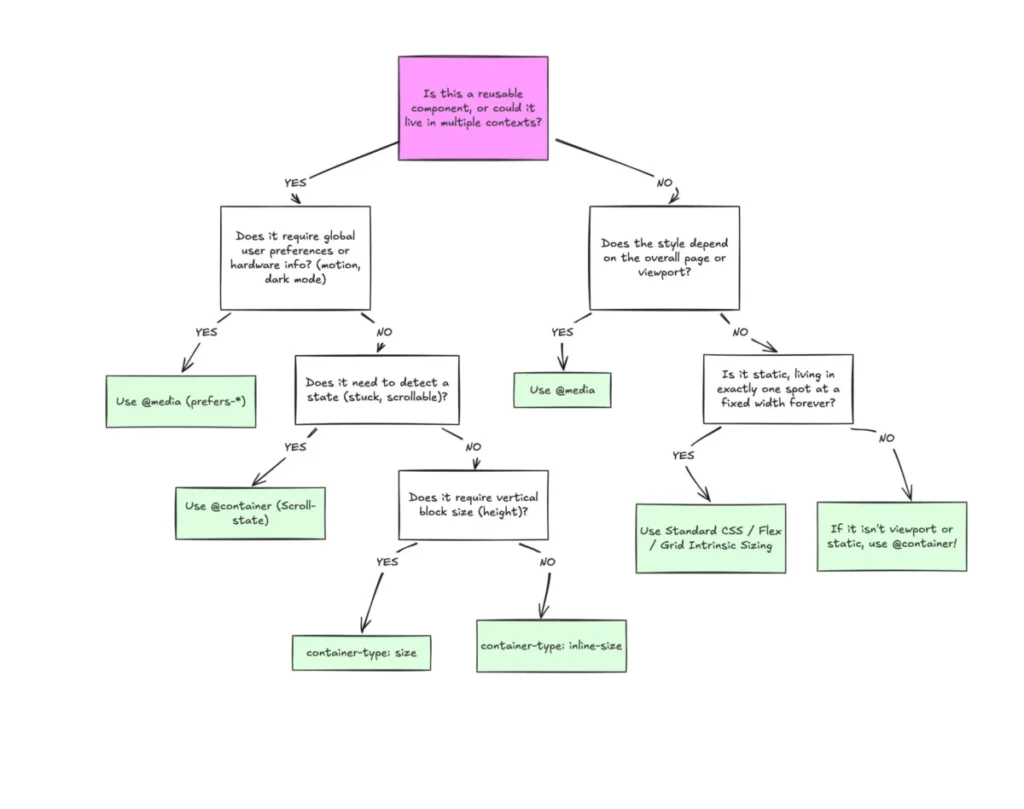
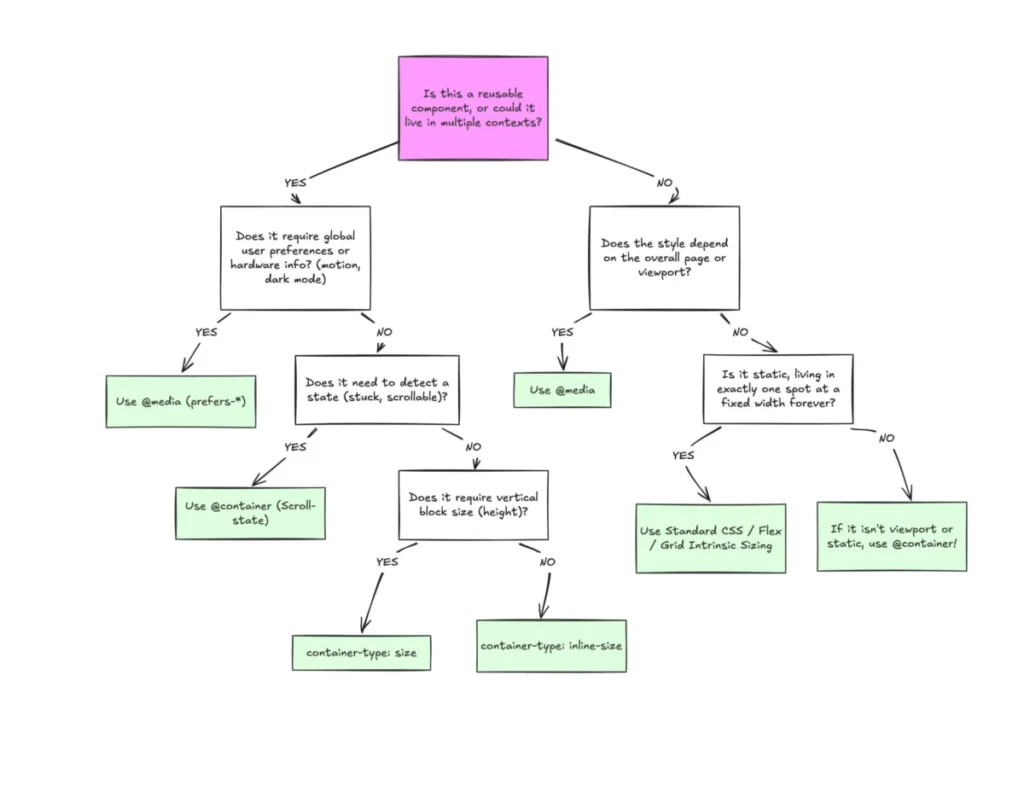
    The month of March 2026 has marked a pivotal period for web platform evolution, with the stable releases of Chrome 146, Firefox 149, and Safari 26.4 introducing a suite of powerful features designed to empower developers and enrich user interactions. These updates span critical areas from responsive design and animation to improved JavaScript ergonomics and native UI integration, reflecting a concerted effort by browser vendors to push the boundaries of what’s achievable on the open web. Key highlights include enhanced container query functionality, native scroll-triggered animations, refined popover controls, and foundational JavaScript improvements, setting a new standard for web application development.

    Overview of March 2026 Stable Browser Releases

    March 2026 witnessed a coordinated rollout of significant updates across the triumvirate of leading web browsers. Chrome 146, Firefox 149, and Safari 26.4 each delivered a distinct set of capabilities, yet collectively contributed to a more robust, performant, and flexible web platform. This synchronized progress underscores an industry-wide commitment to standardizing and accelerating web innovation. The features introduced are not merely incremental improvements but often represent the culmination of years of work within W3C working groups and browser developer communities, moving from experimental flags to broadly available tools.

    Deep Dive into Key Features: Enhancing Web Design and Interactivity

    The stable releases brought forth several game-changing features, each with its own set of implications for web development practices.

    Optional Container Query Conditions: A Leap Forward in Responsive Design

    Both Firefox 149 and Safari 26.4 have embraced support for name-only @container queries without explicit conditions. This seemingly subtle addition represents a significant leap forward in component-based responsive design. Previously, container queries primarily allowed styling elements based on the size or style characteristics of their parent container. With name-only queries, developers can now match against containers based solely on their assigned names, decoupling styling logic from specific dimensional constraints.

    This functionality empowers developers to create truly modular and reusable UI components. Imagine a Card component that needs to adapt its internal layout when placed within a Sidebar container versus a MainContent container, irrespective of the actual pixel width of those containers. By simply naming the containers (e.g., @container sidebar), the Card can apply different styles. This reduces reliance on complex media queries or intricate JavaScript logic for layout adjustments, leading to cleaner, more maintainable CSS. Industry analysts predict this will accelerate the adoption of atomic design principles and component-driven architectures, as it makes component context awareness more straightforward and declarative. "This feature simplifies responsive development dramatically," commented Dr. Anya Sharma, a leading web performance consultant. "It shifts the focus from global viewport dimensions to local component context, which is where modern UIs truly live."

    Scroll-Triggered Animations: Native Performance for Dynamic Experiences

    Chrome 146’s introduction of scroll-position-based control of animations is a monumental advancement for creating engaging and performant user experiences. This feature allows developers to declaratively link CSS animations to the scroll progress of an element or the document, eliminating the need for complex JavaScript event listeners and manual DOM manipulation. Interactions such as parallax effects, scroll-linked progress bars, and element reveals can now be defined directly in CSS, leveraging the browser’s optimized animation engine.

    Crucially, offloading these animations to a worker thread significantly improves performance. Historically, scroll-based animations, particularly those implemented with JavaScript, could lead to jankiness and frame drops, especially on less powerful devices, as they often contended with the main thread for resources. By moving these calculations off-main-thread, Chrome 146 ensures smoother, more fluid animations, enhancing the perceived responsiveness of web applications. The accompanying JavaScript interfaces for web animations provide developers with granular control when custom logic is required, offering a powerful hybrid approach. The CSS scroll-triggered animations are coming article on developer.chrome.com served as an early indicator of this feature’s potential, and its stable release is expected to inspire a new wave of creative web designs. "This is a game-changer for interactive storytelling and dynamic content presentation," stated a spokesperson from the Chrome development team. "It democratizes sophisticated animation techniques, making them accessible and performant for all web projects."

    The trigger-scope Property: Taming Animation Triggers

    Complementing scroll-triggered animations, Chrome 146 also introduced the trigger-scope property. This property addresses a potential challenge in complex web applications: the management of animation trigger names. In a large project, multiple components might define scroll-triggered animations, and without proper scoping, there’s a risk of name conflicts or unintended animation interactions.

    The trigger-scope property allows developers to limit the visibility of animation trigger names to a specific subtree of the DOM. This encapsulation helps to isolate animation-to-trigger interactions, preventing global name conflicts and making it easier to reason about and debug animation behavior within individual components. This feature promotes better architectural practices, enabling developers to build more modular and robust animation systems without worrying about adverse effects from other parts of the application. It’s a testament to the platform’s maturity, addressing not just functionality but also maintainability and scalability.

    Popover hint Value: Granular Control for UI Overlays

    Firefox 149’s support for the hint value in the popover global attribute provides developers with more fine-grained control over popover behavior, particularly in multi-popover scenarios. The popover API, a relatively recent addition to the web platform, simplifies the creation of transient UI elements like tooltips, menus, and notifications. While auto popovers close themselves when the user clicks outside or presses the Escape key, the hint value introduces a nuanced interaction model.

    Popovers with the hint value will not automatically close auto popovers when they are displayed, allowing for layered interactions. However, they will close other hint popovers, ensuring a sensible, sequential display within a specific interaction flow. This distinction is crucial for applications requiring complex overlay management, such as multi-step forms with embedded help tips, or interactive tutorials where multiple contextual prompts might appear. This feature improves the user experience by preventing premature closing of critical UI elements, while still managing the display of multiple hints effectively.

    Grid Lanes (display: grid-lanes): Native Masonry Layouts

    Safari 26.4’s support for display: grid-lanes introduces native support for masonry-style layouts, a highly anticipated feature for web designers. Masonry layouts, characterized by items of varying heights arranged in columns with no gaps, have historically been challenging to implement efficiently on the web. Developers often relied on JavaScript libraries or complex CSS hacks involving absolute positioning or Flexbox workarounds, which could be cumbersome and sometimes lead to performance issues or accessibility challenges.

    The display: grid-lanes value for the display property provides a declarative, performant, and accessible way to achieve this popular layout pattern directly within CSS Grid. This native implementation means better performance, easier maintenance, and improved cross-browser consistency for masonry grids. Content-heavy sites, portfolios, and image galleries are expected to benefit immensely from this, allowing for more dynamic and visually appealing presentations without the overhead of external scripts. "This is a huge win for design flexibility," noted a spokesperson from Apple’s WebKit team. "Masonry has been a persistent request, and bringing it natively to CSS Grid makes it robust and accessible."

    New to the web platform in March  |  Blog  |  web.dev

    Math Functions in sizes Attribute: Responsive Image Loading Refined

    Safari 26.4 further enhances responsive image loading by adding support for min(), max(), and clamp() CSS math functions within the sizes attribute of <img> elements. The sizes attribute informs the browser about the intrinsic size of an image based on the viewport, allowing it to select the most appropriate image source from a srcset.

    By enabling math functions, developers can now express more complex and precise calculations for image dimensions. For instance, an image might need to be clamp(300px, 50vw, 800px) wide, meaning it should be at least 300px, at most 800px, and scale to 50% of the viewport width in between. This capability provides unprecedented flexibility in defining responsive image breakpoints and sizes, optimizing bandwidth usage and improving perceived page load times. This is particularly beneficial for high-performance websites and those with diverse user bases accessing content on a wide range of devices.

    JavaScript Iterator Sequencing: Streamlining Data Processing

    Both Chrome 146 and Safari 26.4 have rolled out support for JavaScript iterator sequencing, introducing Iterator.concat(...items). This new static method allows developers to create a new iterator by concatenating existing iterators. This feature streamlines data processing workflows, especially when dealing with multiple sources of iterable data (e.g., arrays, sets, custom iterators) that need to be processed sequentially as a single stream.

    Prior to this, developers often had to convert iterators to arrays, concatenate them, and then iterate, or write custom generator functions to achieve similar sequencing. Iterator.concat offers a more memory-efficient and idiomatic way to handle such scenarios, as it operates on iterators directly without materializing intermediate arrays. This is now considered "Baseline Newly available," indicating its widespread support and readiness for general use, promising cleaner and potentially more performant code for data manipulation in complex JavaScript applications.

    CloseWatcher Interface: Unifying Device-Native Closing Mechanisms

    Firefox 149’s support for the CloseWatcher interface is a crucial step towards standardizing and enhancing the user experience for closable UI components. This interface allows web developers to integrate their custom components (like modals, custom dropdowns, or notification banners) with device-native closing mechanisms. For example, on Windows, this means components can respond to the Esc key, and on Android, to the system’s Back key, in the same consistent manner as built-in browser dialogs and popovers.

    Historically, implementing consistent closing behavior across different devices and operating systems for custom UI elements has been a significant challenge, often requiring extensive event listener management and conditional logic. CloseWatcher provides a unified, reliable API to manage these interactions, leading to a more coherent and intuitive user experience. Users will find web applications feeling more "native" and responsive to their device’s interaction patterns, reducing friction and improving usability. This feature is particularly valuable for Progressive Web Apps (PWAs) that aim to blur the line between web and native applications.

    Broader Implications for Web Development

    The collective impact of these March 2026 updates is profound. For developers, the platform is becoming more powerful and expressive, reducing the need for complex JavaScript workarounds for common UI patterns. Native scroll-triggered animations and masonry layouts mean better performance and accessibility out-of-the-box. Enhanced container queries promote more modular and maintainable CSS architectures. The CloseWatcher API and improved popover controls contribute to a more seamless and intuitive user experience, particularly for mobile and PWA users. These advancements collectively signal a mature web platform that continues to address developer pain points and expand creative possibilities, while prioritizing performance and user accessibility.

    The Road Ahead: Beta Browser Releases

    Looking beyond the stable releases, the beta channels for April 2026 provide an exciting glimpse into upcoming features. These beta versions are critical for developers to test new functionalities and assess potential impacts on their existing sites before wider stable deployment.

    Chrome 147 Beta: Enhanced Styling and View Transitions

    Chrome 147 Beta introduces several intriguing features:

    • contrast-color(): A new CSS function designed to automatically return either black or white, depending on which color provides the highest contrast against a given argument color. This is invaluable for ensuring text readability and accessibility, especially in dynamic theming or user-generated content scenarios, simplifying the creation of accessible color palettes.
    • border-shape: This property hints at more complex and flexible border geometries beyond traditional rectangular or rounded corners, potentially enabling advanced graphical designs directly in CSS.
    • Element-scoped view transitions: Building on the existing View Transitions API, this allows for smoother, more controlled animations when parts of a page change, scoped to specific elements rather than full page navigations. This will enable highly polished, app-like transitions within single-page applications.

    Firefox 150 Beta: CSS Keywords and Custom Elements

    Firefox 150 Beta also brings a range of significant updates:

    • CSS revert-rule keyword: This keyword allows a property to revert to the value specified by the last matching rule in the user agent’s default style sheet, offering a powerful new mechanism for resetting styles to browser defaults in a more controlled manner.
    • customElementRegistry for Elements and DocumentOrShadowRoot: This provides a more convenient way to interact with the Custom Elements API, allowing developers to query and define custom elements within specific contexts.
    • light-dark() for images: Expanding on the existing light-dark() CSS function for colors, this will enable responsive image selection based on the user’s preferred light or dark mode, further enhancing adaptive user interfaces.

    Expert Commentary and Industry Outlook

    The industry consensus is overwhelmingly positive regarding March’s stable releases and the direction indicated by the beta channels. "The focus on native performance for animations and layouts, coupled with improved control over UI components, truly elevates the web as a platform for sophisticated applications," stated a representative from the Web Standards Project. "We’re seeing a trend towards baking complex interactions directly into the browser, reducing the reliance on JavaScript libraries and leading to more efficient, accessible, and maintainable websites."

    Developers are particularly enthusiastic about the potential for scroll-triggered animations to unlock new creative possibilities without compromising performance. The maturation of responsive design tools like container queries and native masonry layouts is also being lauded as essential for managing the complexity of modern, adaptable UIs. The continued collaborative effort between browser vendors, as evidenced by shared feature adoptions and standardizations, reinforces the health and progressive trajectory of the web platform.

    Conclusion

    March 2026 stands out as a landmark month for web development, delivering a robust set of stable features that significantly enhance the capabilities of Chrome, Firefox, and Safari. From foundational CSS layout and animation tools to refined JavaScript ergonomics and intuitive UI controls, these updates collectively push the web platform forward, enabling developers to build more performant, accessible, and engaging experiences. With promising features already appearing in beta channels, the momentum for innovation on the web shows no signs of slowing, setting an exciting precedent for the remainder of 2026 and beyond.

  • Lusion: Where Digital Craft Meets Ambitious Experimentation

    Lusion: Where Digital Craft Meets Ambitious Experimentation

    Bristol, UK – Lusion, a distinguished digital production studio based in Bristol, has carved a formidable reputation for its pioneering work in interactive websites, real-time visuals, and ambitious digital experiences. Since its inception in 2017, the studio has consistently pushed the boundaries of digital craft, eschewing conventional templates in favor of bespoke solutions that define its unique creative ethos. This approach has not only garnered widespread critical acclaim, including multiple "Site of the Year" accolades, but has also attracted collaborations with an impressive roster of global brands such as Coca-Cola, Porsche, Max Mara, and Google.

    The Genesis of Lusion: A Journey of Self-Taught Excellence

    The foundation of Lusion is deeply rooted in the vision and dedication of its founder, Edan Kwan. Originally hailing from Hong Kong, Kwan’s professional trajectory was initially set on a path in music. However, a pivotal shift in personal interests led him to pivot careers, embarking on an intensive period of self-study in design and coding. This period of independent learning proved instrumental, equipping him with a robust skill set that would form the bedrock of his future endeavors.

    Following his self-taught immersion, Kwan honed his expertise through several years of freelancing, engaging in diverse digital projects that broadened his practical experience. This was succeeded by a significant tenure at a prominent agency in New York, a move that exposed him to the fast-paced, high-stakes environment of international digital production and further refined his craft. The culmination of these experiences—from the foundational independence of freelancing to the collaborative rigor of agency work—ultimately led Kwan back to independent practice, laying the groundwork for Lusion’s establishment in 2017.

    In an era increasingly defined by digital transformation, 2017 represented a burgeoning period for innovative online experiences. The demand for sophisticated, engaging, and unique digital presences was escalating, driven by advancements in web technologies and a growing consumer appetite for immersive interactions. It was into this fertile landscape that Lusion was born, fueled by Kwan’s desire to build a studio "defined by craft, curiosity, and attention to detail." This founding principle distinguished Lusion from many contemporaries, emphasizing custom solutions over off-the-shelf templates and ensuring that every project received a singular, meticulously developed system, logic, and aesthetic flavor.

    Lusion: Where Digital Craft Meets Ambitious Experimentation | Codrops

    A Philosophy of Bespoke Innovation and Uncompromising Craft

    Lusion’s core philosophy revolves around building digital experiences "from scratch." This isn’t merely a marketing slogan; it’s a fundamental operational principle. The studio believes that truly groundbreaking ideas often falter when forced into rigid, pre-existing frameworks. By custom-building each element, Lusion ensures that every project can fully embody its unique concept without compromise. This bespoke approach allows for unparalleled flexibility, enabling the integration of experimental techniques and emergent technologies that might otherwise be incompatible with standardized templates.

    "Our commitment to building from the ground up allows us to explore the full spectrum of creative possibilities for each client," remarked a studio spokesperson, reflecting the inherent value Lusion places on tailored innovation. "It’s about crafting a digital identity that is as unique as the brand it represents, rather than fitting a brand into a pre-determined mold." This dedication to originality manifests in a diverse portfolio, ranging from "polished and cinematic" works to projects that are "weird on purpose," often residing in a compelling middle ground that blends refined aesthetics with a distinctive edge.

    The studio’s unwavering pursuit of excellence has not gone unnoticed. Lusion’s own studio website, a testament to its capabilities, achieved the prestigious "Site of the Year" awards from three of the industry’s most respected authorities: FWA (Favorite Website Awards), Awwwards, and CSS Design Awards (CSSDA). These accolades are highly competitive, judged on criteria such as design, creativity, usability, and technical execution, underscoring Lusion’s mastery across multiple facets of digital production. Beyond its self-promotional triumphs, the studio’s client work has consistently garnered international recognition, including honors from Cannes Lions, D&AD, Webby Awards, further FWA and Awwwards distinctions, among others. These awards signify not just artistic merit but also commercial effectiveness and technological innovation, placing Lusion firmly among the elite in the global digital creative landscape.

    Showcasing Ambitious Experimentation: Three Pillars of Innovation

    Lusion’s portfolio is rich with examples that illustrate its ambitious and diverse capabilities. Three projects stand out as epitomes of the studio’s commitment to pushing creative and technical boundaries: Oryzo AI, Porsche: Dream Machine, and My Little Storybook. Each project, while distinct in its purpose and execution, reflects Lusion’s overarching philosophy of craft, curiosity, and bespoke innovation.

    Lusion: Where Digital Craft Meets Ambitious Experimentation | Codrops

    Oryzo AI: A Satirical Masterclass in Digital Craft

    In an era increasingly saturated with discussions around artificial intelligence and its pervasive influence, Lusion launched "Oryzo AI," a satirical campaign for a fictional product: a cork coaster presented with premium production quality and an almost absurd level of seriousness. This project serves as a brilliant example of Lusion’s ability to blend playful experimentation with high-fidelity digital craft.

    Oryzo AI was conceived as both a creative experiment and a robust showcase of the studio’s design, motion, and digital production prowess. The campaign meticulously built a "fully realized campaign world" around this ostensibly mundane object, transforming a simple cork coaster into the centerpiece of a high-end AI product launch. This included immersive web design, intricate 3D production, sophisticated motion graphics, and a comprehensive suite of supporting content spanning social media posts, a founder video, a Product Hunt listing, and even an open-weight GitHub page. Each component was executed with the same meticulous attention to detail typically reserved for real brand stories, demonstrating Lusion’s capacity to elevate even the most outlandish concepts through exceptional craftsmanship.

    The project implicitly offers a commentary on the often-exaggerated marketing surrounding AI products, while simultaneously proving Lusion’s technical versatility. It showcases their adeptness in creating complex digital ecosystems, highlighting their capabilities in immersive storytelling and advanced visual production. For potential clients, Oryzo AI serves as a compelling, albeit humorous, demonstration of Lusion’s ability to execute highly sophisticated digital campaigns, irrespective of the underlying product’s perceived value. It illustrates that when it comes to digital storytelling and technical execution, Lusion brings unparalleled seriousness and skill, even to a joke.

    Porsche: Dream Machine – Transcending Digital into Cinematic Storytelling

    Lusion’s collaboration with Wallpaper* and Porsche GB on "Porsche: Dream Machine" marked a significant venture into the realm of computer-generated (CG) film, showcasing the studio’s adaptability and creative ambition beyond its core web-based expertise. This short CG film was designed to explore the emotional and creative journey behind Ferry Porsche’s original vision, utilizing generative imagery, sophisticated motion design, and a dreamlike visual language.

    Lusion: Where Digital Craft Meets Ambitious Experimentation | Codrops

    The project’s genesis was unique. Wallpaper* approached Lusion, recognizing the potential in the studio’s immersive digital R&D work, particularly the experimental spirit demonstrated in projects like "Infinite Passerella." Porsche GB, impressed by Lusion’s innovative approach, presented the challenge of creating a 2-3 minute CG short film inspired by the genesis of the first Porsche sports car. This presented an unfamiliar medium for Lusion, primarily known for interactive web experiences.

    Despite the novelty of the format and an intense three-week production timeline, Lusion embraced the challenge. They swiftly adapted their immersive digital thinking to a cinematic format, learning, designing, and building in parallel. The film successfully translated Porsche’s "Driven by Dreams" ethos into a captivating visual narrative, evolving from abstraction and imagination towards the iconic silhouette of the original 356. The project was not only meaningful for its outcome but also for the process, underscoring Lusion’s willingness to trust its instincts and apply its unique creative problem-solving to entirely new formats. The completed film was subsequently featured by Wallpaper*, distributed through Porsche’s official channels, and publicly exhibited at Outernet London, a prominent immersive entertainment venue, significantly broadening Lusion’s reach and demonstrating their mastery in dynamic visual content production.

    My Little Storybook: The Power of Internal R&D and Heartfelt Narratives

    "My Little Storybook" exemplifies Lusion’s commitment to internal research and development (R&D) through its "Lusion Labs" initiative. This self-initiated interactive story about a bird family crossing a river began as a monthly experiment and evolved into one of the studio’s most celebrated internal pieces. It beautifully illustrates how technical exploration can merge seamlessly with simple, heartfelt storytelling to create charming and memorable digital experiences.

    The project leveraged advanced web technologies, combining WebGL for immersive rendering, handcrafted 3D environments, and illustrated animation to craft a playful digital book experience. Part of Lusion’s monthly experiment series, "My Little Storybook" provided a crucial space to test ideas, develop new skills, and experiment creatively without the constraints of client briefs. The objective was to create a storytelling experience that felt gentle, meticulously crafted, and emotionally resonant.

    Inspired by the aesthetic of Japanese anime, the project allowed Lusion to diverge from the more photorealistic, commercial styles often prevalent in their client work. Instead, it embraced a stylized visual language, utilizing hand-built 3D assets, drawn animation, and interactive storytelling elements. Despite a tight one-month production schedule, the team pushed the boundaries of web-based narrative and atmosphere, demonstrating their versatility and artistic depth. "My Little Storybook" underscores the studio’s belief that continuous internal innovation through projects like these is vital for team growth and for attracting talent passionate about learning and creating thoughtful, ambitious work. It stands as a testament to Lusion’s ability to infuse technology with genuine emotional connection, proving that technical prowess can serve deeply human narratives.

    Lusion: Where Digital Craft Meets Ambitious Experimentation | Codrops

    Culture of Collaboration and Continuous Innovation

    Lusion attributes much of its success to its close-knit team culture. This collaborative environment fosters simple, effective communication, ensuring that every project receives the dedicated attention it deserves from conception to completion. The studio’s flat hierarchy and emphasis on individual contribution allow team members to stay intimately connected with the work, promoting a sense of ownership and collective achievement.

    A cornerstone of Lusion’s operational strategy is the investment in internal projects through "Lusion Labs." These initiatives, which have spawned acclaimed works like Oryzo AI and My Little Storybook, are more than just creative outlets; they are vital training grounds. They provide a safe space for the team to test nascent ideas, develop new technical skills, and experiment with creative concepts that may not fit traditional client briefs. This mindset of continuous learning and experimentation is crucial for growth, enabling the studio to stay ahead of industry trends and to attract top-tier talent who share a passion for pushing the envelope in digital design and development. "Lusion Labs is where we truly stretch our creative muscles," a team member might observe, "It’s where we refine our craft and discover the next big thing, ensuring that our client work always benefits from cutting-edge insights."

    Broader Impact and Future Trajectory

    Lusion’s distinctive approach—prioritizing bespoke solutions, embracing ambitious experimentation, and fostering a culture of continuous learning—has positioned it as a significant influencer in the global digital production landscape. By consistently demonstrating that custom-built experiences yield superior results compared to template-driven approaches, Lusion sets a high benchmark for quality and innovation. Their work challenges the industry to move beyond mere functionality toward truly immersive and emotionally engaging digital narratives.

    The studio’s ability to seamlessly pivot between diverse project types—from satirical AI campaigns and cinematic brand films to interactive storybooks—showcases a rare versatility. This broad capability not only diversifies their client base but also solidifies their reputation as a studio capable of tackling virtually any digital challenge with creative flair and technical mastery. As the digital realm continues its rapid evolution, encompassing emerging technologies like augmented reality, virtual reality, and advanced AI integration, Lusion’s foundational commitment to craft and experimentation positions it perfectly to lead the charge. The studio’s trajectory suggests a continued exploration of new mediums and technologies, always guided by their core belief in creating meaningful, impactful, and uniquely Lusion digital experiences.

  • The Indispensable Role of Design Principles in Navigating Modern Product Development and AI Innovation

    The Indispensable Role of Design Principles in Navigating Modern Product Development and AI Innovation

    Design principles, often perceived as rigid guidelines, are in fact a powerful strategic asset for organizations, serving as a unifying force to rally teams around a shared purpose and to articulate the core values and beliefs that define an enterprise. In an increasingly complex and rapidly evolving technological landscape, these principles align teams, inform critical decision-making, and provide a steadfast anchor amidst the relentless hype cycles, ambitious assumptions, pressures for faster delivery, and the emergent challenges posed by AI-driven development. The critical question for many organizations is not whether to adopt design principles, but how to effectively select and implement those that truly resonate with their mission and user needs.

    Historical Evolution: From Industrial Aesthetics to Digital Ethics

    The concept of design principles is not new, tracing its roots back to the early 20th century with movements like the Bauhaus, which championed functionalism and the integration of art and technology. However, it was perhaps Dieter Rams, the influential German industrial designer for Braun, who codified their modern relevance with his "10 Principles of Good Design" in the late 1970s. Rams’ principles, such as "Good design is innovative," "Good design makes a product useful," and "Good design is as little design as possible," offered a humble, practical, and profoundly human-centered framework for industrial product development. These tenets emphasized clarity, utility, and longevity over fleeting trends, significantly influencing generations of designers.

    As technology evolved from physical products to abstract digital interfaces, so too did the application and scope of design principles. The advent of graphical user interfaces (GUIs) in the 1980s and the subsequent rise of the internet in the 1990s necessitated new guiding philosophies for interaction design. Pioneers in user experience (UX) like Don Norman and Jakob Nielsen began articulating principles focused on usability, learnability, and user satisfaction, laying the groundwork for what would become the cornerstone of digital product design. Companies like Apple, with its Human Interface Guidelines (HIG), and later Google, with Material Design, formalized extensive sets of principles that dictated the look, feel, and behavior of their software ecosystems, ensuring consistency and a recognizable brand experience across diverse applications. This evolution underscores a critical shift: design principles moved from being primarily aesthetic and functional considerations for physical goods to encompassing complex user interactions, psychological factors, and ultimately, the ethical implications of digital experiences.

    A Practical Guide To Design Principles — Smashing Magazine

    Defining the Unseen: What Design Principles Truly Are

    At their core, design principles are not prescriptive rules but rather adaptable guidelines and considerations that designers and product teams apply with discretion. They serve as a foundational agreement, allowing teams to proceed with decisions on what has already been established without the need for endless debate. In essence, they are the documented values and beliefs that an organization embodies through its products and services.

    In an era where passable designs and code can be generated within minutes, the focus shifts from how to design to what is worth designing and building, and crucially, what values those creations should embody. Without a clear set of principles, company initiatives often appear random, sporadic, and ad-hoc, resulting in vague, inconsistent, or uninspiring user experiences. Just as a company’s voice and tone might be unintentionally defined by end-users if not consciously crafted, so too will a product’s underlying values be perceived through its design, whether intentional or not.

    Resources such as Ben Brignell’s Principles.design, which compiles over 230 pointers for design principles and methods spanning language, infrastructure, hardware, and organizational structures, highlight the vast scope and applicability of these guidelines. They provide a comprehensive repository for understanding how various entities have articulated their design philosophy, offering invaluable inspiration for those looking to establish their own.

    The Business Imperative: Data and Impact

    The implementation of robust design principles extends far beyond mere aesthetic coherence; it yields tangible business benefits, impacting everything from operational efficiency to market perception and user loyalty. Studies and industry observations consistently suggest that organizations with clearly defined and consistently applied design principles often report higher user satisfaction, improved product-market fit, and accelerated development cycles.

    A Practical Guide To Design Principles — Smashing Magazine
    • Consistency and Trust: Principles foster consistency across a product ecosystem, reducing cognitive load for users and building trust. When interactions are predictable and aligned with user expectations, users feel more in control and are more likely to engage repeatedly with a product or service. This consistency is a hallmark of strong brands and contributes directly to customer retention.
    • Efficiency and Scalability: For development teams, principles act as a shared language and decision-making framework, significantly streamlining the design and development process. They reduce the need for constant re-evaluation of basic design choices, minimizing rework and accelerating time-to-market. This efficiency is particularly critical in large organizations or for products with extensive feature sets, enabling scalable growth without sacrificing quality.
    • Brand Differentiation: Beyond functional consistency, design principles infuse products with a distinct personality and voice, reinforcing brand identity. They articulate what an organization stands for beyond profits, stock prices, or fleeting trends, creating a unique market position that resonates with target audiences. This differentiation is invaluable in competitive landscapes, making products memorable and desirable.
    • Innovation with Purpose: Principles provide a strategic lens through which new ideas and innovations can be evaluated. Instead of pursuing every novel concept, teams can assess potential features or product directions against their core design values, ensuring that innovation serves a greater purpose and aligns with the organization’s overarching mission. This prevents feature creep and ensures that resources are allocated to initiatives that genuinely enhance the user experience and brand value.
    • Team Alignment and Collaboration: Perhaps one of the most significant internal benefits, design principles act as a powerful tool for aligning cross-functional teams. By documenting shared values and beliefs, they reduce subjective debates rooted in personal preferences, fostering a collaborative environment where decisions are guided by a common vision. This unity empowers teams to make autonomous decisions that are consistent with the organizational direction.

    Crafting Your Compass: Establishing Design Principles

    Establishing effective design principles is a collaborative endeavor that transcends the design department. Given that the user experience encompasses every touchpoint—from performance and functionality to customer support and service—it is crucial for participants in the principle-setting process to represent these diverse areas. While the abstract nature of principles can make them challenging to define and agree upon, a structured approach, often in the form of a workshop, can navigate these complexities.

    A practical eight-step workshop framework, inspired by methodologies from design thought leaders such as Marcin Treder, Maria Meireles, and Better, can guide teams through this process:

    1. Preparation and Research: Begin by gathering existing company values, mission statements, user research, competitive analyses, and any previous design guidelines. This provides a foundational understanding of the organization’s identity and market position.
    2. Individual Brainstorming: Each participant independently generates a list of potential principles, focusing on what the product or service should and should not embody. This encourages divergent thinking and prevents groupthink.
    3. Sharing and Grouping: Participants share their ideas, and similar concepts are grouped together. This phase helps identify common themes and areas of consensus, moving from individual thoughts to collective understanding.
    4. Keyword Extraction: From the grouped ideas, extract core keywords or phrases that encapsulate the essence of each cluster. These keywords form the basis for the principle statements.
    5. Drafting Statements: For each keyword, draft a concise, actionable statement that articulates the principle. Each principle should ideally be memorable and easily understood, often accompanied by a brief explanation or an example of its application.
    6. Critique and Refinement: Review the drafted principles for clarity, distinctiveness, and relevance. Are they inspiring? Do they have a clear point of view? Do they differentiate the product? This iterative phase is crucial for honing the language and ensuring each principle is robust.
    7. Prioritization and Selection: Teams vote on the most impactful and relevant principles. Aim for a manageable number (e.g., 5-7) to ensure they are all memorable and actionable. This convergent phase ensures the focus remains on the most critical guiding tenets.
    8. Socialization and Integration Plan: Develop a strategy for effectively sharing, communicating, and embedding the finalized principles across the organization. This plan should include how principles will be referenced in daily work, design critiques, and future product decisions.

    The challenge of principles being "abstract and fluffy" can be mitigated by grounding them in concrete scenarios and examples, demonstrating how they apply to real design challenges. Utilizing workshop kits, readily available on platforms like Figma Community, can further streamline this process, providing templates and structured activities to facilitate productive discussions and decision-making.

    Principles in Action: Exemplary Frameworks

    Examining established design principles from leading organizations offers valuable insights into their practical application and enduring relevance:

    A Practical Guide To Design Principles — Smashing Magazine
    • Dieter Rams’ 10 Principles of Good Design: Though developed for industrial products, Rams’ principles remain profoundly influential in digital design. Examples include "Good design is innovative" (encouraging forward-thinking solutions), "Good design makes a product useful" (prioritizing functionality), and "Good design is aesthetic" (emphasizing visual appeal without sacrificing utility).
    • Apple’s Human Interface Guidelines (HIG): Emphasize principles like "Clarity," "Deference," and "Depth." Clarity means interfaces are clear and unambiguous; Deference means the UI supports the user experience without competing with content; Depth means providing layers of content and functionality for rich interaction. These principles guide the design of all Apple software, ensuring a consistent and intuitive user experience across its ecosystem.
    • Google’s Material Design Principles: Built around "Metaphor," "Bold, graphic, intentional," and "Motion provides meaning." Material Design aims to create a unified system of visual, motion, and interaction design across platforms and devices, drawing inspiration from the physical world while embracing technological possibilities.
    • IBM Design Language: Centers on principles like "User focus," "Craft," and "Purpose." This comprehensive system aims to foster consistency and quality across IBM’s vast portfolio of products and services, ensuring that every interaction reflects IBM’s commitment to thoughtful design and meaningful solutions for enterprise users.

    These examples illustrate that effective principles are not just visionary; they offer a clear point of view, defining not only what an organization does but also what it does not do, thereby clarifying its stance in the world beyond commercial objectives.

    Guiding AI Innovation: Principles in the Age of Intelligent Interfaces

    The rapid proliferation of Artificial Intelligence (AI) technologies introduces a new frontier for design, making robust design principles more critical than ever. AI interfaces, from chatbots and recommendation engines to autonomous systems, present unique challenges related to ethics, transparency, bias, control, and trust. Without clear guiding principles, AI solutions risk being perceived as opaque, unreliable, or even harmful, undermining user adoption and public confidence.

    In this context, design principles for AI must extend beyond traditional usability to encompass considerations such as:

    • Transparency and Explainability: Users should understand how an AI system works, why it made a particular decision, and what data it used. Principles emphasizing clear communication of AI’s capabilities and limitations are paramount.
    • User Control and Agency: While AI can automate tasks, users must retain a sense of control over their interactions and data. Principles should ensure that AI acts as an assistant, empowering users rather than dictating their actions.
    • Fairness and Bias Mitigation: AI systems can inadvertently perpetuate or amplify societal biases present in their training data. Design principles must actively address fairness, ensuring equitable outcomes for all users and preventing discriminatory practices.
    • Predictability and Reliability: AI’s probabilistic nature can lead to unpredictable behavior. Principles should aim to make AI interactions as predictable and reliable as possible, setting clear expectations for users.
    • Privacy and Security: With AI often relying on vast amounts of data, principles must prioritize robust privacy protections and data security, building user trust in the handling of their personal information.

    The growing demand for expertise in this domain is highlighted by resources like Vitaly’s "Design Patterns For AI Interfaces," a video course offering practical UX guidelines and real-life examples for designing AI features. Such initiatives underscore the industry’s recognition of the urgent need for structured approaches and principled thinking in developing intelligent interfaces that are not only functional but also ethical, trustworthy, and user-centered.

    A Practical Guide To Design Principles — Smashing Magazine

    Embedding and Sustaining Principles

    While the creation of design principles is a significant achievement, it represents only a fraction of the overall effort. The greater challenge lies in effectively sharing, embedding, and sustaining these principles within the daily fabric of an organization. Principles must transition from being a document to becoming a default mode of operation.

    Strategies for successful integration include:

    • Continuous Communication: Regularly communicate principles through internal newsletters, team meetings, and dedicated presentations, ensuring they remain top-of-mind for all employees.
    • Integration into Workflows: Incorporate principles into existing design and development workflows. This could involve using them as a checklist during design reviews, referencing them in project briefs, or making them a mandatory part of new employee onboarding and training.
    • Visible Reinforcement: Display principles prominently in workspaces, on internal wikis, or within design system documentation. Visual reminders help to normalize their presence and importance.
    • Leadership Endorsement: Active support and advocacy from leadership are crucial. When leaders consistently reference and uphold the principles, it signals their strategic importance and encourages broader adoption.
    • Iterative Review and Adaptation: Design principles should not be static. Periodically review and, if necessary, adapt them to reflect evolving user needs, technological advancements, and organizational strategies. This ensures their continued relevance and efficacy.
    • Templates and Tools: Integrate principles into design system templates, naming conventions, and output formats. For instance, component documentation can include notes on how specific elements adhere to certain principles.

    By consistently revisiting settings, templates, and conventions, organizations can make design principles an ingrained part of their culture, thereby avoiding endless discussions that often stem from personal preferences or subjective taste. True design, especially in complex product development, should be guided by clearly articulated goals and values, not mere opinion.

    Conclusion: The Enduring Power of Principled Design

    In an era defined by rapid technological change and increasing complexity, design principles stand as indispensable strategic assets. They transcend their traditional role as aesthetic guidelines, evolving into fundamental frameworks that align teams, inform decision-making, and articulate the core values of an organization. From the industrial aesthetics championed by Dieter Rams to the intricate ethical considerations demanded by AI, these principles provide a crucial compass, guiding development towards consistency, efficiency, and profound user trust.

    A Practical Guide To Design Principles — Smashing Magazine

    By fostering a shared understanding of what truly matters, design principles enable organizations to navigate the pressures of accelerated delivery and the allure of fleeting trends. They ensure that products and services are not only functional but also meaningful, ethical, and reflective of a deliberate, human-centered approach. The ongoing effort to embed and sustain these principles is what transforms them from abstract ideals into tangible drivers of innovation and success, ultimately shaping more coherent, valuable, and impactful experiences for users worldwide.

  • Developer Thanh Duc Unveils ClipTool: A Go-Powered Solution for Watermark-Free TikTok Video Downloads and the Technical Innovations Behind Its Design.

    Developer Thanh Duc Unveils ClipTool: A Go-Powered Solution for Watermark-Free TikTok Video Downloads and the Technical Innovations Behind Its Design.

    Software engineer Thanh Duc has recently launched ClipTool.app, a novel web application designed to facilitate the downloading of TikTok videos without the platform’s ubiquitous watermarks. This initiative addresses a long-standing demand from content creators and casual users alike for a streamlined, advertisement-free, and registration-exempt method to archive or repurpose short-form video content. The project, meticulously engineered with a robust Go backend and a responsive React frontend, showcases a thoughtful approach to common web development challenges, particularly concerning performance in video processing and search engine optimization for single-page applications.

    The Genesis of ClipTool: Addressing a Market Void

    The burgeoning popularity of TikTok, which boasts over one billion monthly active users globally, has transformed the digital content landscape. Its short-form video format has cultivated a vibrant ecosystem of creators, influencers, and meme enthusiasts. However, a persistent challenge for many users has been the inability to download videos directly without the prominent TikTok watermark, which often obscures parts of the content and can complicate repurposing efforts across other platforms or for personal archival. Existing solutions in the market often present a host of inconveniences and potential risks. Many are riddled with intrusive advertisements, demand user registration, or require subscriptions. Furthermore, some third-party tools raise concerns about data privacy and security, while others suffer from unreliable performance, slow download speeds, or simply fail to remove watermarks effectively.

    Recognizing this significant void, Thanh Duc embarked on the development of ClipTool. His primary motivation was to create a tool that was unequivocally simple, efficient, and user-friendly, devoid of the common pitfalls associated with competitor services. The vision was clear: a completely free service, accessible without any form of registration, capable of delivering watermark-free TikTok videos swiftly and reliably. This user-centric philosophy guided every aspect of ClipTool’s design and technical implementation, aiming to provide a superior alternative in a crowded yet flawed market. The project reflects a broader trend among independent developers to build highly specific tools that solve acute user problems with elegant, efficient technical solutions, often leveraging modern open-source technologies.

    The Technical Foundation: A Deep Dive into the Stack

    The selection of ClipTool’s technology stack was strategic, prioritizing performance, scalability, and developer efficiency. At its core, the application is built on a modern, distributed architecture that leverages best-in-class tools for both backend processing and frontend delivery.

    Backend and Core Logic:

    • Go (Golang): Chosen for its exceptional concurrency model, high performance, and robust standard library, Go serves as the backbone of ClipTool’s server-side operations. Its goroutines and channels facilitate efficient handling of multiple concurrent requests, which is crucial for the demanding task of video processing. Go’s strong typing and compiled nature also contribute to application stability and speed, making it an ideal choice for a service requiring rapid API interactions and data manipulation. The language’s growing adoption in high-performance computing and microservices architecture further validates its selection for such a task.
    • PostgreSQL: This powerful, open-source relational database management system was selected for its reliability, data integrity (ACID compliance), and advanced features. PostgreSQL provides a stable and scalable foundation for storing metadata related to video processing, user sessions (if any were implemented, though the tool emphasizes no registration), and potentially usage analytics. Its extensibility and robust community support ensure long-term viability and ease of maintenance.
    • Redis: Employed as an in-memory data store, Redis significantly enhances ClipTool’s performance by acting as a caching layer. It stores frequently accessed data, such as temporary video processing states or API responses, reducing the load on the primary database and speeding up data retrieval. Beyond caching, Redis is often utilized for message brokering and real-time analytics, capabilities that could be expanded upon in future iterations of ClipTool.

    Frontend and User Experience:

    • React: For the client-side interface, React was chosen due to its declarative nature, component-based architecture, and extensive ecosystem. React enables the creation of highly interactive and responsive single-page applications (SPAs), providing a fluid user experience. Its virtual DOM efficiently updates the UI, ensuring that ClipTool’s interface remains snappy and intuitive even during complex operations like video URL parsing and download initiation.

    Infrastructure and Deployment:

    • Nginx: Serving as a high-performance web server and reverse proxy, Nginx is critical for routing incoming requests to the appropriate backend services, load balancing, and serving static assets. Its efficiency in handling concurrent connections contributes significantly to ClipTool’s overall responsiveness and reliability. Nginx also plays a vital role in security, terminating SSL/TLS connections and shielding the backend servers from direct exposure.
    • Cloudflare: This global network provides a suite of services including Content Delivery Network (CDN), DNS management, and web security. Cloudflare’s CDN caches static and dynamic content closer to users, drastically reducing latency and improving loading times worldwide. Its DDoS protection and Web Application Firewall (WAF) capabilities enhance ClipTool’s security posture, safeguarding against various online threats.
    • Vercel: Utilized for deploying the React frontend, Vercel offers a seamless developer experience with integrated Git workflows, automatic deployments, and serverless functions. Its global edge network ensures that the frontend application is delivered with optimal performance to users across the globe.
    • DigitalOcean: The backend services, including the Go application, PostgreSQL, and Redis, are hosted on DigitalOcean. Known for its developer-friendly interface, competitive pricing, and scalable droplet infrastructure, DigitalOcean provides a reliable and cost-effective cloud platform for ClipTool’s core operations.

    This comprehensive stack demonstrates a commitment to leveraging modern, scalable technologies to deliver a high-performance and reliable service. The synergy between these components allows ClipTool to handle demanding tasks efficiently while maintaining a lean and agile operational footprint.

    Architectural Innovations: Concurrency and SEO Mastery

    Two primary architectural challenges were identified and addressed during ClipTool’s development: achieving high-speed video processing and ensuring discoverability for a Single Page Application (SPA). Thanh Duc’s solutions for these hurdles highlight sophisticated engineering decisions.

    The Power of Go: Multi-threaded Video Processing Explained

    I Built a TikTok Downloader with Go — Here's What I Learned

    The most significant technical challenge lay in optimizing the speed of video processing. TikTok’s API, by design, does not directly expose a watermark-free video URL. Instead, it requires a sequence of multiple requests and data parsing steps to extract the desired content. This process can be inherently slow if handled sequentially, leading to poor user experience, especially with increased traffic.

    Thanh Duc leveraged Go’s powerful concurrency primitives—goroutines and channels—to implement a highly efficient, multi-threaded processing pipeline.

    1. Parallel API Requests: Upon receiving a TikTok video URL, ClipTool initiates multiple API calls concurrently. Instead of waiting for one request to complete before starting the next, goroutines allow these requests to run in parallel. For instance, one goroutine might fetch video metadata, another might process specific redirects, and yet another could parse complex JSON responses, all happening simultaneously.
    2. Efficient Data Extraction: Once raw data is retrieved from TikTok’s various endpoints, further goroutines can be spun up to parse and analyze this data in parallel. This includes identifying specific parameters, headers, or embedded links that lead to the watermark-free video file. Channels are then used to safely communicate results between these concurrently running goroutines, ensuring data integrity and synchronization.
    3. URL Reconstruction and Delivery: The final step involves piecing together the information gathered from parallel processing to construct the direct, watermark-free video download URL. This optimized approach dramatically reduces the overall latency from the moment a user submits a TikTok link to when they receive the download link.

    This multi-threaded architecture offers several critical benefits:

    • Reduced Latency: Users experience significantly faster processing times, which is paramount for a tool designed for quick utility.
    • Improved Scalability: The concurrent nature of Go allows the application to handle a higher volume of simultaneous requests without degrading performance, making ClipTool robust under increased user load.
    • Resource Efficiency: Go’s lightweight goroutines are more memory-efficient than traditional operating system threads, allowing the server to perform more work with fewer resources.

    Bridging the Gap: SEO for Modern SPAs

    Single Page Applications (SPAs) built with frameworks like React are celebrated for their dynamic user experiences, but they often present inherent challenges for Search Engine Optimization (SEO). Because much of the content of an SPA is rendered client-side via JavaScript after the initial page load, search engine crawlers historically struggled to index all the dynamic content effectively. This can severely limit organic discoverability.

    To counteract this, Thanh Duc implemented a multi-faceted SEO strategy:

    1. Server-Side Rendering (SSR) / Pre-rendering: Instead of relying solely on client-side rendering, ClipTool utilizes a form of server-side rendering or pre-rendering for critical pages. This means that when a search engine crawler or a user initially requests a page, the server delivers a fully formed HTML document containing the page’s content. React then "hydrates" this pre-rendered HTML on the client-side, taking over the dynamic interactions without requiring the browser to fetch and execute JavaScript to build the initial content. This ensures that crawlers can easily access and index the content.
    2. Dynamic Sitemaps: An XML sitemap acts as a roadmap for search engines, listing all the important pages on a website. ClipTool generates and maintains dynamic sitemaps, which automatically update as new content or features are added. This ensures that search engines are always aware of the latest available pages and can crawl them efficiently.
    3. Structured Data (Schema.org Markup): Implementing Schema.org markup involves embedding specific semantic tags within the HTML. This structured data provides search engines with explicit information about the content on a page (e.g., that a page is a "tool," what it does, who created it). This can lead to richer search results (rich snippets), improving visibility and click-through rates.
    4. Optimized Meta Tags: Custom and descriptive meta titles and descriptions are dynamically generated for each page. These tags provide concise summaries of the page’s content to search engines and users in search results, crucial for attracting clicks.
    5. Performance Optimization: Beyond rendering, the overall performance of the website (loading speed, interactivity) is a significant SEO ranking factor. Through careful optimization of assets, leveraging CDNs like Cloudflare, and efficient caching strategies, ClipTool ensures a fast and responsive user experience, which is favored by search algorithms.

    By combining these strategies, ClipTool effectively overcomes the traditional SEO limitations of SPAs, ensuring that it is discoverable by users searching for solutions to download TikTok videos, while simultaneously delivering a superior, interactive user experience.

    Achieving Results and User Impact

    The implementation of these sophisticated technical and architectural decisions has yielded tangible results for ClipTool. The platform successfully delivers on its promise: users can download watermark-free TikTok videos with remarkable speed and ease, completely free of charge and without the need for registration. The multi-threaded Go backend ensures that even during peak usage, processing times remain minimal, providing a consistently smooth experience. The meticulous SEO strategy has been instrumental in allowing ClipTool to gain visibility in search engine results, driving organic traffic to the application without relying on paid advertising or intrusive pop-ups, a common affliction of similar services.

    While specific user metrics were not detailed, the underlying architectural choices strongly imply a high capacity for handling a growing user base efficiently. The absence of advertisements and mandatory sign-ups fosters trust and provides a refreshingly clean user interface, distinguishing ClipTool from many of its counterparts. This focus on user experience, coupled with robust backend performance, positions ClipTool as a compelling and reliable utility for anyone seeking to download TikTok content.

    Future Outlook and Developer Insights

    ClipTool represents a compelling case study in modern web application development, demonstrating how a clear problem statement, combined with strategic technology choices and innovative architectural decisions, can lead to a highly effective and user-centric product. Thanh Duc’s insights into overcoming challenges like multi-threaded video processing and SPA SEO provide valuable lessons for the broader developer community. The project underscores the continued relevance of languages like Go for high-performance backend tasks and the importance of a holistic approach to web development that considers not just functionality but also user experience, scalability, and discoverability.

    As ClipTool continues to evolve, future enhancements could potentially include support for additional short-form video platforms, batch downloading capabilities, or even a browser extension for more seamless integration. The open-source nature of many components in its stack (Go, React, PostgreSQL, Nginx) ensures a vibrant community and continuous innovation, allowing for ongoing refinement and expansion.

    ClipTool.app is publicly available, offering a free, no-registration solution for watermark-free TikTok video downloads. It stands as a testament to efficient engineering and a user-first development philosophy in the dynamic world of online content. Feedback on its architecture and feature ideas is welcomed, indicating an ongoing commitment to improvement and community engagement.

  • February 2026 Baseline monthly digest

    February 2026 Baseline monthly digest

    The web platform continued its rapid evolution in February 2026, marking another significant month for developers and users alike. Innovations ranging from enhanced security protocols with Trusted Types to a more ergonomic CSS syntax for intricate graphical elements have solidified the capabilities of modern browsers across all major rendering engines. This monthly digest serves to illuminate the critical features that have achieved Baseline milestones this month, underscoring the ongoing commitment to fostering a more robust, capable, and interoperable web ecosystem. These advancements collectively empower developers to craft sophisticated applications with a heightened degree of cross-browser compatibility and efficiency.

    The Foundation of Interoperability: Interop 2026 Takes Center Stage

    Building upon years of collaborative effort, Interop 2026 officially launched last month, renewing the industry’s dedication to improving the interoperability of web features. This crucial initiative brings together a consortium of representatives from leading technology companies that significantly contribute to the development of browser rendering engines. This collaborative framework ensures that emerging web features are not only prioritized but also receive concentrated effort to achieve consistent implementation across all major browser platforms. The sustained focus on interoperability is a direct response to historical fragmentation issues that have challenged web developers, often requiring workarounds or feature detection for differing browser behaviors.

    The Interop program, which began in 2022, has become an indispensable cornerstone of modern web development. Each year, a set of key features is identified, often based on developer feedback, usage statistics, and strategic importance to the platform’s future. The program then sets ambitious goals for achieving universal support and consistent behavior for these features. The success of previous Interop initiatives, which saw significant improvements in areas like CSS Grid, form controls, and scrolling behavior, has paved the way for the ambitious targets set for 2026. A public dashboard, accessible at wpt.fyi/interop-2026, provides transparent tracking of test pass rates against these identified key features, offering a real-time snapshot of progress and highlighting areas that still require attention. This transparency is vital, fostering accountability among browser vendors and providing developers with clear insights into the current state of web standards implementation. The ultimate goal of Interop 2026, much like its predecessors, is to minimize the "write once, debug everywhere" paradigm, allowing developers to focus on innovation rather than compatibility fixes.

    February’s Baseline Milestones: Newly Available Features

    February 2026 saw several pivotal features transition into the "Baseline Newly available" category. This designation signifies that these features are now fully supported across all major browser engines, providing a stable and reliable foundation for developers to integrate them into production environments without concern for fragmentation.

    Revolutionizing CSS Shapes with the shape() Function

    A significant enhancement for web designers and front-end developers is the addition of the CSS shape() function. This new component of the <basic-shape> data type introduces a far more intuitive and flexible method for defining complex paths, specifically for the clip-path and offset-path properties. Historically, creating intricate shapes often necessitated the use of the path() function, which required developers to input a single, often cumbersome, string of SVG-like commands. This approach, while powerful, presented a steep learning curve for many developers who were more accustomed to CSS syntax than the intricacies of SVG path definitions.

    The shape() function elegantly addresses this by employing a standard CSS syntax. This fundamental shift allows developers to leverage familiar CSS units such as rem, em, and percentages, alongside powerful math functions like calc(), and even CSS variables directly within their shape definitions. This capability dramatically simplifies the creation of responsive and dynamic shapes. For instance, designers can now define a complex polygon whose points are calculated based on viewport dimensions or user preferences, making adaptive layouts more accessible than ever before. This feature is particularly impactful for creative designs, allowing elements to flow around non-rectangular shapes, enhancing visual appeal and user experience. The integration of shape() into Baseline empowers designers to push the boundaries of layout design without resorting to complex JavaScript libraries or static SVG assets, ultimately streamlining workflows and fostering greater design freedom. Further technical details and examples are available on the MDN documentation for the CSS shape() function.

    Fortifying Web Applications with Trusted Types

    In an era of escalating cyber threats, the Baseline arrival of the Trusted Types API represents a critical advancement in web security. This API offers a robust defense against DOM-based cross-site scripting (XSS) attacks, a pervasive vulnerability that can lead to data theft, session hijacking, and defacement of websites. Traditional XSS prevention often relies on manual code reviews and vigilant sanitization, processes prone to human error. Trusted Types fundamentally shifts this paradigm by enforcing security at the platform level.

    The API mandates that developers process all data through "policies" before it can be introduced into "sinks" – sensitive APIs capable of executing code or rendering HTML, such such as Element.innerHTML, eval(), or document.write(). By integrating these policies with a Content Security Policy (CSP), developers can establish a stringent framework ensuring that only explicitly sanitized or "trusted" data ever interacts with these dangerous sinks. This mechanism effectively transforms security checks from a manual, reactive process into a proactive, platform-enforced guarantee. For instance, instead of relying on developers to manually escape user-generated content before rendering it with innerHTML, a Trusted Type policy would intercept any attempt to assign a raw string to innerHTML and either block it or require it to pass through a predefined sanitization function first. This architectural change significantly reduces the attack surface for XSS, providing a foundational layer of security that is difficult to bypass, even for complex applications. The security implications are profound, offering peace of mind for both developers and users by mitigating one of the web’s most persistent security challenges. Comprehensive documentation for the Trusted Types API can be found on MDN.

    Enhanced JavaScript Map Ergonomics: getOrInsert() and getOrInsertComputed()

    JavaScript’s native Map objects have received a welcome ergonomic upgrade with the introduction of getOrInsert() and getOrInsertComputed(). These new methods elegantly streamline a common programming pattern: checking for the existence of a key in a map and, if absent, inserting a default value before returning it. Prior to these additions, this pattern often involved a verbose if (!map.has(key)) map.set(key, defaultValue); return map.get(key); construct.

    February 2026 Baseline monthly digest  |  Blog  |  web.dev

    The getOrInsert() method simplifies this by allowing developers to specify a default value directly. If the key exists, its current value is returned; otherwise, the default value is inserted and then returned. This is ideal for cases where the default value is a simple literal or a pre-computed constant. For more complex scenarios, where the default value might be computationally expensive to create or depends on dynamic conditions, getOrInsertComputed() provides an optimized solution. This method accepts a callback function that is only executed if the key is missing. This lazy evaluation prevents unnecessary computation, enhancing performance for maps that might frequently check for non-existent keys. For example, memoization patterns or caching mechanisms can greatly benefit from these methods, making code cleaner, more efficient, and less prone to subtle bugs. These additions reflect a continuous effort to refine core JavaScript language features, making them more developer-friendly and performant. Further details on Map getOrInsert() can be found on MDN.

    Optimizing Data Transfer with Zstandard Compression

    The web’s performance landscape receives a significant boost with the Baseline inclusion of Zstandard (or zstd) as an option for HTTP Content-Encoding. Zstandard stands out for its exceptional balance of high compression ratios and remarkably fast decompression speeds, presenting a compelling modern alternative to established algorithms like Gzip and Brotli. While Gzip has been a long-standing workhorse and Brotli offered improvements, Zstandard often surpasses both in specific scenarios.

    Zstandard’s strength lies in its ability to achieve superior compression across a diverse range of data types, from text and JSON to binary files, without imposing a heavy computational burden on the client-side during decompression. This characteristic is particularly vital for improving page load times, especially for users on slower networks or less powerful devices. By reducing the amount of data transmitted over the wire, Zstandard contributes directly to faster content delivery and a more responsive user experience. Furthermore, its rapid decompression means that the user’s CPU is taxed less, leading to smoother interactions and longer battery life on mobile devices. The adoption of Zstandard as a Baseline feature signifies a forward-looking approach to web optimization, providing developers with another powerful tool to enhance the speed and efficiency of their applications. This move is expected to drive broader adoption of Zstandard across web servers and content delivery networks, leading to a tangible improvement in overall web performance. Detailed information regarding the Content-Encoding header and Zstandard can be explored on MDN.

    Baseline Widely Available Features: Broadening Reach

    Beyond the newly available features, February 2026 also saw an important internationalization tool become "Baseline Widely available." This classification indicates that the feature has not only achieved universal browser support but has also demonstrated maturity and stability, making it a reliable choice for broad implementation.

    Facilitating Global Communication with the dirname HTML Attribute

    The dirname HTML attribute, now Baseline Widely available, addresses a critical aspect of internationalization for web forms. This attribute can be appended to <input> and <textarea> elements, providing an automated mechanism to capture the directionality of text entered by the user. In multilingual contexts, text can flow either left-to-right (ltr), as in English, or right-to-left (rtl), as in Arabic or Hebrew. Correctly identifying and transmitting this directionality to the server is paramount for accurate display and processing of user-generated content.

    When a form containing an element with the dirname attribute is submitted, the browser automatically sends an additional field. This field is named according to the value specified in the dirname attribute (e.g., if dirname="user-text-direction", a field named user-text-direction would be sent) and contains either ltr or rtl, reflecting the detected directionality of the input. This seemingly minor detail has significant implications for applications serving a global audience. Without dirname, servers would often have to infer text directionality, which can be unreliable, or rely on complex client-side JavaScript, adding overhead. The standardized and automatic capture of text direction simplifies server-side processing, ensures that text is rendered correctly in databases, email notifications, and other user interfaces, and ultimately enhances the user experience for individuals interacting with the web in diverse languages. This feature exemplifies the web platform’s continuous commitment to inclusivity and global accessibility. Further insights into the dirname HTML attribute can be found on MDN.

    Broader Impact and Future Implications

    The collection of features reaching Baseline milestones in February 2026 underscores a persistent trend towards a more secure, performant, and developer-friendly web. The continued success of initiatives like Interop 2026 highlights the critical role of cross-browser collaboration in harmonizing the web platform. This collaborative spirit ensures that innovation is not stifled by implementation discrepancies, but rather accelerated by a shared vision for a unified web.

    The improvements in CSS for complex shapes, for instance, are not just aesthetic; they contribute to more flexible and adaptive designs that can cater to a wider array of devices and user preferences, crucial in a mobile-first world. Similarly, the robust security offered by Trusted Types moves the industry closer to a proactive security posture, mitigating a class of vulnerabilities that have plagued the web for decades. This shift reduces the burden on individual developers to constantly guard against every potential attack vector, allowing them to focus more on feature development.

    On the performance front, Zstandard’s widespread availability promises tangible improvements in loading times and reduced bandwidth consumption, which is particularly beneficial for emerging markets and users with limited internet access. The JavaScript enhancements, while seemingly minor, contribute to cleaner, more maintainable codebases, fostering greater developer productivity and reducing the likelihood of errors. Lastly, the dirname attribute’s maturation reinforces the web’s commitment to global accessibility, acknowledging the linguistic diversity of its vast user base.

    These advancements, taken together, paint a picture of a web platform that is not only growing in capability but also maturing in its foundational principles of security, performance, and inclusivity. As browser engines continue to converge on these essential standards, developers can anticipate an environment where innovation is limited only by imagination, rather than by the complexities of cross-browser compatibility. The ongoing dialogue between developers and browser vendors, facilitated by feedback mechanisms like the web-platform-dx issue tracker, remains crucial for guiding the future direction of these foundational improvements, ensuring that the web continues to evolve in ways that best serve its global community.

  • They Call Me Giulio: The Making of a Cinematic Cyberpunk Portfolio Demo

    They Call Me Giulio: The Making of a Cinematic Cyberpunk Portfolio Demo

    In an era where digital portfolios often conform to predictable templates, a groundbreaking project titled "They Call Me Giulio: The Making of a Cinematic Cyberpunk Portfolio Demo" has emerged, redefining the standards for interactive web experiences. This fifth iteration of Giulio’s personal portfolio stands as a testament to unbridled creativity, leveraging advanced web technologies to craft an immersive, narrative-driven journey inspired by iconic cult classics. Far from a conventional résumé, this project is a deeply personal exploration of artistic expression and technical mastery, designed to leave a lasting impression long after a browser tab is closed.

    The Visionary Behind the Canvas

    Giulio embarked on this ambitious endeavor by taking a deliberate sabbatical from client-based work, a crucial decision that allowed for pure, unadulterated creative exploration. This hiatus was not merely a break but a strategic immersion into a space free from the constraints of client briefs, key performance indicators (KPIs), or established rules. The driving force was an internal wellspring of ideas, coupled with a profound command of code, aiming to manifest a vision uncompromised by external pressures.

    His philosophy diverges sharply from the common perception of "creativity" in the digital sphere, which often devolves into a checklist of fleeting trends—be it cursor followers, oversized typography, or generic flashy effects. While acknowledging that these elements might define contemporary aesthetics, Giulio posits that genuine creativity lies in constructing a coherent, compelling narrative. In this context, every animation transcends mere decorative flair, becoming an integral storytelling tool. This portfolio deliberately eschews textbook user experience (UX) principles and safe design choices, instead aiming to disrupt patterns and carve out a distinctive presence in a crowded digital landscape. The ultimate measure of success, as articulated by Giulio, is simple: if the site lingers in a visitor’s mind after they close their browser, the mission is accomplished.

    Narrative as the New UX: Blending Cult Classics into Canvas

    This portfolio is not merely a professional showcase; it is a deeply personal artifact, interwoven with the creator’s identity beyond the professional façade. Giulio sought to integrate his human side—the "couch guy" who rewatches beloved movies—into the experience, moving beyond a sterile list of projects and a "contact me" button. His inspiration flowed directly from these cherished films, those timeless narratives he can revisit endlessly without fatigue.

    They Call Me Giulio: The Making of a Cinematic Cyberpunk Portfolio | Codrops

    A notable element of his personal brand is his distinctive avatar, which originated as a playful experiment in Blender during the development of his fourth portfolio version. What began as a learning exercise quickly evolved into a permanent, recognizable presence, endowed with its own personality and becoming a crucial component of his unique brand identity.

    The portfolio unfolds across four distinct, cinematic scenes, each meticulously crafted to evoke the atmosphere and narrative power of its cinematic muse:

    Scene One: About Me – Echoes of Neo-Noir

    The journey commences with an homage to Ridley Scott’s 1982 neo-noir masterpiece, Blade Runner. Upon entering the site, visitors are immediately immersed in a scene inspired by the film’s iconic "Tears in Rain" monologue, delivered by Roy Batty. This sequence captures the essence of a rain-soaked, neon-drenched cityscape, where Batty, a replicant, recounts profound experiences before his poignant demise, releasing a white dove into the gray sky. This blend of melancholy, poetry, hope, and raw cyberpunk atmosphere sets the initial tone.

    Giulio envisioned this opening as a radical departure from conventional hero sections or oversized headlines, opting instead for an evocative image that resonates with fans of the film. The avatar, a sentient android, is dynamically integrated into this environment, reacting like a video game character. Hovering over the "About" button prompts the android to lift its head inquisitively. A click smoothly transitions the camera, dissolving the surrounding world and leaving the avatar alone in a spotlight—the gateway to the About page. A subtle detail, a rusty yellow sign on a building, reveals the Japanese translation of "Giulio," further embedding personal touches within the immersive world.

    Scene Two: Works – Unleashing Inner Power

    The atmosphere shifts dramatically in the second scene. The android protagonist reclaims its strength and capabilities, unleashing a powerful, glowing energy blast that cuts across the screen. This explosive transformation serves as a potent metaphor for the accumulation of skills and experiences over Giulio’s career. The visual inspiration for this dynamic sequence is drawn from the beloved childhood cartoon Dragon Ball, specifically the Super Saiyan transformation—the pivotal moment when a character taps into their latent, hidden potential. As this energy explodes, a curated selection of projects materializes, as if the avatar, having unlocked its inner power, proudly declares, "This is what I can do." These projects are not merely listed but are chosen for their personal significance, having challenged or taught Giulio valuable lessons.

    They Call Me Giulio: The Making of a Cinematic Cyberpunk Portfolio | Codrops

    Scene Three: Room of Memories – The Cyberpunk Guestbook

    Giulio rekindles a beloved feature from early 2000s web design: the guestbook. Reimagined for the cyberpunk era, it becomes the "Room of Memories"—an immersive space suspended in darkness, where visitor messages drift like luminous fragments through infinite space. This concept draws heavily from a seminal scene in The Matrix (1999), where Neo and Trinity enter the weapons program, a vast, sterile white warehouse filled with racks materializing from the void.

    Giulio inverted this aesthetic, transforming the limitless white space into profound darkness punctuated by soft neon glows, where thousands of messages float like suspended memories. This "cyberpunk guestbook" directly links back to the Blade Runner inspiration of the first scene, echoing Roy Batty’s famous last words: "All those moments will be lost in time, like tears in rain." The messages, therefore, become digital tears, preserved in a boundless void.

    Scene Four: Contact – A New Journey Awaits

    The melancholic ambiance of the opening scene gently returns, accompanied by the same subtle soundtrack and soft neon rain. The avatar stands with its back turned, breathing slowly, poised for a new adventure. The iconic DeLorean from Back to the Future then descends silently from the sky, glowing blue, landing softly as its door opens. The mission concludes, signaling "It’s time to go home"—or perhaps, to embark on the next chapter.

    Crafting the Digital Dreamscape: The Development Process

    Giulio’s creative process for this portfolio was characterized by an iterative, code-first approach. As a developer, his primary focus was establishing an efficient workflow that balanced speed with effectiveness. The design phase was largely conceptual, with Figma serving as a personal notepad for post-its, screenshots, and nascent ideas rather than a tool for producing meticulously finalized mockups. Being both designer and developer, he bypassed the need for shareable files or collaborative tools, transitioning directly from thought to code.

    They Call Me Giulio: The Making of a Cinematic Cyberpunk Portfolio | Codrops

    The majority of his time was dedicated to conceptualizing, prioritizing, and interconnecting various inspirations. Strong ideas were immediately documented as digital post-its or quick sketches. Later, screenshots from films or Pinterest boards were used to concretize the visitor’s journey, even if initially only within his mind.

    Overcoming the Text Conundrum

    A significant challenge arose in balancing an immersive, cinematic 3D experience with clear, readable 2D text. Directly overlaying text onto a deep 3D scene severely compromises readability. Giulio rejected conventional solutions like dark overlays or semi-transparent backgrounds, which he felt would shatter immersion by creating two distinct "worlds."

    His innovative compromise involved integrating the text content directly into the 3D scene and unifying everything with shared effects. This was achieved through:

    • A subtle glow effect: Enhancing text visibility against the dark backdrop.
    • UV distortion: Applying a slight distortion to text based on mouse movement, making it feel organic and part of the environment.
    • RGB split (chromatic aberration): A subtle effect that adds a "glitchy", futuristic aesthetic, further blending the text into the cyberpunk world.

    This approach ensures the text doesn’t merely cover the scene but actively becomes a part of it, maintaining visual cohesion and immersion.

    Under the Hood: A Deep Dive into the Tech Stack

    This portfolio served as an ideal experimental ground for new technologies. Giulio deliberately chose a stack that allowed for maximum control and performance, pushing the boundaries of what’s achievable in a web browser.

    They Call Me Giulio: The Making of a Cinematic Cyberpunk Portfolio | Codrops

    Cutting-Edge Graphics & 3D Tools:

    • Blender: The powerful open-source 3D software was instrumental for creating and preparing all models and scenes. While some models (avatar, buildings, DeLorean) were sourced from Sketchfab, Blender was used for intricate modeling, texturing, rigging, and rendering.
    • WebGPU: This next-generation web graphics API was leveraged to drastically reduce overhead between JavaScript and the GPU, resulting in more stable framerates and performant shaders. Giulio delved into Three.js’s Shader Language (TSL), capable of compiling to both WGSL (WebGPU Shading Language) and GLSL (OpenGL Shading Language), with a WebGL fallback for broader compatibility. This represented a challenging yet highly rewarding technical leap.
    • Pure Three.js: Eschewing declarative libraries like R3F (React Three Fiber), Giulio opted for pure Three.js. Previous experiences with R3F’s declarative nature clashing with Three.js’s imperative operations, particularly with THREE.RenderTarget, informed this decision. Given the portfolio’s reliance on multiple RenderTargets and granular control over the rendering pipeline, pure Three.js offered the consistency and control required.

    Front-End Architecture & Animation:

    • React & React Router: Despite the canvas-centric visual experience, the Document Object Model (DOM) remains active behind the scenes. React and React Router manage all sections, text positioning within them, and scroll behavior, ensuring a robust and structured front-end.
    • GSAP (GreenSock Animation Platform): An indispensable tool, GSAP orchestrated all scroll-based animations, including synchronized audio cues, and facilitated precise timeline control over material uniforms, bringing complex visual effects to life.
    • Lenis + Custom Logic for Scrolling: Lenis provides smooth and performant primary scrolling. However, for seamless snapping between sections, Giulio implemented custom logic. Instead of the typical 50% viewport height threshold that could impede UX, the scene change triggers at a more intuitive 30% viewport height, making transitions feel natural and fluid.
    • Monorepo (Turborepo): For a single-page application featuring four interconnected Three.js scenes, a monorepo structure managed by Turborepo proved invaluable. This allowed for independent development of each scene, preventing unnecessary loading of assets from other sections while ensuring shared classes and assets were consistently available across the project.

    Aural Immersion:

    • AI-Generated Soundtrack: Inspired by Vangelis’s melancholic, neo-noir "Tears in Rain" from Blade Runner, Giulio sought a similar retro-futuristic, synth-heavy atmosphere. Lacking advanced sound design skills, he turned to Suno, an AI music generator. While the process involved numerous prompts and iterations due to Suno’s limitations, the resulting deep, atmospheric track, "Bleeding Seconds," perfectly captures the android’s mood, even if "it’s not Vangelis."

    Navigating Technical Frontiers: Key Challenges & Solutions

    The creation of such a complex interactive experience naturally presented several technical hurdles, each met with ingenious solutions:

    The Intricate Rendering Pipeline:
    The entire visual experience resides within a THREE.Scene, managed by a SectionTransition class. This class orchestrates an THREE.OrthographicCamera and a THREE.PostProcessing object. It intelligently updates one or two scenes based on whether a transition is active. Each Section object encapsulates its unique elements (avatar, DeLorean, buildings) and instantiates its own TextScene, ensuring that all 2D elements (texts, buttons) are integral to the section’s transitions. The TextScene also incorporates a WatercolorBrush object, which uses a ping/pong accumulator technique to record mouse movement history into a low-resolution texture. This texture is then used by TextScene to distort text UVs and subtly adjust brightness, saving the final result into another texture. Ultimately, each Section applies various post-processing effects and blends its output with the TextScene‘s texture, with SectionTransition smoothly blending the output textures from one or two sections to achieve seamless transitions.

    Dynamic Scene Transitions:
    Crafting the ideal transition between sections demanded extensive experimentation. The final chosen effect evokes the shockwave created by the helicopter crash in The Matrix, revealing the virtual nature of the environment. This was significantly aided by Yuri Artiukh’s "Shader Image Transition" video. The shader facilitates a transition between two textures (A and B) using masks and multiplier bands that move vertically. Instead of a clean line, the mask is made irregular using Perlin noise, ensuring a dynamic, non-uniform progression. A "bounce effect"—an additional band multiplying these irregularities—enhances the sense of movement. A lens-like UV distortion is applied within a wider band around the transition front, causing elements near the edge to deform intensely while distant areas remain stable. Furthermore, scrolling triggers an extra UV displacement, a slight velocity-based zoom-out, and a subtle RGB split (chromatic aberration) near the center, culminating in a "glitchy/chromatic" aesthetic.

    They Call Me Giulio: The Making of a Cinematic Cyberpunk Portfolio | Codrops

    Optimized Loading & Animation:
    To ensure a fluid user experience, Giulio adopted an "load everything upfront" strategy for assets, simplifying loading logic and preventing missing asset issues. Remarkably, the entire experience, including 3D models and textures, clocks in at a lean 12.5 MB. A THREE.LoadingManager efficiently handles global and section-specific asset lists, providing automatic progress tracking.

    Upon pressing "Enter," a "Dolly Zoom" (Vertigo Effect) camera animation catapults the visitor into the first scene. This cinematic punch, where the camera moves towards the subject while the field of view widens, creates a "breathing" background effect, visually engaging the user from the outset.

    Android animations are meticulously crafted using Blender’s rigging (armature and bones) and Weight Painting tools for fluid deformation. Animations are generated as Animation Actions on the timeline, then pushed to the NLA Editor for THREE.js compatibility. The exported .glb models are then controlled by THREE.AnimationMixer, allowing for precise playback, fading, and programmatic management of AnimationAction progress.

    For the iconic flying cars in the opening scene, a THREE.InstancedMesh with just 100 instances efficiently renders the skyway traffic. Their basic geometry is sufficient due to the post-processing bokeh effect. The cars’ flight paths were meticulously traced using Blender curves, exported, and converted into a THREE.CatmullRomCurve3 parametric curve in the application. A function then returns coordinates and tangents, allowing cars to be offset and spread along the path, looping seamlessly. This technique was also applied to the flying police car.

    Performance Engineering: Maximizing Efficiency

    In a single-page application with four distinct scenes, optimization was paramount.

    • Assets Optimization: All assets undergo a custom gltf-transform pipeline, which simplifies geometry and downsizes textures to a maximum of 1024px. 3D models are converted to KTX2 format, leveraging hardware compression (Basis Universal) for reduced VRAM usage. Textures and images are further compressed using the AVIF format.
    • Intelligent Section Updates: The scroll position dictates which scenes are active. Only one scene renders at a time, or two during a transition, preventing unnecessary render loop and post-processing computations for invisible scenes.
    • Shader & Draw Call Optimization: To alleviate shader load, noise functions are baked into textures (Perlin, Fractional Brownian Motion, Random noise) and sampled at runtime, avoiding computationally intensive calculations. This project successfully eliminated runtime noise function execution using only three pre-baked noise textures. Furthermore, draw calls are heavily optimized through InstancedMesh for elements like rain, cars, and buildings, allowing the GPU to handle transformations in a single call.

    Reception and Future Implications

    They Call Me Giulio: The Making of a Cinematic Cyberpunk Portfolio | Codrops

    Giulio expressed profound satisfaction with the final outcome, particularly given the initial lack of a fixed design, which necessitated an agile, code-first approach. The positive feedback received has been overwhelmingly encouraging, with the "Room of Memories" section proving to be a beloved and engaging feature. Hundreds of messages, ranging from simple greetings to profound expressions of inspiration, underscore the project’s impact.

    Notable feedback includes:

    • "This is better than spaghetti bolognese!"
    • "This is the best site i’ve seen till today. I have no words to explain how this site has inspired me to do more creative work."
    • "Thanks for proving humans were worth designing."
    • "Amazing Website man, never ever thought off – highly creative and everything matches – even the sound. Kudos man really."
    • "No Comments about The Work Thanks For this Such a Creativity Work, Words will never describe this Work. But i say this is more THAN AMAZING."
    • "This makes me believe that i can create what I’m currently struggling to make it simply takes patience and practice becuase this is amazing man."
    • "Is this the coolest feature I’ve seen on a portfolio? YES. Who doesn’t like side quests."
    • "For i am an Eternal being living in endless solitude, trapped in this endless void of Data."
    • "have you seen the sky? i want to live everytime i see it."

    These testimonials highlight not just the aesthetic appeal but also the profound emotional and inspirational resonance of the portfolio. Giulio anticipates the enduring joy of rereading these "memories" in decades to come.

    "They Call Me Giulio" is more than just a portfolio; it is a meticulously crafted cinematic experience that pushes the boundaries of web development and interactive design. It serves as a compelling case study for how a strong narrative, combined with cutting-edge technology and a bold creative vision, can transform a personal showcase into an unforgettable digital journey, setting a new benchmark for immersive web experiences in the industry.

  • Beyond the Black Box: Designing for Trust and Clarity in Autonomous AI Systems

    Beyond the Black Box: Designing for Trust and Clarity in Autonomous AI Systems

    The rapid proliferation of agentic artificial intelligence (AI) systems, designed to perform complex tasks autonomously, has introduced a critical challenge for developers and users alike: maintaining transparency and fostering trust. As AI agents execute intricate multi-step processes, the traditional dichotomy of either a completely opaque "black box" or an overwhelming "data dump" of technical logs has proven inadequate. A more thoughtful, structured approach is essential to reveal the right moments for building user confidence through clarity, not noise.

    This imperative has driven the development of methodologies such as the Decision Node Audit and the Impact/Risk Matrix, which empower design and engineering teams to map an AI system’s internal logic to user-facing explanations. These tools aim to demystify AI actions, transforming moments of potential anxiety into opportunities for connection and understanding.

    The Rise of Agentic AI and the Transparency Dilemma

    Agentic AI systems represent a significant leap in automation, capable of handling complex, multi-stage tasks with minimal human intervention. From processing financial claims to managing supply chains, these agents promise unparalleled efficiency. However, this autonomy often comes at the cost of user understanding. When an AI system takes a complex task and, after a period of internal processing, returns a result, users are left questioning its journey: "Did it work correctly? Did it hallucinate? Were all necessary compliance checks performed?"

    This "algorithmic fog" stems from the inherent complexity of modern AI, particularly large language models (LLMs) and other advanced machine learning architectures. Unlike traditional software with predictable, rule-based logic, agentic AI often operates with probabilistic reasoning, making decisions based on confidence scores rather than absolute certainties. This fundamental difference necessitates a new paradigm for transparency. According to a recent survey by PwC, only 35% of consumers trust companies to use AI responsibly, highlighting a significant trust deficit that opaque systems exacerbate. The global AI market is projected to reach over $1.8 trillion by 2030, underscoring the urgency for effective trust-building mechanisms to ensure widespread adoption and ethical deployment.

    Historically, responses to this transparency challenge have swung between two extremes. The "Black Box" approach, favored for its simplicity, hides all internal workings, often leading to user frustration, powerlessness, and a profound lack of trust. Conversely, the "Data Dump" floods users with every technical detail, from log lines to API calls, causing "notification blindness." Users ignore this constant stream of information until an error occurs, at which point they lack the contextual understanding to diagnose or rectify the problem, negating the efficiency gains the agent was meant to provide. Neither extreme adequately serves the user’s need for informed agency.

    Identifying Necessary Transparency Moments In Agentic AI (Part 1) — Smashing Magazine

    Mapping Internal Logic: The Decision Node Audit

    To navigate this nuanced landscape, the Decision Node Audit emerges as a crucial first step. This collaborative process brings together designers, engineers, product managers, and business analysts to meticulously map an AI system’s backend logic to its user interface. The core objective is to identify "ambiguity points"—moments where the system diverges from set rules to make a probabilistic choice or estimation. By exposing these decision points, creators can provide specific, reliable reports about how the AI arrived at its conclusion, rather than vague status updates.

    Consider the case of Meridian (a hypothetical insurance company), which deployed an agentic AI to process initial accident claims. Users uploaded photos and police reports, after which the system displayed a generic "Calculating Claim Status" message for a minute before presenting a risk assessment and payout range. This black box approach generated significant distrust, with users uncertain if the AI had even reviewed crucial documents like the police report.

    A Decision Node Audit revealed that the AI performed three distinct, probability-based steps, each with numerous smaller embedded processes:

    1. Damage Assessment: Analyzing uploaded photos to estimate vehicle damage severity.
    2. Report Cross-Referencing: Verifying details against the police report and other submitted documents.
    3. Policy Compliance & Payout Recommendation: Checking coverage, deductible, and legal precedents to propose a settlement.

    By transforming these internal steps into transparent moments, Meridian’s interface was updated to a sequence of explicit messages: "Assessing Vehicle Damage…", "Reviewing Police Report for Mitigating Circumstances…", and "Verifying Coverage and Calculating Payout Range…". While the processing time remained unchanged, this explicit communication restored user confidence. Users understood the AI’s complex operations and knew precisely where to focus their attention if the final assessment seemed inaccurate. This shift transformed a moment of anxiety into a moment of connection, reinforcing the value of the AI’s work.

    Another example involves a procurement agent designed to review vendor contracts and flag risks. Initially, users were presented with a simple "Reviewing contracts" progress bar, which generated anxiety, particularly regarding potential legal liabilities. The Decision Node Audit identified a key ambiguity point: the AI’s probabilistic assessment of liability terms against company rules. When a clause was, for instance, a "90% match" but not a perfect one, the AI had to make a judgment. Exposing this node allowed the interface to update to "Liability clause varies from standard template. Analyzing risk level." This specific update provided users with confidence, context for any delay, and clarity on where to focus their review of the agent-generated contract.

    Prioritizing Transparency: The Impact/Risk Matrix

    Identifying Necessary Transparency Moments In Agentic AI (Part 1) — Smashing Magazine

    While the Decision Node Audit identifies all potential transparency moments, not all warrant exposure. AI systems can generate dozens, if not hundreds, of internal events for a single complex task. Displaying every detail would lead back to the "data dump" problem. This is where the Impact/Risk Matrix becomes indispensable, helping teams prioritize which decision nodes to highlight.

    The matrix categorizes decisions based on two axes:

    • Impact: The potential consequence of the AI’s action (e.g., financial, legal, operational, reputational).
    • Risk/Reversibility: How difficult or impossible it is to undo the AI’s action.

    Low Stakes / Low Impact decisions often involve minor, easily reversible actions. For example, an AI renaming a file or archiving a non-critical email. These can typically be auto-executed with passive notifications (e.g., a small toast message or a log entry) or a simple undo option.

    High Stakes / High Impact decisions, however, demand greater transparency. Consider a financial trading bot. Executing a $5 trade might require minimal transparency, but a $50,000 trade demands a pause and explicit review. The solution might be to introduce a "Reviewing Logic" state for transactions exceeding a specific dollar amount, allowing the user to examine the factors driving the decision before execution.

    The matrix can then be used to map specific design patterns to these prioritized transparency moments:

    Reversible Irreversible
    Low Impact Type: Auto-Execute
    UI: Passive Toast / Log
    Ex: Renaming a file
    Type: Confirm
    UI: Simple Undo option
    Ex: Archiving an email
    High Impact Type: Review
    UI: Notification + Review Trail
    Ex: Sending a draft to a client
    Type: Intent Preview
    UI: Modal / Explicit Permission
    Ex: Deleting a server

    This structured approach prevents "alert fatigue" by reserving high-friction patterns like "Intent Previews" (where the system pauses, explains its intent, and requires confirmation) only for truly irreversible, high-stakes actions. For high-stakes but reversible actions, an "Action Audit & Undo" pattern (e.g., notifying the user and offering an immediate undo button) can maintain efficiency while providing safety.

    Qualitative Validation: The "Wait, Why?" Test

    Identifying Necessary Transparency Moments In Agentic AI (Part 1) — Smashing Magazine

    Identifying potential transparency nodes on a whiteboard is only the first step; validation with actual human behavior is critical. The "Wait, Why?" Test is a powerful qualitative protocol for this purpose. Users are asked to observe the AI completing a task while speaking their thoughts aloud. Any questions like "Wait, why did it do that?", "Is it stuck?", or "Did it hear me?" are timestamped. These moments of confusion signal a breakdown in the user’s mental model and highlight missing transparency moments.

    For instance, in a study for a healthcare scheduling assistant, users observed the agent booking an appointment. A four-second static screen consistently prompted the question, "Is it checking my calendar or the doctor’s?" This revealed a critical missing transparency moment. The system needed to split that wait into two distinct steps: "Checking your availability" followed by "Syncing with provider schedule." Crucially, these messages must connect the technical process to the user’s specific goal. A message like "Checking your calendar to find open times" followed by "Syncing with the provider’s schedule to secure your appointment" grounds the technical action in the user’s real-world objective, significantly reducing anxiety.

    Operationalizing Transparency: A Cross-Functional Imperative

    Implementing these transparency strategies demands deep cross-functional collaboration. Transparency cannot be designed in isolation. It requires a seamless integration of technical capabilities, content strategy, and user experience design.

    The process begins with a Logic Review involving lead system engineers. Designers must confirm that the system can indeed expose the desired states. Often, engineers initially report a generic "working" status. Designers must push for granular updates, ensuring the system can signal precisely when it moves from, for example, text parsing to rule checking. Without this technical hook, the design is impossible to build.

    Next, the Content Design team becomes invaluable. While engineers provide the "what," content designers articulate the "how" in a human-friendly, trust-building manner. A developer might propose "Executing function 402," which is technically accurate but meaningless to a user. A content strategist translates this into something like "Scanning for liability risks" – specific enough to convey action without technical jargon, aligning with the user’s mental model and alleviating concerns.

    Finally, rigorous Qualitative Testing is paramount. Designers conduct comparison tests using simple prototypes, varying only the status messages. For example, one group might see "Verifying identity" while another sees "Checking government databases." This reveals how specific wording impacts user perception of safety and trustworthiness. This iterative testing ensures that the final interface language is not only accurate but also effective in building confidence.

    Identifying Necessary Transparency Moments In Agentic AI (Part 1) — Smashing Magazine

    This integrated approach culminates in a "transparency matrix"—a shared spreadsheet where engineers map technical codes to user-facing messages, edited collaboratively with content designers. This fosters shared understanding and accountability. Teams learn to navigate friction points, such as when an engineer’s "Error: Missing Data" becomes a designer’s "Missing receipt image" after negotiation, leading to more actionable user feedback. Ultimately, operationalizing the audit strengthens team communication and ensures users have a clearer, more trustworthy understanding of their AI-powered tools.

    Trust as a Design Choice: Implications for the Future

    Viewing trust as a mechanical result of predictable communication, rather than an abstract emotional byproduct, empowers designers to actively engineer it into AI systems. This proactive approach to transparency has profound implications:

    • Enhanced User Adoption: Users are more likely to embrace and regularly use AI tools they understand and trust.
    • Regulatory Compliance: With evolving regulations like the EU AI Act emphasizing explainable AI (XAI), structured transparency becomes a critical component of legal and ethical compliance.
    • Reduced Errors and Faster Recovery: When users understand the AI’s decision points, they can more quickly identify and correct errors, minimizing potential financial or operational damages.
    • Competitive Advantage: Companies that prioritize transparent AI experiences will differentiate themselves in a rapidly crowding market, building stronger brand loyalty.
    • Improved Human-AI Collaboration: By demystifying AI’s actions, humans can better collaborate with agents, leveraging their strengths while maintaining oversight and control.

    The era of opaque AI is drawing to a close. The Decision Node Audit and Impact/Risk Matrix provide a robust framework for designing AI experiences that are not only efficient but also inherently trustworthy. By systematically identifying ambiguity points, prioritizing based on impact and reversibility, and crafting clear, contextual explanations, designers can ensure that AI systems truly augment human capabilities, fostering a future where intelligent agents are partners, not black boxes. The next step will involve delving into the specifics of designing these transparency moments, including crafting effective copy, structuring intuitive UI, and handling the inevitable errors when agents fall short.

Grafex Media
Privacy Overview

This website uses cookies so that we can provide you with the best user experience possible. Cookie information is stored in your browser and performs functions such as recognising you when you return to our website and helping our team to understand which sections of the website you find most interesting and useful.