

The traditional social media marketing funnel, a cornerstone of digital strategy for over two decades, is facing a fundamental crisis of efficacy as consumer behavior shifts toward non-linear, fragmented discovery paths. For years, marketers operated under the assumption that the customer journey moved in a predictable trajectory from awareness to consideration and, ultimately, to conversion. However, the rise of decentralized platforms, the ubiquity of artificial intelligence (AI), and a growing skepticism toward corporate-polished messaging have rendered this linear model increasingly obsolete. In response to these shifts, industry leaders are pivoting toward the "Proof of Reality Flywheel," a self-sustaining model that prioritizes social intelligence and human-validated content over traditional top-down advertising.
The Breakdown of the Linear Journey
The historical marketing funnel, often traced back to the AIDA (Attention, Interest, Desire, Action) model developed by E. St. Elmo Lewis in 1898, was designed for a world of limited information channels. In that era, and even during the early days of the social media boom, brands could largely control the narrative. Today, the buyer’s journey is characterized by "looping." A consumer may see a product mentioned by a creator on TikTok, pause to search for the brand on Reddit to find unfiltered reviews, consult an AI assistant like ChatGPT for a technical comparison, and then disappear into a private WhatsApp group chat to ask for a peer’s opinion before finally purchasing weeks later.

This fragmentation is backed by emerging data. According to Sprout Social’s Q2 2026 Pulse Survey, while traditional search engines remain a primary starting point, social media now accounts for 21% of all searches across age demographics—a figure that is significantly higher among Gen Z and Millennial cohorts. The path to purchase is no longer a straight line; it is a complex web of cross-platform validation and "dark social" interactions that traditional attribution models struggle to track.
The Rise of the Proof of Reality Flywheel
To address the limitations of the traditional funnel, the Proof of Reality Flywheel reframes marketing as a continuous cycle. Unlike the funnel, which "leaks" potential customers at every stage and requires constant reinvestment at the top to generate results at the bottom, the flywheel treats engagement as a renewable resource. Every signal of trust—whether a share, a save, or a community mention—serves as fuel for the next cycle of the brand’s visibility.
The flywheel consists of three core pillars:
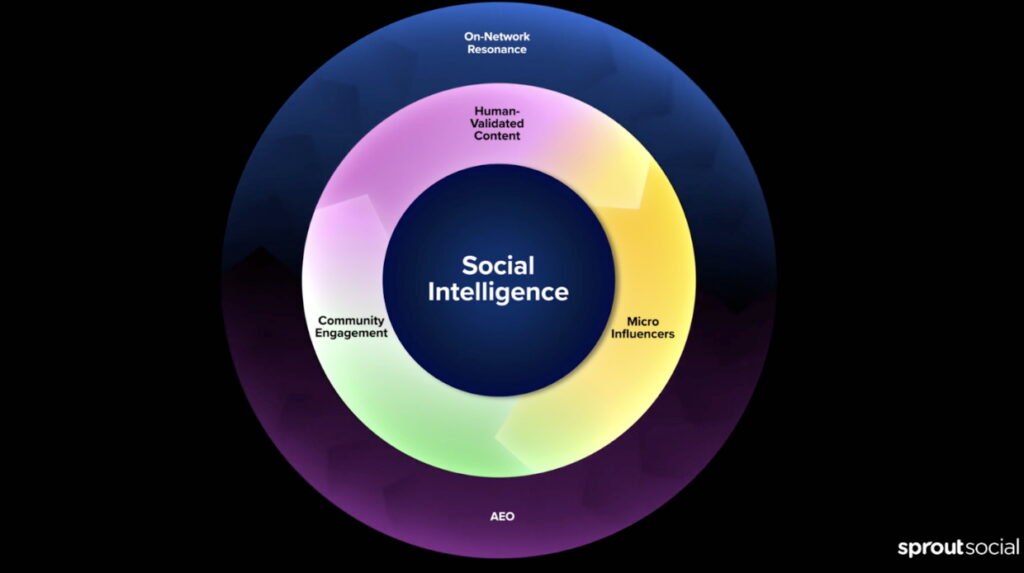
- Social Intelligence: The practice of using social listening to analyze conversations, sentiment, and market trends. Instead of starting with what the brand wants to say, this stage focuses on what the audience is already discussing.
- Human-Validated Content: A shift away from high-production, sterile corporate assets toward content that feels authentic and helpful. This includes behind-the-scenes footage, peer-led demonstrations, and evergreen resources that answer specific consumer questions.
- Influence Networks: Leveraging creators, niche communities, and forums like Reddit to provide third-party validation. These networks act as a bridge between awareness and consideration, offering a level of trust that paid advertisements can no longer command.
Chronology of the Marketing Shift: From Broadcast to Community
The transition from the traditional funnel to the flywheel model reflects a broader historical evolution in digital communication. In the 2010s, the "Golden Age of Social Media" focused on reach and follower counts. Brands prioritized building large audiences on platforms like Facebook and Twitter to broadcast messages.
By 2020, the landscape began to shift toward "Interest Graphs." Platforms like TikTok began prioritizing content based on user behavior rather than social connections. This made reach less predictable and forced brands to compete with individual creators for attention. By 2024, the proliferation of AI-generated content introduced a "trust deficit." Sprout’s data indicates that 83% of consumers now encounter AI-generated content regularly, leading to a heightened sensitivity toward anything that feels automated or generic.
As of 2026, the market has entered the "Era of Proof." In this stage, the mere presence of an ad is no longer enough to drive consideration. Consumers require "proof of reality"—evidence that real people are using, discussing, and finding value in a product.

The Trust Deficit and the Impact of AI
The primary catalyst for the flywheel’s adoption is the changing nature of trust. When feeds are saturated with AI-generated imagery and text, the "polished" brand message often becomes a liability. Consumers have developed a "filter" for content that feels manufactured. According to industry analysis, 56% of consumers report seeing AI content "often" or "very often," leading to a premium on content that is demonstrably human.
This shift has profound implications for Search Engine Optimization (SEO). As search evolves into Answer Engine Optimization (AEO), AI tools like Google’s AI Overviews and ChatGPT pull from social discussions and community forums to generate responses. If a brand’s presence is limited to its own website and paid ads, it risks being excluded from AI-generated recommendations. The flywheel addresses this by ensuring that human-validated content exists across the platforms where AI bots go to "learn" about public sentiment.
Strategic Implementation: Rebuilding the Funnel
Transitioning to a flywheel model requires a structural overhaul of how marketing teams operate. It is no longer sufficient for social media teams to work in a silo.
Integration of Social Intelligence
Social intelligence must inform departments beyond marketing, including product development and customer service. Currently, only 36% of professionals report that social data regularly informs non-marketing decisions, despite 98% agreeing on its cross-functional value. By tracking "Share of Voice" and "Net Sentiment," brands can identify competitive gaps and customer pain points in real-time, allowing them to adjust their messaging before a crisis or a trend passes.
The Reddit and Community Factor
Platforms like Reddit have become essential "influence networks." Because Reddit is human-moderated and built around shared interests, it serves as a high-intent environment for buyers in the consideration stage. Brands like Fidelity have successfully navigated this by having official representatives answer questions directly within subreddits, moving away from "selling" and toward "helping." This type of transparent participation builds a repository of searchable, human-validated information that aids in long-term discovery.
Creator Partnerships Over Influencer Ads
The flywheel model changes the criteria for creator partnerships. Instead of focusing on broad reach or celebrity status, brands are now evaluating creators based on "semantic themes" and niche authority. A micro-influencer with 10,000 highly engaged followers in a specific category (e.g., sustainable fashion or enterprise software) provides more "proof of reality" than a general lifestyle influencer with millions of passive followers.

Measuring Success in a Non-Linear World
One of the greatest challenges of the flywheel model is measurement. Because the journey is circular and often involves "dark social" (private channels), traditional click-through rates (CTR) do not tell the full story. Modern marketers are shifting their focus toward deeper engagement signals:
- Saves and Shares: Indicators that content is valuable enough to be revisited or distributed to a private network.
- Community Sentiment: Tracking how the tone of conversation around a brand changes over time.
- Brand Cites in AI Answers: Monitoring whether a brand is being surfaced as a recommended source in AI-generated search results.
Broader Impact and Industry Implications
The move toward the Proof of Reality Flywheel signals a broader maturation of the digital economy. It represents a move away from the "growth at all costs" mentality of the 2010s toward a model of "sustained authority." For brands, the implications are clear: those that continue to rely on a linear, ad-heavy funnel will likely see their customer acquisition costs (CAC) rise while their conversion rates stagnate.
Conversely, brands that embrace the flywheel can create a compounding effect. As they gather social intelligence, they produce better content; as they produce better content, they earn more community trust; and as community trust grows, the brand’s visibility in search and AI engines increases naturally. This self-sustaining loop reduces the reliance on fluctuating ad algorithms and builds a more resilient brand presence.

In conclusion, the social media marketing funnel is not just changing; it is being replaced by a system that mirrors the complexity of modern human interaction. In an age of AI and fragmented attention, "reality" has become the most valuable currency a brand can possess. The Proof of Reality Flywheel provides the framework for brands to earn that currency, turning every social interaction into a building block for long-term business intelligence and growth.