

Silicon Valley has long chased the dream of the ubiquitous digital companion—an invisible, intelligent entity capable of anticipating our needs, scheduling our lives, and optimizing our daily routines. At the forefront of this persistent crusade is Meta Platforms and its Chief Executive Officer, Mark Zuckerberg. Despite a decade of public indifference, lukewarm adoption, and outright product failures, Meta continues to double down on the concept of the personal AI assistant.
This week, the tech giant officially unveiled its latest and most ambitious iteration in this ongoing saga: the Muse app and chatbot. Touted as Meta’s most advanced artificial intelligence assistant tool to date, Muse allows users to customize their bot’s name, interact with it dynamically, and assign it autonomous background tasks. Zuckerberg envisions Muse not merely as a novelty feature, but as a critical stepping stone toward delivering personal superintelligence to the masses.
Yet, beneath the polished marketing and advanced machine learning capabilities lies a starkly familiar reality. Muse is, fundamentally, the latest reincarnation of a concept Meta has attempted to sell to the public multiple times before—with remarkably consistent apathy from consumers. As the company pours billions of dollars into artificial intelligence infrastructure, the release of Muse raises a central, pressing question: Can Meta finally convince the public to embrace a lifestyle of radical technological optimization, or is the company doomed to repeat history?
A Decade of Digital Assistants: A Chronology of Meta’s Bot Push
To understand the stakes surrounding the launch of Muse, it is necessary to examine Meta’s turbulent history with conversational AI and digital agents. The company’s fascination with automated assistants is not a recent pivot born of the modern generative AI boom; rather, it spans more than ten years of trial, error, and quiet shelving.
The journey began in August 2015, when Facebook introduced "M," a groundbreaking personal assistant integrated directly into the Messenger platform. Unlike rival voice assistants of the era, such as Apple’s Siri or Microsoft’s Cortana, M was designed to handle complex, real-world execution tasks. As David Marcus, then-head of Messenger, explained at the time, M could purchase retail items, arrange flower and gift deliveries, book restaurant reservations, coordinate travel arrangements, and manage appointments.
However, M’s reliance on human contractors behind the scenes to handle complex requests proved financially and logistically unsustainable. Despite early media fascination, mainstream user adoption stalled. Recognizing the lack of consumer demand, Meta officially pulled the plug on the M project in January 2018, less than three years after its high-profile debut.
Undeterred by the failure of M, Meta pivoted toward alternative bot strategies. In 2016, the company launched the Messenger Bots platform, opening the floodgates for third-party businesses to deploy automated customer service agents. While developers experimented with the tool, consumers largely treated the bots as intrusive nuisances rather than helpful companions.
Years later, in an attempt to leverage the rising popularity of generative AI and celebrity culture, Meta rolled out a suite of celebrity-themed AI chatbots on Messenger and Instagram, featuring the likenesses and simulated personalities of well-known public figures. Complete with celebrity endorsements and heavy promotional campaigns, these specialized bots failed to capture the public imagination or retain active user bases.
Now, with the debut of Muse, Meta is attempting once again to position the digital assistant as an indispensable daily tool. Despite the advanced underlying architecture—vastly superior to the natural language processing capabilities available during the era of project M—the core value proposition remains largely unchanged.
The Optimization Mindset Versus Human Experience
The persistent disconnect between Meta’s strategic roadmap and consumer behavior highlights a fundamental philosophical divergence between Mark Zuckerberg and the average user. While the public has repeatedly demonstrated a preference for using technology selectively and maintaining traditional boundaries in communication, Zuckerberg’s vision is rooted in radical efficiency and life optimization.
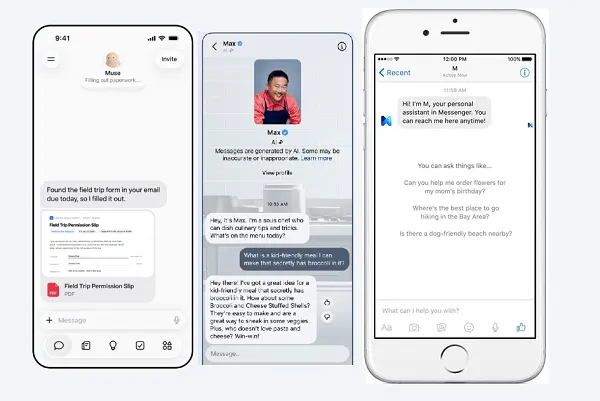
Zuckerberg’s personal affinity for automated home systems is well-documented. Having previously engineered a custom, artificially intelligent system to manage his own household functions, the Meta CEO views ambient computing as the ultimate solution to friction in daily life. In a recent interview discussing the philosophy behind the Muse AI chatbot, Zuckerberg articulated his personal use case candidly: “For me, when I’m using my Muse Agent, I kind of want it to help me be a better father and a better husband, and show up better for my friends.”
This perspective reveals an approach to life centered on optimization—a drive to compress time, minimize administrative overhead, and maximize interpersonal performance. However, market research and cultural trends suggest that this optimization mindset is far from universal.
For the vast majority of consumers, the friction of daily life—such as conducting independent product research, browsing through retail options, and engaging in unplanned human interactions—is not viewed as a waste of time to be eliminated. Rather, it constitutes the lived human experience. People frequently enjoy the journey of discovery, the nuance of organic conversation, and the autonomy of making decisions without algorithmic mediation.
When a tech executive views human communication as an inefficiency to be streamlined, products designed around that philosophy risk alienating the very audience they intend to serve.
Broader Implications for Meta’s AI Strategy
The launch of Muse arrives at a critical juncture for Meta. The company has committed tens of billions of dollars to capital expenditures, data centers, and specialized hardware to secure a dominant position in the artificial intelligence landscape. Wall Street and industry analysts are closely monitoring these investments, looking for tangible signs of monetization and mass-market adoption.
If Muse fails to capture consumer interest—following the trajectory of its predecessors, M and the celebrity-themed chatbots—it could pose significant challenges for Meta’s broader monetization strategy. While Meta’s foundational large language models (such as the Llama series) have found immense success within the developer community and enterprise back-end applications, consumer-facing AI products remain a volatile battleground.
Industry experts note that consumer habits surrounding AI are shifting toward utilitarian tools that solve immediate, specific problems—such as writing assistance, coding support, or creative generation. Broad, persistent personal agents that require users to delegate significant autonomy over their schedules, relationships, and daily tasks face a steep psychological barrier to entry. Trust and privacy concerns further compound these challenges, as users remain wary of granting tech platforms deep visibility into their personal lives.
Looking Ahead: Can Muse Overcome Past Precedent?
As Meta initiates its promotional campaign for Muse, utilizing influencer partnerships and high-profile endorsements reminiscent of its past product launches, the tech industry watches with cautious skepticism. The underlying technology has undoubtedly matured, allowing for contextual awareness and background task management that was unimaginable a decade ago.
Yet, technology alone cannot manufacture demand for a paradigm that consumers do not actively seek. Meta possesses unprecedented troves of behavioral data, offering deep insights into how people interact across its vast family of apps, including Facebook, Instagram, and WhatsApp. However, interpreting those metrics as a mandate for automated personal management may be a strategic miscalculation.
Ultimately, the success or failure of Muse will not be determined by Zuckerberg’s personal belief in the transformative power of digital agents, but by the willingness of everyday users to invite an AI assistant into the intimate spaces of their daily routines. Until Meta bridges the gap between executive idealism and consumer reality, the ghost of project M will continue to loom large over the company’s ambitious path toward artificial general intelligence.