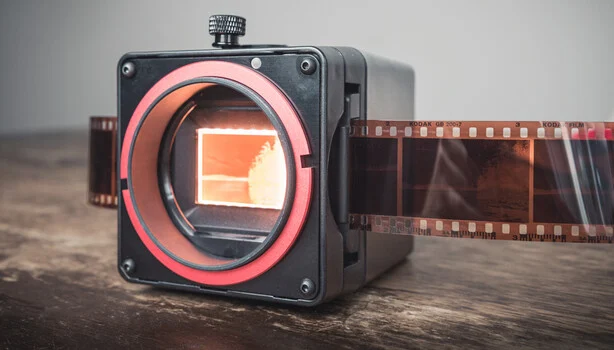

The resurgence of analog photography over the past decade has brought with it a persistent logistical bottleneck: the digitization of 35mm negatives and slides. For years, photographers unsatisfied with commercial lab scans—frequently criticized for aggressive oversharpening, compressed dynamic range, and rigid JPEG outputs—have turned to home-scanning rigs. Historically, this meant cobbling together disparate components such as macro extension tubes, copy stands, third-party film holders, and light panels. These improvised setups required tedious alignment procedures, precise distance calibrations, and constant troubleshooting. Enter the VALOI Easy35 v2, an all-in-one, purpose-built ecosystem designed to streamline the film scanning process by utilizing a photographer’s existing interchangeable-lens digital camera. Priced at approximately $270 for the base unit, the second-generation system promises to eliminate the friction traditionally associated with home scanning, offering a streamlined workflow for both modern negatives and archival slide collections.
Evolution of Home Scanning and the Origins of VALOI
The demand for high-quality, independent scanning solutions has grown exponentially as commercial photo labs increasingly phase out traditional chemical processing or prioritize high-speed, low-detail digital conversions. Photographers seeking archival-grade digital files often turn to camera scanning—a method wherein a digital mirrorless or DSLR camera equipped with a macro lens photographs backlit film strips.
While camera scanning yields superior resolution and raw data flexibility compared to flatbed scanners or commercial minilabs, constructing a reliable rig has historically been an exercise in frustration. Users frequently relied on makeshift configurations involving cutting boards, tripod ball heads, and separate film holding gates. Alignment errors—such as a sensor plane failing to run perfectly parallel to the film plane—frequently resulted in uneven corner sharpness, while curled film stocks routinely jammed in generic holders.
Recognizing this widespread industry pain point, accessory manufacturer VALOI launched the original Easy35 via an Indiegogo crowdfunding campaign in early 2003. The product aimed to bridge the gap between clunky professional copy setups and consumer-grade convenience by introducing a universal, self-contained unit featuring integrated illumination, precise mechanical spacing via modular tubes, and a fluid film advancement mechanism. Following positive market reception, the company refined the concept, culminating in the release of the Easy35 v2.
Engineering Upgrades in the Easy35 v2 Iteration
The second-generation VALOI Easy35 introduces several critical hardware modifications designed to address user feedback from the original release. Most notably, the v2 model replaces traditional bolts and hex keys with spring-loaded ball bearings, dramatically accelerating the process of swapping between different film carriers—such as standard 35mm strips, sprocket-hole adapters, and mounted slide holders.
Furthermore, the internal illumination architecture has undergone significant revision. The adjustable color temperature lamp of the first generation has been replaced with a fixed 6000K high-CRI light source optimized for accurate color reproduction during conversion. VALOI also eliminated the nylon-to-aluminum threading connections, opting for more durable metal assemblies, and integrated a power bypass system allowing the internal battery to run directly off external USB-C power sources.
The device ships in plastic-free packaging and includes a robust set of anodized aluminum extension tubes, threaded adapter rings for various filter threads, and an aluminum mounting collar equipped with a knurled locking knob. This collar enables users to precisely square the camera frame before securing it in place. A notable modular accessory is the magnetic "Duster" attachment, which integrates antistatic brushes to remove dust particles from the film surface as it feeds through the gate.
Component Specifications and Practical Workflow Integration
Operating the VALOI Easy35 v2 requires a digital camera, a macro lens (or a standard prime lens paired with extension tubes), and a stable flat surface or vertical copy stand. The unit itself functions as a battery-powered lightbox measuring compact proportions, featuring a built-in rechargeable lithium-ion battery rated for over four hours of continuous operation, replenishable via a braided USB-C cable.
When deployed horizontally on a desk, the system allows users to feed film strips smoothly through the gate while operating the camera shutter. However, vertical mounting configurations are often preferred by operators to minimize footprint and maintain ergonomic posture. The physical build quality relies on injection-molded ABS plastic for the main chassis and carriers, paired with matte-finished anodized aluminum tubing.
The modular tube system uses a series of rings to achieve the exact focal distance required for 1:1 reproduction ratios across various macro focal lengths, ranging from dedicated 90mm macro lenses to shorter focal length setups. Once calibrated, the process of advancing through a standard 36-exposure roll requires minimal manual intervention, drastically cutting down the time investment per roll compared to traditional multi-frame holder systems.
Comparative Analysis: Negatives Versus Archival Slides
While digitizing modern color negative and black-and-white film stocks proceeds with high efficiency, the VALOI Easy35 v2 demonstrates its most pronounced operational advantages when handling archival 35mm mounted slides. Historical slide collections—often inherited from decades past—frequently present a massive volume hurdle for photographers attempting digitization via standard multi-frame holders.
Systems requiring operators to load strips of six frames into a rigid gate before repositioning the entire carrier can turn large archives into multi-week projects. By contrast, the Easy35 v2 slide holder utilizes a push-through mechanism. As a new mounted slide is inserted into the gate, it automatically displaces the preceding slide, allowing for rapid, continuous cycling. This design drastically reduces handling time, transforming the digitization of thousands of historical transparencies from an arduous chore into a manageable task.
Market Implications and Economic Considerations
At a baseline retail price of $270, augmented by optional accessories such as the sprocket holder, slide module, and antistatic duster, the VALOI Easy35 v2 occupies a specialized tier within the analog photography accessory market. It is positioned above DIY alternatives and basic light panels, yet remains competitively priced relative to heavy-duty professional scanning systems and dedicated film scanners.
Industry analysts note that products simplifying the analog workflow play a crucial role in sustaining the film photography market. By lowering the technical and temporal barriers associated with post-exposure processing, systems like the Easy35 v2 empower independent photographers to retain full creative control over their digital archives without relying on commercial lab turnaround times or proprietary scanning software.
Future Outlook for Analog Accessory Engineering
As manufacturers continue to innovate within the analog niche, the focus has shifted heavily toward modularity, interoperability with existing digital mirrorless camera systems, and reduction of setup friction. The success of the VALOI Easy35 v2 highlights a broader trend in photographic equipment design: bridging the gap between legacy analog capture formats and modern digital sensor technology. With ongoing refinements in LED illumination uniformity, material durability, and rapid-swap mechanical interfaces, home film digitization is increasingly shedding its reputation as an overly complex darkroom science, evolving instead into a streamlined, accessible component of the contemporary photographic workflow.