
The long-standing tenet of modern web development, "never block the main thread," has been challenged by practical performance considerations, prompting a re-evaluation of its absolute application. While widely accepted as a fundamental principle for ensuring responsive user interfaces, developer Victor Ayomipo recently detailed a specific scenario involving a screenshot extension where he found that purposefully executing tasks on the main thread yielded superior performance and a smoother user experience, defying conventional wisdom. His experience highlights the critical need for a nuanced, data-driven approach to web performance optimization, rather than strict adherence to generalized rules.
The Foundational Principle: Unpacking the Main Thread Dilemma
For years, web developers have been indoctrinated with the imperative to avoid blocking the browser’s main thread. This principle stems from the fundamental architecture of web browsers, where the main thread is a singular execution context responsible for a multitude of critical operations. It handles everything from parsing HTML, executing JavaScript, and laying out elements to painting pixels on the screen and processing user input. Being single-threaded, it can only execute one task at a time. If a JavaScript operation ties up the main thread for an extended period, it prevents other crucial tasks, such as rendering new frames or responding to user clicks, from executing promptly.
The consequences of a blocked main thread are immediately apparent to the end-user: unresponsive interfaces, janky animations, and a general perception of slowness. To maintain a fluid user experience, browsers aim to render new frames every 16.6 milliseconds, equating to 60 frames per second (fps). Any task that exceeds a roughly 50-millisecond execution time is generally classified as a "long task," capable of causing noticeable UI freezes. This shared responsibility—where the browser’s rendering engine and input handlers compete with developer-written JavaScript for main thread access—underscores why offloading computation to background workers like Web Workers or Chrome’s Offscreen Documents became the recommended architectural pattern. The aim was to create a clear separation between UI rendering and heavy computation, ensuring that the user interface remained responsive even during intensive processing.
The Conventional Wisdom Meets Reality: Ayomipo’s Fastary Extension Journey
Victor Ayomipo encountered this performance paradox while developing Fastary, a Chrome extension designed for rapid screenshotting. His initial architectural design adhered strictly to the "never block the main thread" principle. For canvas operations and image manipulation, such as cropping or watermarking screenshots, the standard recommendation for Chrome extensions is to utilize an Offscreen Document. These documents run in a hidden background context, offering a DOM and Canvas API, specifically designed to offload computationally intensive tasks without impacting the main thread of the active tab.
Ayomipo’s initial implementation for Fastary followed this recommended path. The workflow involved the background script capturing the visible tab, then transmitting the screenshot data to an Offscreen Document for processing, and finally receiving the processed image back. Despite this seemingly optimized approach, user testing consistently revealed a significant latency of 2 to 3 seconds between the screenshot capture and the display of the processed image. This delay starkly contrasted with the expectation of an "instant" screenshot experience, similar to native applications. The irony was palpable: the very act of trying to avoid freezing the UI by moving work to a background thread was, in this specific case, introducing a noticeable delay that negatively impacted user perception.
Dissecting the Overhead: The Structured Clone Algorithm
To understand the root cause of this unexpected latency, it’s crucial to delve into how different browser contexts communicate. Browsers are not monolithic environments; they consist of multiple isolated contexts, each with its own memory space and access permissions. This "shared-nothing" architecture ensures security and stability, preventing one script from directly interfering with another. Communication between these isolated environments, such as the main thread, background scripts, or Offscreen Documents, must occur explicitly through messaging APIs like postMessage().
The mechanism underlying postMessage() for most data types is the Structured Clone Algorithm (SCA). While JSON.stringify() might be a familiar concept for serialization, SCA is a more robust and capable deep-copy operation. When data is sent via postMessage(), the SCA synchronously walks through the entire data structure, clones every value, serializes it into a transportable format (bytes), ships these bytes to the target context, and then reconstructs the original object on the receiving side. For small data payloads, like a simple configuration object, this process is imperceptible. However, the SCA is an O(n) operation, meaning its cost increases linearly with the size of the data. Sending a large image payload, such as an 8MB screenshot, through postMessage() necessitates the main thread to halt its current operations to execute this serialization and copying process. If this synchronous blocking operation, combined with transit and deserialization, takes longer than simply processing the data directly on the main thread, the benefit of offloading is negated.
The "Transferable Objects" Alternative and Its Limitations
Recognizing the synchronous blocking nature of SCA, many high-performance web applications leverage "Transferable Objects" (e.g., ArrayBuffer, ImageBitmap, MessagePort) to bypass the cloning overhead. Instead of copying data, transferable objects allow the browser to "transfer ownership" of the data from one context to another. The sending context instantly loses access to the data, and the receiving context gains full control. This "hand-off" mechanism is remarkably efficient. Benchmarks from Chrome Developers illustrate this stark difference: transferring a 32MB ArrayBuffer can take less than 7 milliseconds using transferable objects, a dramatic improvement compared to approximately 300 milliseconds for cloning the same data with SCA – a 43x speed boost.
Despite this impressive performance gain, transferable objects come with their own set of constraints. They only work with specific data types, limiting their applicability. More significantly, once data is transferred, the original sender loses access to it. This "move" semantic, while fast, can introduce complex state management challenges, especially if the data needs to be accessed or modified by both contexts sequentially or if it represents a shared resource that cannot simply be relinquished. For Ayomipo’s screenshot extension, where the image data might need to be captured, sent, processed, and potentially returned or further manipulated, the limitations of transferable objects made them an unsuitable solution.
The Retina High-DPI Conundrum: Adding Complexity
Beyond the fundamental communication overhead, Ayomipo’s Fastary extension also encountered a subtle yet critical bug related to high-DPI (Dots Per Inch) displays, commonly found on modern devices like MacBooks (Retina displays) or 4K monitors. When a user selected an area to crop, the coordinates were obtained using getBoundingClientRect(), which returns values in CSS pixels – the abstract units used by the DOM. However, when Chrome’s native captureVisibleTab() API takes a screenshot, it captures the image using the physical hardware pixels. The discrepancy arises because the browser uses a devicePixelRatio (DPR) to determine how many physical pixels correspond to one CSS pixel. On a standard monitor, DPR is typically 1:1. On a Retina display, however, DPR can be 2 or 3, meaning one CSS pixel might correspond to two or three physical pixels.
Consequently, if a user on a Retina display (DPR = 2) selected a 400×300 CSS pixel area, the actual captured image area represented by those coordinates would be 800×600 physical pixels. Processing this image in an Offscreen Document, which by default operates with a DPR of 1 (as it has no physical display), would lead to incorrect scaling and misaligned crops. To rectify this, Ayomipo would have needed to explicitly capture the active tab’s devicePixelRatio, serialize it, pass it alongside the image payload to the Offscreen Document, and then manually apply the scaling math. This additional data transfer and computational complexity further compounded the overall latency and development effort.
A Bold Reversal: Embracing the Main Thread
Faced with persistent latency and the compounding complexity of the DPI issue, Ayomipo reconsidered the "never block the main thread" rule. He realized that the task at hand – cropping an image – was not a long-running, CPU-intensive computation but rather a data-heavy operation. The core processing (canvas manipulation for cropping) was inherently fast; the bottleneck was the repeated serialization, transfer, and deserialization of large image data across isolated contexts.
His revised architecture dramatically simplified the process:
- The background script uses
chrome.tabs.captureVisibleTab()to obtain the screenshot as a Base64 URL string. - Instead of sending this large string to an Offscreen Document, the background script uses
chrome.scripting.executeScript()to inject a JavaScript function directly into the active tab. - This injected function then processes and copies the image directly on the active tab’s main thread.
// Background Script
const screenshotUrl = await chrome.tabs.captureVisibleTab(undefined,  format: "png" );

// Inject the processing function into the active tab as a content script
await chrome.scripting.executeScript(
  target:  tabId: activeTab.id ,
  func: processAndCopyImage, // This function performs the cropping
  args: [ base64Image: screenshotUrl, cropData: userSelection ]
);
This approach eliminated multiple context hops and the associated synchronous JSON serialization overhead. The only cross-context transfer involved sending the Base64 data URL from the background script to the content script, a single postMessage call. Crucially, the Retina DPI issue was inherently resolved because the content script executes directly within the active browser tab, giving it direct access to the correct window.devicePixelRatio. The cropping logic could then be applied accurately without manual scaling or additional data transfer.
Ayomipo’s justification for this departure from convention was pragmatic: for a user-explicitly invoked action like taking a screenshot, if the entire processing chain (including any brief main thread blocking) completes within approximately one second, the perceived responsiveness is superior to a multi-second delay caused by inefficient context switching. The "never block the main thread" rule, he concluded, is more accurately interpreted as "never block the main thread for too long."

A Nuanced Framework: Compute-Heavy vs. Data-Heavy Tasks
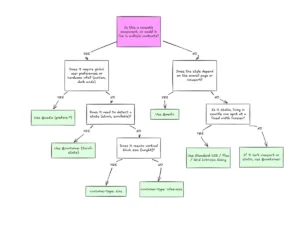
Ayomipo’s experience offers a valuable framework for deciding when to offload tasks and when to process them on the main thread, based on the nature of the task:
-
Compute-Heavy Tasks (CPU-Bound): These tasks are dominated by computational cost, where the time spent on calculations or complex transformations far outweighs the size of the data being processed. Examples include heavy image compression, audio profiling, complex physics simulations, or cryptographic operations. For these, the transfer cost is typically minuscule compared to the actual work. Offloading these tasks to background workers is almost always the correct approach, as it frees the main thread for UI responsiveness.
-
Data-Heavy Tasks (Data-Bound): These tasks are expensive primarily due to the sheer volume of data involved, rather than the complexity of the processing itself. The actual computation might be trivial, but the cost of serializing, transferring, and deserializing the data becomes the bottleneck. Image cropping, filtering a large array, or shallow copying operations often fall into this category. In such cases, the overhead of context isolation can lead to "negative-sum efficiency," where the total time taken (serialization + transit + background processing + deserialization) exceeds the time it would take to simply process the data directly on the main thread.
The critical insight lies in the "Total Time" equation:
Total Time = Serialization Cost + Transit + Background Processing Time + Deserialization Cost
If the "background processing time" is the dominant factor, then isolation is beneficial. However, if the combined costs of serialization, transit, and deserialization surpass the background processing time, then the supposed benefit of offloading evaporates.
Implications and the Call for Empirical Measurement
Ayomipo’s findings challenge the rigid application of a fundamental web performance rule, advocating for a more empirical, measurement-driven approach. Blindly adhering to "never block the main thread" without considering the specific nature of the task and the overheads involved can inadvertently lead to worse performance. This perspective resonates with broader performance optimization philosophies, where profiling and measurement are paramount. Tools like performance.mark() and performance.measure() are invaluable for developers to accurately profile the transfer cost and processing time, enabling informed decisions based on real-world data rather than generalized best practices.
This case study from the Fastary extension serves as a potent reminder that web development is not solely about following rules but about understanding the underlying mechanisms and making intelligent trade-offs. The ultimate goal is always to deliver the fastest, most responsive, and most satisfying user experience. Sometimes, achieving that goal means strategically bending, or even breaking, conventional rules when the data unequivocally demonstrates a superior outcome.