
The solo exhibition and accompanying photobook by Lebanese-American photographer Rania Matar serves as a profound meditation on the cyclical nature of conflict, the resilience of the human spirit, and the agonizing decisions faced by a generation of young women in Lebanon. Currently on view at the Sidney and Lois Eskenazi Museum of Art through August 2, 2026, the project features 128 color portraits that transcend mere documentation, offering a collaborative exploration of identity amidst a nation grappling with systemic collapse and renewed warfare. The work arrives at a critical juncture in Middle Eastern history, coinciding with the 50th anniversary of the start of the Lebanese Civil War (1975–1990) and a contemporary period of mass displacement that mirrors the traumas of the past.
Historical Context and the Catalyst of the 2020 Port Explosion
To understand the weight of Matar’s work, one must look at the layering of crises that have defined Lebanon over the past half-century. While the project is titled to mark the 50-year milestone of the 1975 Civil War, its immediate impetus was the August 4, 2020, explosion at the Port of Beirut. One of the largest non-nuclear explosions in history, the blast killed over 200 people, injured thousands, and left an estimated 300,000 residents homeless.
For the young women in Matar’s portraits, the explosion was a definitive "before and after" moment. It shattered the relative stability of the post-war era and accelerated a socio-economic freefall. Since 2019, the Lebanese pound has lost more than 98% of its value, and the World Bank has ranked Lebanon’s economic crisis as one of the top three most severe globally since the mid-19th century. Matar’s subjects are the faces of this "lost generation"—highly educated, ambitious young women who must decide whether to stay and rebuild or join the massive "brain drain" to the West.

The question "Where do I go?" was found by Matar scrawled on a wall in the aftermath of the blast. It is a question that Matar herself faced in 1984 when she left Lebanon for the United States during the height of the Civil War. By focusing on women who are currently the same age she was when she emigrated, Matar creates a bridge across time, highlighting a tragic repetition of history where daughters are forced to navigate the same crossroads their mothers once did.
A Chronology of Conflict and Resilience
The timeline of the work’s creation reflects a period of intensifying instability. Matar began the series in the wake of the 2020 explosion, capturing the immediate grit and determination of women who took to the streets not just to protest, but to physically clear the rubble of their city.

- 1975–1990: The Lebanese Civil War shapes the national psyche and drives the first major wave of the modern diaspora, including Rania Matar.
- August 2020: The Port of Beirut explosion serves as the primary catalyst for the Where Do I Go? project.
- 2020–2024: Matar conducts extensive field research and photography sessions across Lebanon, utilizing social media to recruit participants and ensure a diverse cross-section of the population.
- 2024–2025: As the project nears publication and exhibition, Lebanon enters a new phase of conflict involving cross-border hostilities in the south, leading to the displacement of over one million people—approximately one-fourth of the nation’s population.
This chronology transforms the exhibition from a retrospective look at recent history into an urgent, living document of a current humanitarian crisis. The "Where do I go?" inquiry is no longer metaphorical for many of the models; it is a literal plea for safety as they flee active combat zones.
Methodology: Agency and the Collaborative Portrait
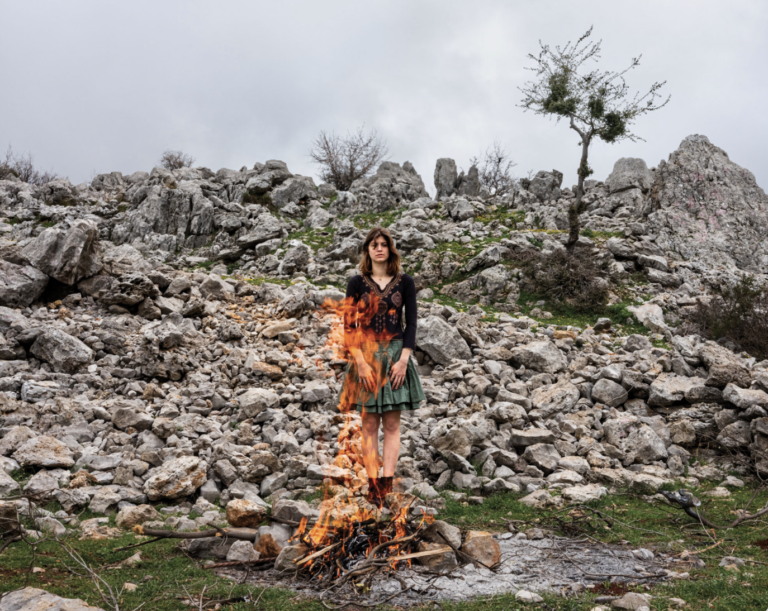
A distinguishing feature of Matar’s work is her rejection of the traditional "subject-photographer" hierarchy. In a region often depicted through the lens of Western "disaster voyeurism," Matar grants her models significant agency. The process begins with long-form communication, often starting on Instagram and moving to lengthy phone calls where the women share their personal histories, their relationship to Lebanon, and their visions for how they wish to be portrayed.

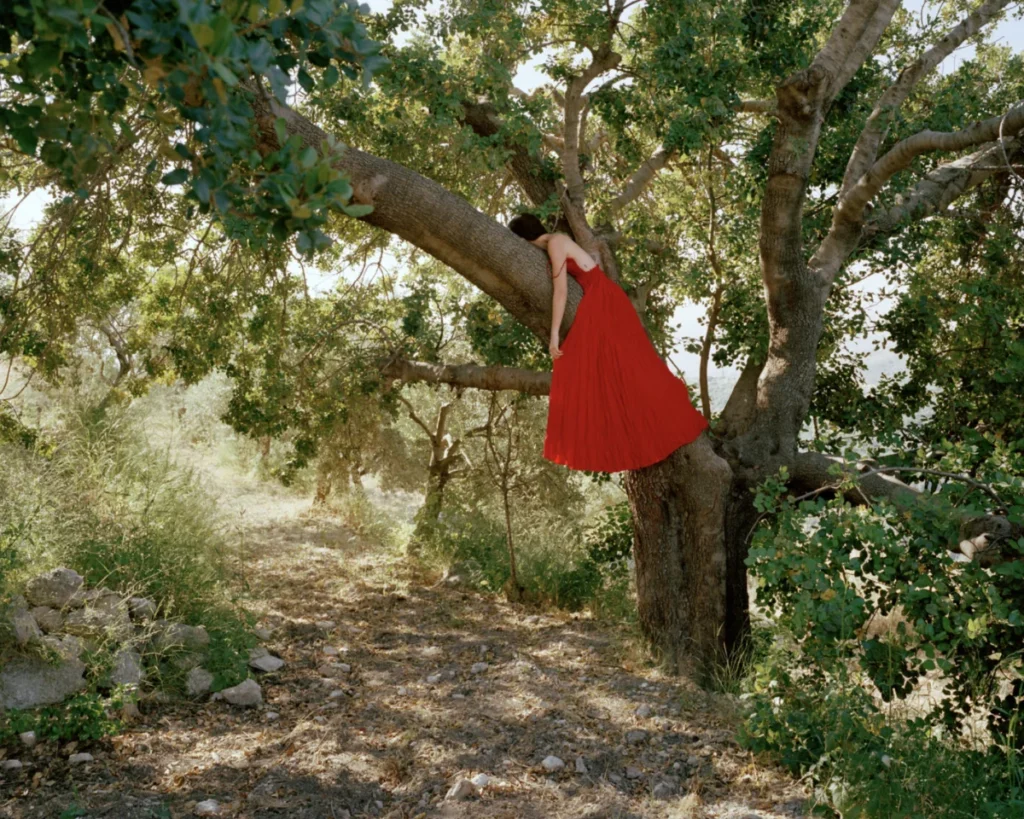
There is no formal location scouting or rigid staging. Instead, Matar and her subjects meet and explore environments together—ranging from the skeletal remains of bombed-out buildings to the lush, resilient greenery of the Lebanese mountains. This improvisational approach allows the portraits to become a "pure creation" between two individuals.
The models often bring their own clothing and choose locations that hold personal or ancestral significance. This collaboration ensures that the images do not merely show a victim of circumstance, but a person with a complex interior life. As Matar notes, the portraits are "love letters" to these women, recognizing their courage to remain visible and active in a society that often feels as though it is disappearing.

Visual Motifs and Symbolic Analysis
Matar utilizes several recurring motifs to convey the duality of life in Lebanon: the tension between destruction and beauty, and the split identity of the diaspora.
- Mirrors and Reflections: Mirrors are frequently used to show "two sides" of a reality simultaneously. They represent the internal fracture of the Lebanese identity—the part that is rooted in the soil and the part that is already looking toward the horizon.
- Portals and Shafts of Light: The use of Mediterranean light acting as a "portal" suggests a sense of transition. It highlights the women as beings caught between worlds, or perhaps as "phoenixes" rising from the architectural wounds of Beirut.
- The Natural vs. The Man-made: By placing women in settings where they are sinking into flowers or leaning against cracked concrete, Matar emphasizes the endurance of life. The flowers and mountains represent the eternal Lebanon, while the rubble represents the transitory nature of political and military failure.
These elements move the work away from the "documentary" style of news photography and into the realm of the metaphorical. The portraits aim to capture the "human reality" that statistics often obscure.

Socio-Economic Implications and Data
The release of the book and the opening of the exhibition occur against a backdrop of staggering data regarding the Lebanese state. According to recent reports from the United Nations and the International Organization for Migration (IOM):
- Displacement: As of late 2024, the escalation of conflict in Southern Lebanon has displaced more than 1.2 million people. Many of the women featured in Matar’s project are from these affected southern regions.
- Poverty: Over 80% of the Lebanese population now lives in multidimensional poverty, up from roughly 25% before the 2019 economic collapse.
- Migration: A 2022 survey by Arab Barometer found that nearly half of all Lebanese citizens—and over 60% of those aged 18–29—expressed a desire to leave the country permanently.
Matar’s work puts a human face on these numbers. When a viewer looks at a portrait of a young woman standing in a fractured apartment, they are not just seeing a statistic about the "brain drain"; they are seeing the specific grief of a woman who may have to leave her family behind to survive.

Institutional and Public Response
The Sidney and Lois Eskenazi Museum of Art has positioned the exhibition as a cornerstone of its contemporary programming, emphasizing the role of art in fostering global empathy. Museum curators have noted that Matar’s work provides a necessary counter-narrative to the dehumanizing imagery often found in mainstream media coverage of the Middle East.
Responses from the models themselves, many of whom remain in contact with Matar, highlight the empowering nature of the project. Despite the current bombings and the scarcity of basic resources like fuel and electricity, several of the women featured in the book have been active in grassroots relief efforts—distributing food, mattresses, and medicine to the newly displaced. Their real-world actions mirror the resilience captured in Matar’s frames, validating the artist’s belief in their "courage and grit."

Conclusion: The Enduring Question
50 Years Later – Where Do I Go? is more than a photography exhibition; it is an interrogation of the concept of home. For Rania Matar, the project is a full-circle journey that connects her past as an immigrant to the present struggles of a new generation. By documenting these women, she ensures that their individual stories are not lost to the "news cycle" of numbers and political abstractions.
The question "Where do I go?" remains unanswered for many in Lebanon. However, through Matar’s lens, the answer is found in the act of staying, the act of helping, and the act of being seen. The work stands as a testament to a country that, despite being "fractured" and "wounded," continues to produce generations of women who refuse to stop believing in the possibility of a future. As Lebanon navigates another dark chapter in its history, these portraits serve as a reminder that the beauty of a people can survive even when the structures around them do not.