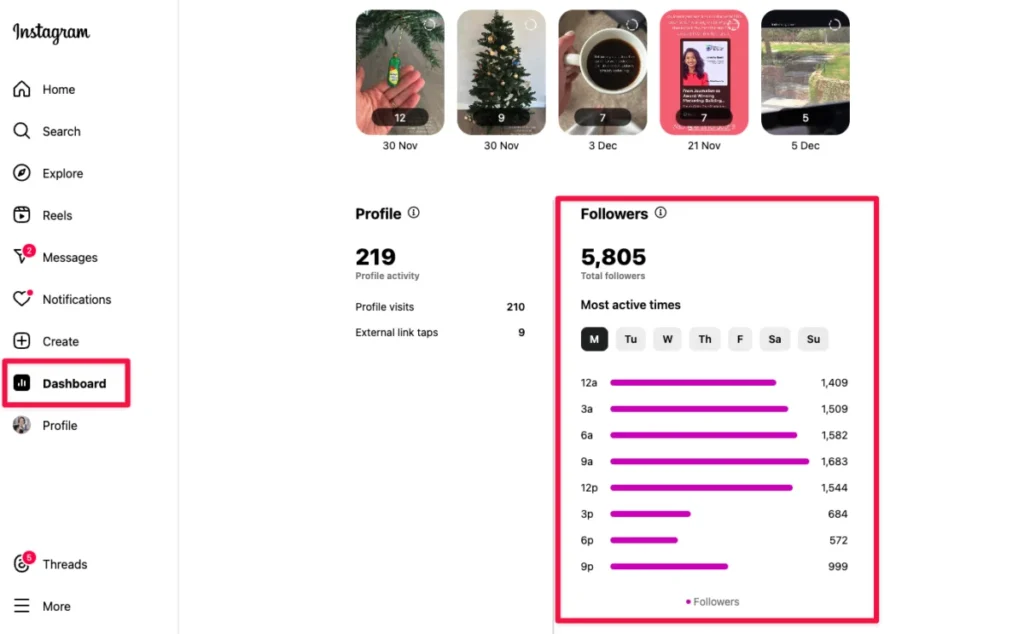

The landscape of digital engagement has undergone a significant transformation leading into 2026, with recent data revealing that the optimal windows for visibility on Instagram are now more concentrated than in previous years. According to an extensive analysis conducted by social media management platform Buffer, which examined 9.6 million Instagram posts between January 2024 and December 2025, the most effective times to publish content are Thursday at 9 a.m., Wednesday at 12 p.m., and Wednesday at 6 p.m. local time. These findings, part of the State of Social Engagement 2026 report, suggest a pivot toward midweek engagement and a growing preference for evening consumption among the platform’s global user base.
The study, which encompassed 52 million posts across ten different social platforms from over 200,000 accounts, highlights a widening gap between peak engagement periods and "dead zones." For brands, creators, and small business owners, the stakes for timing have escalated as competition for feed space intensifies. While content quality remains the primary driver of long-term success, the data suggests that hitting "publish" at the wrong moment can result in a total lack of initial momentum, effectively burying high-quality content before it has the chance to be surfaced by the algorithm.
The Midweek Peak and the Thursday Anomaly
Historically, social media engagement followed a predictable pattern tied to the standard work week, with peaks often occurring during morning commutes and lunch breaks. However, the 2026 data indicates a shift. Wednesday has emerged as the highest-performing day of the week, characterized by three distinct windows of high activity: 8 a.m., 12 p.m., and 6 p.m. This suggests that users are increasingly using Instagram as a midweek mental break, both during the start of the day and as they transition into evening leisure.
![Best Time to Post on Instagram: 2026 Data from 9.6M Posts [Updated July 2026]](https://storage.ghost.io/c/6d/21/6d217297-aa70-41fe-b68d-e29e411dd3ed/content/images/2026/01/best-time-to-post-on-instagram-2026.png)
Thursday presents the most intriguing data point in the report. While evening hours (6 p.m. to 11 p.m.) dominate the engagement charts for most of the week, Thursday morning at 9 a.m. ranks as the single best time to post overall. Analysts suggest this "Thursday Anomaly" is driven by "end-of-week planning energy." As users begin to look toward the weekend, they are more likely to engage with creators and brands for inspiration regarding travel, shopping, and social activities. This early-morning spike contrasts sharply with Monday and Tuesday, where engagement remains relatively low until the post-work hours.
Strategic Breakdown by Day of the Week
The report provides a granular look at how engagement fluctuates throughout the week, offering a roadmap for content scheduling:
- Monday: Engagement is moderate, peaking at 7 p.m. Users typically spend the first day of the work week catching up on professional tasks, making the evening wind-down the first real opportunity for recreational scrolling.
- Tuesday: Performance improves, with high engagement recorded at 3 p.m., 5 p.m., and 7 p.m. This day represents the start of the midweek surge.
- Wednesday: The gold standard for posting. The 12 p.m. lunch hour and the 6 p.m. evening slot are both powerhouse windows for reach.
- Thursday: The peak occurs early at 9 a.m., followed by strong performance at 8 a.m. and 7 a.m. It is the only day where morning posts consistently outperform evening ones.
- Friday and Saturday: These are identified as the weakest days for engagement. As users transition into real-world social activities, digital engagement drops significantly. Friday’s peak does not occur until 10 p.m., while Saturday engagement remains low across all slots, peaking slightly at 9 p.m.
- Sunday: A "recovery" day for engagement. Activity begins to climb again in the late evening, specifically between 8 p.m. and 10 p.m., as users prepare for the week ahead.
The Evolution of the Instagram Algorithm: Sends per Reach
A critical component of the 2026 report is the analysis of how Instagram’s algorithm has evolved. Adam Mosseri, Head of Instagram, has recently emphasized that the platform’s most important ranking signal is no longer just likes or comments, but "sends per reach." This metric measures how often users share a post via Direct Message (DM) to their friends.
The shift toward "shareability" as a primary metric explains why evening hours have become so dominant. Users are more likely to engage in the "DM-and-discuss" cycle when they have the downtime to interact with their social circles. Consequently, content posted during the 6 p.m. to 11 p.m. window is more likely to be shared, signaling to the algorithm that the content is valuable and should be surfaced to a wider audience.
![Best Time to Post on Instagram: 2026 Data from 9.6M Posts [Updated July 2026]](https://storage.ghost.io/c/6d/21/6d217297-aa70-41fe-b68d-e29e411dd3ed/content/images/2026/01/best-time-to-post-instagram-2026-heatmap.png)
Furthermore, while the chronological feed is a thing of the past, recency still plays a vital role in the "initial reach" phase. When a post is published during a high-activity window, it garners immediate interactions. These early signals act as a catalyst, prompting the algorithm to extend the post’s lifespan and visibility in the "Explore" and "Reels" tabs.
Format-Specific Considerations: Reels, Carousels, and Stories
The 2026 data also provides insights into how different content formats should be timed to maximize their unique strengths.
Instagram Reels
Reels continue to be the platform’s primary engine for discovery and entertainment. Because users typically consume video content when they have dedicated time to focus, the evening hours of Wednesday and Thursday are optimal. The report suggests that since Reels are designed to entertain, they perform best when the audience is in a relaxed, receptive state.
Instagram Carousels
Carousels, often used for educational content or storytelling, require more active engagement as users must swipe through multiple slides. The data shows these perform exceptionally well during the Wednesday midday spike. The "lunch break scroll" provides just enough time for users to digest multi-slide content without the distractions of the early morning rush.
![Best Time to Post on Instagram: 2026 Data from 9.6M Posts [Updated July 2026]](https://storage.ghost.io/c/6d/21/6d217297-aa70-41fe-b68d-e29e411dd3ed/content/images/2026/01/best-day-to-post-instagram-2026-.png)
Instagram Stories
Unlike feed posts, Stories are ephemeral and rely on consistency rather than specific timing. Experts recommend a cadence of one to two Stories daily. Because Stories appear at the top of the app and are often the first thing users check, maintaining a regular presence ensures that a brand or creator stays "top of mind" regardless of when a user logs in.
The "Dead Zones": When to Avoid Posting
Identifying when not to post is just as crucial as finding the peak windows. The analysis found that engagement consistently bottoms out between 1 a.m. and 5 a.m. across all time zones. Posting during these hours is generally viewed as a waste of resources, as the content will likely be buried by newer posts by the time the majority of the audience wakes up.
Additionally, the weekend "slump" is a real phenomenon in 2026. With the exception of Sunday evening, weekend engagement is significantly lower than midweek levels. For social media managers, this suggests that the most impactful or high-stakes content should be reserved for the Tuesday-through-Thursday window, while weekends should be used for lighter, less critical updates.
Methodology and Global Application
To ensure the data is applicable to a global audience, Buffer’s data scientists normalized the posting times to local time zones. This means that "12 p.m. Wednesday" refers to 12 p.m. in the user’s specific location, whether they are in New York (EST), London (GMT), or Mumbai (IST). By measuring median engagement rates rather than averages, the study also avoided being skewed by "viral outliers" or accounts with millions of followers, making the advice relevant for small businesses and new creators alike.
![Best Time to Post on Instagram: 2026 Data from 9.6M Posts [Updated July 2026]](https://storage.ghost.io/c/6d/21/6d217297-aa70-41fe-b68d-e29e411dd3ed/content/images/2026/05/image-6.png)
Broader Implications for Digital Marketing
The findings of the 2026 report reflect a broader trend in consumer behavior: the consolidation of digital attention. As the volume of content on Instagram grows, users are becoming more selective about when and how they engage. The "chasm" between peak times and lulls suggests that the era of "posting whenever" is over.
For businesses, this data underscores the necessity of automation and scheduling tools. With peak windows often falling during busy work hours (like Thursday at 9 a.m.) or late in the evening, manual posting is becoming increasingly impractical. Professional-grade social media strategies in 2026 are likely to rely heavily on data-driven scheduling to ensure that content lands when the audience is most active.
However, the report concludes with a reminder that timing is an optimizer, not a cure-all. While posting at 6 p.m. on a Wednesday provides a statistical advantage, the content must still resonate with the target audience’s specific interests and needs. The "sends per reach" metric reinforces this, as users will only share content that they find genuinely entertaining, informative, or relatable.
As Instagram continues to compete with other short-form video platforms and search engines for user attention, understanding these shifting patterns of engagement will remain a cornerstone of successful digital communication. The 2026 data serves as a vital benchmark for anyone looking to navigate the complexities of the modern social media ecosystem.