


A recent comprehensive analysis of 97 Google Analytics 4 (GA4) accounts, encompassing nearly 29 million website visits over a year, has revealed a significant trend: traffic originating from Artificial Intelligence (AI) sources demonstrates a markedly higher propensity to convert into leads compared to traditional organic search and other referral channels. This finding challenges conventional wisdom regarding online lead generation and signals a potential paradigm shift in how businesses approach digital marketing strategies.
The study, conducted from July 1, 2025, to June 30, 2026, meticulously examined B2B lead generation websites to understand the conversion behavior of visitors arriving from various traffic origins. The initial observation, noted within individual GA4 accounts, indicated that AI-referred visitors were more likely to become leads, particularly when landing on a website’s homepage. This anecdotal evidence prompted a broader investigation to validate the trend across a larger dataset.
The AI Advantage: Unpacking the Conversion Rate Disparity
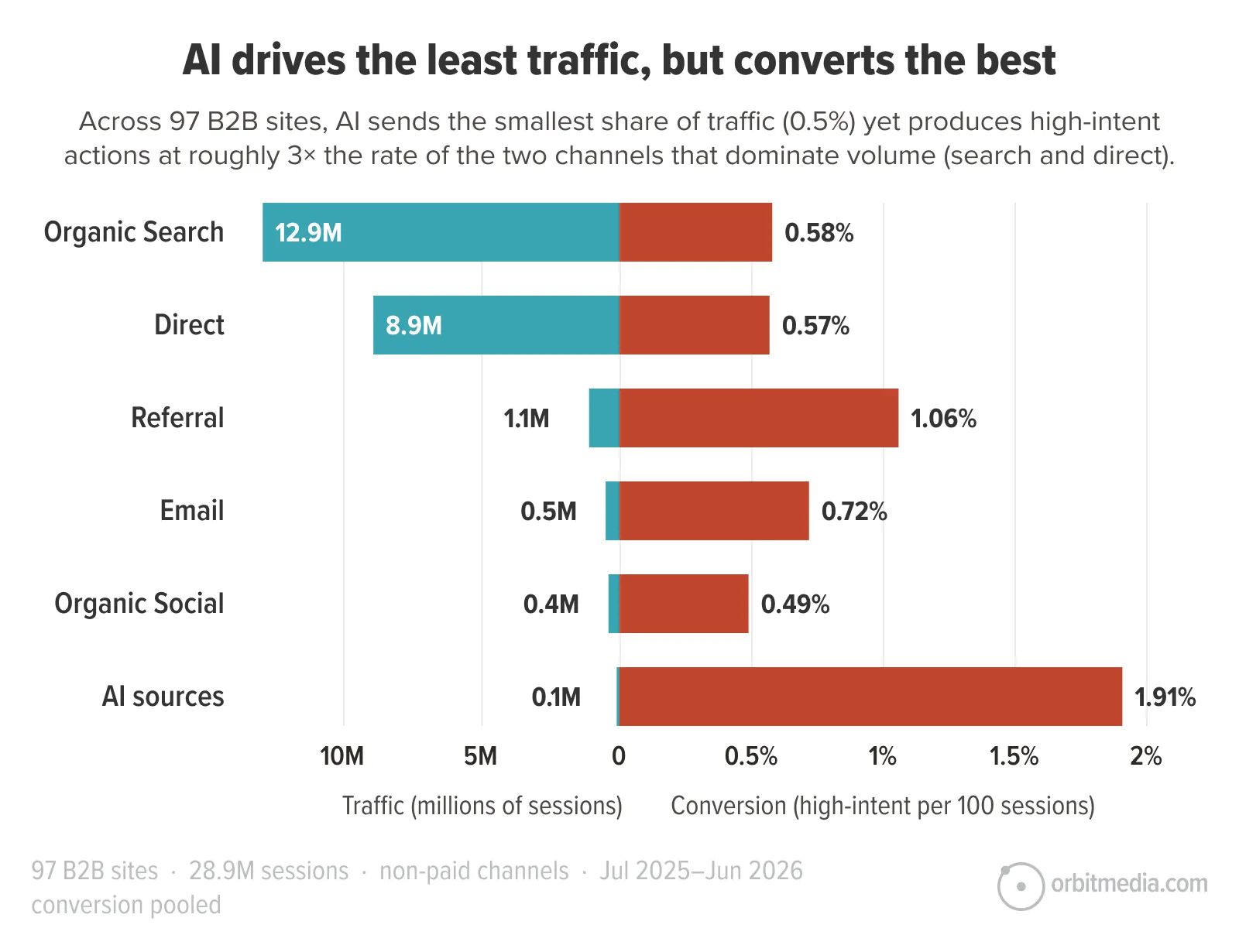
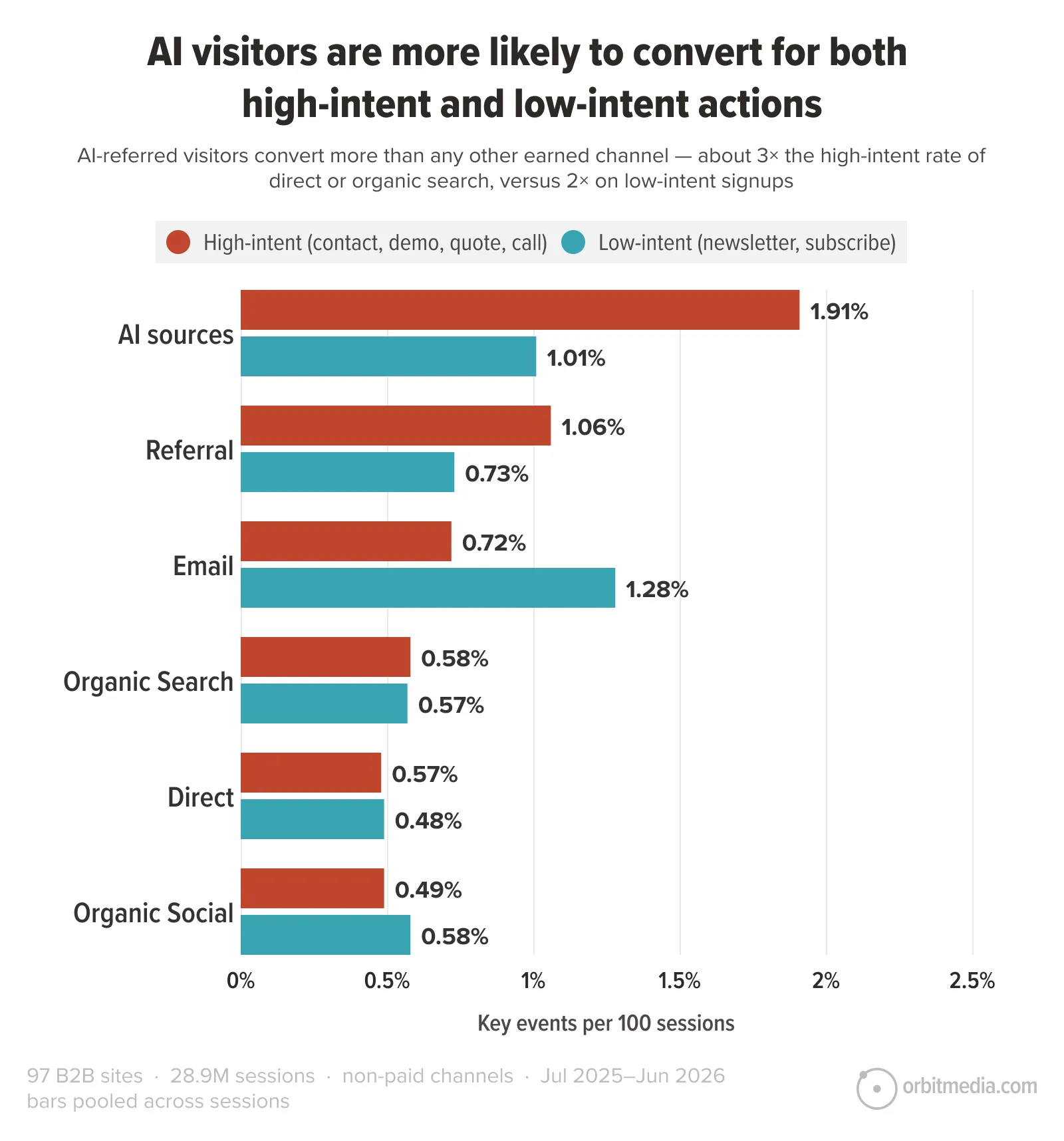
The core finding of the research is striking: visitors originating from AI sources are, on average, three times more likely to convert into leads than those arriving from other organic traffic channels. This elevated conversion rate is not merely an aggregate anomaly; it was observed consistently across approximately two-thirds of the individual websites analyzed. When examining the median conversion rates on a per-site basis, this advantage for AI-sourced traffic widened to an impressive seven-fold increase.
While AI traffic is showing exceptional conversion power, its volume remains comparatively low. Across the analyzed 29 million visits, only about 140,000, or roughly 0.5%, originated from AI sources. This suggests that while AI is a potent driver of high-intent leads, traditional channels like organic search, particularly Google, continue to dominate in terms of sheer traffic volume. The ingrained habit of using search engines, coupled with the widespread adoption of browsers like Chrome with prominent Google integrations, likely contributes to this sustained traffic dominance.
The research also highlighted the nuances in how AI traffic is categorized within GA4. Traffic originating from Google’s AI Mode and AI Overviews is currently classified under "Organic Search," making it difficult to isolate from traditional search results. Similarly, traffic from standalone AI applications is often categorized as "Direct" traffic, as the referral information is not passed through the browser in the same manner as traditional web links. This classification challenge means the true volume of AI-referred traffic might be underestimated in current analytics.
Dominance of ChatGPT and the AI Ecosystem
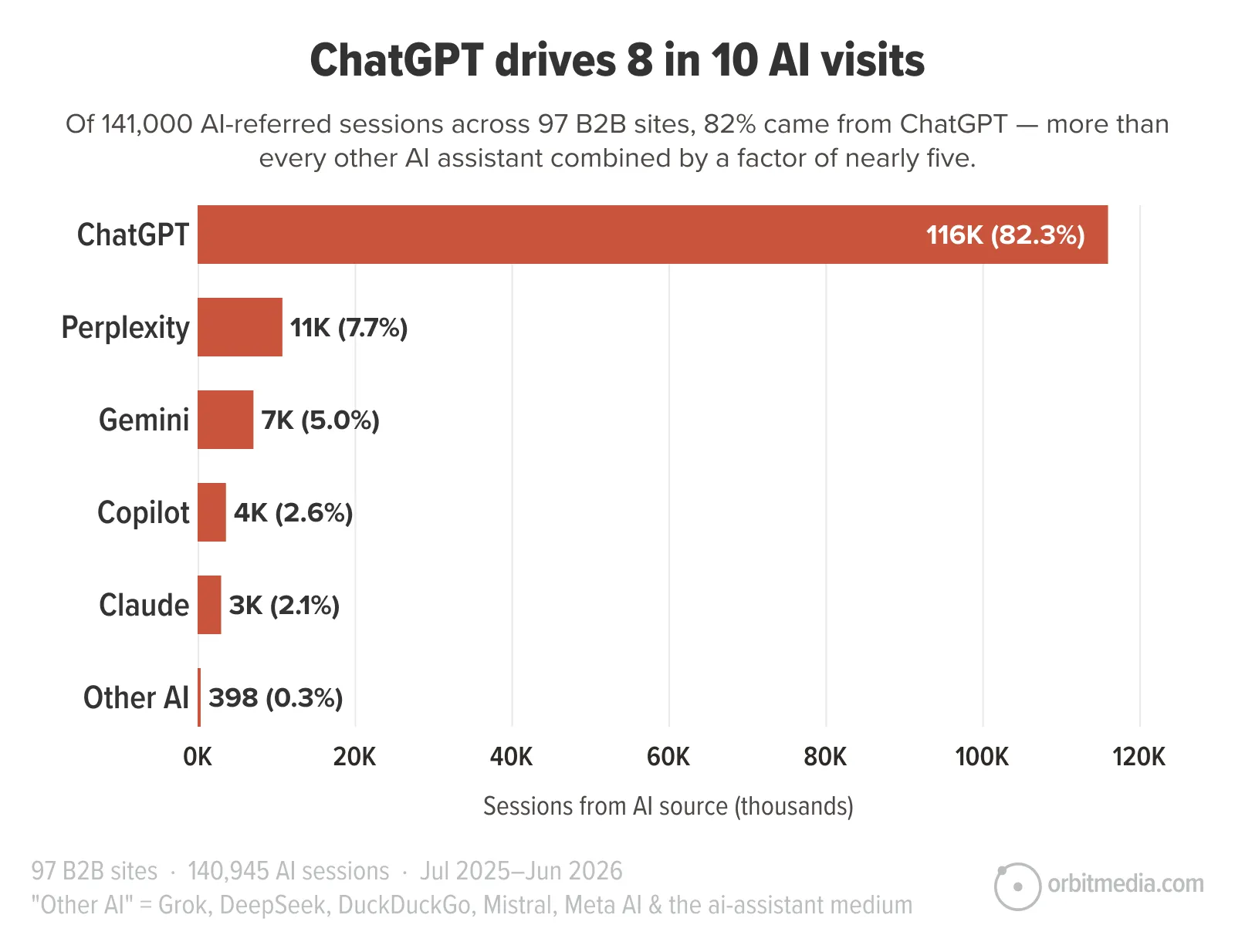
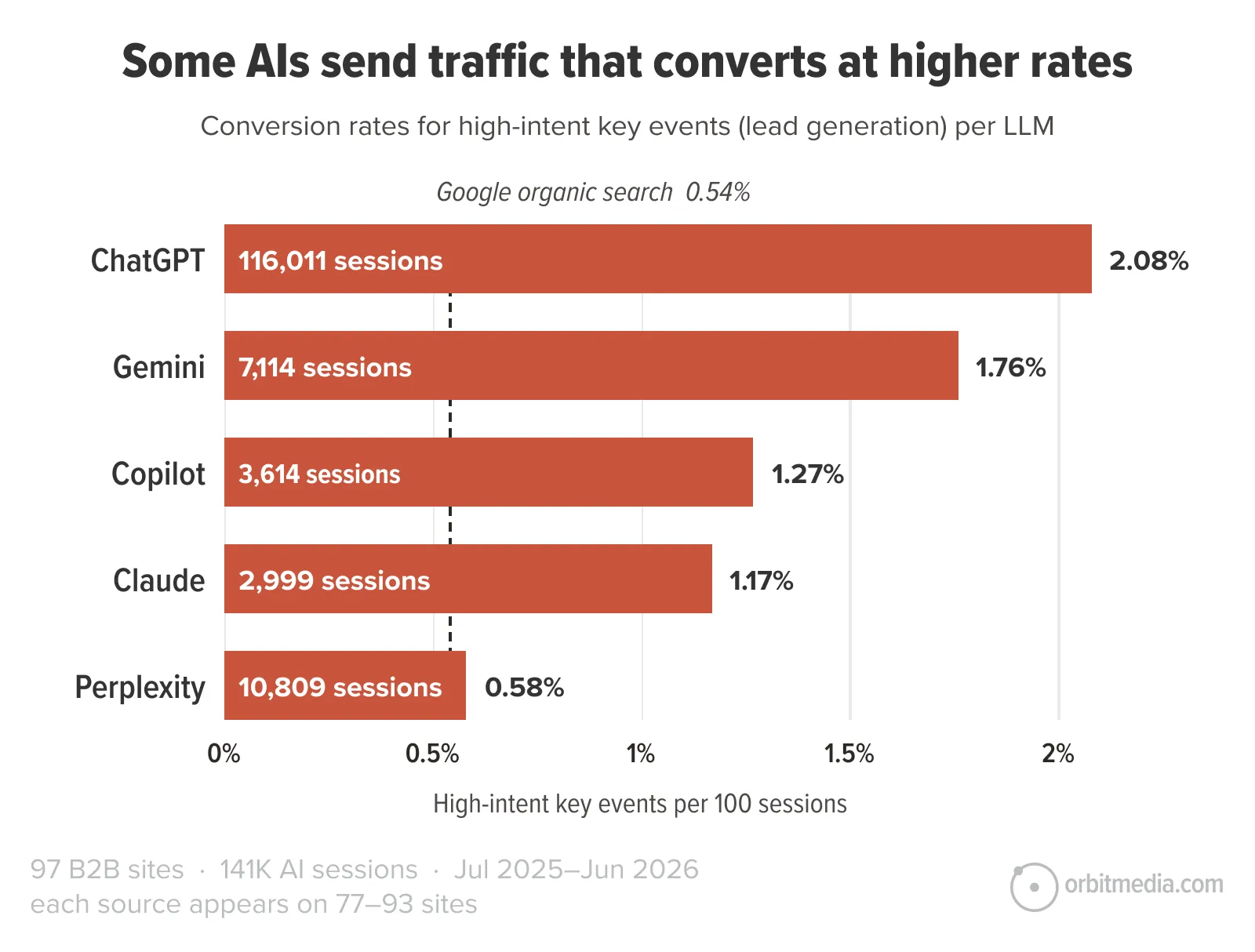
Delving deeper into the AI landscape, the analysis identified a clear leader in referral traffic: ChatGPT. Accounting for a significant majority of the AI-referred sessions, ChatGPT is proving to be a primary gateway for users seeking information that leads to business interactions. While other AI platforms like Perplexity position themselves as search engine alternatives, their contribution to B2B website traffic remains considerably lower.
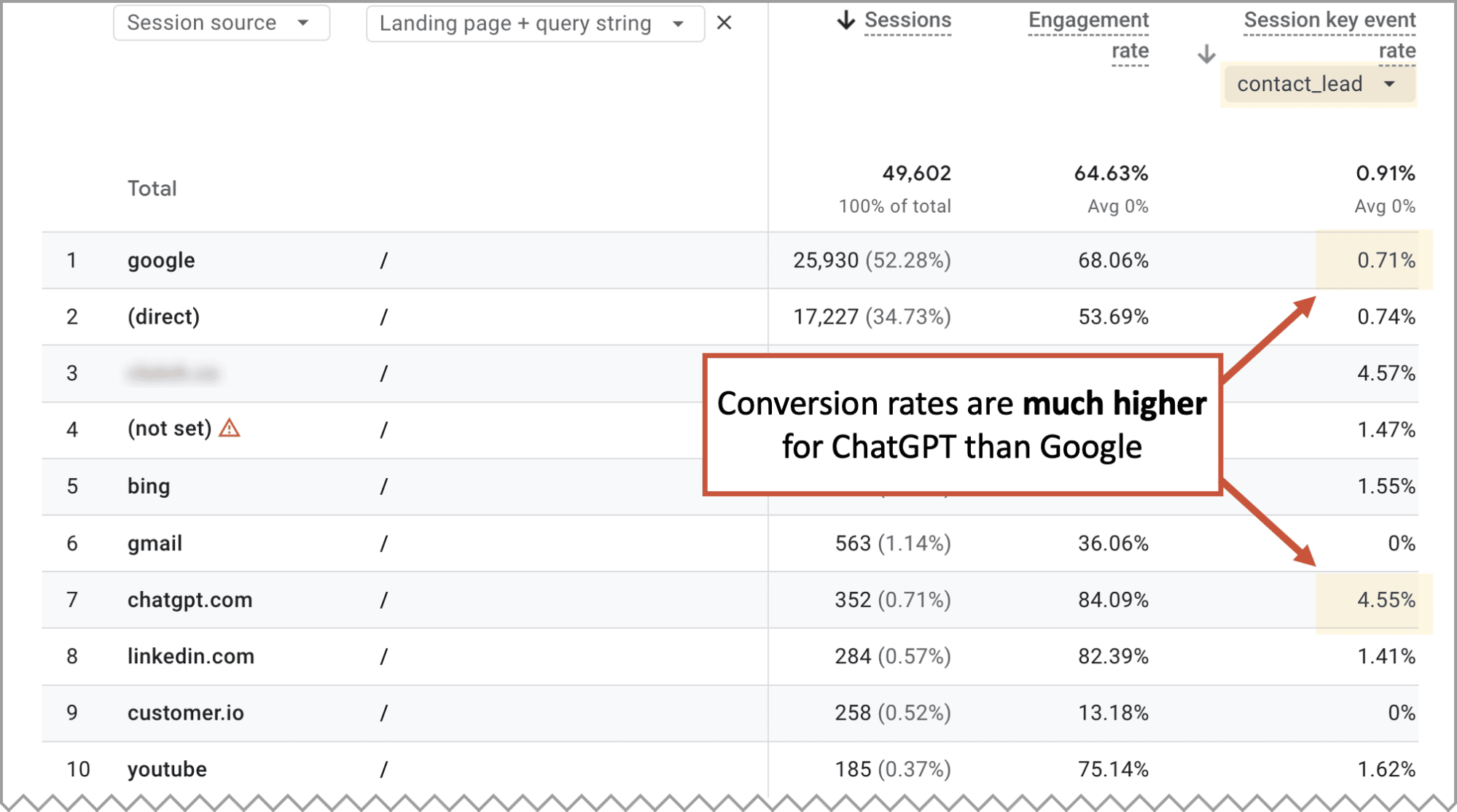
The conversion rates further underscore ChatGPT’s impact. Visitors from ChatGPT demonstrated a conversion rate of 2.08%, significantly outperforming Google Search’s 0.5% for similar lead generation actions. However, it’s crucial to reiterate that Google’s immense traffic volume still makes it a more powerful source for overall lead generation numbers, despite the lower per-visitor conversion rate.
Differentiating Intent: High-Value vs. Lower-Commitment Conversions
To gain a more granular understanding of AI’s impact, the study categorized conversions into two main groups: high-intent and low-intent actions. High-intent conversions typically include actions like submitting contact forms, requesting demos or quotes, and initiating phone calls. Low-intent conversions encompass activities such as subscribing to newsletters, downloading guides, or registering for webinars.
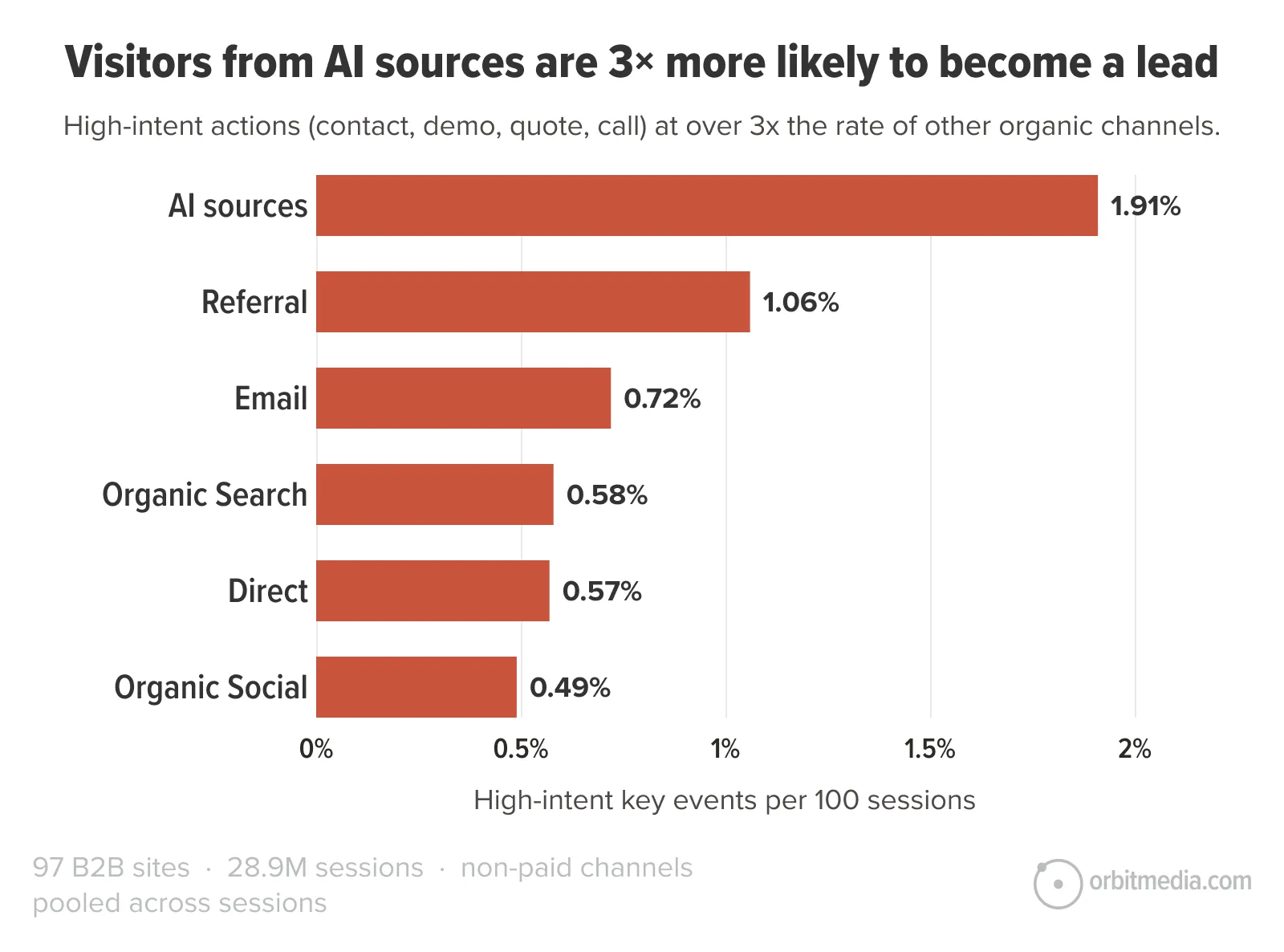
The analysis revealed that AI-referred visitors are twice as likely to engage in both high-intent and low-intent conversions when compared to visitors from other sources. This suggests that AI is effectively driving users further down the sales funnel, regardless of the specific conversion action. Whether a user is ready for an immediate sales conversation or seeking to learn more through content, AI traffic appears to be more engaged and predisposed to taking action.
Landing Page Performance and User Journey
The research also shed light on the types of landing pages that are most effective in converting AI-referred visitors. By categorizing landing pages into groups such as homepage, services/products, articles, about pages, contact pages, and case studies, the study observed that AI traffic tends to land on a variety of page types. Notably, blog posts attracted the highest volume of AI-referred traffic, while case studies demonstrated the highest conversion rates.
The initial observation that AI visitors frequently land on homepages is also reinforced by the data. This could indicate that users are using AI to find specific companies or solutions, and are then directed to the primary entry point of the website. The fact that even higher-funnel pages like blog articles are showing strong conversion rates from AI traffic is a significant finding, suggesting a higher overall intent from these users, regardless of where they initially land.
Explaining the AI Conversion Phenomenon: Hypotheses and Implications
Several hypotheses emerge from this data to explain why AI-referred visitors exhibit such high conversion rates:
-
Pre-Qualified Leads: AI conversational interfaces may be effectively performing an initial "shortlisting" for users. By engaging in dialogue, users are likely to have already refined their needs and compared options within the AI platform before clicking through to a website. This means they arrive with a clearer understanding of what they are looking for, and potentially a higher degree of motivation.
-
Familiarity and Trust: AI interactions can feel more akin to receiving personalized advice or recommendations than traditional search engine results, which are often perceived as a marketplace of options. When an AI names a specific brand, it can feel like a trusted referral or word-of-mouth endorsement, fostering a sense of pre-existing familiarity and trust.
-
Intent-Driven Usage: Unlike social media platforms, which users might browse for entertainment, AI tools are typically employed with a specific purpose – to gather information, solve a problem, or make a decision. This inherent purposefulness translates into higher visitor intent, even before they reach a website.
-
Reduced Friction: The conversational nature of AI interactions may reduce the perceived friction in the initial research phase. Users can ask nuanced questions and receive tailored responses, potentially simplifying the early stages of their buyer journey.
Broader Impact on Digital Marketing Strategies
The implications of these findings for businesses are substantial. As AI continues to evolve and integrate into user search habits, marketers must adapt their strategies to capitalize on this high-intent traffic.
- Content Optimization for AI: Websites need to be optimized not only for search engines but also for AI consumption. This means ensuring content is clear, comprehensive, and directly addresses user queries in a way that AI can easily interpret and recommend.
- Homepage and Key Landing Page Experience: Given the tendency for AI traffic to land on homepages and other key pages, these areas must be highly effective in guiding visitors towards conversion. Clear value propositions, easy navigation, and prominent calls-to-action are paramount.
- Data Interpretation and GA4 Configuration: Businesses need to ensure their GA4 configurations accurately capture and categorize AI traffic. This may involve creating custom explorations to identify AI-referred sessions and understanding the limitations of current tracking mechanisms.
- Strategic Focus on AI Platforms: As AI platforms become more influential in the discovery phase, businesses may need to consider their presence and optimization strategies on these platforms, akin to SEO for traditional search.
The research underscores the growing importance of AI as a discovery and decision-making tool. While traditional search remains a dominant force in traffic volume, AI is emerging as a significant player in driving highly qualified leads. Businesses that proactively adapt to this evolving landscape by understanding and optimizing for AI-driven traffic are likely to gain a competitive edge in the lead generation arena. The future of digital marketing will undoubtedly involve a more sophisticated integration of AI into user journeys, and the data suggests that this integration is already yielding tangible results for those who can harness its potential.