

The modern buyer journey has undergone a profound structural transformation, forcing content marketers worldwide to reevaluate how they capture audience attention and drive conversions. Recent industry research reveals that 72 percent of professional buyers now utilize artificial intelligence tools on a daily basis, with more than half relying on AI chat interfaces as their primary mechanism for preliminary research and decision-making. Despite this seismic shift in consumer behavior, a notable disconnect persists between how marketing professionals perceive AI search optimization and the actual execution of effective digital strategies.
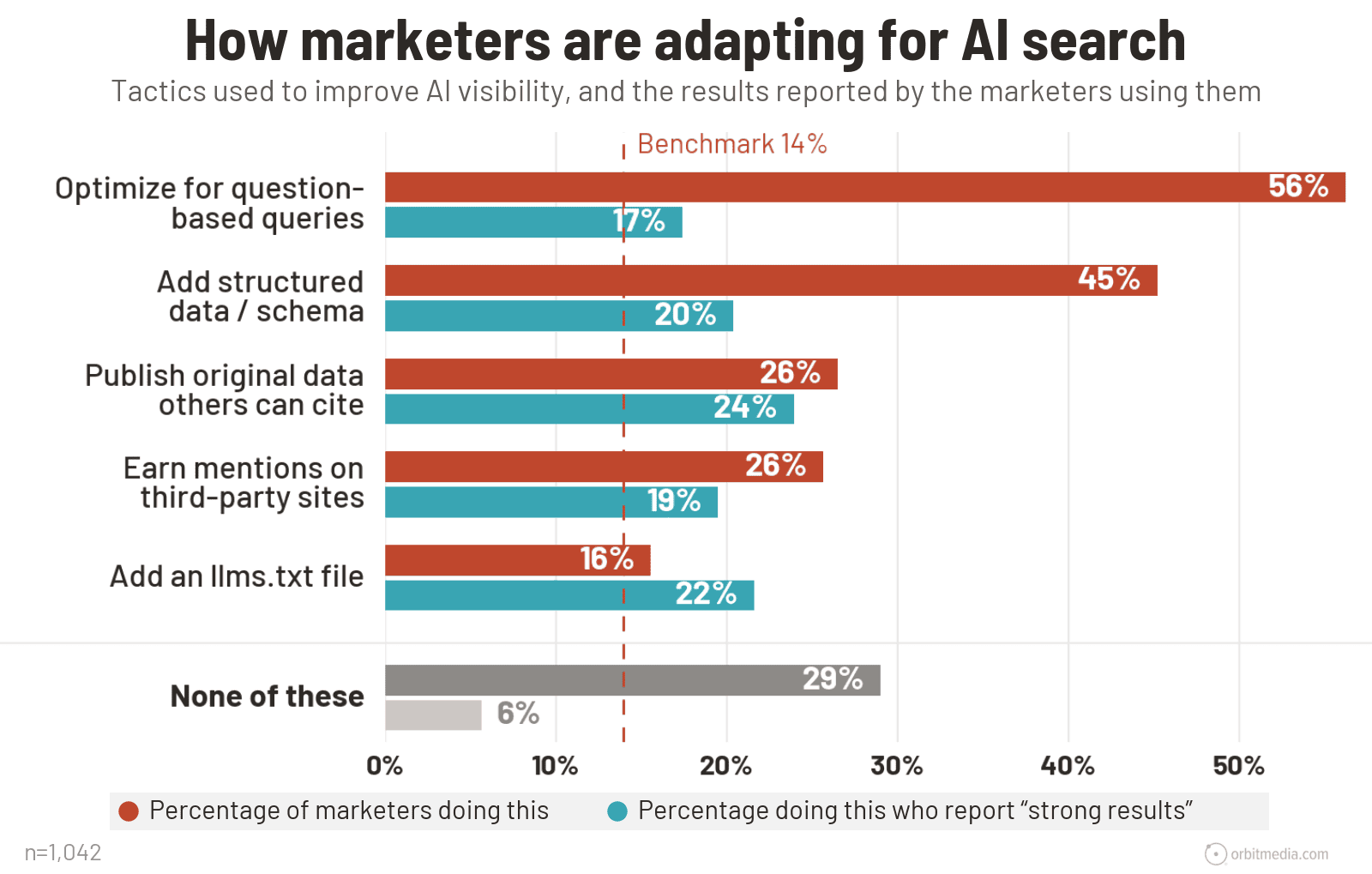
Data compiled from a comprehensive survey of over 1,000 content marketers, alongside cross-platform analyses conducted through mid-2026, highlights a paradoxical landscape. While roughly 71 percent of content marketers claim to be adapting their digital assets for AI search visibility, the tactics most commonly deployed frequently correlate with the lowest performance outcomes. Conversely, the strategies yielding the strongest results remain largely underutilized. This phenomenon underscores an industry-wide tendency to prioritize operational ease over empirical efficacy as organizations grapple with the integration of large language models (LLMs) into everyday information retrieval.
The Evolution of Search: From Deterministic Engines to Probabilistic Chatbots
To understand the current state of content marketing, one must examine the chronological progression of search behavior over the past several years. Traditional search engine optimization (SEO) dominated digital strategy for decades, relying primarily on deterministic algorithms that matched specific keywords to indexed web pages. However, the proliferation of conversational AI and generative search tools introduced a probabilistic paradigm. Instead of scanning a list of blue links, today’s consumers interact with AI agents that synthesize data across the web to provide direct, synthesized answers.
This technological evolution initially triggered widespread panic among digital strategists, spawning numerous articles declaring traditional SEO dead. Yet, longitudinal data tracking web traffic patterns from January 2023 through July 2026 demonstrates that foundational practices remain deeply relevant. Specifically, analytics across 86 monitored websites indicate that direct traffic has steadily risen, recently surpassing organic search to account for approximately 34 percent of overall web traffic compared to organic search at 32 percent. Industry analysts attribute a significant portion of this unassigned or direct traffic to users clicking referral links originating inside AI chat applications—a migration pattern that complicates traditional attribution models.
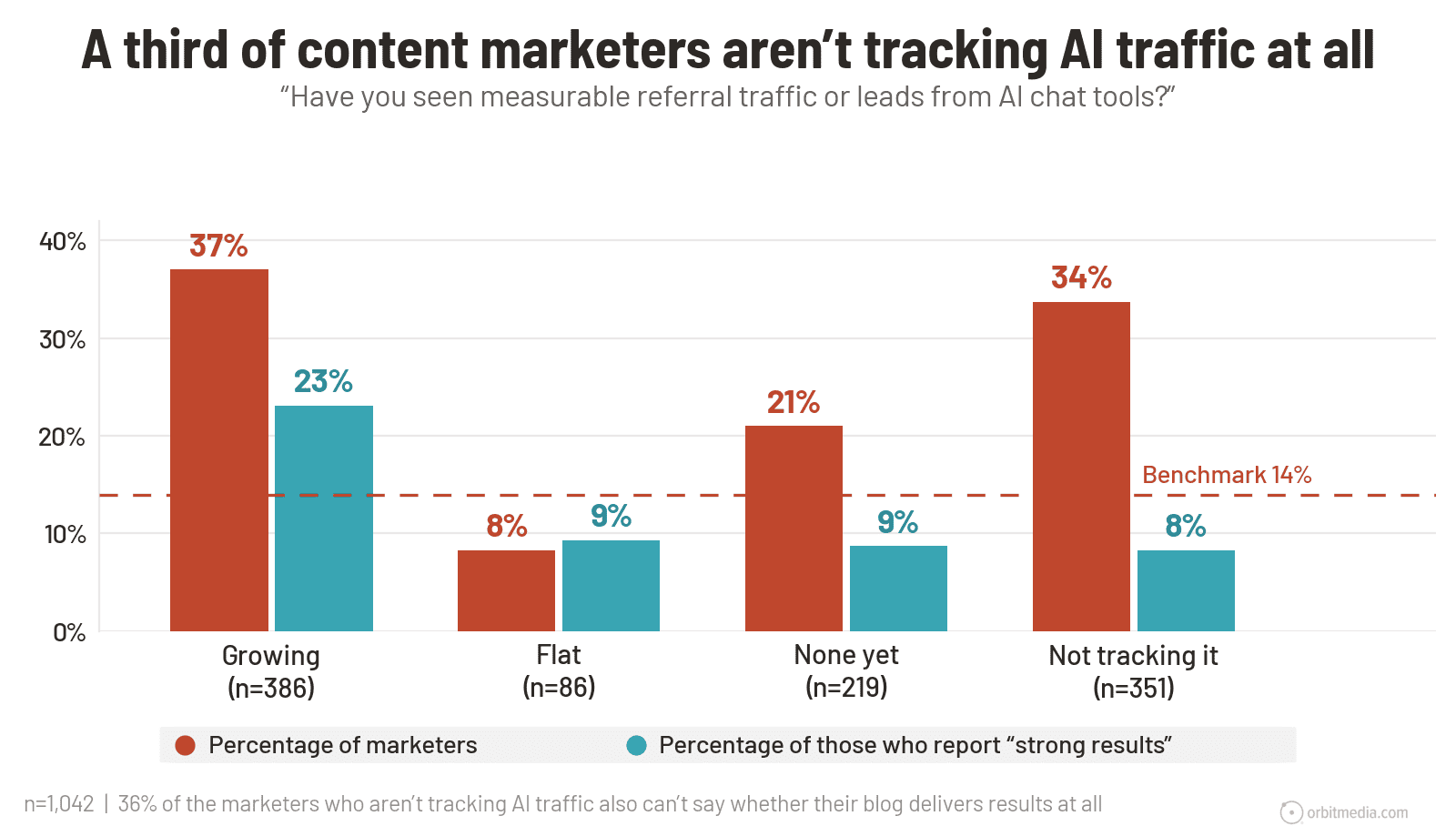
Despite these shifting traffic dynamics, the survey data reveals that 34 percent of content marketers fail to track AI-driven search traffic entirely. This blind spot is particularly costly given that visitors arriving via AI recommendations consistently exhibit higher intent. Conversion data across multiple Google Analytics 4 (GA4) accounts shows that while AI search traffic accounts for a modest 0.5 percent of total site visits, these visitors convert into leads at roughly three times the rate of traditional organic search traffic.
Strategy versus Execution: Unpacking the AI Adaptation Gap
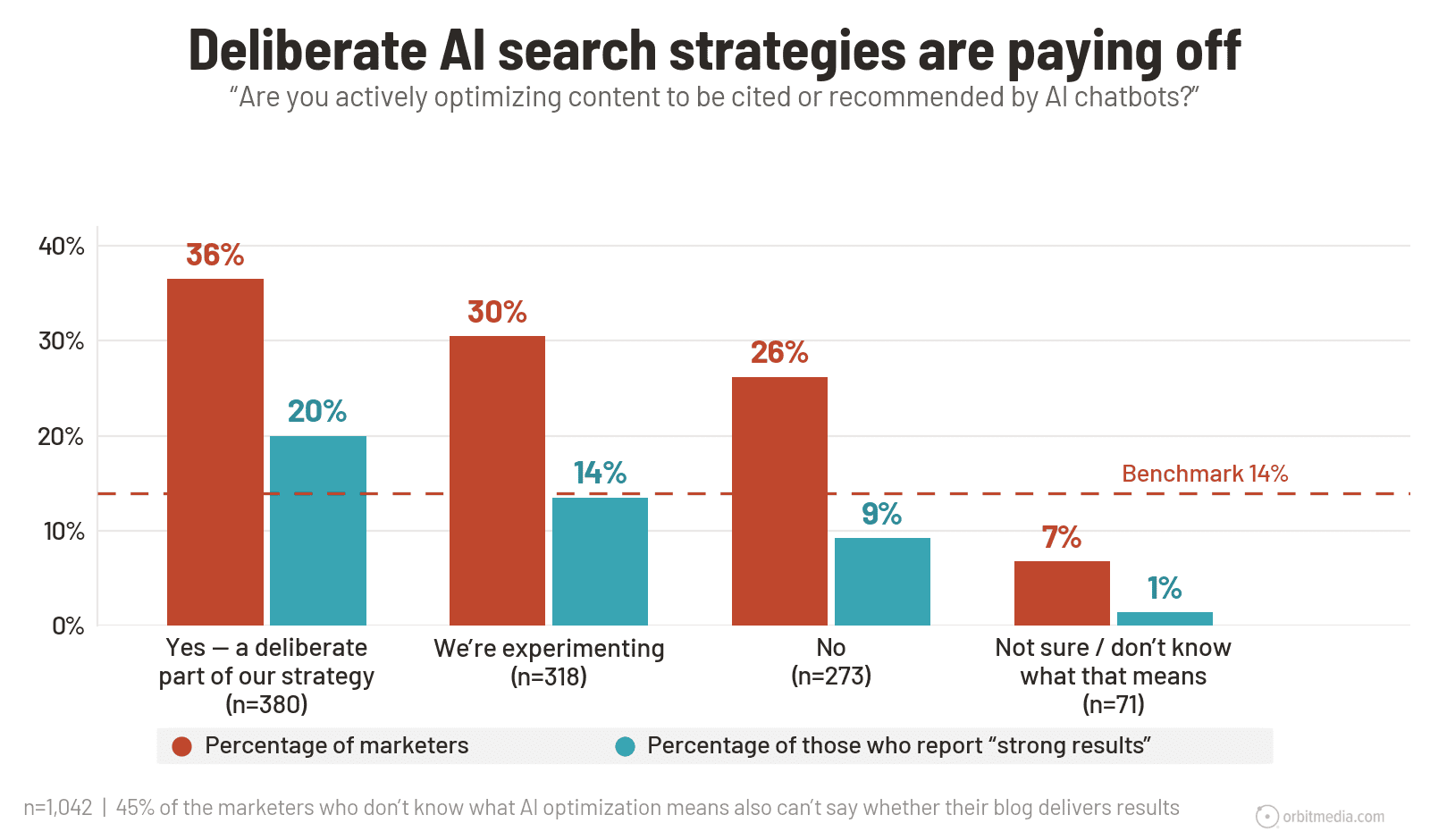
A deeper examination of the survey data exposes a stark divide in preparedness. Only 36 percent of surveyed content marketers possess a deliberate, active AI search strategy designed to optimize content for citation and recommendation by LLMs. Organizations operating without a structured plan consistently underperform against established industry benchmarks, whereas those with focused strategies report above-average performance.
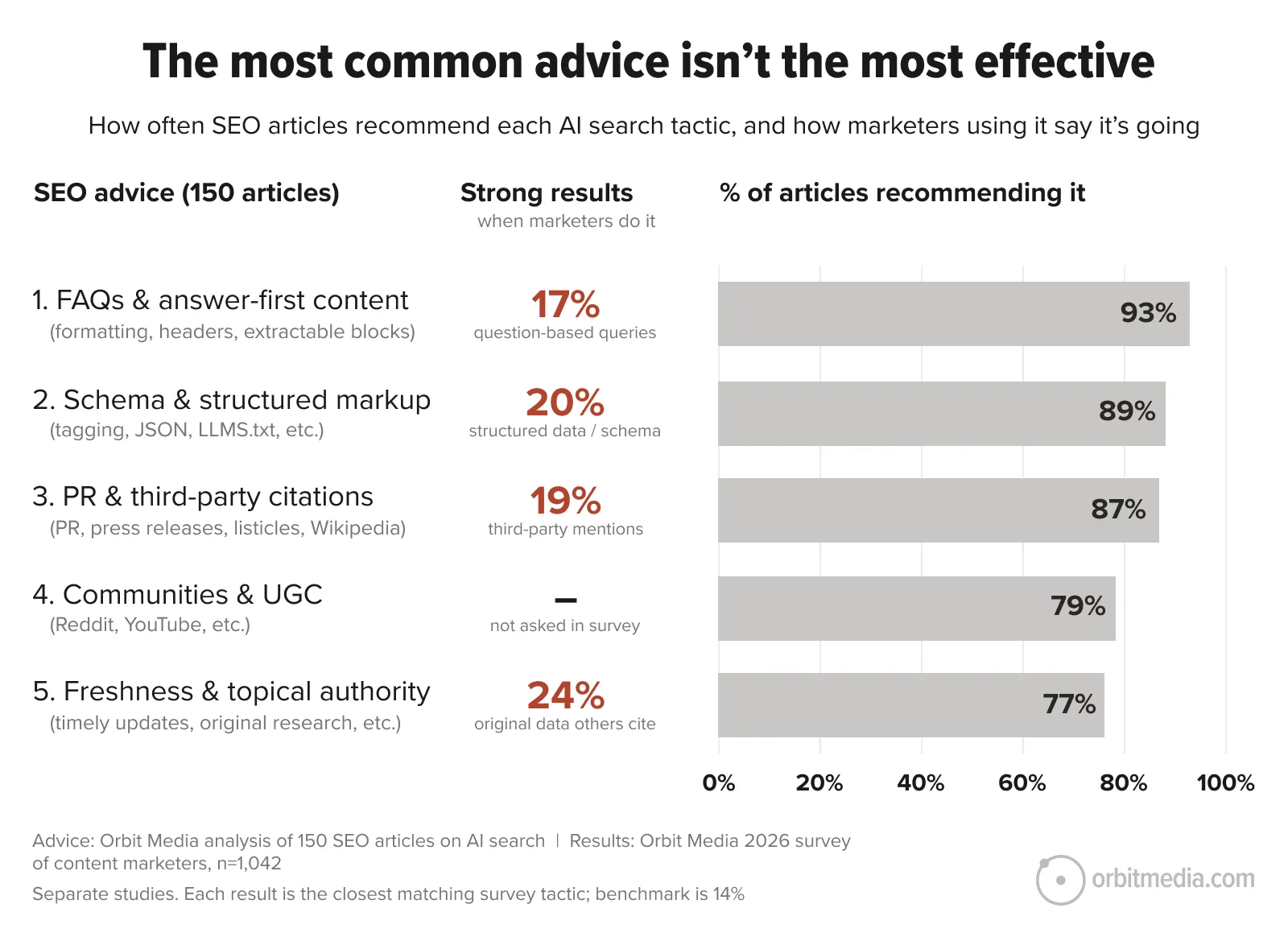
Furthermore, a comparative analysis of 150 search engine optimization blogs published earlier this year reveals a near-unanimous consensus regarding recommended AI adaptation tactics. Approximately 93 percent of these publications advise marketers to focus heavily on frequently asked questions (FAQs) and answer-focused content, while 89 percent emphasize schema markup implementation. However, when these recommendations are mapped against reported performance outcomes, they fail to emerge as the top drivers of success.
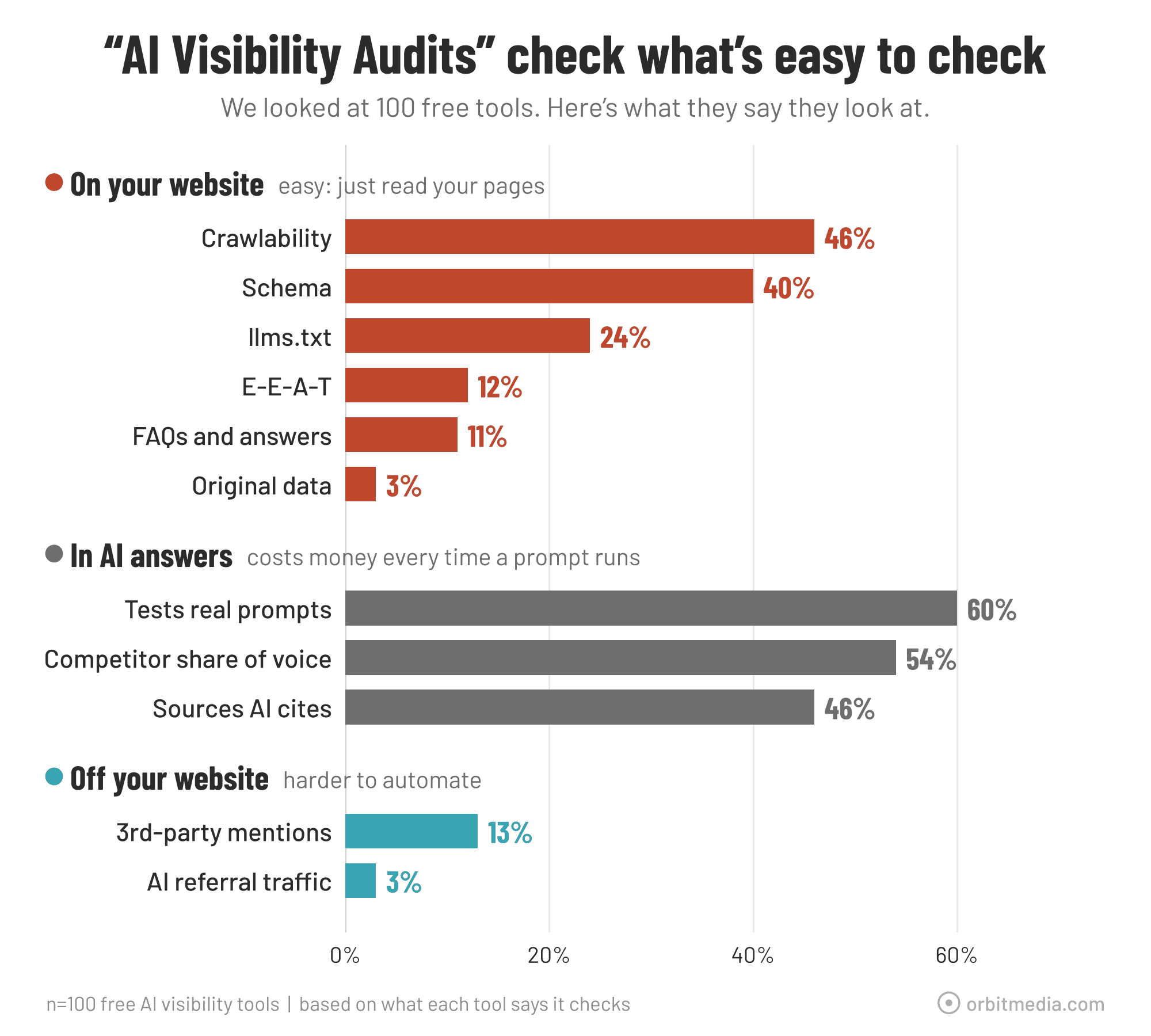
A parallel review of 100 automated, free "AI Visibility Audit" tools—frequently marketed via cold outreach by SEO software companies and digital agencies—reveals a similar reliance on low-friction metrics. Approximately 40 percent of these auditing tools issue an "AI visibility score" without ever querying an actual AI platform. Instead, they scan for easily detectable technical factors such as meta tags, sitemaps, and crawler settings, while completely ignoring qualitative variables that dictate whether an LLM will actually cite a brand.
The High-Performance Outliers: Original Research and Foundational SEO
While technical optimizations like schema markup and FAQs remain popular, the empirical data points toward a different set of success metrics. The single most effective strategy identified in the research is the publication of original data and proprietary research. Among content marketers who regularly publish original data, 24 percent report strong performance results. Despite this high correlation with success, only 26 percent of marketers utilize the tactic, it ranks fifth among recommendations found on typical SEO blogs, and a meager 3 percent of automated AI visibility audits bother to check for it.
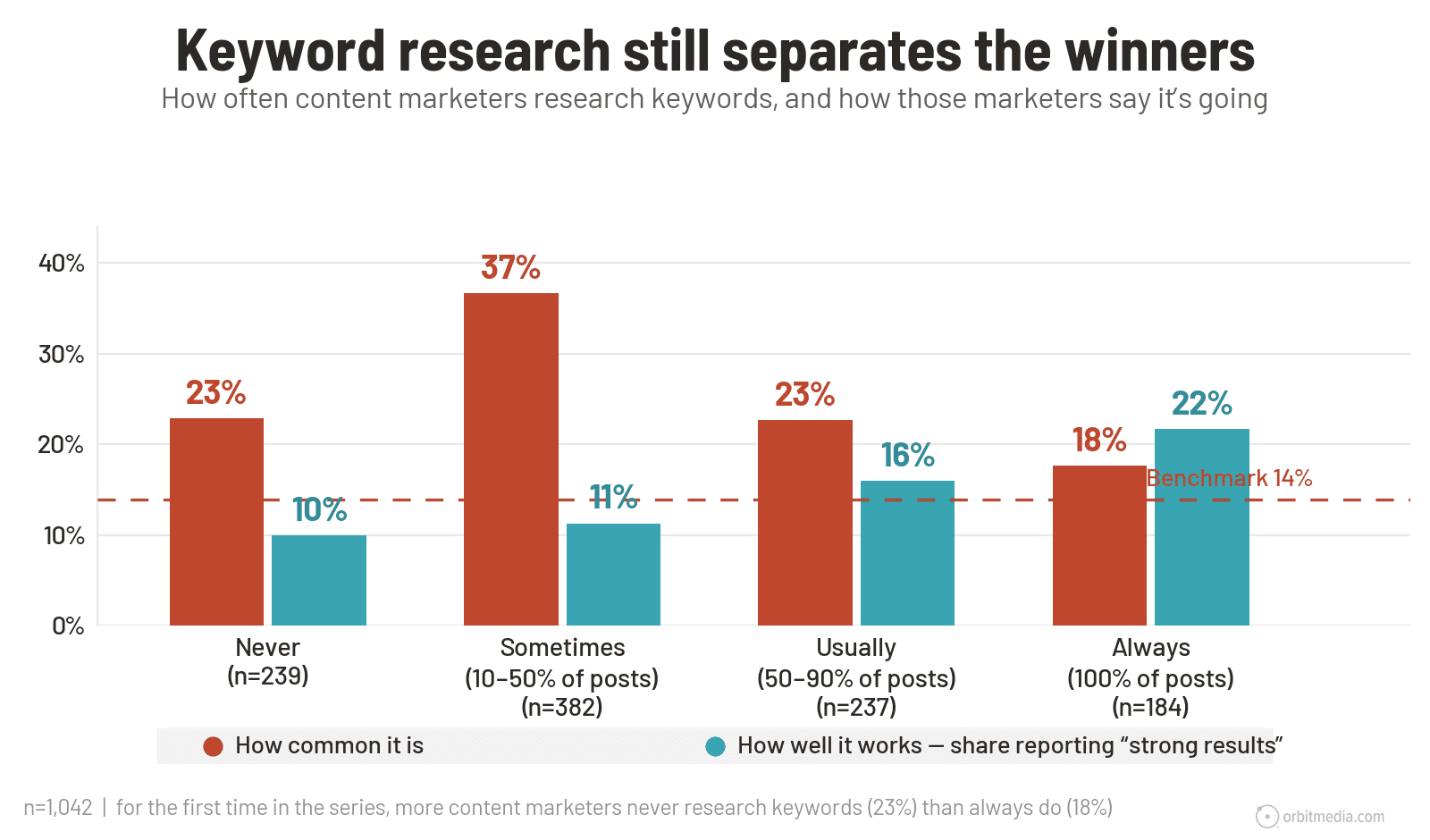
Similarly, foundational keyword research—long considered the bedrock of traditional digital marketing—has experienced an unexplainable decline in adoption among certain marketing segments. Some organizations have abandoned keyword analysis altogether under the mistaken assumption that semantic AI search renders keyword targeting obsolete. Industry experts emphasize that understanding how machines process and retrieve information remains vital. The marketers successfully navigating the AI transition are those who recognize that modern AI optimization is not a replacement for traditional SEO, but rather an extension of it.
Karine Abbou, a prominent content strategist and AI search educator, addressed the paralysis facing many organizations in the current climate. "Yes, AI search is new. Yes, the LLM sitting between us and our buyers is new. Yes, there is no AI search playbook yet," Abbou noted. "None of that is a reason to leave building our AI search strategy off next year’s marketing plan. Simply making it a top priority puts you ahead of everyone still waiting for certainty. You don’t need to understand it all to start."
Broader Implications for the Digital Marketing Industry
The convergence of traditional content marketing principles and generative search optimization suggests that the industry is experiencing a rebranding of core competencies rather than a complete reinvention of the wheel. The activities that drive visibility in LLM-generated answers—such as conducting original research, earning authoritative brand mentions, providing definitive answers to complex industry questions, and rigorously measuring downstream conversions—are the exact same practices that defined elite content marketing prior to the generative AI boom.
As organizations finalize their digital budgets and strategic roadmaps, the imperative moving forward is clear. Closing the gap between superficial technical audits and substantive, data-driven content creation will determine which brands successfully capture high-intent buyer traffic. For the nearly one-third of content marketers currently taking no proactive steps toward AI search optimization, the data serves as a stark warning: waiting for absolute market certainty is no longer a viable competitive strategy.