

The digital marketing and analytics landscape is undergoing a profound structural shift as search behavior evolves past traditional browser-based engines. Recent empirical research examining nearly 100 enterprise Google Analytics 4 (GA4) properties has revealed a striking trend: website visitors arriving via artificial intelligence platforms and large language models (LLMs) convert into leads at rates significantly higher than those coming from conventional search channels.
While traditional organic search engines such as Google continue to command the vast majority of total web traffic volume, visitors sourced through generative AI interfaces exhibit much stronger purchase and engagement intent. As marketing executives and digital strategists grapple with the implications of conversational search engines, these data-driven findings offer a clear glimpse into how modern consumer behavior is reshaping the bottom line for B2B organizations and lead-generation websites.
Methodology and Scope of the Study
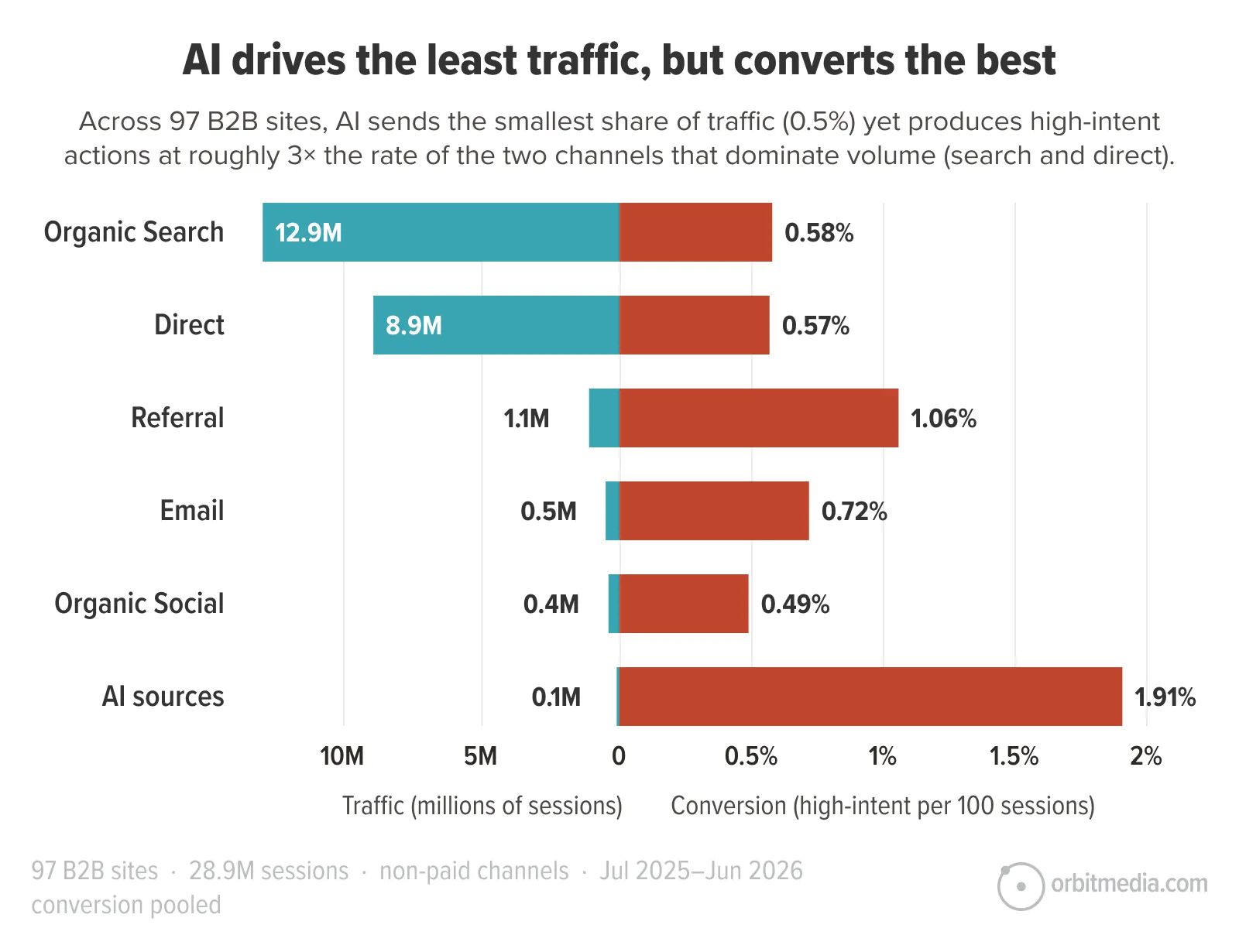
To move past anecdotal observations, analysts conducted a comprehensive evaluation of 97 Google Analytics 4 accounts representing a diverse cross-section of B2B lead-generation websites. The study captured visitor activity spanning a full twelve-month period through June 2026, aggregating a massive dataset comprising nearly 29 million total visits.
Isolating artificial intelligence traffic presented unique analytical challenges, primarily because GA4 platforms historically categorize various touchpoints differently. Traffic originating from Google’s integrated AI features, such as AI Overviews and dedicated AI search modes, is routinely absorbed into standard "Organic Search" reporting data. Similarly, referral traffic from standalone AI mobile applications often defaults to "Direct" traffic classifications because users transition to web environments without passing standard HTTP referrer headers.
To overcome these classification hurdles, researchers established strict parameters. AI-referred sessions were identified by pattern-matching session sources and mediums against an exhaustive repository of known AI assistant domains—including ChatGPT, Perplexity, Google Gemini, Microsoft Copilot, and Anthropic’s Claude. This baseline was further supplemented by utilizing newly introduced "AI Assistant" medium categorizations deployed by analytics infrastructure providers.
Furthermore, because conversion tracking varies wildly across different organizations, analysts manually reviewed and categorized every single GA4 key event recorded during the study window. Conversions were strictly divided into high-intent actions—such as contact form submissions, scheduled demonstrations, and quote requests—and low-intent actions, including newsletter signups and resource downloads. Secondary interactions like page scrolls, video views, and job applications were systematically excluded to preserve data integrity.
The Data Breakdown: High Conversion Rates Meet Low Traffic Share
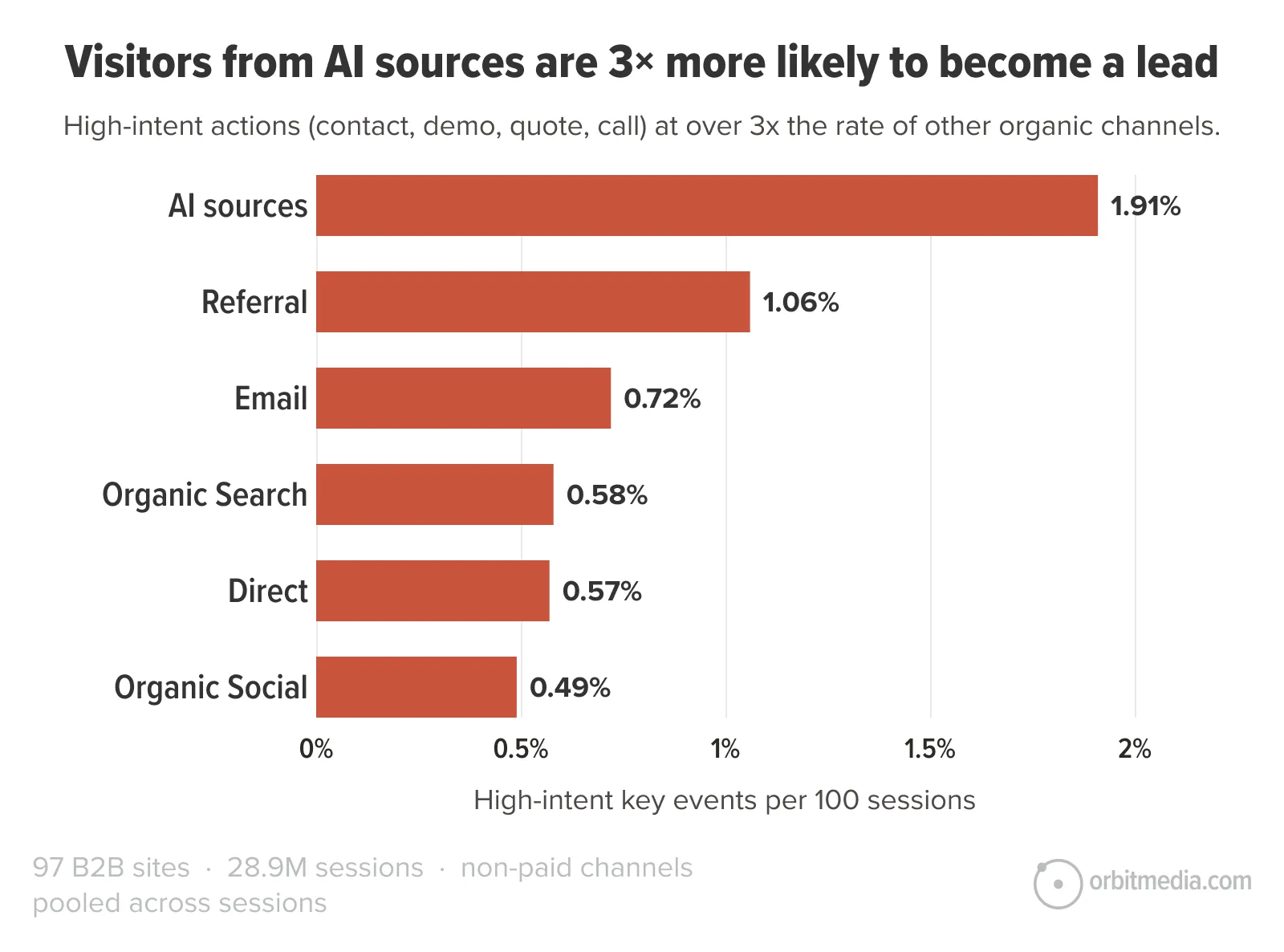
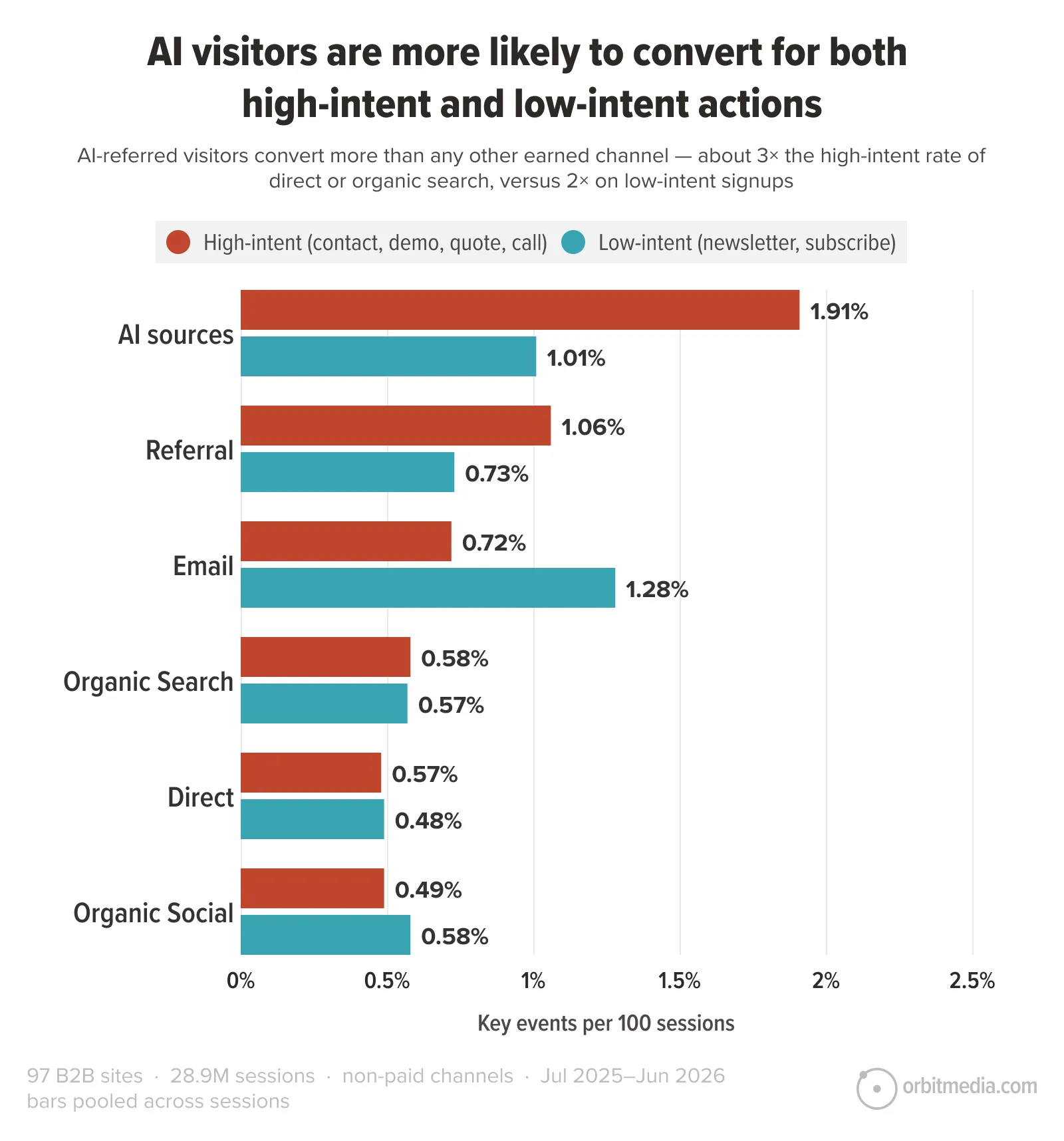
The empirical results of the multi-account study quantify a phenomenon that many digital marketers had previously only suspected. When pooling the aggregate data across all 29 million sessions, visitors originating from AI-powered referral channels proved to be three times more likely to convert into high-intent leads compared to standard organic search traffic.
When evaluating the per-site median—rather than pooling all sessions together—the disparity becomes even more pronounced, with AI conversion rates scaling up to seven times higher than traditional channels on a majority of individual properties.
Despite these exceptional conversion efficiency metrics, the sheer volume of traffic driven by AI remains modest. Out of the 29 million total visits analyzed, approximately 140,000 sessions—roughly 0.5% of total traffic—originated from recognized AI platforms. Organic search engines like Google still function as the primary digital gateway for millions of internet users, driven by decades of consumer muscle memory and integrated browser ecosystems.
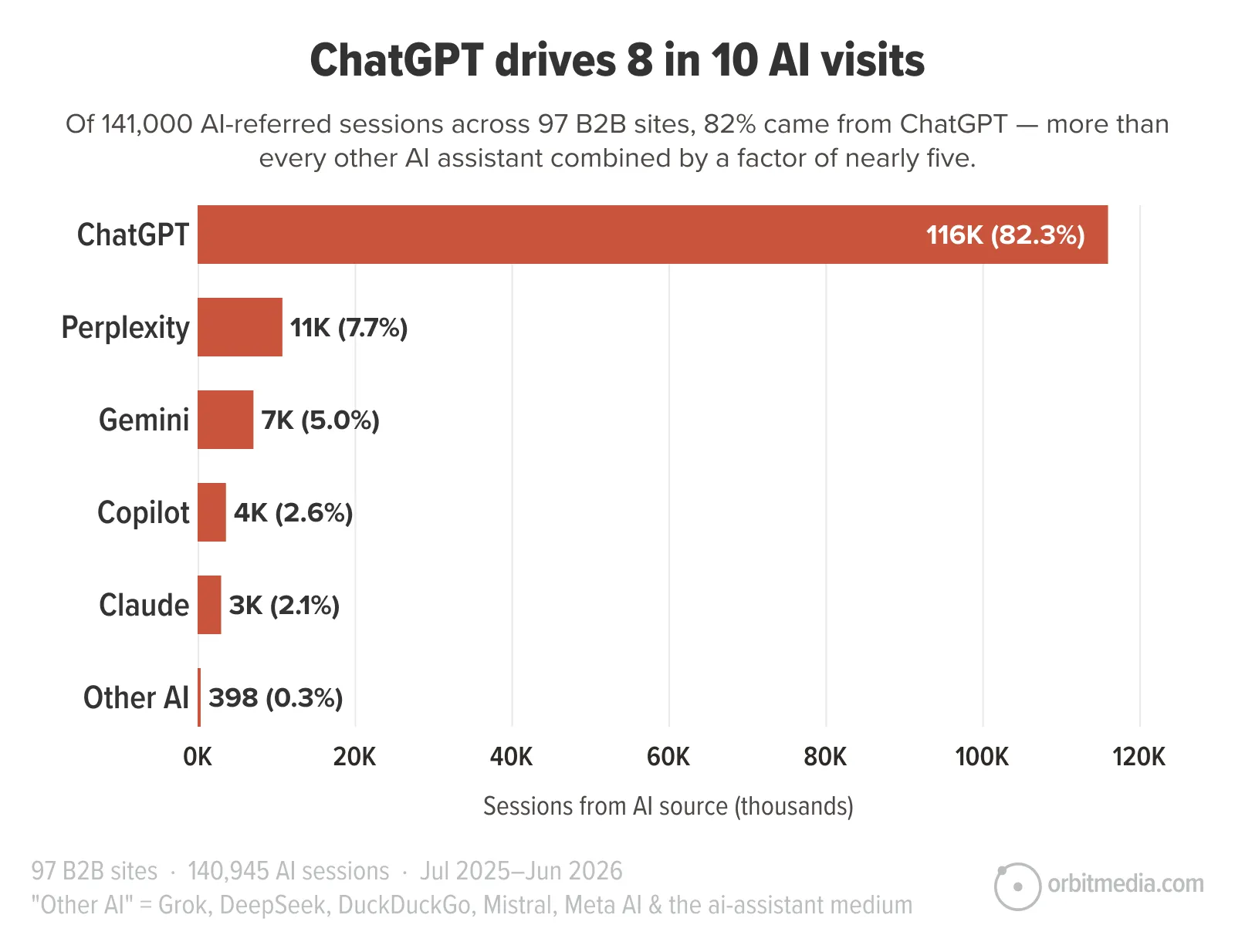
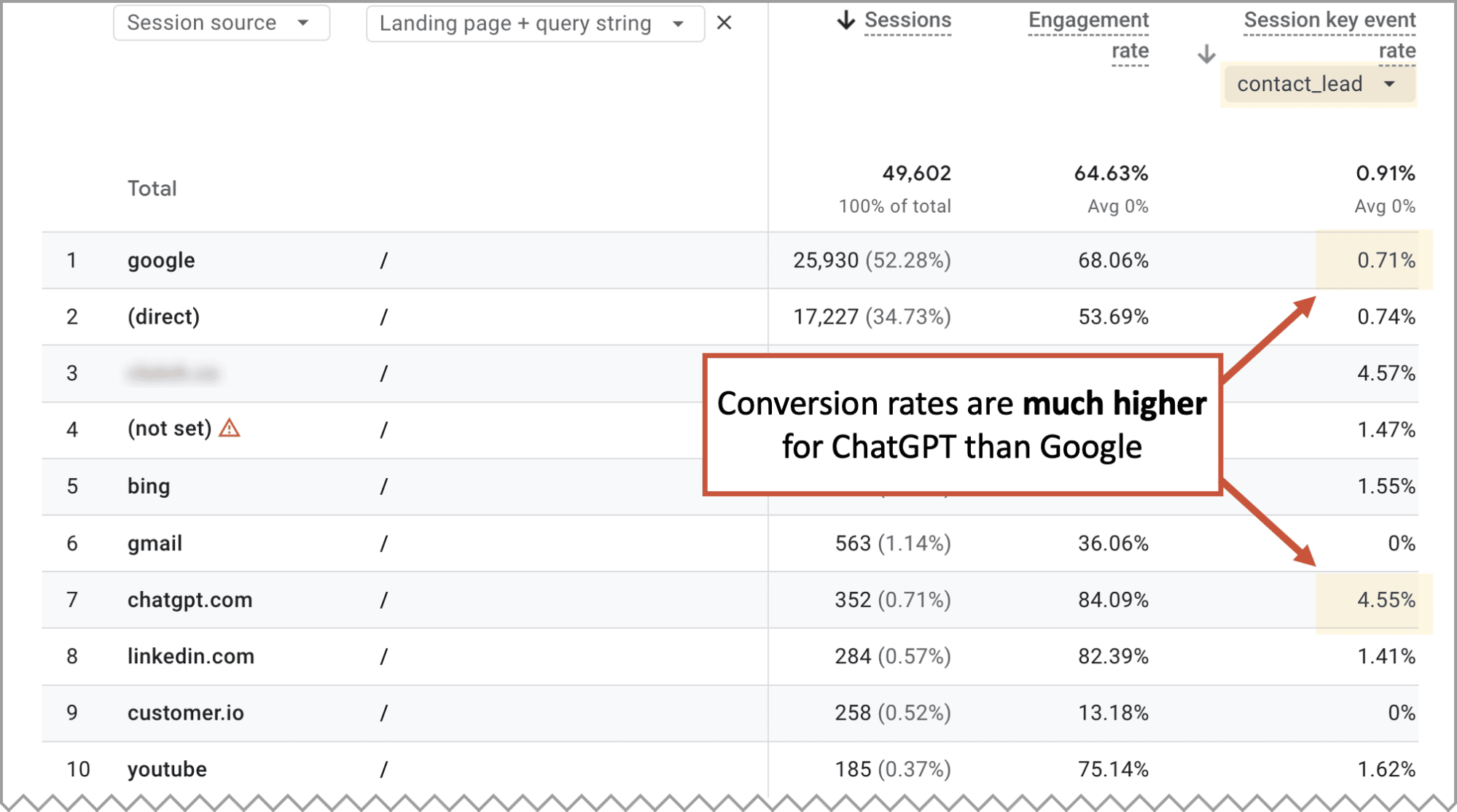
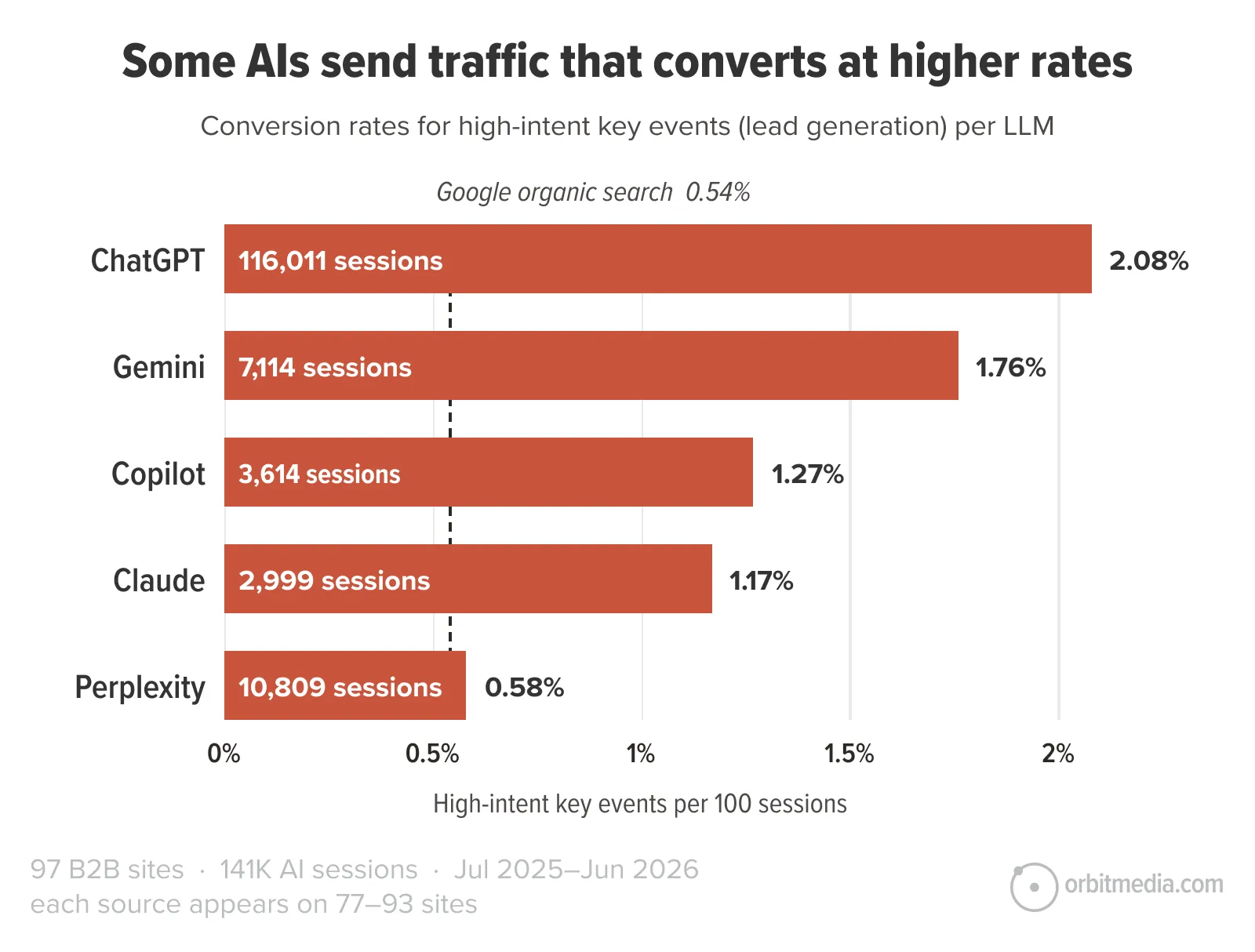
When examining individual models within the AI referral ecosystem, OpenAI’s ChatGPT emerged as the dominant traffic driver by a wide margin. ChatGPT accounted for over 82% of all AI-referred visits in the dataset, vastly outperforming competitors like Perplexity, Microsoft Copilot, and Google Gemini. In direct comparative metrics, ChatGPT traffic converted at roughly 2.1%, compared to a 0.5% conversion rate for standard Google Search traffic. While Google continues to drive exponentially greater raw volume, the qualification level of the average AI user remains remarkably high.
Behavioral Analysis: Why Do AI Visitors Convert Better?
Industry experts point to several psychological and technical factors to explain why conversational AI users demonstrate such pronounced conversion intent. Chief among them is the fundamental difference in how users interact with conversational interfaces compared to traditional search engine result pages (SERPs).
Joanna Wiebe, author of The Copyselling System, emphasizes the deliberate nature of conversational discovery. "It is so wildly uncommon to click any of the source links that ChatGPT produces in its answers," Wiebe noted, describing the click-through action as crossing a digital threshold. "When you do click one, to me it indicates the depth of your desire to resolve the problem you went to AI with. You’ve essentially crossed digital hot coals to arrive on a brand’s website."
Gaetano Nino DiNardi, a prominent B2B marketing strategist, shares a similar perspective on user preparedness. "Website visitors coming from AI search platforms are generally better informed due to the hyper-personalized and conversational nature of the search journey," DiNardi explained.
Analysts have summarized the primary drivers behind this high-intent phenomenon into four core hypotheses:
-
Pre-Qualification and Shortlisting: By the time a user clicks a referral link inside an LLM interface, they have typically engaged in an iterative dialogue. They have defined their parameters, asked clarifying questions, and narrowed down potential vendors. The early-stage consideration phase occurs entirely within the AI model, filtering out unqualified browsers before they ever reach a corporate website.
-
Brand Navigation and Direct Intent: A subset of AI traffic mirrors direct navigation. Users already familiar with a specific brand may use a chatbot to locate precise landing pages or contact portals, mirroring the high-intent nature of branded search queries.
-
The Advisory Dynamic: Unlike traditional search engines—which often present users with a dense commercial landscape filled with advertisements, sponsored links, and competing choices—conversational AI delivers synthesized recommendations that feel akin to trusted word-of-mouth guidance. This reduces initial consumer skepticism.
-
Serious User Demographics: Consumers rarely open generative AI tools simply to pass time or browse casually, a behavior common on traditional social media platforms. Users typically engage with LLMs to solve specific, complex problems, bringing baked-in motivation to their eventual web destination.
Broader Implications for Digital Strategy
The empirical confirmation that AI referral traffic yields superior conversion rates forces a strategic recalculation for digital marketers. Historically, SEO strategies have centered entirely on capturing high-volume keyword traffic to maximize top-of-funnel awareness. However, as generative search engines increasingly satisfy informational queries directly within the chat interface, raw traffic volumes from search engines may experience downward pressure.

For enterprise organizations, the metric that matters most is no longer pure session volume, but rather audience quality and downstream pipeline velocity. Websites that optimize their digital assets to be easily understood, cited, and recommended by large language models stand to capture a highly lucrative segment of high-intent buyers.
As search engine optimization transitions into answer engine optimization (AEO), digital teams are being urged to audit their analytics configurations, properly segment AI-referred traffic within GA4, and ensure their landing pages explicitly answer the complex queries modern buyers submit to artificial intelligence systems.