

For over two decades, the primary objective of search engine optimization (SEO) has been singular and clear: reach the top 10 results on a Google search engine results page (SERP). Achieving a first-page ranking was once synonymous with visibility, authority, and sustained traffic. However, the emergence of generative AI and Google’s subsequent integration of AI Overviews into the search experience has fundamentally altered this landscape. Today, a top-10 ranking is no longer a guarantee of visibility. Instead, the mechanism of “query fan-out” has introduced a new, complex hurdle that requires content creators to pivot from traditional SEO to a strategy centered on Answer Engine Optimization (AEO).
The shift is not merely academic; it represents a tectonic movement in how information is indexed, synthesized, and presented to users. According to data from Ahrefs, the historical alignment between traditional organic ranking and AI citations has eroded significantly. As of July 2025, approximately 76% of URLs cited in Google’s AI Overviews held a top-10 organic ranking. By March 2026, that figure plummeted to just 38%. This decoupling of ranking and citation suggests that Google’s AI models are increasingly prioritizing content that addresses the nuance of a query over content that merely matches a keyword density threshold.
The Mechanism of Query Fan-out
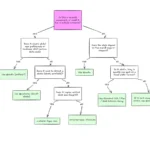
To understand why high-ranking pages are being overlooked, one must understand the architecture of query fan-out. In a traditional search, an algorithm matches a user’s string of text against a database of indexed pages. In an AI-driven search, the system performs a multi-stage interpretation. When a user submits a query, the Large Language Model (LLM) behind the search engine does not simply fetch the most relevant page; it “fans out” by decomposing the user’s original prompt into a constellation of related sub-queries.
For instance, if a user searches, “How do I measure the ROI of our B2B content marketing program to prove its value to executives?” the AI will simultaneously trigger sub-searches for topics such as “B2B marketing attribution models,” “key performance indicators for content marketing,” and “how to present marketing ROI to the C-suite.” The final AI Overview is synthesized from the pages that demonstrate the highest consistency and depth across all of these sub-queries, not just the primary one.
This process favors "topic-level depth" over "keyword-level breadth." A page that ranks #1 for the primary keyword but lacks substance on the follow-up questions effectively fails the AI’s validation check. Consequently, the AI bypasses the top-ranking page in favor of a source that provides a comprehensive, multi-faceted answer, even if that source ranks lower on the traditional SERP.
A Chronology of the Shift
The transformation began in earnest in mid-2024, as Google accelerated the rollout of its Search Generative Experience (SGE). By late 2024, the search industry observed that traffic patterns for top-ranking sites began to fluctuate without corresponding changes in ranking position. Industry analysts began noting that the "Search Generative Experience" was moving from a experimental feature to a primary interface.
By early 2025, the impact became measurable. The Ahrefs study, which analyzed 863,000 keywords and 4 million AI Overview URLs, provided the first quantitative proof of the decline in correlation between ranking and citation. The data revealed a stark new reality: 31% of citations were coming from pages ranking between positions 11 and 100, and another 31% originated from pages that did not rank in the top 100 at all for the primary query. This data point suggests that Google’s AI is actively hunting for high-quality, long-tail, or specialized content that may have been previously ignored by traditional ranking algorithms.
Broader Implications for Content Strategy
The implications for digital marketing are profound. McKinsey & Company projects that by 2028, over 75% of all searches will involve an AI-generated summary. Furthermore, survey data from 1,927 US consumers indicates that AI-powered search is rapidly becoming the preferred tool for high-intent purchasing decisions.
For brands, the "new front door to the internet" is no longer the blue link at the top of the page; it is the summary box at the very top of the interface. If a brand’s content is not the source of that summary, they risk becoming invisible to the user who never scrolls past the AI-generated response.
However, this does not mean traditional SEO is obsolete. In fact, a top-10 ranking remains a critical gateway. The 38% of citations that still come from top-10 pages suggest that Google’s AI still views high organic ranking as a strong signal of site-wide authority and trustworthiness. The strategy, therefore, is not to abandon SEO, but to treat it as the first gate of a two-gate process. The first gate is traditional optimization, which earns the content a seat at the table. The second gate is AEO, which earns the content the citation.
Implementing Answer Engine Optimization (AEO)
The technical requirements for AEO differ from traditional SEO in that they prioritize machine readability and semantic completeness. Successful AEO strategies focus on:
- Self-Contained Sections: Because AI models look for snippets to extract, each section of a long-form article should act as a standalone resource. Using clear H2 and H3 headings, and ensuring that a paragraph addresses a specific sub-question, makes the content easier for an LLM to parse.
- Direct Answer Syntax: Similar to the old "featured snippet" optimization, placing a clear, concise answer at the beginning of a section allows the AI to "lift" the claim cleanly without needing to summarize complex prose.
- E-E-A-T Adherence: Experience, Expertise, Authoritativeness, and Trustworthiness (E-E-A-T) have moved from being "soft" signals to functional requirements. AI models are programmed to favor sources with verifiable credentials. Content produced by subject matter experts—such as CFAs for financial content or MDs for medical advice—is inherently more citable because the model can verify the authority of the source.
- Anticipatory Coverage: The most effective content now anticipates the sub-queries that a user might have. If a piece on “B2B marketing ROI” doesn’t touch on "budget allocation" or "executive reporting," it is unlikely to be cited because it does not cover the full intent of the query fan-out.
Analysis of the Changing Landscape
The move toward AI-centric search is a move toward a "consensus-based" web. By breaking queries into multiple sub-queries, Google is attempting to triangulate truth. If five different high-authority sources agree on a specific answer to a sub-query, the AI is more likely to synthesize that into an Overview.
This creates a competitive environment where thin, generic content is increasingly penalized. While a piece of content might have historically ranked by gaming keyword density, the new AI search environment requires a depth of editorial judgment. Brands must now shift their focus from the volume of content to the quality and specificity of their expertise.
As Google continues to refine its models to reduce the incidence of errors, the reliance on high-quality, verified sources will only increase. For publishers and businesses, the challenge of the next five years is clear: to remain relevant, one must provide the kind of authoritative, granular, and well-structured content that an AI can confidently recommend as the definitive answer. The era of winning through mere ranking is coming to an end; the era of winning through citation has begun.