

The digital landscape is undergoing a significant operational shift, forcing traditional search engine optimization (SEO) teams to collaborate closely with legal, development, and infrastructure departments. Recent developments spanning core content management systems, search engine application programming interfaces (APIs), artificial intelligence agent protocols, and enterprise terms of service highlight an evolving ecosystem where technical decisions no longer reside strictly within marketing silos. From WordPress introducing mandatory new routing behaviors to aviation giants establishing strict boundaries for autonomous AI traffic, digital strategists must navigate a complex matrix of technical and regulatory adjustments.
WordPress 7.2 Implements Default /Random/ Redirects
Scheduled for release on December 8, WordPress version 7.2 introduces a controversial architectural change: a native /random/ redirect feature that will be activated by default across all installations. According to core developer documentation released in November, this feature automatically directs incoming visitors to a randomly selected published post. The mechanism casts a wide net, encompassing standard posts as well as custom post types, provided they are publicly queryable and possess active archives. Excluded from this automated routing are standard static pages and media attachments, alongside any custom post types explicitly registered by developers with the parameter ‘randomable’ => false.
The technical implementation of the /random/ redirect utilizes an HTTP 302 temporary redirect status code paired with an X-Robots-Tag header specifying noindex, follow. Crucially, this restrictive header is applied strictly to the redirect response itself rather than the destination post, raising immediate concerns among search engine optimization professionals regarding how search engine crawlers will process these dynamic pathways. Furthermore, the dashboard settings interface will lack a native toggle to deactivate the feature. To disable the functionality, developers must manually apply the wp_enable_random_content_redirect filter within their codebase.
The implications for enterprise sites and custom builds are substantial. Testimonial pages, dynamic portfolios, and specialized custom post types that are intentionally hidden from primary site navigation remain fully eligible for the /random/ redirect. Consequently, users could land on draft-stage elements or content explicitly suppressed by third-party SEO plugins. Digital architects are strongly advised to audit their registered post types ahead of the WordPress 7.2 deployment to prevent unintended user experiences and indexing anomalies.
Enhanced Search Console API Introduces Automated Branded Query Segmentation
Google has expanded the capabilities of its Search Analytics API, rolling out long-awaited features that streamline how organizations process search performance metrics. Effective mid-November, the API now natively supports the brandedClassification dimension within eligible Performance reports. This update removes the operational friction previously required for digital analysts to maintain complex regular expressions (regex) to manually isolate branded searches from non-branded organic traffic.
The historical context of this update traces back to Google’s broader rollout of native branded query filtering within the Search Console user interface. However, the API integration provides developers with programmatic access to these classifications, extending back to data points recorded on February 21, 2026. For analytics workflows examining historical ranges prior to this threshold, teams must still rely on legacy custom regex solutions. Additionally, Google has introduced a type parameter set to webMultimodal, capturing query performance across visual search ecosystems such as Google Lens, Circle to Search on Android, and direct image uploads, alongside a new filterLists field enabling multi-country and multi-device filtering within a single query execution. While search engine analysts welcome the automation, Google has cautioned that occasional misclassifications may occur, making comparative audits against historical regex data a recommended best practice for enterprise reporting suites.
Clarifying Referrer Policies Across Google Search, Discover, and Images
Web analytics administration has long been complicated by ambiguous referral data originating from Google properties. A comprehensive documentation update published by Google Search Central in November addresses the underlying mechanics of referrer values passing through standard Search results, Google Discover, and Google Images.
According to the documentation, standard Google Search results utilize an origin referrer policy. Consequently, inbound HTTP referrer headers transmit strictly the scheme and host domain, stripping away granular search query strings to protect user privacy. Conversely, traffic generated via Google Discover carries contextual values corresponding to the specific user surface where the content was displayed. Meanwhile, same-origin services such as Google Images mirror the referral signatures of standard Search and Discover streams.
For digital marketers attempting to parse traffic anomalies in platforms like Google Analytics, the search giant advises utilizing the dedicated Google Discover report within Search Console rather than relying strictly on raw referrer log data. Discrepancies where organic traffic defaults to direct or general referral classifications should prompt a rigorous audit of custom channel groupings, automated tracking filters, and referral exclusion lists.
CDN Migrations and Their Impact on Googlebot Crawl Efficiency
Migrating a website to a Content Delivery Network (CDN) introduces hidden technical challenges that can inadvertently disrupt organic search visibility, according to recent technical guidance issued by Google. While established CDNs improve site delivery speeds and can gradually elevate a domain’s crawl capacity limits, newly implemented CDNs launch with entirely empty caches, fundamentally altering how search engine crawlers interact with origin servers.

During the initial post-migration phase, every unique URL requested by Googlebot results in a cache miss, forcing the CDN to route requests directly back to the origin server. Because automated crawlers index content at a volume and velocity vastly exceeding human user traffic, these unoptimized requests can overwhelm origin infrastructure. Furthermore, overly aggressive web application firewall (WAF) configurations and blanket bot protection protocols frequently misidentify initial Googlebot surges as malicious scraping, triggering CAPTCHA challenges that automated crawlers cannot bypass. If left unaddressed, persistent crawl blockages lead directly to pages dropping out of indexation libraries.
To mitigate migration-related SEO degradation, technical infrastructure teams are advised to configure firewalls to explicitly permit verified search engine bots prior to cutting over traffic. Additionally, administrators should proactively pre-warm CDN caches by programmatically fetching high-priority and frequently crawled URLs before shifting DNS records.
Ask Maps Expands Automated Business Calling Capabilities
Google continues to blur the line between digital discovery and real-time physical commerce with the expansion of its Ask Maps feature. Initially deployed to assist consumers with travel and holiday logistics, Ask Maps has begun executing automated voice calls on behalf of users to local businesses across the United States within the beauty, pet care, automotive repair, and home services sectors.
The feature allows users to query natural language prompts regarding service availability—such as checking open appointment slots for a specific cosmetic procedure—prompting Ask Maps to autonomously contact local establishments, verify openings, and present real-time scheduling options directly within the mobile interface. While Google has historically utilized automated assistants for reservation booking through Search and Maps, the escalation of outbound AI calling directly to small business front desks necessitates operational adjustments for local enterprises.
Business owners managing local visibility must ensure that their verified Google Business Profile settings appropriately configure customer inquiries and booking preferences under advanced administrative parameters. Furthermore, front-line staff must be briefed on the mechanics of automated AI agent calls to ensure these communications are handled efficiently without disrupting standard customer service operations.
United Airlines Establishes Legal Boundaries for AI Agents While Preserving Search Indexing
The intersection of artificial intelligence, web scraping, and corporate legal policy reached a new milestone following United Airlines’ revision of its website terms of service in November. The updated legal framework draws a distinct operational line: while the airline explicitly continues to permit traditional search engines to index its public-facing pages, it institutes a mandatory requirement for written authorization regarding any autonomous AI agent seeking to search, scrape, book, or transact on behalf of users.
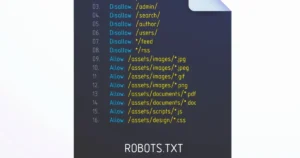
Furthermore, the revised terms explicitly prohibit utilizing extracted schedule, pricing, and route data sourced from United’s digital properties to train, fine-tune, ground, or otherwise develop external machine learning models. Despite these stringent operational constraints, technical audits of the airline’s robots.txt file indicate that no specific AI user agents have been programmatically blocked via standard exclusion protocols, reinforcing that compliance is enforced primarily through legal terms and advanced bot management detection systems rather than foundational crawler instructions.
This development mirrors broader findings from enterprise security firms regarding the composition of automated agentic traffic. Threat intelligence data indicates that generative AI crawlers—most notably Meta’s Muse and various OpenAI iterations—constitute an overwhelming majority of non-human agent traffic across protected enterprise domains. Because emerging agents often operate without standardized or recognizable user-agent strings in robots.txt directives, web administrators increasingly rely on behavioral analytics and cryptographic request signatures—such as those monitored by DataDome and HUMAN Security—to regulate autonomous traffic.
The Broader Implications: A Shift Toward Cross-Departmental Governance
A unifying theme connects these disparate developments: the technical decisions impacting digital visibility and search optimization no longer fall exclusively within the purview of marketing departments. Managing the operational fallout of WordPress’s automated redirects requires direct intervention from core web developers. Interpreting Search Console’s branded API updates and referrer mechanics demands advanced data analytics governance. Mitigating CDN migration risks necessitates close coordination with network infrastructure and security engineers. Handling Ask Maps automated calls requires operational readiness from customer-facing staff, while managing AI agent access demands alignment with corporate legal counsel.
As the digital ecosystem grows increasingly automated and complex, organizations must tear down traditional structural silos. Establishing clear lines of communication and shared accountability across legal, engineering, infrastructure, and marketing teams is no longer optional—it is the foundational prerequisite for maintaining digital resilience in an AI-driven economy.