
The rapid proliferation of generative artificial intelligence has fundamentally altered the landscape of digital design, transforming the industry from a workspace defined by manual craft to one increasingly governed by algorithmic outputs. As companies like OpenAI, Midjourney, and Stability AI gain widespread adoption, a growing tension has emerged between the efficiency of automated generation and the necessity of human creative intuition. This shift has prompted a critical reevaluation of how AI assistants are designed, moving away from sterile, transactional text-based interfaces toward more nuanced, character-driven interactions.
The Evolution of the AI Interface: From Chatbots to Companions
For much of the past decade, AI interaction has been standardized into the "chat-box" paradigm. Whether through ChatGPT, Claude, or Gemini, the user experience is typically confined to a browser-based text input field. While this format provides a low barrier to entry and consistent performance, it creates a psychological distance between the user and the tool. Industry analysts suggest that this "transactional" interface reinforces the perception of AI as a utility—a cold, functional engine—rather than a collaborative partner.
The history of software interfaces shows a trajectory toward greater anthropomorphism. From the early command-line interfaces of the 1970s to the graphical user interfaces (GUI) that popularized the desktop, design has consistently moved toward making technology more intuitive. The current AI era represents the next logical step: the "agentic" interface. However, designers are now grappling with the "uncanny valley," where a tool that mimics human behavior too closely can evoke feelings of unease.
MacPaw and the Development of Eney
In response to the limitations of traditional interface design, the team at MacPaw sought to bridge the gap between utility and personality through the development of Eney, a proactive AI assistant designed to integrate seamlessly into professional workflows. Unlike static chatbots that wait for user prompts, Eney was conceived as a dynamic participant in the creative process.
The design philosophy behind Eney centered on the concept of "purposeful anthropomorphism." Rather than creating a human-like avatar, the design team opted for a minimalist, circular form. This choice was deliberate: by stripping away complex human features, the designers avoided the distraction of a "personality" that might overshadow the actual work being performed. Instead, the focus was placed on emotional feedback through subtle gestures—such as morphing into a loading icon or shifting eye movements—to communicate system status without overwhelming the user.

Data-Driven Design and Color Psychology
The choice of color for the Eney interface serves as a case study in modern UX differentiation. While market leaders in the AI sector—such as OpenAI and Microsoft—have historically favored shades of blue to convey stability, intelligence, and trustworthiness, MacPaw’s research indicated a trend toward "interface fatigue."
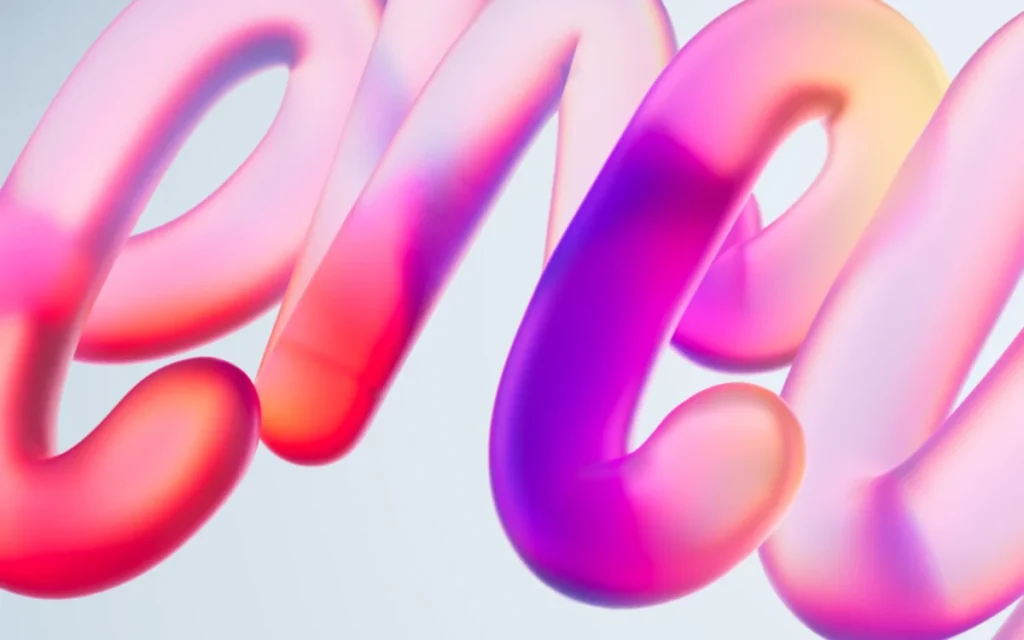
By opting for a vibrant pink palette, the developers aimed to disrupt the visual monotony of the desktop environment. According to color theory studies in user interface design, specific hues can significantly impact user retention and emotional engagement. The shift to a warmer, more stimulating color was intended to signal a departure from the "faceless" nature of corporate AI tools, fostering a sense of familiarity and support.
The Creative Industry’s Stance on AI Integration
The rise of generative AI has faced significant pushback from the creative community, largely due to concerns regarding intellectual property and the training of models on copyrighted material without consent. According to a 2024 report by the Creative Industries Council, nearly 65% of professional designers expressed anxiety over job displacement, citing the proliferation of high-quality, AI-generated assets as a direct threat to the value of human-led creative services.

Despite these concerns, industry experts argue that the integration of AI is inevitable. The challenge, therefore, lies in the "human-in-the-loop" model. Organizations are increasingly looking to adopt AI as a "force multiplier" rather than a replacement. In this framework, the designer acts as an artistic director, guiding the AI’s capabilities with the specific judgment, taste, and emotional intelligence that current algorithms lack.
The Role of Human Judgment in the AI Era
While AI tools like Midjourney or DALL-E 3 can produce high-fidelity imagery in seconds, the distinction between "generated content" and "intentional design" remains a primary metric of quality. Manual design involves a series of value-based decisions—compositional hierarchy, semiotic intent, and cultural resonance—that are beyond the current capabilities of autonomous systems.
A brief analysis of current design workflows reveals that AI is most effective during the research and ideation phase. Tools such as Perplexity and ChatGPT are frequently used to synthesize large datasets, yet the actual execution—the "creative finish"—continues to rely on the human designer. This suggests that the future of the industry will not be defined by the tools themselves, but by the level of "curated taste" the operator brings to the technology.

Broader Implications for the Tech Sector
The movement toward more expressive, character-based AI assistants like Eney represents a broader shift in software development. As AI becomes embedded in operating systems and professional software suites (such as Adobe Creative Cloud or Microsoft 365), the user interface will become the primary battleground for user adoption.
- Increased Personalization: Future AI agents will likely possess "memory" and "personality" tailored to individual user needs, moving away from one-size-fits-all responses.
- Contextual Awareness: Proactive agents will shift from responding to inputs to anticipating needs, reducing the "cognitive load" on professionals.
- Ethical Standards: As these tools become more human-like, the pressure on developers to maintain transparency—clearly distinguishing between AI-generated outputs and human input—will intensify.
Challenges and Future Trajectory
The development of character-based AI is not without its risks. Excessive animation or "chatty" interfaces can lead to productivity losses if the assistant becomes intrusive. Designers are currently navigating a delicate balance: providing enough visual feedback to build trust, while ensuring the tool remains subordinate to the user’s primary objective.
Furthermore, the legal landscape surrounding AI-generated imagery remains in flux. As litigation against major AI developers continues to wind through international courts, the creative sector is keeping a close watch on how the ownership of AI-generated assets will be codified. This uncertainty further underscores the importance of human-directed creative processes, as work that relies heavily on human input remains easier to protect under current copyright laws.

Conclusion
The evolution of the digital landscape in the era of artificial intelligence is moving toward a synthesis of machine efficiency and human empathy. The case of Eney highlights that the future of design is not necessarily about choosing between machines and humans, but rather about creating a more meaningful interaction between the two.
As technology continues to advance, the value of the human element—specifically artistic judgment, integrity, and emotional nuance—is likely to appreciate rather than diminish. The designers who thrive in this new environment will be those who view AI not as a competitor, but as a sophisticated instrument that, when paired with human vision, expands the boundaries of what is possible in the creative arts. Curiosity, when coupled with a refined aesthetic sensibility, remains the most potent tool in the modern professional’s arsenal, ensuring that even in a world of automated outputs, the human perspective remains the guiding force of innovation.