
The Bruce Silverstein Gallery in New York City is currently hosting a comprehensive retrospective titled Chester Higgins: Shared Memories, an exhibition that distills sixty years of photographic mastery into a singular narrative of dignity, spirituality, and cultural reclamation. Running through June 20, 2026, the exhibition serves as both a career summation and a vital sociological document, tracing the evolution of a man who spent nearly four decades as a staff photographer for The New York Times. Higgins, whose work has long bridged the gap between daily photojournalism and fine art, remains one of the most influential visual chroniclers of the African Diaspora. His career, which began amidst the volatile atmosphere of the 1960s Civil Rights Movement, has been dedicated to what he describes as "expanding the horizon" of how people of African descent are perceived by the world and, perhaps more importantly, how they perceive themselves.
The Genesis of a Visionary: Alabama and Tuskegee
To understand the weight of Higgins’ work, one must look to his origins in the American South. Born in 1946 and raised in rural southern Alabama, Higgins came of age during the height of the Jim Crow era. This environment provided a stark contrast between the vibrant, dignified reality of the Black community he knew and the demeaning caricatures presented by the mainstream media of the time.
His formal journey into photography began at Tuskegee University, an institution with a deep-seated history of Black intellectual and artistic excellence. It was here that Higgins encountered P.H. Polk, the university’s official photographer, who became a pivotal mentor. Polk’s ability to capture the elegance of his subjects, regardless of their economic status, left an indelible mark on Higgins.

A defining moment in Higgins’ career occurred during his student years while participating in political protests against the racist policies of then-Governor George Wallace at the State Capitol in Montgomery. Higgins recalls a profound sense of cognitive dissonance when viewing the newspaper coverage the following day. While he and his fellow students saw themselves as American citizens petitioning their government for basic rights, the published photographs depicted them through a lens of fear—portraying them as potential "arsonists, rapists, thugs, and thieves." This realization that "the photograph never lies about the photographer" became the cornerstone of his professional philosophy. He understood that the internal biases, fears, and sentiments of a photographer are inevitably etched into the final image, creating a "sociological contract" between the artist and the viewer.
Reforming the Visual Record at The New York Times
In 1975, Higgins joined the staff of The New York Times, a position he held until 2014. During these four decades, he functioned as what he calls an "agent of expansion." At the time of his hiring, the "visual diet" regarding Black Americans in major metropolitan dailies was often restricted to stories of crime, poverty, or exceptionalism in sports and entertainment. Higgins sought to disrupt this binary by introducing images of daily life, family rituals, religious ceremonies, and the quiet dignity of aging.

His approach to photographing poverty was particularly revolutionary. Rather than employing the traditional "lens of class, pity, or exclusion," Higgins focused on the inherent humanity of his subjects. He operated on the belief that while humans are "complicated and defective by nature," they share universal desires for happiness and connection. By highlighting these common denominators—air to breathe, water to drink, and the "emotions to season our life experience"—Higgins forced a predominantly white editorial staff and a global readership to confront the Black experience as a fundamentally human experience.
Upon his retirement, the Managing Editor of The New York Times noted that Higgins had fundamentally changed how the newspaper’s staff perceived Black people. By placing his images in the "paper of record," Higgins provided America’s decision-makers with data packaged as art, making complex societal truths digestible and undeniable.

The Signature of the Spirit and the African Diaspora
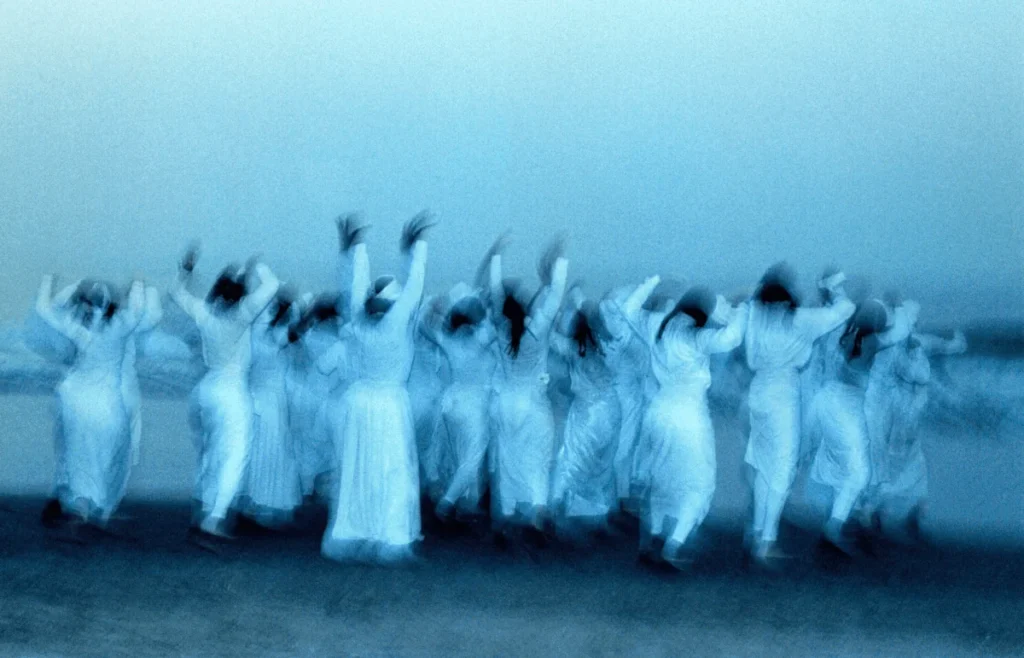
Beyond his journalistic assignments, Higgins has spent decades traveling across the African continent and throughout the Americas to document the "Signature of the Spirit." This concept is rooted in an out-of-body experience Higgins had as a young man, which convinced him that reality is multi-layered and driven by invisible, natural forces. He views the world as a "Marionette performance" where the Spirit is in charge, and his goal as a photographer is to capture the "transitions between the Spirit world and the world of reality."
This metaphysical approach is evident in his extensive documentation of sacred sites and religious practices. From the Coptic churches of Ethiopia to the ancient ruins of Egypt and the vibrant ceremonies of the Black Diaspora in Brazil and the Caribbean, Higgins looks for the "marriage between Nature and life." His work suggests that there is a continuous, subterranean thread connecting the African people across time and geography—a spirit that survived the Middle Passage and continues to manifest in the way people move, worship, and exist in the world.

Chronology of Major Works and Publications
Higgins’ career is marked by a series of influential books that have helped define the visual vocabulary of the African Diaspora:
- 1970: Black Woman: His first book, which challenged contemporary beauty standards and celebrated the diversity of Black womanhood.
- 1974: Drums of Life: A poignant look at Black men in America, focusing on the roles of fathers, sons, and elders.
- 1986: Some Time Ago: A historical look at Black life from 1850 to 1950, utilizing archival images to reconstruct a lost narrative of dignity.
- 1994: Feeling the Spirit: Searching the World for the People of Africa: The culmination of years of travel, this volume explores the cultural and spiritual links between African communities worldwide.
- 2021: The Sacred Nile: A massive undertaking documenting the civilizations along the Nile River, emphasizing the African roots of ancient Egyptian culture.
The "Shared Memories" Exhibition: A Modern Balm
The current exhibition at Bruce Silverstein Gallery comes at a time of renewed national discourse regarding identity, representation, and the power of the image. Higgins views the show as especially relevant in an era he describes as filled with "daily confusion and miseducation." For many viewers, his nonjudgmental and embracing view of African people serves as a "balm"—a positive counter-narrative to the often-polarized depictions of race in digital media.

The exhibition features a curated selection of his most iconic works alongside lesser-known images, providing a holistic view of his sixty-year journey. From the sun-drenched streets of Harlem to the majestic landscapes of the Blue Nile, the photographs are linked by Higgins’ unwavering respect for his subjects. The gallery setting allows for a slow, meditative engagement with the work, encouraging viewers to look past the surface of the image to find the "underlying forces" Higgins spent his life chasing.
Impact and Legacy: A Fact-Based Analysis
The legacy of Chester Higgins can be measured both in the archives of The New York Times and in the evolution of contemporary photography. Before photographers like Higgins broke through, the "White Gaze" dominated the American media landscape, often relegating minority communities to the status of "the other." Higgins’ work provided a template for subsequent generations of photographers of color, such as those in the Kamoinge Workshop, to claim agency over their own narratives.

Data from media monitoring groups suggests that while representation of Black Americans in news media has improved since the 1960s, biases remain in the framing of stories related to poverty and social justice. Higgins’ philosophy—that the heart of the photographer determines the "flavor" of the message—remains a vital lesson for modern photojournalists. His career demonstrates that objectivity in journalism does not mean the absence of empathy; rather, true accuracy requires a deep, respectful understanding of the subject’s humanity.
As the exhibition Shared Memories continues to draw audiences in New York, it reinforces the idea that photography is not merely a tool for recording facts, but a medium for transmitting spirit. Chester Higgins has not only documented history; he has helped to heal the visual record of a people, ensuring that the "African Spirit" is seen, honored, and remembered for generations to come. Through his lens, the struggle for civil rights, the quiet moments of family life, and the ancient echoes of the Nile all converge into a single, enduring testament to the resilience of the human soul.