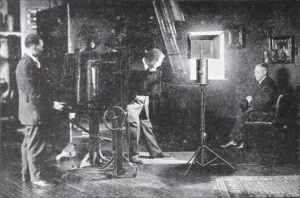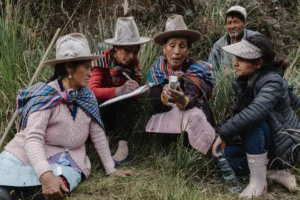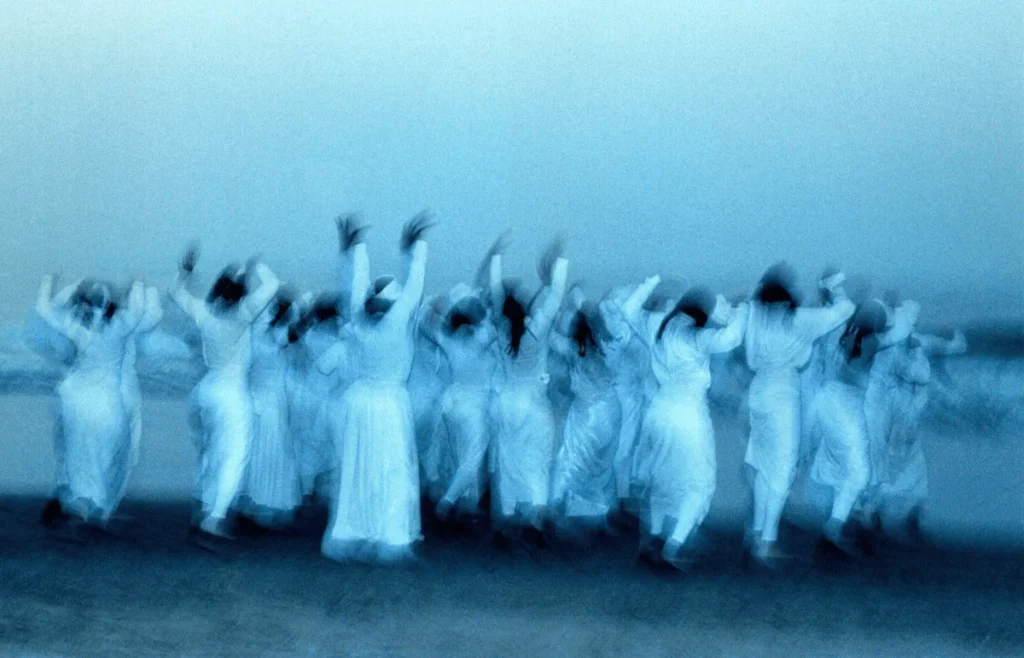

For more than sixty years, legendary photojournalist and artist Chester Higgins has dedicated his lens to capturing the profound depth, cultural richness, and historical continuity of people of African descent. A sweeping retrospective of his life’s work, titled Chester Higgins: Shared Memories, is currently on display at the Bruce Silverstein Gallery in New York City, running through June 20, 2026. Bringing together iconic images from a career that spanned nearly four decades at The New York Times, the exhibition offers audiences a rare and intimate glimpse into the diaspora, viewed through a deeply humanist and spiritually resonant perspective.
Higgins’s journey from a segregated upbringing in rural Alabama to the halls of one of the world’s most influential newspapers highlights a transformative era in American photojournalism. By challenging traditional visual tropes and redefining how Black communities are represented in mainstream media, Higgins has fundamentally altered the cultural landscape of documentary photography.
Early Beginnings and the Crucible of the Civil Rights Movement
Born and raised in the rural American South during the height of the Jim Crow era and the burgeoning Civil Rights movement, Chester Higgins developed an early awareness of social injustice and systemic inequality. This formative environment deeply influenced his worldview, instilling in him a commitment to truth-telling and dignity.

Higgins first discovered his passion for photography while studying at Tuskegee University, a historically Black institution founded by Booker T. Washington. It was during his college years that the stark disparity between reality and media representation became glaringly apparent to him. Following a political protest at the Alabama State Capitol in Montgomery against the segregationist policies of Governor George Wallace, Higgins witnessed firsthand how mainstream media distorted the image of Black citizens. While he and his peers were participating as lawful American citizens petitioning their government for basic constitutional rights, subsequent newspaper reports frequently cast them through inflammatory, criminalizing stereotypes.
This pivotal discrepancy left an indelible mark on Higgins’s artistic philosophy. It solidified his belief that a photograph invariably reflects the internal moral compass and sociological biases of the photographer—a concept he summarizes in his enduring maxim: "The photograph never lies about the photographer." Recognizing that a photographer brings their own sentiment, fear, or empathy to the subject, Higgins resolved to use his camera to correct historical imbalances and offer a compassionate, unvarnished depiction of human dignity.

A Historic Tenure at The New York Times
In the early 1970s, Higgins transitioned into professional publishing, eventually securing a position as a staff photographer for The New York Times. Over a tenure that lasted nearly forty years, he became a trailblazer within the institution, using his platform to radically expand the visual vocabulary of the nation’s newspaper of record.
During an era when mainstream media outlets predominantly associated Black communities with poverty, crime, and social distress, Higgins deliberately sought to change what he termed the "visual diet" of the American public. His assignments allowed him to document a vast spectrum of human experiences, ranging from everyday family life and cultural ceremonies to international travels across the African continent and the Caribbean.

Rather than approaching marginalized or impoverished subjects through a lens of pity, class division, or exclusion, Higgins focused on their universal humanity. He documented the shared desires that bind humanity together—the pursuit of happiness, the trials of aging, the strength of familial bonds, and the resilience required to navigate systemic obstacles. By presenting these narratives to The New York Times‘ influential readership—comprising policymakers, cultural leaders, and everyday citizens—Higgins served as an agent of cultural expansion, offering data packaged as compelling visual art. Upon his retirement, the newspaper’s managing editor acknowledged his profound impact, noting that Higgins had fundamentally transformed the way the predominantly white staff and readership perceived Black individuals, effectively broadening their horizons.
The Philosophical and Spiritual Dimensions of the Lens
Higgins’s artistic style transcends traditional photojournalism, incorporating profound spiritual and philosophical inquiries. His work frequently explores the intersections of nature, ancestry, and human ritual, a perspective shaped by a profound personal experience in his youth. Having undergone an out-of-body experience at an early age, Higgins developed a perception of reality as multi-layered and operating in parallel dimensions.

This worldview influences how he frames his subjects. Rather than capturing merely the surface appearance of a moment, Higgins describes his photographic process as an attempt to visualize the "Signature of the Spirit." He views the visible world as a performance driven by unseen, underlying forces of nature—forces that frequently remain below the threshold of human senses. By stepping back as an observer and exercising artistic humility, Higgins seeks out the subtle transitions where the spiritual realm intersects with physical reality.
This methodology results in portraits that are striking for their quiet power, psychological depth, and profound empathy. His images avoid voyeurism or exploitation, instead inviting viewers into a reciprocal relationship of mutual respect with the subject.

Shared Memories: An Overview of the Retrospective
Curated to celebrate a six-decade-long career, Chester Higgins: Shared Memories at the Bruce Silverstein Gallery serves as both a retrospective of an extraordinary artistic output and a timely intervention in contemporary cultural discourse. The exhibition features a meticulously curated selection of vintage and modern prints, chronicling Higgins’s travels throughout the United States, Africa, and the Caribbean.
Art historians and critics have lauded the exhibition for its emotional resonance and historical importance. In an era marked by intense polarization and competing narratives regarding identity, representation, and history, Higgins’s work offers a unifying balm. By celebrating the search for the African spirit and documenting the enduring resilience of people of African descent, the exhibition challenges viewers to look beyond superficial divisions and recognize a shared humanity.

Implications and Broader Cultural Impact
The exhibition arrives at a critical juncture in contemporary art and media studies. As institutions reevaluate historical canons and push for more inclusive representations of marginalized histories, the foundational work of pioneers like Chester Higgins provides a vital blueprint for modern visual artists.
Higgins’s legacy demonstrates that documentary photography can function simultaneously as rigorous journalism, historical preservation, and spiritual exploration. By consistently refusing to reduce his subjects to the sum of their struggles, he established a standard of ethical representation that continues to influence contemporary photographers.

The Bruce Silverstein Gallery exhibition invites a new generation of viewers to engage with history not as a distant sequence of dates and events, but as a living, breathing tapestry of human experiences. Through Shared Memories, Higgins reaffirms the power of art to educate, heal, and bridge cultural divides, cementing his status as one of the most vital photographic chroniclers of our time.