
The volcanic basalt cliffs of western India hold some of the world’s most profound architectural achievements, yet many of these sites remain shrouded in the relative obscurity of remote geography. For over a quarter-century, Dr. David S. Efurd, a two-time Fulbright recipient and associate professor of art and art history, has dedicated his career to bringing these subterranean marvels to light. Through a rigorous combination of photography, architectural measurement, and a contemplative practice known as "slow looking," Dr. Efurd has documented more than 80 cave sites, amassing a digital archive of over 10,000 images now hosted by Artstor. This collection offers a rare, comprehensive glimpse into the evolution of Buddhist, Hindu, and Jain monastic life, spanning from the second century BCE to the ninth century CE.
The Methodology of Slow Looking and Architectural Documentation
Dr. Efurd’s approach to archaeology and art history transcends the typical academic survey. Central to his work is the concept of "slow looking," a practice that involves spending hours or even consecutive days within a single chamber to observe the shifting play of light, the nuances of sculptural relief, and the spatial logic of the site. While the average tourist might spend only minutes in a cave, Efurd’s deliberate pace allows for the discovery of details that have escaped centuries of casual observation.
His research began under the mentorship of the late Walter Spink, the preeminent scholar of the Ajanta caves. Spink’s influence instilled in Efurd a deep appreciation for the "living" nature of these monuments. Armed with a handheld camera and a notebook, Efurd records not just the grand facades but the minute deviations in rock-cut architecture. Unlike traditional building methods where stone is added, these caves are subtractive; they are sculpted from the living rock of the Deccan Traps. This requires a level of mathematical precision and foresight that Efurd’s work seeks to quantify through rigorous measurement, revealing complex systems of proportion that align with ancient Indian aesthetic and spiritual theories.

Geological and Social Foundations of the Monastic Caves
The selection of western India’s basalt cliffs for these monasteries was neither accidental nor purely aesthetic. The geology of the region, characterized by massive outcroppings of volcanic basalt known as the Western Ghats, provided a durable medium that resisted collapse and erosion. These "living rock" structures were designed to endure for millennia, providing a permanent sanctuary for monastic communities.
Historically, these caves served a critical function during the "vassa," or the three-month monsoon season. During this period of torrential rain, Buddhist monks, who were typically itinerant, were required to take up fixed residence. The caves offered shelter from the elements while providing a stable environment for meditation and communal study.

However, Dr. Efurd’s research emphasizes that these sites were not intended for total isolation. While they provided the quietude necessary for spiritual practice, they were strategically located along major ancient trade routes connecting the coast to the inland Deccan plateau. This proximity ensured a symbiotic relationship between the monastic community and the laity. The monks relied on nearby villages and passing merchants for alms and physical sustenance, while in return, they provided spiritual guidance and the opportunity for laypeople to earn religious merit through acts of patronage and support.
Solar Alignments and Technical Mastery
One of the most striking revelations of Dr. Efurd’s documentation is the sophisticated understanding of astronomy possessed by ancient builders. Following the groundwork laid by Walter Spink, Efurd has explored how several caves were engineered to interact with the sun. At the Ajanta caves, researchers discovered that specific shrines were aligned with the winter solstice. In these instances, the "caitya" window—a massive arched aperture on the facade—allows a beam of sunlight to penetrate the deep interior, illuminating the image of the Buddha at the exact moment of the solstice.

A similar phenomenon occurs at the Ellora caves, where a small aperture filters light onto the face of the Buddha twice a year. This event is still celebrated today as "Kirnotsav," or the Festival of the Sun’s Rays. Such technical precision indicates that the builders were not merely excavating rooms but were creating celestial clocks that integrated the divine image with the rhythms of the natural world. Efurd notes that the most dramatic transformations often occur shortly before sunset, when the low-angled light reveals textures and inscriptions that remain invisible under midday glare.
A Glimpse into Daily Monastic Life
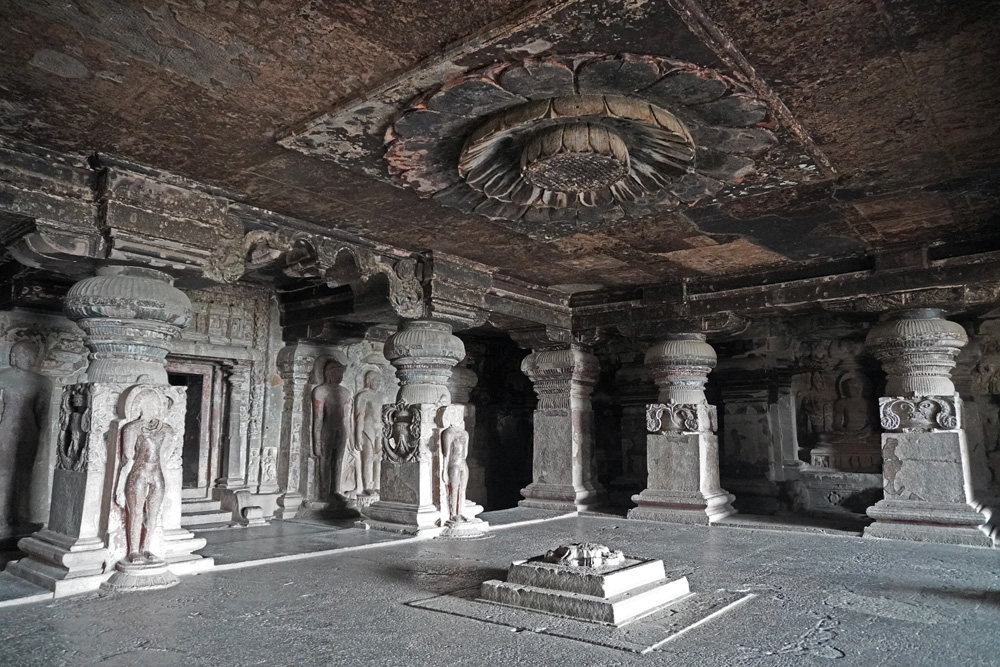
While the monumental sculptures of Buddhas and Bodhisattvas often command the most attention, Dr. Efurd’s archive places significant value on the "modular" components of the caves—the spaces where everyday life unfolded. His research highlights that many sites are composed of modest monastic cells (viharas) arranged around a central hall.

These cells often contain simple rock-cut beds, while some include small benches or shelves that likely served as meditation seats. The presence of sophisticated cisterns and water tanks carved into the rock demonstrates how these communities managed resources long after the monsoon rains had ceased. Inscriptions found in some caves suggest they functioned as refectories, where monks gathered for communal meals. By documenting these utilitarian features, Efurd provides a more holistic view of the monastic experience, moving beyond the "museum" perspective to see these sites as bustling centers of human activity.
Iconography and the Transition of Faith
The artwork within the caves serves as a visual record of India’s shifting religious landscape. Early Buddhist sites (from the 2nd century BCE) are notably "aniconic," meaning they lack direct representations of the Buddha. Instead, sanctity is denoted through symbols like the "Triratna" (the triple gem) or the stupa.

By the fourth and fifth centuries CE, however, the caves began to feature elaborate carvings of the Buddha and Bodhisattvas. Interestingly, Efurd’s documentation also highlights the presence of "mithuna" (amorous couples) and "yakshas" (nature spirits). While these motifs might seem out of place in a celibate monastic setting, Efurd explains that they represent auspiciousness, fertility, and the abundance of the world. Their inclusion in the sculptural program signifies their subordination to the Dharma and their role as protectors of the sacred space.
As Buddhism declined in India, many of these sites underwent significant transformations. Some, like the remote Ajanta caves, were abandoned and eventually forgotten by the wider world until their "rediscovery" in the 19th century. Others, more accessible to local populations, were appropriated by Hindu communities. Efurd notes that at sites like Karle, Buddhist halls were rededicated for Brahmanical devotion, with Buddhist deities sometimes being worshiped as forms of Hindu gods. This layering of religious history is a recurring theme in Efurd’s work, illustrating the fluid nature of sacred spaces in India.

Modern Preservation and Scholarly Impact
Today, the majority of these caves are managed by the Archaeological Survey of India (ASI). Dr. Efurd’s current work, supported by a Fulbright research grant, involves close collaboration with the ASI to ensure that his documentation supports ongoing preservation efforts. The process of gaining special permission to spend extended hours in the caves is essential, as it allows for the high-resolution photography and detailed measurements that a standard tourist visit would not permit.
Efurd’s archive on Artstor serves as a vital resource for scholars who may not have the means to visit these remote locations. By providing a digital repository of over 10,000 images, he has democratized access to these sites, allowing for new interpretations of ancient Indian art. His work challenges previous Western-centric views that dismissed "inconsistencies" in cave design as errors. Instead, Efurd’s measurements suggest that these variations often follow indigenous mathematical relationships and ritual intents that were previously misunderstood.

The Future of Discovery
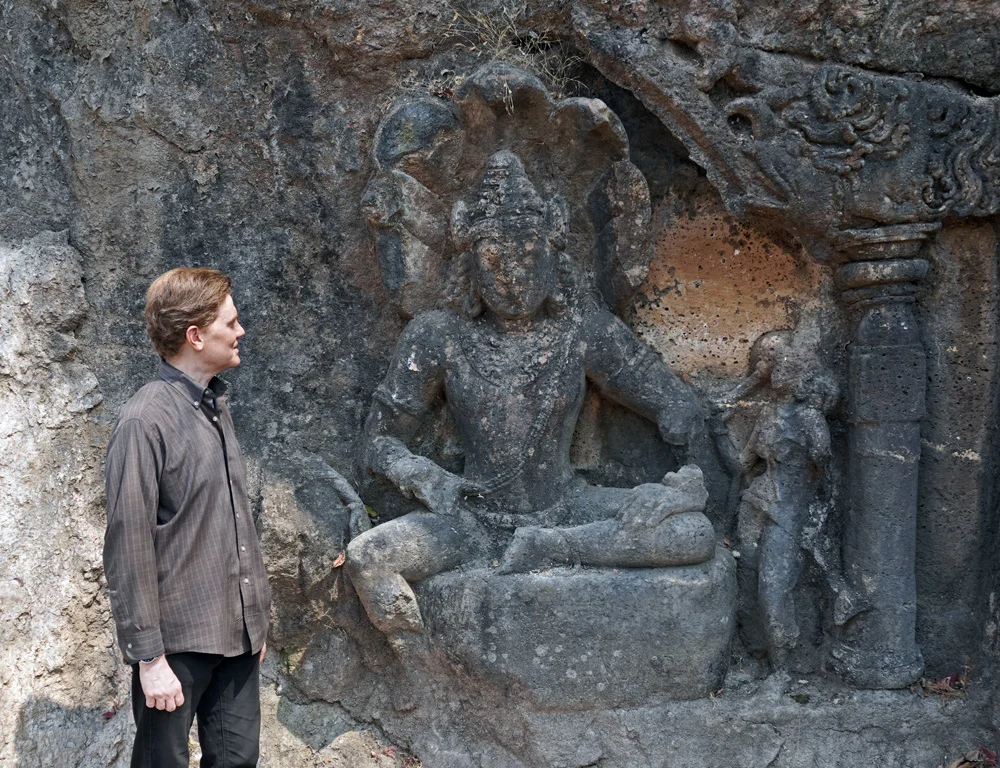
Despite decades of exploration, Dr. Efurd believes that the cliffs of India still hold secrets. Isolated caves are still being found, often partially buried by centuries of monsoon runoff and debris. He cites a recent example at the Ghatotkacha caves, where the removal of a large boulder revealed a magnificent carved "nagaraja" (serpent king) that had been hidden for at least 500 years.
"I would speculate that somewhere there is a major site yet to be found," Efurd remarks. His ongoing commitment to "slow looking" ensures that as these sites are uncovered, they will be documented with the reverence and precision they deserve. For Dr. Efurd, these caves are not merely relics of the past; they are "living" spaces that continue to inspire ritual, music, and chanting among modern pilgrims. By bridging the gap between historical documentation and the lived experience of the present, Efurd’s work ensures that the silent voices of the basalt cliffs will continue to be heard by future generations.