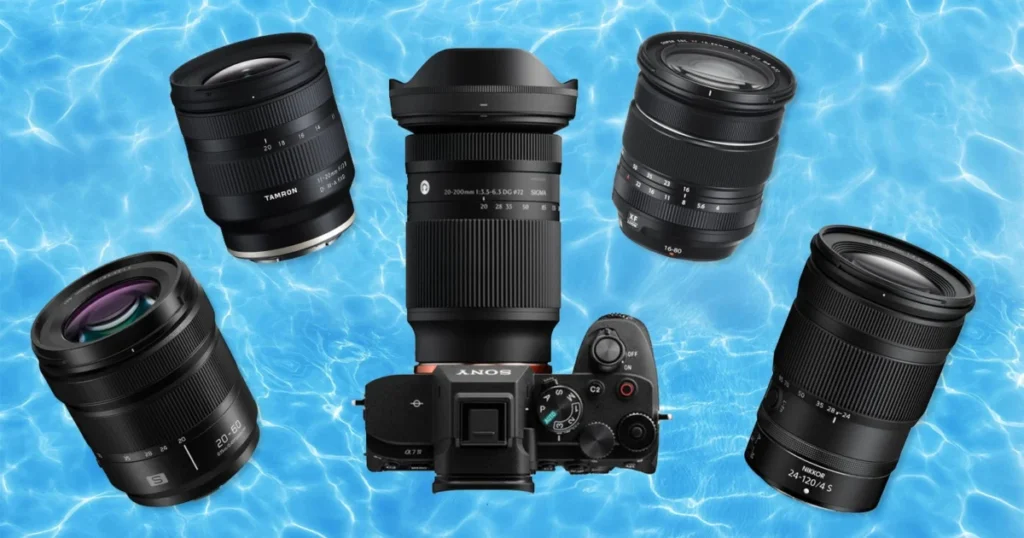

The mid-summer photography retail landscape has reached a critical juncture as major manufacturers and third-party lens designers initiate a coordinated series of price reductions on some of the most sought-after optics in the mirrorless era. For professional photographers and serious enthusiasts, the current promotional window represents one of the most significant opportunities in the 2026 fiscal year to upgrade kit configurations at a fraction of the standard retail cost. These discounts, primarily focused on versatile zoom lenses, target the growing demand for "one-lens" solutions that can handle the diverse requirements of travel, event, and hybrid video production. With several of the most aggressive price cuts scheduled to expire on July 19, 2026, the industry is seeing a surge in volume as consumers move to secure high-performance glass for the remainder of the summer travel season.
The Strategic Shift Toward Versatile Mirrorless Zooms
The modern photography market has transitioned away from the traditional reliance on a vast bag of prime lenses toward high-performance, constant-aperture zooms and expansive "superzooms." This shift is driven by advancements in optical engineering that allow modern zoom lenses to rival the sharpness of older prime lenses while offering unparalleled convenience. Industry analysts suggest that the current round of discounts is a strategic move by brands like Sony, Canon, and Nikon to maintain market share against increasingly sophisticated third-party offerings from Tamron and Sigma.
A standard zoom lens, typically covering the 24-70mm or 24-105mm range, is often the most critical investment a photographer makes after purchasing a camera body. These focal lengths mirror the human eye’s perspective while providing the flexibility to capture wide-angle architecture and compressed portraits without a lens change. The current sales cycle emphasizes these "workhorse" lenses, providing significant relief to professionals facing rising equipment costs.
Sony E-Mount: Third-Party Manufacturers Drive Value
The Sony E-mount ecosystem remains the most competitive sector for lens sales due to its open-mount architecture, which allows third-party manufacturers to compete directly with Sony’s G-Master series. Tamron and Sigma have emerged as the primary beneficiaries of this competition, offering lenses that frequently match or exceed the performance of first-party glass at a lower price point.
Full-Frame Innovations from Tamron and Sigma
Tamron’s 28-75mm f/2.8 Di III VXD G2 has become a benchmark for the E-mount system. Currently discounted by $200, bringing the price to $699 through July 19, this lens represents the "Goldilocks" of the zoom world—fast enough for low light, sharp enough for high-resolution sensors, and light enough for all-day use. The G2 (Generation 2) iteration features the Voice-coil eXtreme-torque Drive (VXD), an autofocus mechanism that provides the speed and silence required for modern 4K and 8K video recording.
For those requiring even greater range, the Tamron 35-150mm f/2-2.8 Di III VXD is seeing a $100 price reduction. This lens is unique in the industry for offering an f/2 aperture at the wide end, effectively replacing two or three prime lenses in a wedding photographer’s kit. Similarly, the Sigma 28-200mm f/3.5-6.3 DG Contemporary is now $100 off, catering to the "all-in-one" travel demographic that prioritizes weight reduction over a constant fast aperture.
APS-C Market Resilience
Sony’s APS-C (crop sensor) lineup, including the popular A6000 and ZV-E10 series, also sees significant support. The Tamron 17-70mm f/2.8 Di III-A VC RXD, which offers a full-frame equivalent range of approximately 25.5-105mm, is currently $100 off. This lens is particularly notable for its built-in Vibration Compensation (VC), which is essential for handheld video on camera bodies that lack internal sensor stabilization.
Canon RF Mount: High-End L-Series Performance
Canon’s transition to the RF mount has been defined by high-performance optics, and the current sale focuses on the professional-grade L-series lenses. Unlike the Sony ecosystem, Canon has traditionally been more selective with third-party licensing, making these first-party discounts particularly impactful for the Canon faithful.
Professional Hybrid Solutions
The Canon RF 24-105mm f/2.8 L IS USM Z is perhaps the most technologically advanced lens in this roundup. Discounted by $200 to a sale price of $2,800, this lens is designed specifically for "hybrid" creators who jump between high-end stills and cinema-grade video. Its constant f/2.8 aperture over a 105mm range is a feat of engineering that was previously considered impossible for a lens of this size.
For enthusiasts, the RF 24-105mm f/4 L IS USM is seeing a $100 discount. As the "kit lens" for many professional Canon bodies, it remains the standard for reliability and weather sealing. Additionally, the more affordable RF 28-70mm f/2.8 IS STM is now available for $1,000, providing a path for hobbyists to enter the world of constant-aperture zooms without the $2,000+ price tag of the L-series.
Nikon Z-Mount: The Expansion of the S-Line
Nikon’s Z-mount has been praised for its large diameter, which allows for superior edge-to-edge sharpness. The current sales focus on the "S-Line," Nikon’s designation for its highest-quality optics.
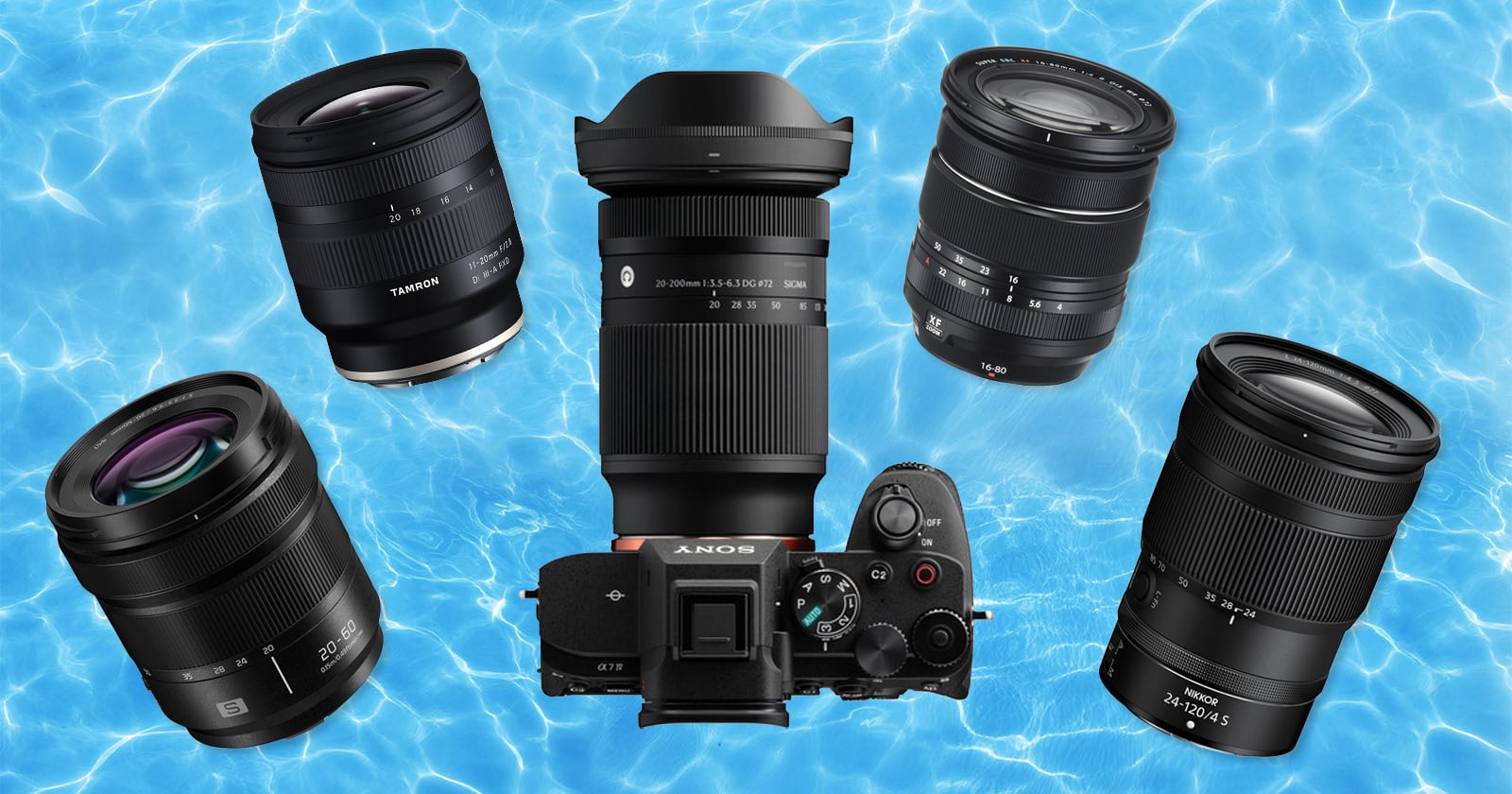
The Nikon Nikkor Z 24-120mm f/4 S, currently $50 off, has largely superseded the older 24-70mm f/4 as the preferred walk-around lens for Z6 and Z7 users. The extra reach at the long end makes it a favorite for landscape photographers who need to "punch in" on distant mountain peaks. Meanwhile, the professional cornerstone Nikkor Z 24-70mm f/2.8 S is seeing a $150 reduction. This lens is widely regarded as one of the sharpest standard zooms ever produced, featuring a dedicated OLED information panel and a customizable control ring.
In the superzoom category, the Nikkor Z 28-400mm f/4-8 VR is receiving a $150 discount. This lens is aimed at the travel and wildlife sector, where the ability to go from a wide landscape to a distant bird in a matter of seconds is more valuable than a fast aperture.
L-Mount Alliance: Collaborative Pricing Strategies
The L-Mount Alliance, consisting of Panasonic, Sigma, and Leica, provides a unified ecosystem for full-frame mirrorless cameras. Panasonic Lumix S lenses are currently leading the pack in terms of price-to-performance value.
The Lumix S 24-105mm f/4 Macro OIS is currently $200 off through July 18. This lens is unique for its 0.5x macro capability, allowing photographers to capture close-up details of flowers or products without switching to a dedicated macro lens. For professional studio and event work, the flagship Lumix S Pro 24-70mm f/2.8 is also $200 off. Panasonic’s "Pro" lenses are certified by Leica, ensuring they meet rigorous standards for bokeh quality and color rendition.
Fujifilm X-Mount: The APS-C Specialist
Fujifilm has maintained a loyal following by focusing on the APS-C format, and their lenses are designed to be compact and tactile. The Fujifilm XF 16-80mm f/4 R OIS WR, now $100 off, is the quintessential travel lens for the X-T5 and X-H2 series. Its weather-resistant (WR) construction and 6-stop optical image stabilization make it a rugged choice for outdoor adventures.
Third-party support for Fujifilm is also expanding. The Tamron 11-20mm f/2.8 Di III-A RXD, an ultra-wide zoom perfect for architecture and vlogging, is currently discounted by $60. This competition is forcing first-party manufacturers to keep prices competitive, benefiting the end consumer.
Chronology of the 2026 Summer Sales Event
The current promotional cycle did not emerge in a vacuum. Market data suggests a specific timeline that led to these mid-July discounts:
- May 2026: Manufacturers began seeing a slight cooling in lens sales as consumers prioritized travel experiences over new gear.
- June 2026: Inventory levels for 24-70mm and 24-105mm variants reached a 12-month high.
- July 1, 2026: Major retailers like B&H Photo and Adorama launched "Summer Savings" windows, coordinated with manufacturer rebates.
- July 15, 2026: Flash sales were introduced for high-demand third-party lenses (Tamron/Sigma) to capture the final wave of summer shoppers.
- July 18-19, 2026: The scheduled expiration for the majority of these "instant savings" programs.
Industry Reactions and Market Implications
Retail analysts note that the depth of these discounts—reaching up to $200 on lenses that are already competitively priced—suggests a pivot in industry strategy. "We are seeing a more aggressive stance from manufacturers to lock users into their lens ecosystems early," says one senior market analyst. "Once a photographer invests in three or four high-quality zoom lenses, the cost of switching camera brands becomes prohibitive. These sales are as much about brand loyalty as they are about moving inventory."
Furthermore, the rise of video-centric features in these lenses—such as suppressed focus breathing and silent linear motors—indicates that the market no longer views "still" and "video" as separate categories. The discounts on hybrid-ready lenses like the Canon RF 24-105mm f/2.8 Z reflect the industry’s acknowledgement that the modern creator is a multi-disciplinary artist.
Analysis of Consumer Impact
For the individual photographer, these sales represent a lowering of the barrier to professional-quality imaging. A $200 saving on a lens like the Tamron 28-75mm G2 effectively pays for a high-quality circular polarizer and a spare battery, or a significant portion of a weekend photography workshop.
However, consumers are advised to check the specific end-times for these deals. While many run through July 19, some Panasonic deals expire as early as July 18 at 11:59 PM ET. The synchronized nature of these expirations suggests that manufacturers are preparing for a new product announcement cycle in the late third quarter of 2026, making this a "clearance" of current flagship stock before the next generation of optics is unveiled.
As the July 19 deadline approaches, the photography community remains focused on these essential tools. Whether it is the versatility of a 28-300mm superzoom for a family vacation or the clinical precision of a 24-70mm f/2.8 for professional work, the current market offers a rare alignment of high supply and lowered prices, marking a high point for the 2026 retail season.