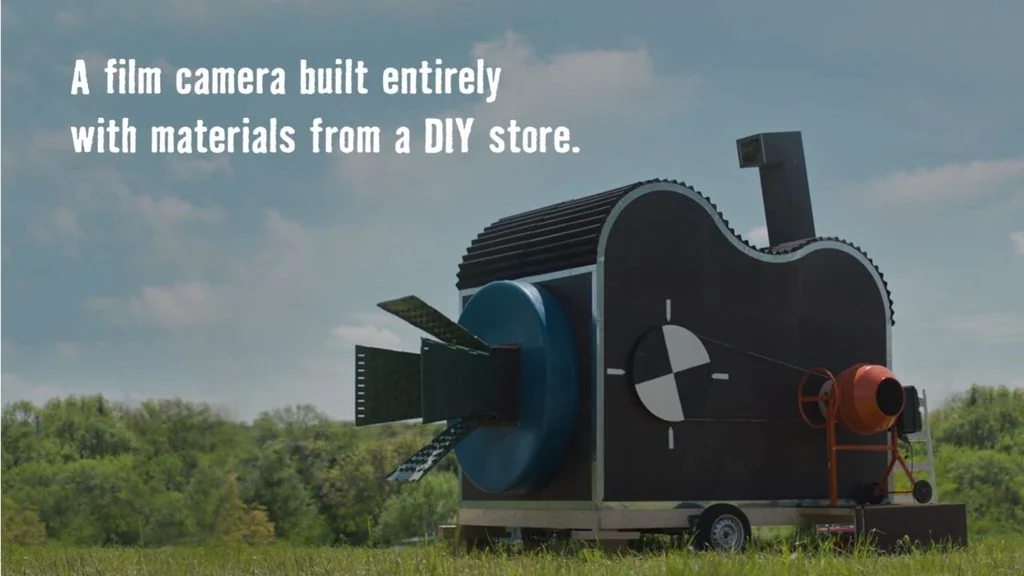

The ultimate embodiment of the do-it-yourself ethos is the belief that with the right materials, imagination, and determination, anything can be constructed from scratch. Pushing this philosophy to its absolute physical limits, home improvement retailer Hornbach, in creative collaboration with agency HeimatTBWA and directing collective Glue Society, has achieved what many would consider impossible: the complete construction of a fully functional 35mm film camera fabricated exclusively from everyday hardware-store supplies.
Far more than a simple novelty stunt, the resulting hardware-store camera was deployed in the field to shoot its own accompanying advertising campaign. The ambitious project brings together conceptual audacity, precise engineering, and artistic craftsmanship, resulting in a multi-part campaign anchored by a comprehensive behind-the-scenes documentary. The initiative showcases not only the versatility of Hornbach’s product inventory but also celebrates the resourcefulness and ingenuity of modern makers.
The Anatomy of an Improvised Masterpiece
Constructing a precision optical instrument like a 35mm film camera typically requires specialized manufacturing facilities, microscopic optical alignment, and specialized computer-controlled machinery. However, the team behind the Hornbach project relied entirely on the aisles of a standard home improvement warehouse.
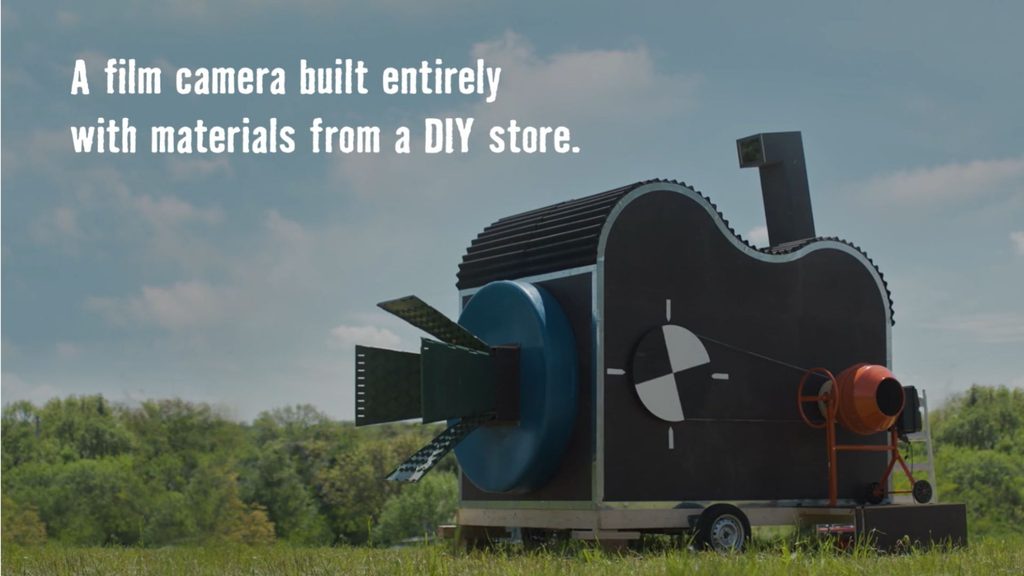
The engineering breakdown of the camera reads like a surreal inventory of home renovation goods. The optical lens system—the most critical component of any camera—was fashioned from a standard hardware store magnifying glass, ingeniously secured and aligned using sections of common water piping. To advance and manage the movement of the light-sensitive 35mm film stock through the apparatus, the makers integrated a functioning cement mixer into the core mechanical design. Meanwhile, to shield the makeshift lens from stray light flares and glare, the lens hood was expertly fashioned from a repurposed, cut-open organic waste bin.
The resulting footage captured by this hybridized contraption possesses a distinct aesthetic signature. The imagery is markedly grainy, characterized by a raw, handheld immediacy and a focal depth that frequently drifts in and out of sharpness. This idiosyncratic visual language is underscored by a sound design featuring offbeat, industrial percussion tracks, reinforcing the homemade, artisanal nature of the creative undertaking.
A Decade in the Making: The Chronology of an Idea
While the final campaign materialized in September 2026, the genesis of the project stretches back significantly further. The foundational concept was originally conceived an entire decade prior, resting dormant as an ambitious "what-if" idea that seemed too complex and logistically challenging to execute at the time.

It was not until roughly a year and a half before its public debut that the project was revived, dusted off, and given the green light for production. Recognizing that the ambitious undertaking required a multidisciplinary approach, the organizers invited a select group of five young makers to bring the conceptual blueprint into physical reality.
This core team of craftspeople was carefully curated to cover a diverse spectrum of technical disciplines. Each maker brought specific, highly specialized skills to the workshop floor, encompassing traditional carpentry, advanced industrial design, CAD (Computer-Aided Design) technology, precision metalworking, and professional photography. This collaborative synthesis of traditional trades and modern digital planning allowed the team to overcome the immense physical hurdles of housing delicate optical and mechanical film transport systems inside rigid, utilitarian hardware containers.
Production and Campaign Rollout
The physical creation of the camera and the subsequent production of the campaign took place over an intense seven-day period. The epicenter of this creative blitz was the HORNBACH Colentina store located in Bucharest, Romania. Operating within the confines of an active retail environment added an extra layer of authenticity and logistical challenge to the production process.
The overarching campaign rollout comprises three distinct film assets, supported by an in-depth 11-minute documentary that chronicles the grueling yet rewarding process of building the camera from the ground up.
The first film in the series plunges the viewer directly into the perspective of the improvised device. Featuring the aforementioned grainy, handheld footage, it relies on organic visual imperfections to establish a visceral connection with the audience. The second film shifts tone entirely, presenting a series of sequences that are difficult to categorize yet strangely mesmerizing, highlighting the unique optical distortions and visual artifacts produced by the magnifying-glass lens system.
The third major pillar of the content release is the behind-the-scenes documentary. Produced with the support of Berlin-based production company Tony Peterson Film and Sydney-headquartered REVOLVER, the documentary serves as a transparent instructional narrative. It walks viewers through the step-by-step engineering feats required to transform plumbing supplies, gardening equipment, and masonry tools into a working cinematographic tool.
Industry Collaboration and Global Production Footprint
Bringing a project of this magnitude to life required a tightly coordinated international network of creative agencies, production houses, and specialized talent. The conceptual framework was spearheaded by HeimatTBWA, a prominent agency known for pushing boundaries in retail and brand positioning, alongside the Glue Society, an internationally acclaimed creative collective renowned for large-scale installations, art projects, and unconventional film direction.
Production execution was shared across continents to manage the multifaceted requirements of building the camera, capturing the technical build process, and directing the final commercial output. Tony Peterson Film handled the rigorous demands on the ground in Europe, while REVOLVER brought its extensive commercial production expertise from Sydney, Australia. This cross-continental collaboration ensured that the technical documentary elements met the highest broadcast standards while maintaining the gritty, authentic tone demanded by the narrative.
Broader Implications and Marketing Analysis
In the contemporary advertising landscape, brands continually seek novel ways to demonstrate product utility beyond traditional product-placement or functional demonstration. By utilizing its own inventory to construct a complex recording device, Hornbach has executed a masterclass in demonstrable utility.
From a marketing analysis perspective, the campaign reinforces the brand’s long-standing strategic positioning: that hardware stores are not merely warehouses for passive consumption, but rather portals to creation, problem-solving, and empowerment. By handing the project over to young makers rather than corporate engineers, Hornbach successfully aligned its corporate identity with the grassroots maker movement.
Furthermore, the longevity of the project—spanning a ten-year incubation period before finally finding the right creative alignment—demonstrates a commitment to bold, patient creative risk-taking. In an industry increasingly dominated by rapid-turnaround digital content designed for short attention spans, investing in a multi-year conceptual build for a physical product represents a deliberate pivot toward high-craft storytelling.
As consumer skepticism toward traditional advertising continues to grow, campaigns that rely on genuine craftsmanship, transparent behind-the-scenes documentation, and tangible physical engineering offer a refreshing alternative. By proving that a cinematic masterpiece can be captured using a camera built from cement mixers, waste bins, and magnifying glasses, Hornbach and its agency partners have effectively redefined the boundaries of what is possible inside a hardware store.