


The Paradigm Shift: From Ad Spend to AI Citations
The concept of Share of Voice has undergone three distinct evolutionary phases. Historically, in the mid-20th century, SoV was calculated simply as a brand’s share of total advertising spend within a specific market or medium, such as television or print. With the advent of the digital age in the early 2000s, the metric shifted toward search engine visibility, measuring the percentage of organic and paid search impressions a brand captured for its primary keywords.
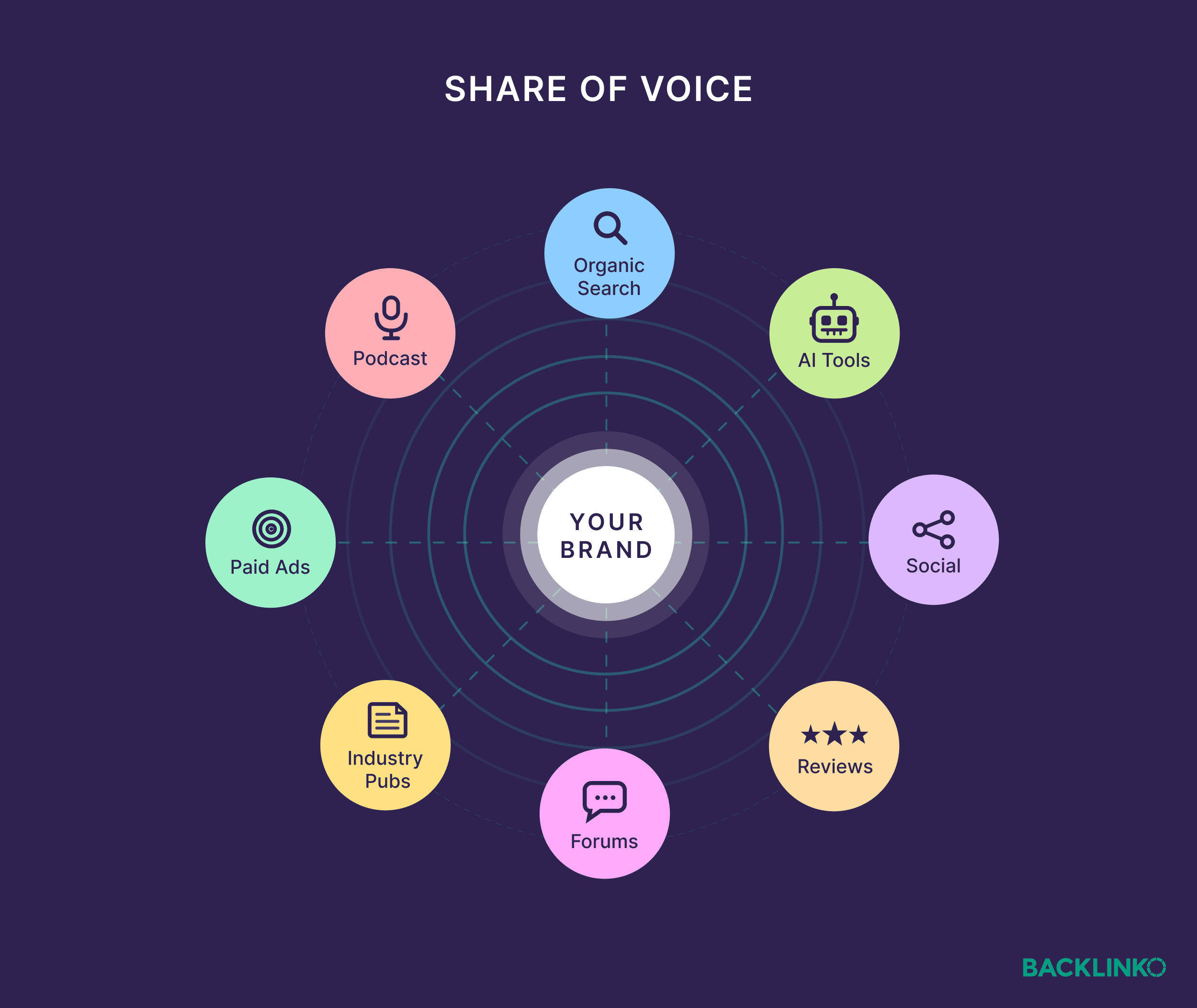
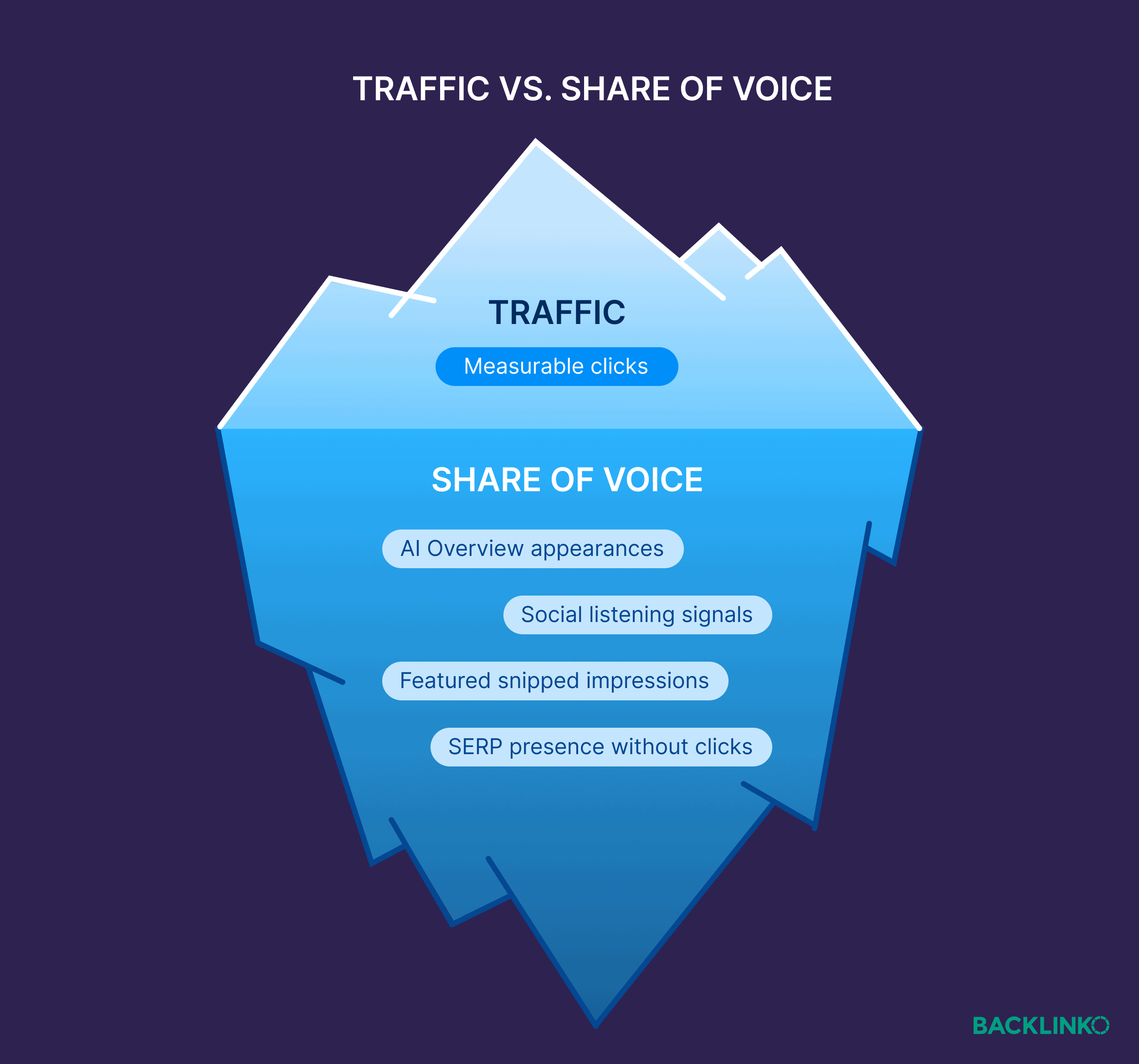
As of 2024, the industry has entered a third phase: the era of AI and Community SoV. This modern iteration captures brand mentions and citations within Large Language Model (LLM) responses and niche community threads. Unlike traditional SEO metrics, which track the user’s journey to a website, AI SoV measures the brand’s inclusion in the "consideration set" provided by an algorithm. According to recent industry data, zero-click searches now account for nearly 60% of all mobile queries, meaning that a brand can influence a buyer’s decision without the user ever clicking a link. Consequently, SoV has transitioned from a vanity metric into a critical indicator of brand health and future revenue potential.
Distinguishing Between Organic and AI Visibility
To accurately measure market presence, organizations must now distinguish between two primary search contexts: Traditional SEO SoV and AI Search SoV. While both aim to answer what percentage of category demand a brand owns, their methodologies and data sources differ significantly.
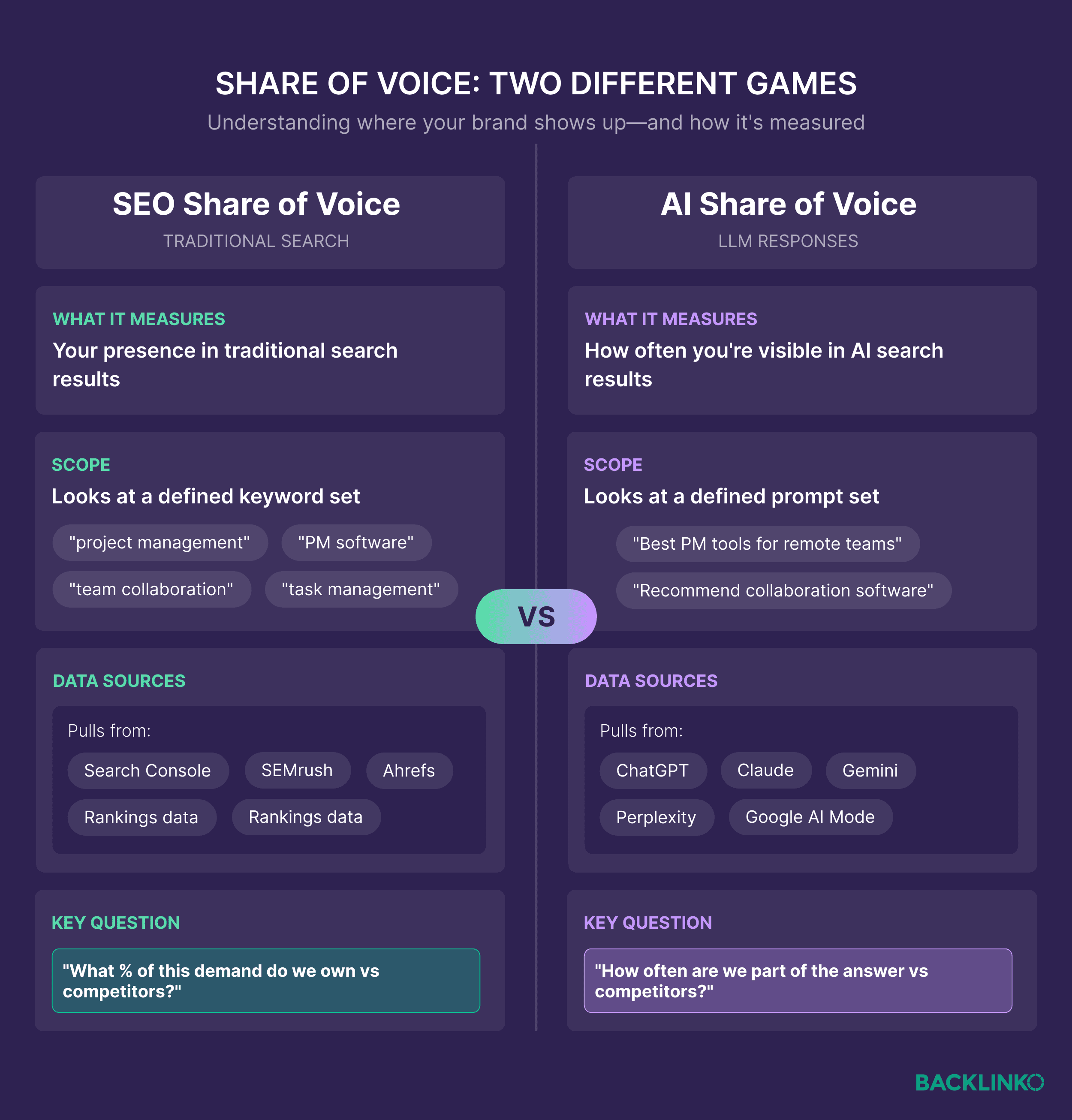
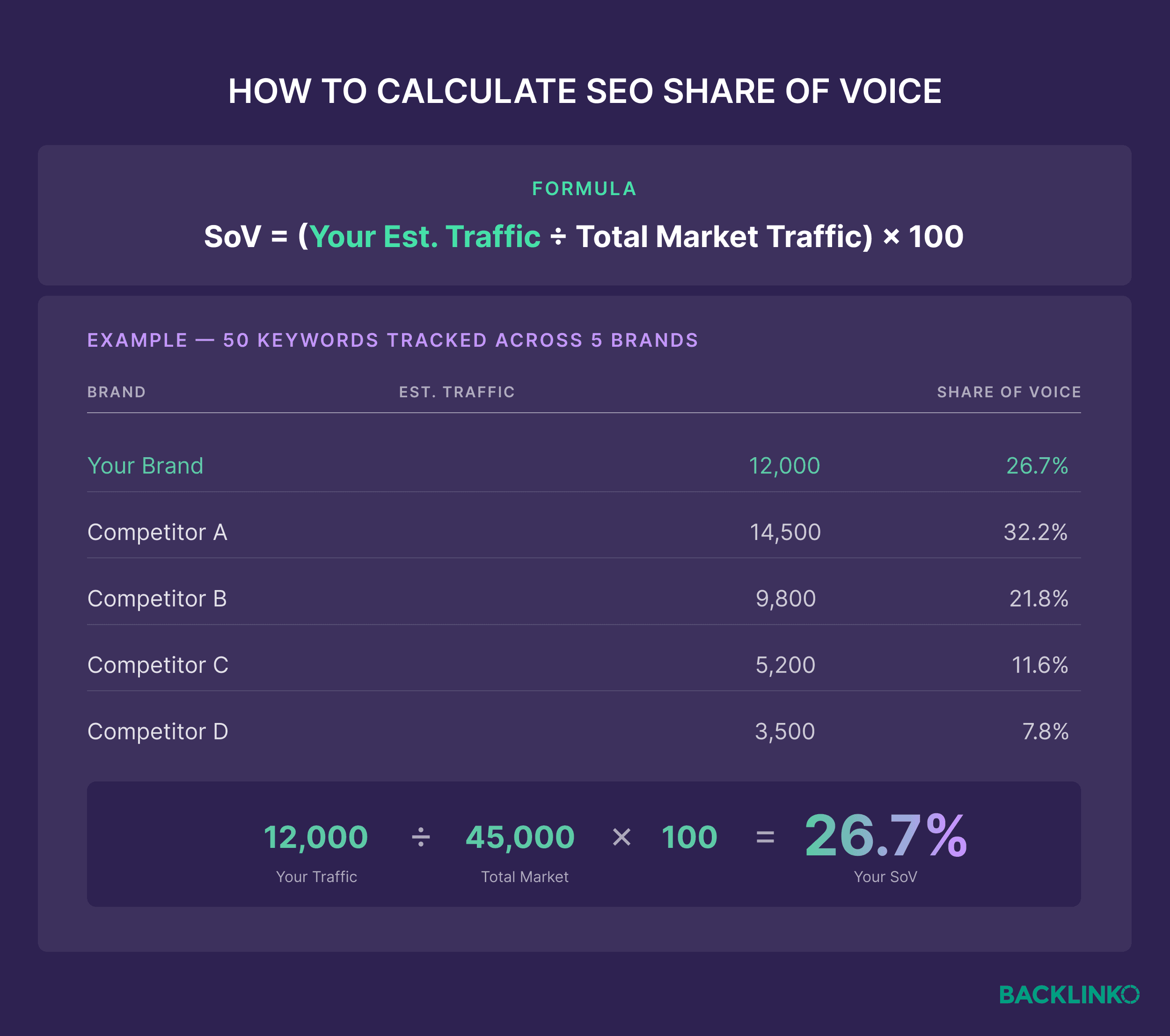
SEO Share of Voice is calculated by analyzing a set of target keywords and determining the percentage of total estimated traffic a brand captures. For instance, if a category’s top 100 keywords generate 100,000 monthly visits and a brand captures 20,000 of those visits, its organic SoV stands at 20%. This metric remains vital because search engines continue to be the primary channel for high-intent buyers who are ready to make a purchase.
Conversely, AI Share of Voice measures brand mentions and citations within the conversational outputs of LLMs like ChatGPT, Google Gemini, and Perplexity. In this context, visibility is weighted by the frequency and sentiment of the mention. If a brand is mentioned in 40 out of 100 prompts related to "best enterprise software," its AI SoV is 40%. The challenge for modern marketers is that these two metrics do not always correlate; a brand may rank first on Google for a specific keyword but be entirely absent from a ChatGPT recommendation if the AI does not perceive the brand as a topical authority.
A Four-Step Methodology for Measuring Market Dominance
Industry analysts suggest a rigorous, four-step framework for establishing a baseline SoV in the current market. This process allows brands to move beyond raw data and toward actionable business intelligence.
Step 1: Defining the Competitive Industry Landscape
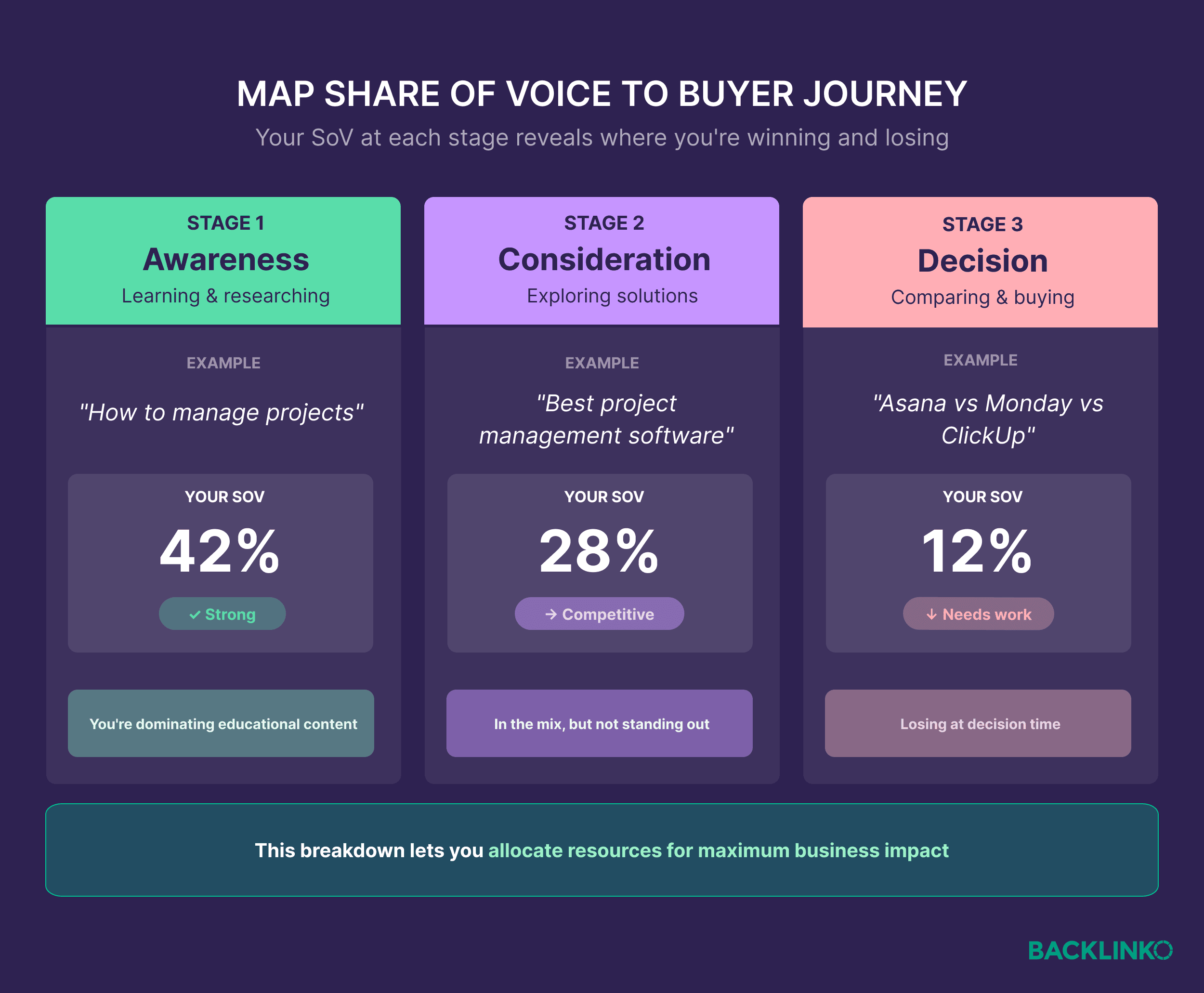
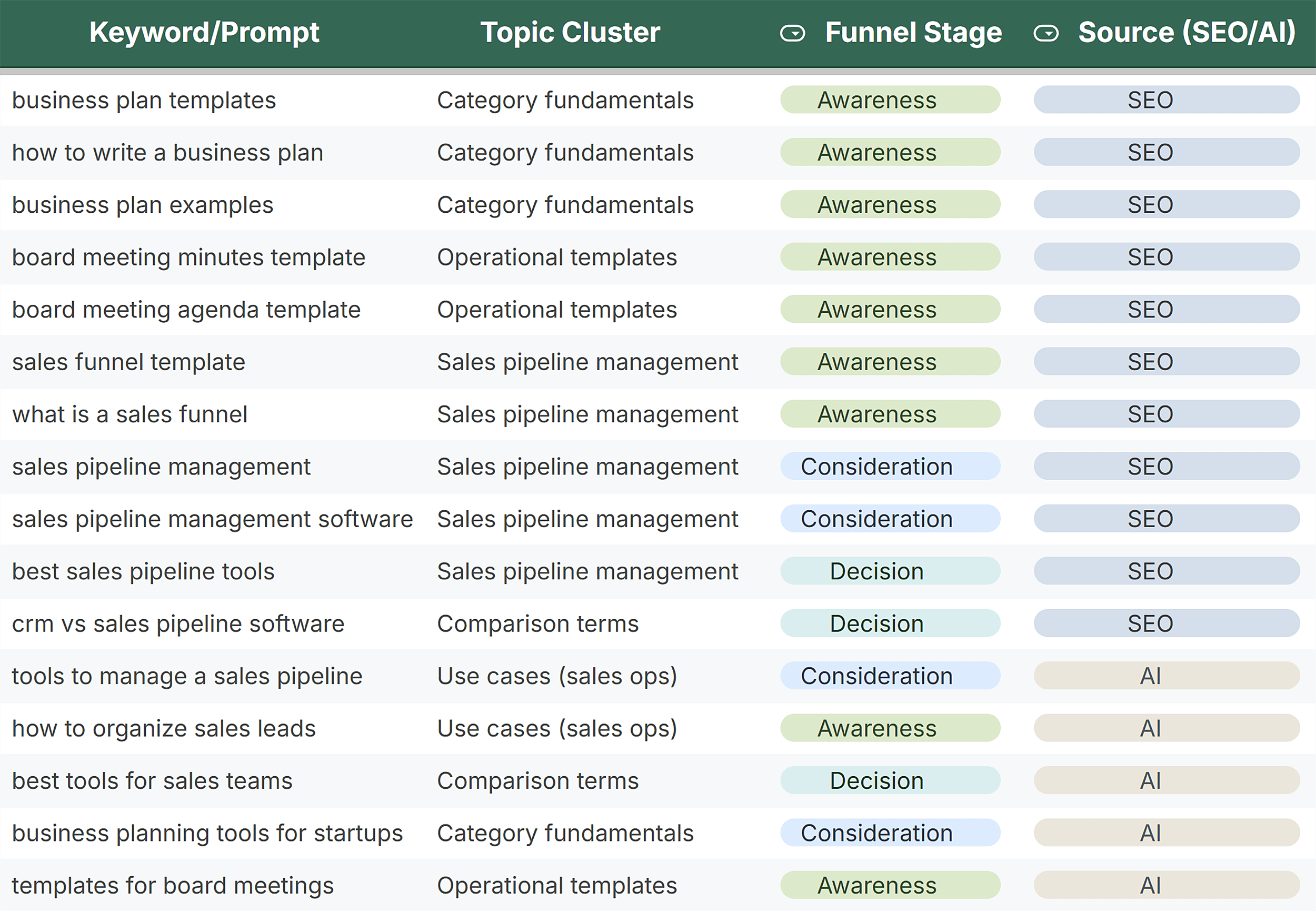
The measurement process begins with the identification of topic clusters tied directly to revenue. For an enterprise in the project management space, for example, clusters might include "agile methodology," "remote team collaboration," and "resource planning." Analysts recommend categorizing these clusters into funnel stages: Awareness (top-of-funnel), Consideration (middle-of-funnel), and Decision (bottom-of-funnel). A brand that dominates Awareness but has 0% SoV in the Decision stage is effectively educating the market for its competitors.

Step 2: Building Keyword and Prompt Libraries
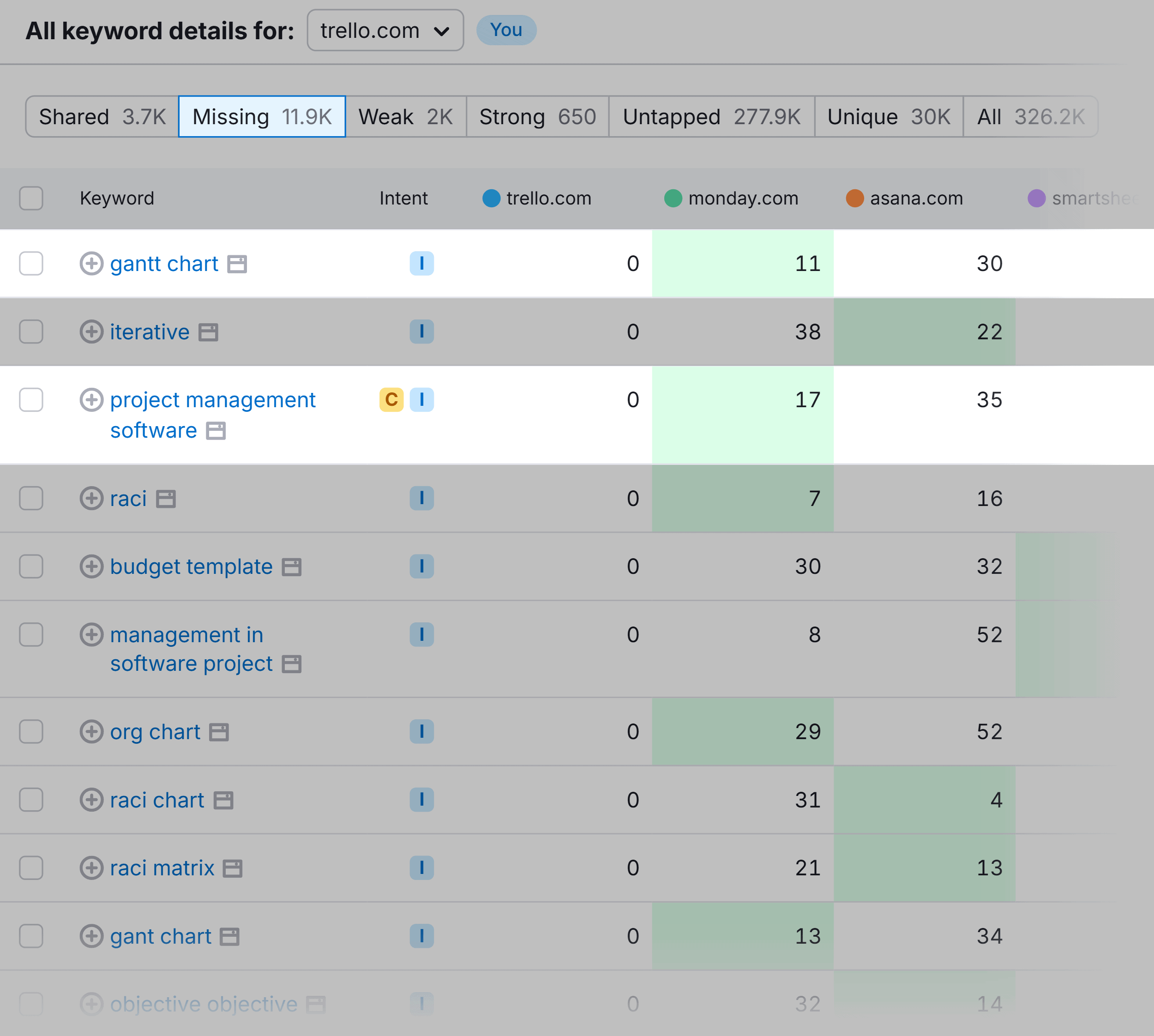
To capture the full spectrum of visibility, brands must develop a library of 200 to 500 queries. This library should include traditional SEO keywords pulled from Google Search Console and PPC data, as well as conversational "prompts" that mirror how users interact with AI. Researching community platforms like Reddit or review sites like G2 helps identify the specific pain points and phrasing used by the target audience. For instance, a user might search "best CRM" on Google but ask an AI, "Which CRM is best for a small creative agency that needs ease of use over complex features?"
Step 3: Calculating Quantitative Share of Voice
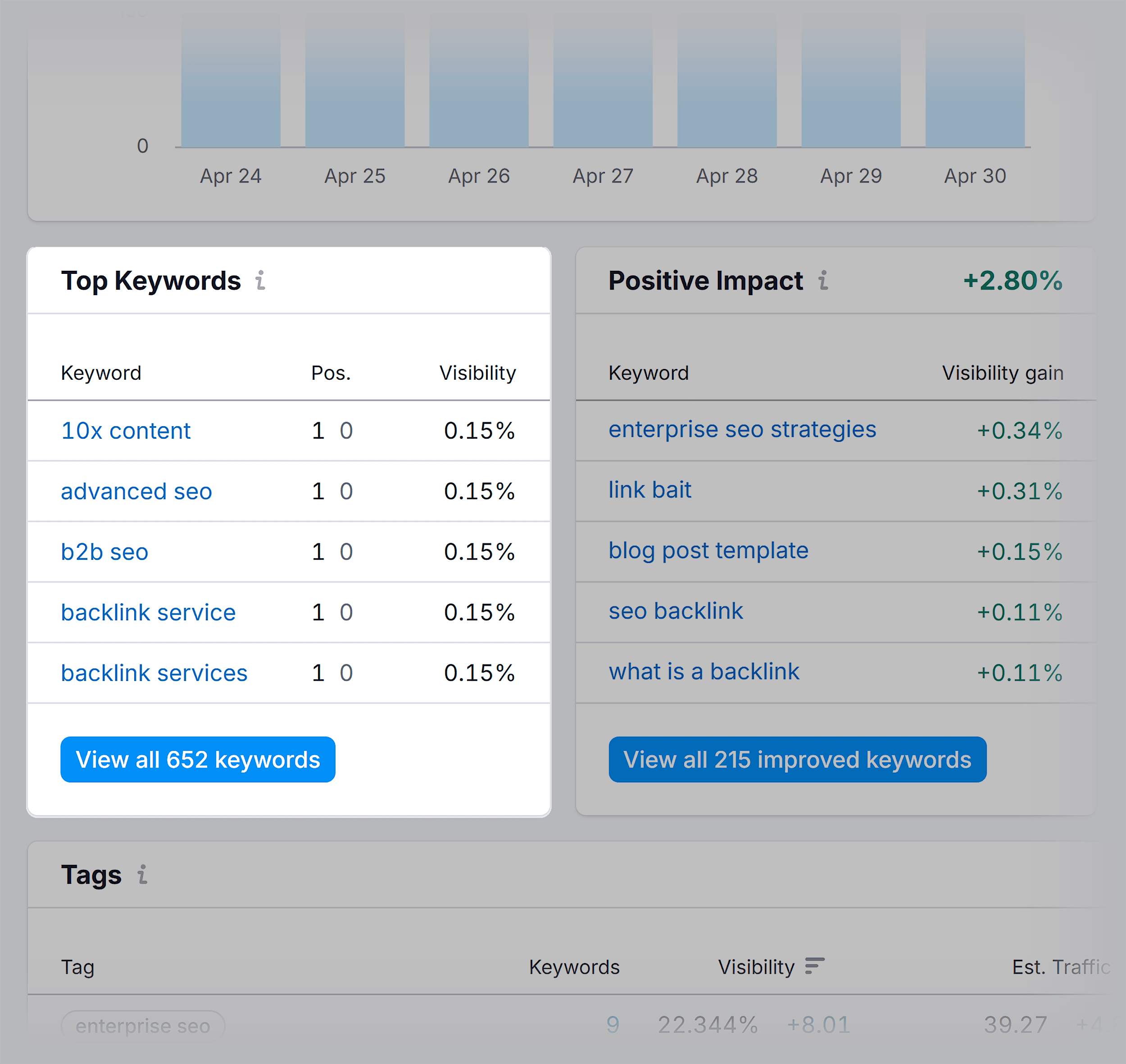
The calculation of SEO SoV requires multiplying the search volume of each keyword by the estimated click-through rate (CTR) of the brand’s ranking position. Data from Backlinko indicates that the top position in Google captures approximately 27% of clicks, with a steep decline for lower positions.
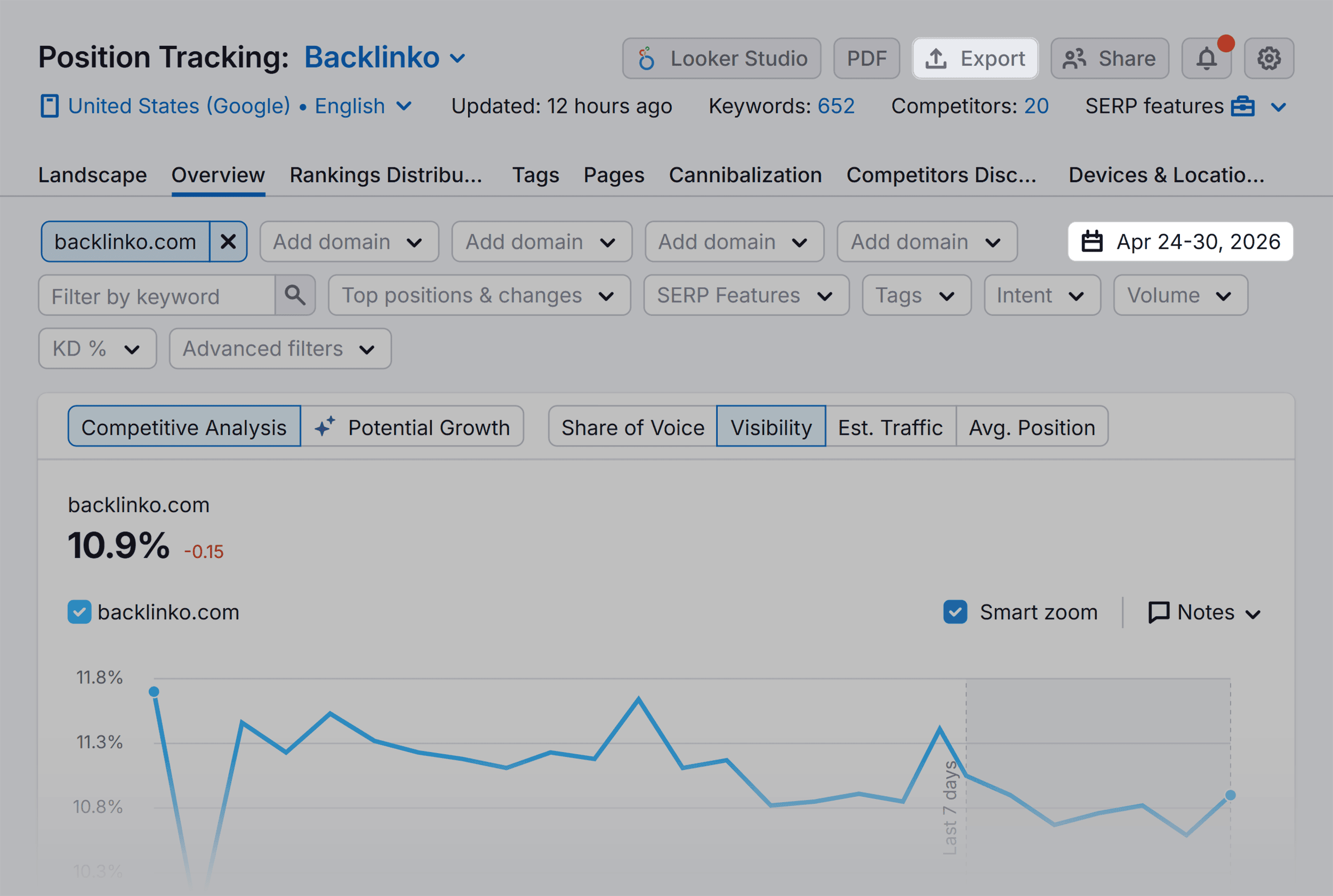
For AI SoV, the process involves testing the prompt library across various LLMs and counting brand mentions. Advanced tools now automate this by analyzing the sentiment of the response and whether the brand was cited as a primary source. This dual-layered calculation provides a holistic view of where the brand stands in the traditional search engine results pages (SERPs) versus the new AI-driven discovery engines.
Step 4: Establishing a Baseline and Tracking Cadence
A single SoV snapshot is of limited value. Strategic measurement requires a monthly tracking cadence to identify trends and a quarterly deep dive to assess competitor shifts. This longitudinal data allows marketing teams to see if a competitor’s new content strategy is successfully eroding their market share before it reflects in declining sales figures.

Strategic Implications: Closing the Visibility Gap
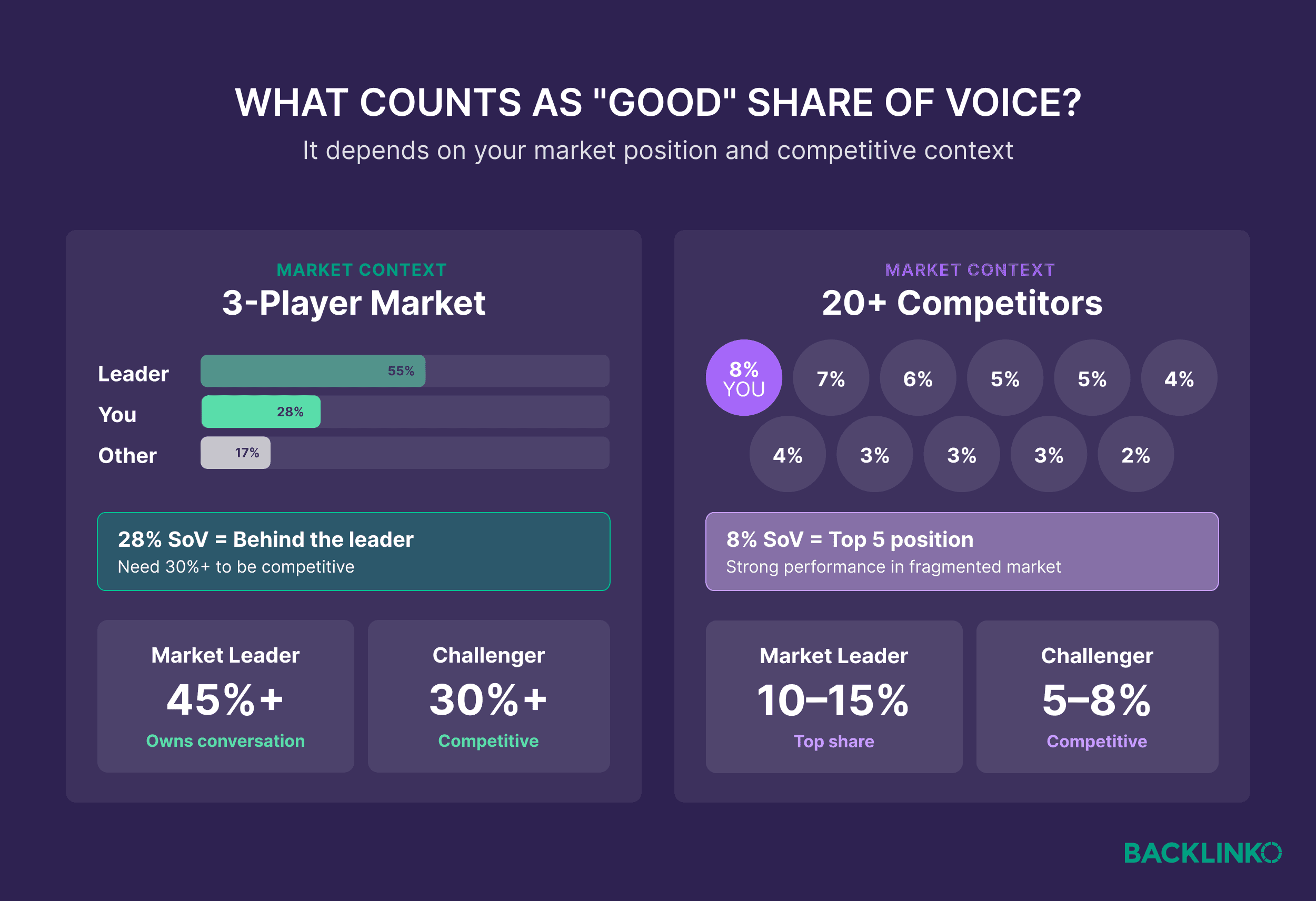
The primary value of SoV measurement lies in its ability to diagnose structural weaknesses in a marketing strategy. When a brand identifies a cluster with less than 10% SoV, it indicates a critical visibility gap.
Industry experts identify three main areas for intervention:

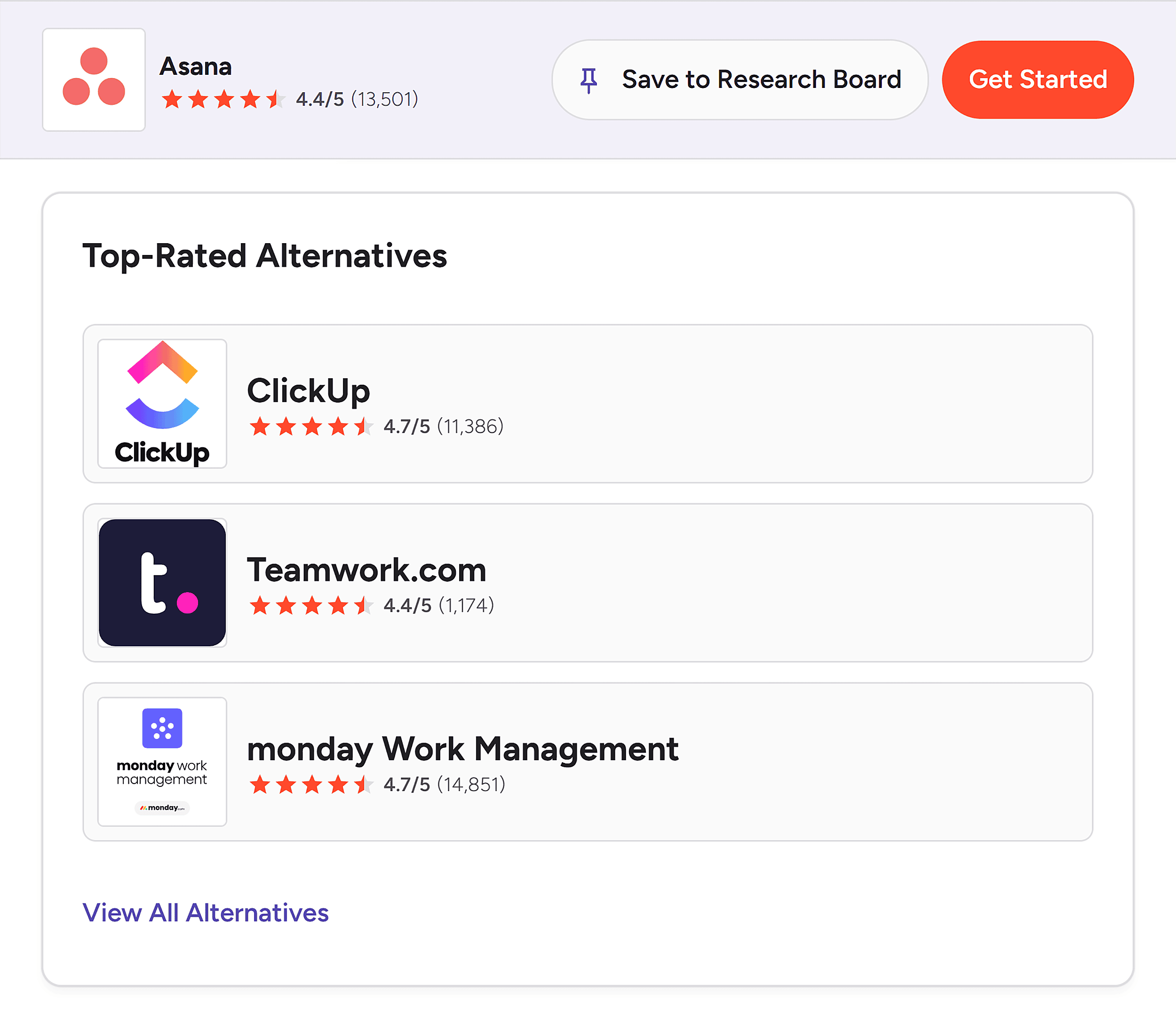
- Closing Visibility Gaps: If a brand lacks presence in decision-stage queries, it must prioritize bottom-of-funnel content such as "Alternative to [Competitor]" pages, case studies, and ROI calculators.
- Solving Efficiency Problems: A high SoV in awareness-stage queries that fails to convert into leads suggests an efficiency problem. The brand may be attracting the wrong audience or failing to provide a clear path to the next stage of the buyer journey.
- Addressing Competitive Threats: When a competitor gains more than 5% SoV in a core cluster within a single quarter, it signals an aggressive targeted campaign. Brands must respond by optimizing their existing high-performing content or improving their presence on third-party review sites that feed AI algorithms.
The Role of AI in Fragmenting the Buyer Journey
The rise of AI search has fragmented the buyer journey, making SoV more important than ever. In the traditional model, the journey was linear: search, click, browse, convert. In the 2026 landscape, the journey is "circular." A user may hear of a brand on a podcast, ask ChatGPT for a comparison, read a Reddit thread, and only then visit the brand’s website via a direct search.
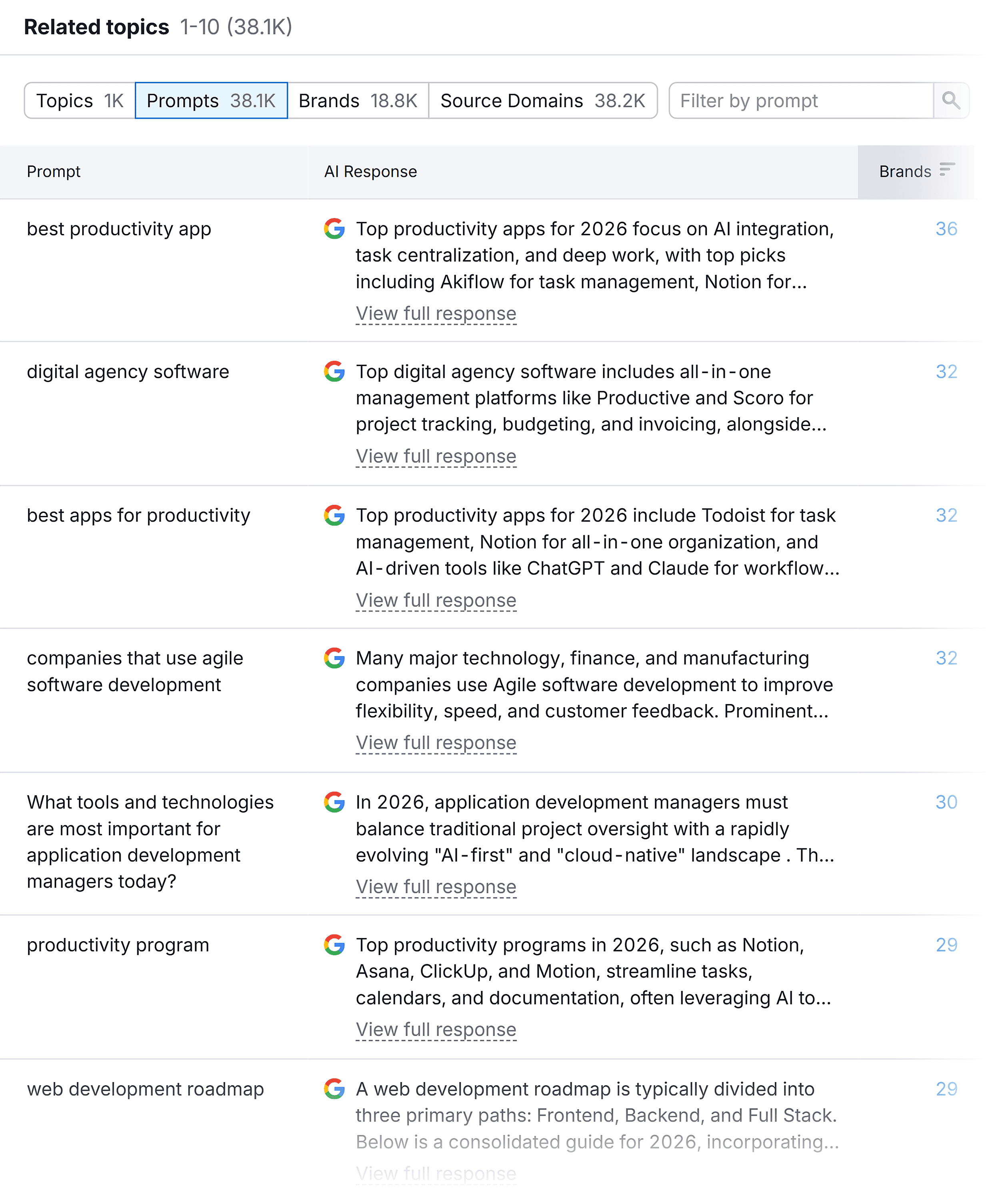
Because AI models rely on "citable" and "credible" content, brands must focus on becoming a primary source of information. This involves a shift from high-volume, low-quality content toward "authority assets"—well-researched, original data and thought leadership that LLMs are more likely to reference. Brands that fail to adapt to this "citable" requirement risk becoming invisible in the AI-driven consideration set, regardless of their traditional SEO rankings.
Conclusion: Share of Voice as the 2026 North Star
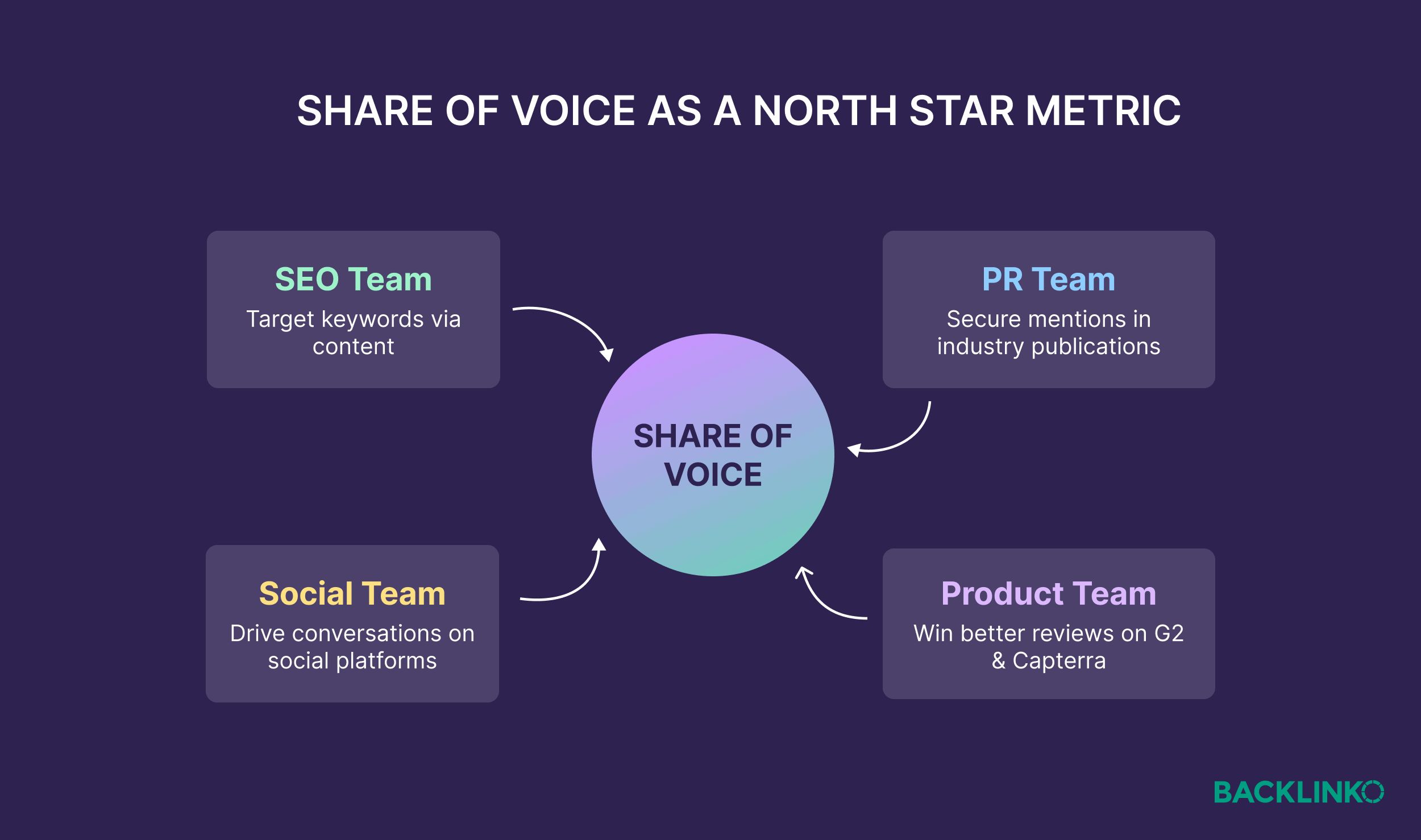
As marketing departments move away from siloed KPIs—where SEO, PR, and social media teams track disparate metrics—Share of Voice offers a unifying "North Star." It provides a single percentage that reflects the collective impact of all marketing efforts on brand visibility.
In an era where the "click" is no longer the sole arbiter of success, the ability to own the conversation within a category is the ultimate competitive advantage. By measuring and systematically improving Share of Voice across organic and AI search, enterprises can ensure they remain visible, credible, and dominant in the minds of buyers, regardless of the platform they use to find answers. The transition to SoV-centric marketing is not merely a trend; it is a necessary adaptation to a digital ecosystem where visibility is the precursor to every transaction.