
Jim Parkinson, a celebrated lettering artist, type designer, and painter whose distinctive hand-drawn letterforms graced the logos of countless iconic brands, publications, and bands, passed away on June 26, 2025, at his home in Oakland, California. He was 83 years old. His death followed a protracted battle with Alzheimer’s disease, a condition that he navigated with the same grace and resilience he brought to his artistic endeavors. He is survived by his wife, the accomplished book artist Dorothy A. Yule, who served not only as his life partner since 2010 but also as his devoted caregiver throughout his years of declining health.
Born in Oakland on October 23, 1941, Parkinson’s early life was steeped in the rich tradition of artisanal craftsmanship. His formative years were shaped by proximity to Abraham Lincoln Paulsen, a local figure known as the "Wizard Penman." Paulsen, a master calligrapher, possessed an astonishing ability to pen the Gettysburg Address upside down and backward using only the numeral "2." This early exposure to the meticulous art of lettering ignited a lifelong passion in young Jim. He immersed himself in the world of lettering by diligently collecting antique lettering manuals and correspondence-school textbooks. These historical resources, often decades old, provided him with a deep understanding of typographic history, a foundation upon which he would build his unparalleled ability to interpret and revitalize classic styles, a hallmark of his distinguished career.
Parkinson pursued his artistic education at the California College of Arts and Crafts, where he studied design and painting, graduating in 1963. Following his academic career, he relocated to Kansas City, Missouri, to join the staff artists at Hallmark Cards. Initially tasked with creating whimsical illustrations, Parkinson soon found his true calling when the company recognized his exceptional talent for lettering and moved him to their dedicated lettering department. It was here that he solidified his understanding that specializing in lettering was not merely a professional opportunity but a profound life’s purpose. His innate ability to render any letterform with exquisite precision by hand became the cornerstone of his freelance career, which spanned over five decades and left an indelible mark on the visual landscape.

A Prolific Career Shaping Visual Identities
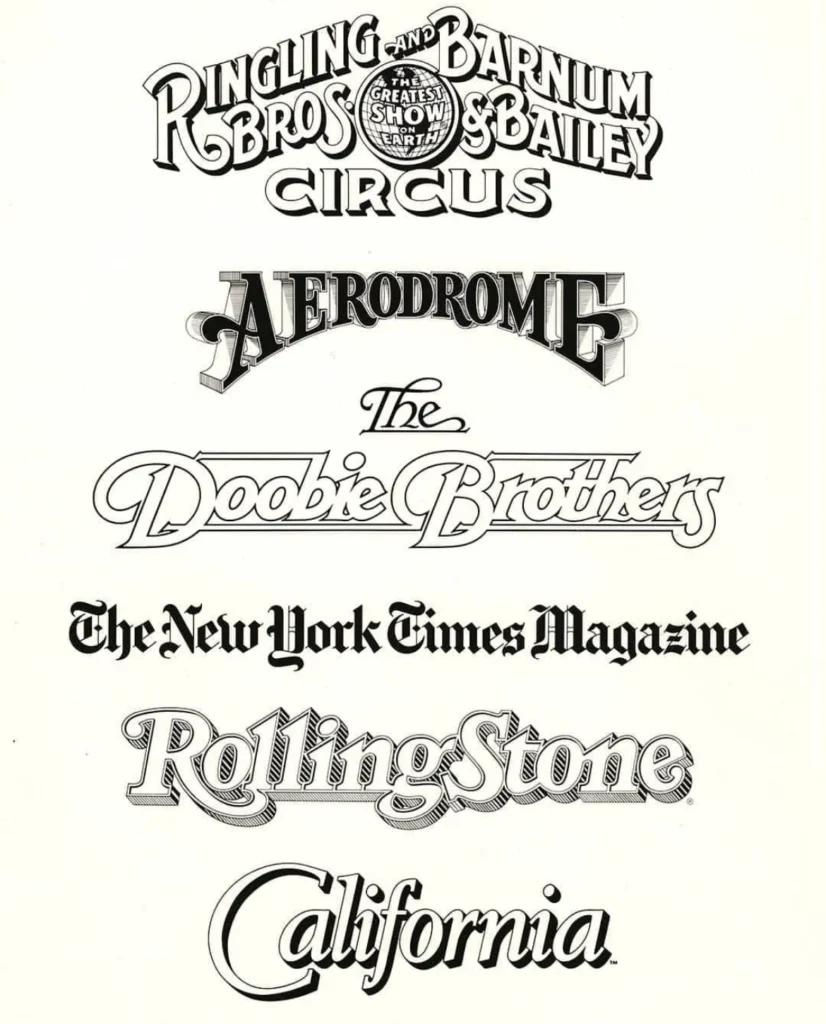
Parkinson’s dedication to the craft of letters was unwavering, yet his versatility within this specialized field was extraordinary. His artistic repertoire encompassed a wide spectrum of projects, from intricate logo designs to the creation of complete typefaces. His career was, in essence, a tapestry woven from multiple distinct, yet interconnected, professional lives. Over fifty years, Parkinson’s lettering graced an astonishing array of applications. He meticulously crafted headlines for advertising campaigns, designed memorable logos for legendary musical acts such as The Doobie Brothers, and brought the spectacle of the circus to life with his lettering for Ringling Bros. and Barnum & Bailey.
His contributions extended to the development of dozens of custom and retail typefaces, each imbued with his signature style. Furthermore, he was the architect behind countless nameplates for prestigious magazines, including the iconic masthead for Rolling Stone, and the distinctive lettering for newspapers like the Los Angeles Times. The sheer volume and ubiquitous presence of his work mean that naming these examples only scratches the surface of his prolific output. A casual visit to any newsstand in the United States, and indeed many internationally, would likely reveal Parkinson’s hand at work, often on multiple covers. He became the indispensable resource for art directors seeking to revitalize publication identities, frequently undertaking redesigns of established titles multiple times over the years, a testament to his enduring relevance and adaptability.
Beyond Typography: A Passion for Painted Signs
In his later years, when not immersed in the creation of logos or fonts, Parkinson channeled his artistic energies into a unique and deeply personal pursuit: painting vintage neon signage. This was not merely a hobby but an exploration of his artistic sensibilities through the lens of industrial Americana. His extensive collection of photographs, meticulously gathered during road trips across the American West, served as the inspiration for dozens of large-scale paintings. These artworks, which adorned the walls of his home, captured the evocative beauty of decaying neon signs with remarkable fidelity. Parkinson possessed an uncanny ability to render every peeling surface and fractured glass tube, imbuing his painted signs with a sense of poignant realism that often surpassed the original snapshots. This artistic endeavor highlighted his keen eye for detail and his profound appreciation for the transient beauty of everyday American landscapes.
A Generous Spirit and Lasting Legacy
For the past two decades, I had the distinct privilege of knowing Jim Parkinson. Upon my arrival in Oakland in 2004, he was among the first to extend a welcoming hand, embodying the spirit of community that defined his character. He generously opened his home to visitors, offering them an unparalleled glimpse into his personal archive of ephemera, type books, and his own extensive body of work. The experience of bringing friends to his studio and witnessing their awe as he revealed flat files filled with original artwork was a consistently rewarding one.

Parkinson was a beloved fixture at our semiregular community picnics, where he consistently radiated an infectious joy and profound wisdom. Despite his immense talent, he possessed a disarming casualness and silliness that kept him grounded, preventing him from adopting an air of superiority. He truly embodied the admirable mantra of Margot Fonteyn: "Take your work seriously, but never yourself." This wry levity is evident throughout his website, a testament to his foresight in securing an enviable domain name in the early days of the internet, and in the insightful video interview we conducted in 2010.
A Life’s Story in Words and Art
Beyond his mastery of visual communication, Jim Parkinson was an exceptional storyteller. It is with immense pleasure that I can announce that the Letterform Archive will publish his memoir in 2026. This posthumous publication represents a significant opportunity for those who did not have the chance to meet him to connect with his life and experiences through his own eloquent prose. His memoir promises to offer profound insights into his creative journey and his unique perspective on the world of design.
A memorial service to celebrate Jim Parkinson’s life will be held in the fall. The family has requested that those who wish to share their memories do so in the comments section of the original announcement. In lieu of flowers, donations to the Alzheimer’s Association are encouraged, a cause that reflects Parkinson’s personal struggle and the ongoing efforts to combat this debilitating disease.
The impact of Jim Parkinson’s work on the visual communication landscape is immeasurable. His ability to imbue letters with personality, warmth, and a timeless quality set a standard for excellence in lettering design. His legacy will continue to inspire designers, artists, and enthusiasts for generations to come, a testament to a life dedicated to the profound beauty and power of the written word. His passing marks the end of an era, but his contributions will continue to be seen, felt, and appreciated in the fabric of our visual culture.