
The rapid ascendancy of generative artificial intelligence has irrevocably altered the digital marketing landscape, ushering in an era where brand visibility in AI-powered answer engines is as critical as traditional search engine optimization. In response to this paradigm shift, specialized tools have emerged to help brands monitor, audit, and optimize their presence within these new AI environments. Among the frontrunners are Scrunch, a platform purpose-built for Answer Engine Optimization (AEO), and Ahrefs Brand Radar, an integrated module designed to provide AI visibility alongside traditional SEO metrics. HubSpot AEO, with its free grader and accessible entry points, also offers a foundational solution for brands beginning their AEO journey. Understanding the distinct capabilities, methodologies, and ideal use cases for each tool is paramount for marketers seeking to dominate the AI discovery funnel.
The Emergence of Answer Engine Optimization (AEO)
The digital marketing ecosystem has witnessed a profound transformation driven by the proliferation of sophisticated AI models such as ChatGPT, Perplexity, Gemini, Claude, and Copilot. These platforms are increasingly becoming primary information sources for consumers and businesses, moving beyond simple keyword matching to synthesize complex answers and provide direct recommendations. This shift necessitates a new optimization discipline: Answer Engine Optimization (AEO). Unlike traditional SEO, which focuses on ranking in search results, AEO aims to ensure a brand is cited, understood, and favorably represented within AI-generated responses. The imperative for brands to adapt is clear; market data suggests a growing reliance on AI for research and purchasing decisions, with a significant portion of digital marketing spend projected to shift towards AI-centric strategies in the coming years. Early adopters of AEO are reporting substantial gains in brand citations and influence, highlighting the urgency for marketers to engage with this evolving channel.
The development of tools like Scrunch and Ahrefs Brand Radar can be seen as a direct response to this evolving need, emerging in the wake of generative AI’s explosion onto the mainstream. As AI models became more sophisticated and their adoption rates soared, the demand for specialized analytics and optimization capabilities grew. Companies quickly realized that their meticulously crafted SEO strategies might not directly translate to AI visibility, prompting the need for dedicated solutions that could analyze how AI bots interact with and interpret web content. This period, spanning from the early 2020s, has seen a rapid iteration of tools designed to bridge the gap between traditional web presence and AI perception, creating a competitive market for AEO solutions.
Core Offerings: A Deep Dive into Functionality
While both Scrunch and Ahrefs Brand Radar address the need for AI visibility, their architectural approaches and feature sets cater to different strategic objectives.
Scrunch: The AEO Specialist
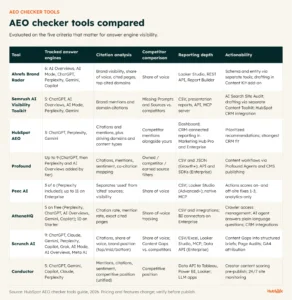
Scrunch positions itself as a purpose-built AI visibility platform, meticulously crafted for AEO. Its capabilities extend beyond mere monitoring to active optimization. Scrunch tracks a brand’s share of voice within AI answers, analyzes sentiment in AI-generated responses, and identifies the domains and specific pages most frequently cited by AI models. Beyond brand monitoring, it delves into AI search trends, offering insights into prompt volumes and product-level shopping visibility, illustrating how brands rank in AI-driven purchase recommendations. A key differentiator is its ability to audit AI crawlability, ensuring that AI bots can effectively experience and parse a brand’s website. Furthermore, Scrunch’s Enterprise-only AXP (AI-Optimized Experience) integrates at the edge of a website’s content delivery layer, serving AI-optimized pages to bots without altering the human-facing CMS. This dual-delivery architecture is designed to reduce token loads by up to 26%, overcoming potential blockers for AI agents on complex website markup.
Ahrefs Brand Radar: The Integrated SEO Powerhouse
Ahrefs Brand Radar operates as an add-on module within the comprehensive Ahrefs SEO platform, offering a holistic view for teams that prefer to consolidate their digital marketing insights. It tracks brand presence across various AI answers and seamlessly integrates this data with traditional search demand, web mentions, video, and Reddit analytics. This integrated approach is particularly valuable for SEO-led teams accustomed to the Ahrefs ecosystem, allowing them to monitor AI visibility without migrating to a separate platform. Ahrefs Brand Radar leverages a vast pool of over 406 million monthly prompts, derived from real user keywords, providing a broad signal for benchmarking brand performance. Its strength lies in providing a unified dashboard for multi-channel brand performance, ensuring that AI visibility is viewed in conjunction with broader digital discovery efforts.
HubSpot AEO: Accessible Benchmarking
For brands initiating their AEO strategy or operating with constrained budgets, HubSpot AEO provides an accessible entry point. Its free AEO Grader offers a no-account-required snapshot of a brand’s representation across ChatGPT, Perplexity, and Gemini, complete with a scored assessment and actionable recommendations. HubSpot also offers AEO Sensor, providing ongoing industry-level AI visibility and citation trends for free. This makes HubSpot AEO an ideal tool for low-risk benchmarking and establishing initial baselines before committing to a paid platform, offering a pragmatic first step into the world of AI visibility.
Data Methodology and Trustworthiness: The Foundation of Insight
The reliability of AI visibility data hinges on the underlying methodology employed by each platform. Marketers are increasingly scrutinizing how these tools collect and interpret data to ensure actionable and trustworthy insights.
Scrunch’s Methodological Precision
Scrunch employs a hybrid data collection strategy, combining browser automation with official platform APIs. This is followed by the application of machine learning and natural language processing (NLP) to precisely identify brand mentions, analyze sentiment, and detect citation patterns. Prompts are run daily for the initial 14 days post-setup, then transition to a 72-hour refresh cycle by default, with manual refresh options available. A key methodological nuance for Scrunch is its prompt architecture, which converts keyword data into prompts rather than sampling actual user queries from live AI traffic. While this offers precise control for tracking specific, brand-relevant questions, it may present a gap for teams attempting to model the entirety of real buyer queries. This controlled approach allows for highly targeted optimization efforts but requires careful consideration of the prompt library’s breadth.
Ahrefs Brand Radar’s Scale and Scope
Ahrefs Brand Radar’s methodology is characterized by its scale. It draws from a massive pool of over 406 million total monthly prompts, which are derived from real user keywords rather than synthetic ones. This extensive dataset allows teams to build custom queries, filtering by prompt type, brand, and AI platform. The sheer volume of real user data provides a significant advantage, enabling brands to benchmark against a broader and more authentic signal of AI interactions. However, documented limitations, as reported in third-party reviews, suggest accuracy gaps in ChatGPT and Perplexity tracking. Furthermore, Claude, a significant player in professional research, is not currently covered by Ahrefs Brand Radar, though Grok is included. These factors are crucial for teams whose target audiences frequently utilize specific AI models. The general industry challenge of ensuring high accuracy in AI-generated data, given the probabilistic nature of large language models, remains an ongoing development for all platforms in this space.
Strategic Fit: Aligning Tools with Business Objectives
The choice between Scrunch, Ahrefs Brand Radar, and HubSpot AEO largely depends on a brand’s specific AEO goals, existing tech stack, and team structure. The wrong tool, often, isn’t the most expensive, but the one that fails to track the most relevant metrics for achieving desired outcomes.
Who Should Choose Scrunch?
Scrunch is the stronger fit for marketing teams deeply invested in AEO, particularly enterprise brands with dedicated AI visibility programs. It is ideal for organizations that:
- Prioritize active optimization of how AI bots interact with their site, moving beyond mere monitoring.
- Need granular control over AI citations, sentiment analysis, and the specific content AI models consume.
- Require detailed insights into AI search trends and product-level shopping visibility within AI-driven recommendations.
- Are prepared to leverage advanced features like AXP for a dual-delivery architecture, serving AI-optimized content at the edge.
- Seek a tool purpose-built to answer the question: "Why doesn’t my brand appear in AI answers for buying-stage prompts, and what do I fix?"
Who Should Choose Ahrefs Brand Radar?
Ahrefs Brand Radar is best suited for SEO-led teams seeking a unified view of their digital performance. It appeals to organizations that:
- Are existing Ahrefs users and want to integrate AI visibility seamlessly into their current workflow without adopting a new vendor.
- Prioritize a holistic view of brand performance across AI, traditional search, web mentions, video, and social platforms like Reddit.
- Benefit from benchmarking against a large dataset of real user prompts.
- Aim to answer the question: "How is our brand performing across all discovery channels, including AI, search, Reddit, and YouTube?"
Who Should Choose HubSpot AEO?
HubSpot AEO serves as an excellent starting point for:
- Teams new to AEO who need to benchmark their AI visibility without immediate financial commitment.
- Brands seeking actionable recommendations and citation analysis at an affordable entry point ($50/month for HubSpot AEO, beyond the free tools).
- Organizations looking for a low-risk way to assess their AI readiness before investing in more comprehensive platforms.
Industry analysts suggest that while specialized tools like Scrunch are becoming critical for brands aiming for granular control and advanced optimization over their AI presence, integrated platforms like Ahrefs cater to broader marketing needs, particularly for teams that value a consolidated view of their digital footprint.
Pricing, Coverage, and Implementation Considerations
Investment in AEO tools requires a clear understanding of pricing structures, AI engine coverage, and implementation complexities.
Scrunch Pricing and Coverage
Scrunch’s Brand Core plan starts at $250/month, including 125 unique tracked prompts, 5 site audits monthly, 1 brand workspace, 5 user licenses, and coverage across 4 LLMs: ChatGPT, Perplexity, Google AIO, and Copilot. A 7-day free trial is available. The Agency Core plan is priced at $500/month, offering 250 prompts, 5 audits per brand, 3 brand workspaces, 3 pitch workspaces, and unlimited user licenses. Enterprise plans (custom pricing) unlock advanced features like AXP, custom prompts, custom audits, API/SSO integration, and expanded coverage to 9 LLMs, adding Claude, Gemini, Meta AI, Grok, and Google AI Mode. Notably, Claude coverage is an Enterprise-only feature.

Scrunch implementation involves building a prompt library and running Site Maps to understand AI agent site perception. Core plans support Google SSO, while Enterprise plans offer SAML/OIDC SSO, Looker Studio integration, and Query API access for data integration. The AXP implementation is at the edge, requiring evaluation of a brand’s technical strategy and risk tolerance for maintaining a dual-delivery architecture.
Ahrefs Brand Radar Pricing and Coverage
Ahrefs Brand Radar is available as a standalone product or bundled with Ahrefs SEO plans. Standalone pricing begins at $199/month for entry-level access, scaling to $398/month for Select Platforms, or $699/month for All Platforms, which includes the full 406M+ prompt database, 2,500 custom checks, and Grok coverage. When bundled, it’s available with Ahrefs SEO plans starting at $129/month (Lite). Custom Prompts are available from $50/month (2,500 checks) to $250/month (25,000 checks).
Brand Radar activates as a module within an existing Ahrefs account or as a standalone. This offers a significant implementation advantage for existing Ahrefs users, eliminating the need for a separate vendor relationship. Users define prompts and brands for tracking, and Brand Radar pulls data from its extensive prompt pool. Features like the MCP Server allow for live Ahrefs data integration into Claude or ChatGPT for in-workflow analysis, alongside Bot Analytics and IndexNow integration. A key limitation, however, is that Brand Radar’s roadmap is intrinsically linked to the broader Ahrefs platform, potentially limiting the pace of specialized AEO feature development.
Critical Coverage Decisions
When evaluating coverage, teams must consider which AI models their target audience primarily uses and which models are critical for competitive benchmarking. The absence of a key LLM (e.g., Claude for professional research) can be a significant gap. Furthermore, the ability to scale prompt tracking and audits with business growth is a crucial long-term consideration.
Limitations and Risk Assessment
Every emerging technology and accompanying toolset comes with inherent limitations. Acknowledging these is vital for informed decision-making.
Scrunch Limitations
- Focus on AEO: While a strength, Scrunch’s focus means it doesn’t offer the comprehensive traditional SEO data found in broader platforms like Ahrefs or Semrush.
- Prompt Architecture Nuance: Its conversion of keyword data to prompts, while precise, means it doesn’t directly sample actual user queries, which might be a consideration for teams modeling broad, uncurated user intent.
- AXP Dual-Delivery: The Enterprise-only AXP, which serves an AI-optimized site in parallel with the human-facing site, requires a strategic evaluation of a brand’s technical strategy and risk tolerance. Maintaining two distinct experiences, though beneficial for AEO, adds complexity.
Ahrefs Brand Radar Limitations
- Accuracy Gaps: Third-party reviews have reported accuracy issues specifically with ChatGPT and Perplexity tracking.
- Limited LLM Coverage: Claude, a prominent AI for professional research, is not currently covered, which could be a significant drawback for B2B brands.
- Platform Roadmap Dependency: Brand Radar’s development is tied to the broader Ahrefs platform roadmap. If AEO-specific needs outpace Ahrefs’ prioritization, users may find their specialized requirements unmet.
- Less Active Optimization: While it monitors AI presence, Brand Radar does not offer the same level of active optimization features or AI crawlability auditing as Scrunch.
From Visibility to Action: Measuring ROI in AEO
Visibility data, regardless of its source, is only valuable when it translates into actionable strategies and measurable return on investment. Many teams falter at this crucial juncture, struggling to convert insights into tangible business outcomes.
Scrunch’s Actionable Framework
Scrunch’s Insights feature is designed to bridge this gap, pairing diagnoses with specific recommended actions. For instance, if a competitor dominates AI answers for a critical category, Scrunch might recommend creating content that highlights a differentiating feature. This diagnosis-plus-recommendation structure provides prioritized content briefs, moving teams beyond mere data observation. For pipeline attribution, Scrunch connects visibility to site behavior through its Agent Traffic feature (showing which AI bots consume site content) and Shopping feature (tracking products winning AI-driven commerce recommendations), offering a clearer line from content investment to commercial outcomes. The HubSpot State of AEO report, for example, showcased a 433% improvement in brand citations for participating marketers, underscoring the potential for significant ROI when visibility is effectively translated into action.
General AEO Action Strategy
A core strategy for AEO involves identifying prompts where a brand is underperforming and then analyzing the sources cited by AI for those prompts. The goal is not just to rank, but to become a trusted source for the sources that AI itself trusts. This involves optimizing existing content, creating new content tailored for AI consumption, and building authoritative links and mentions within the broader digital ecosystem that AI models frequently crawl. Avoid using raw citation count as a primary KPI, as it can reward volume over quality. Instead, focus on high-intent prompts and the quality of citations.
Broader Industry Context: Ahrefs vs. Semrush in AEO
The comparison between Scrunch and Ahrefs Brand Radar exists within the larger context of the SEO platform market, where tools like Semrush also play a significant role in addressing AI visibility. Semrush frames modern discovery as a "combined SEO + AI discovery problem," advocating for simultaneous dominance across both Google and AI search. Its SEO Toolkit tracks billions of keywords, and it offers specific AI Visibility and Social toolkits.
Keyword Difficulty vs. Prompt Competitiveness
A crucial distinction in the AI era is the evolution of "keyword difficulty." In traditional SEO, keyword difficulty (KD) scores assess how hard it is to rank for a keyword based on various signals. For AI visibility, the direct equivalent is "prompt competitiveness" – how many credible, well-cited sources appear when an AI model answers a specific prompt, and the effort required to become one of them. Scrunch’s AI Search Trends feature, for example, approaches this by tracking topics gaining or losing momentum in AI prompts, providing a directional read on intensifying competition. This shift requires marketers to think beyond static keyword scores and consider the dynamic nature of AI-generated responses.
Frequently Asked Questions About AI Visibility Tools
Can Scrunch and Ahrefs be used together?
Yes, utilizing both tools can be a legitimate strategy for larger teams. A practical pairing involves Ahrefs Brand Radar for SEO teams monitoring AI share of voice alongside traditional search performance, and Scrunch or HubSpot AEO for content teams running active AEO programs against specific prompt sets. While there is coverage overlap on AI models like ChatGPT, Perplexity, and Gemini, budgeting for some redundancy can enhance confidence in the data by leveraging methodologically different tracking approaches.
What if budget is a constraint?
For teams with limited budgets, HubSpot offers invaluable free resources. The free AEO Grader provides a one-time scored snapshot across ChatGPT, Perplexity, and Gemini without requiring an account. Additionally, the AEO Sensor offers ongoing industry-level AI visibility and citation trends, also free. These tools enable meaningful benchmarking and initial strategy development before committing to paid platforms.
How is ROI from AI visibility measured?
Measuring ROI from AI visibility involves tracking concrete signals that link AI presence to business outcomes. In Scrunch, Agent Traffic demonstrates which AI bots are consuming site content, providing proof of AI engagement. The Shopping feature tracks products winning shelf space in AI-driven commerce prompts, directly tying visibility to purchase-intent outcomes. Semrush is also developing integrated ROI views combining AI visibility with traditional SEO metrics, traffic data, and Google Analytics conversions. The critical point is to move beyond raw citation counts and focus on the quality and intent behind AI interactions.
Does AEO replace SEO?
No, AEO does not replace SEO; it complements it. Both Scrunch and Semrush explicitly state this. Semrush advocates for a "combined SEO + AI discovery problem" approach, aiming to dominate both Google and AI search simultaneously. Scrunch’s AXP architecture, by serving an AI-optimized experience to bots while maintaining the traditional human-facing site for SEO, structurally reinforces that the two channels are managed in parallel, not as replacements for each other. A strong SEO foundation remains crucial for AI models to discover and confidently cite content.
How often should content be refreshed for AI visibility?
Neither Scrunch nor Semrush prescribes a universal content refresh timeline. Instead, both emphasize continuous monitoring over periodic audits. Scrunch’s AI Search Trends tool, for example, tracks topics gaining or losing momentum in AI prompts, allowing for data-triggered content updates as actual demand shifts. Semrush provides daily data updates for tracked AI prompts and rankings, and its SEO Content Toolkit is designed for continuous content optimization. The practical rule is to monitor high-priority prompts continuously and refresh content when sustained drops in citations or sentiment are observed on those specific prompts, prioritizing data-driven refreshes over arbitrary schedules.
In conclusion, the journey into AI visibility is multifaceted, requiring careful consideration of specialized tools like Scrunch for deep AEO optimization, integrated platforms like Ahrefs Brand Radar for a holistic marketing view, or accessible entry points like HubSpot AEO for initial benchmarking. As AI continues to redefine digital discovery, the strategic deployment of these tools will be paramount for brands aiming to maintain and grow their influence in an increasingly AI-driven world.